Onyx

Batu Onyx: Panduan Lengkap tentang Sifat, Jenis, Nilai, dan Perawatan

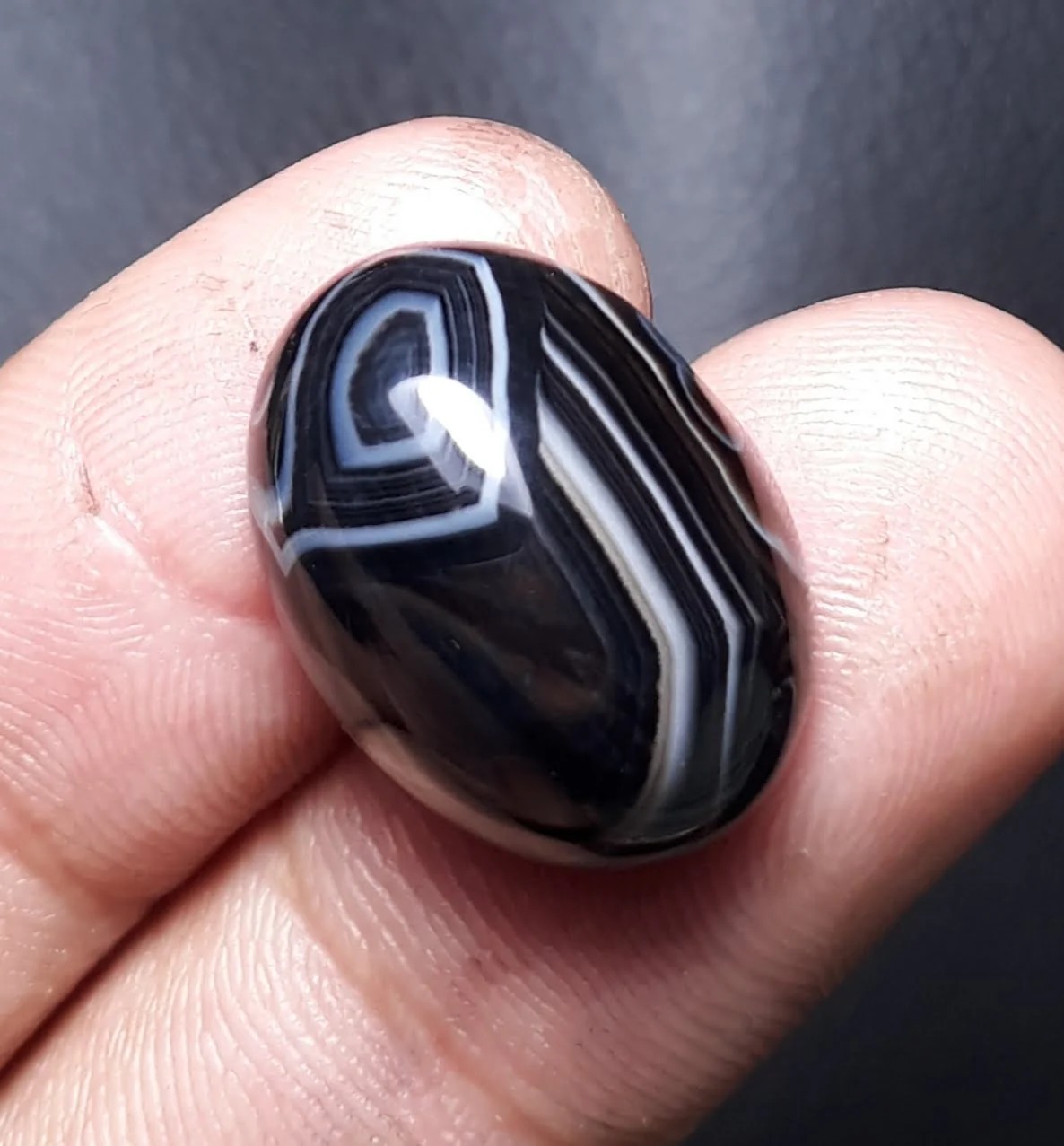
Onyx stands as one of nature’s most geometrically disciplined masterpieces. As a distinguished variety of chalcedony, it is a microcrystalline form of quartz fundamentally composed of silicon dioxide. While many gemstones are defined by their chaotic brilliance, onyx is celebrated for its orderly internal architecture; traditionally, “true” onyx is characterized by its signature parallel black and white bands. These straight, ribbon-like layers are the stone’s mineralogical fingerprint, providing a sharp visual contrast that distinguishes it from the concentric, curved swirls found in its close relative, agate. Formed over aeons within the gas cavities of volcanic rock, these bands are the result of rhythmic silica deposits, where subtle shifts in mineral impurities during the crystallization process “paint” the distinct color transitions. This unique structural layering has made onyx the premier canvas for lapidary artists throughout history, particularly in the creation of cameos and intaglios, where carvers utilize the contrasting depths to bring three-dimensional figures to life. Whether in its natural banded state or its modern, sleek solid-black finish, onyx remains a symbol of grounded elegance and architectural precision in the gemstone world. Is Onyx a Type of Agate? Clarifying the Relationship Onyx and agate are siblings in the mineral world, both belonging to the chalcedony family, which is a microcrystalline form of quartz composed of silicon dioxide . While they share the same chemical DNA and a dense, waxy texture, they are distinguished by their internal architecture. The fundamental difference lies in the geometry of their banding: Onyx: Characterized by straight, parallel bands that resemble neatly stacked ribbons. Agate: Known for curved, concentric, or irregular bands that often follow the rounded contours of the volcanic cavities where they formed. Technically, both gemstones are varieties of banded chalcedony. However, in the precise language of gemology, onyx is not a sub-type of agate. They are best described as closely related cousins. The straight-layered nature of onyx is what historically made it the premier choice for cameo carving, as it allowed artists to cut a figure on one flat color layer against a contrasting background layer. Onyx Varieties: Exploring Different Types True Onyx: The Classic Black and White Stone True onyx traditionally refers to the most iconic form of the gemstone, featuring strongly defined, parallel black and white bands. This stark contrast made it the premier material for ancient glyptography, specifically for carving cameos and intaglios. By skillfully navigating the flat layers, artisans could carve a white figure in high relief against a deep black background. Its alternative name, Arabic onyx, reflects its historical trade routes and the high-quality specimens found in the Arabian Peninsula. Sardonyx: The Colorful Variety Sardonyx is a vibrant variation that features reddish-brown layers, known as sard, combined with crisp white bands. This material was highly valued in ancient Rome, where it was the preferred stone for seals and engraved signet rings because hot wax would not stick to its smooth surface. Beyond its functional use, sardonyx is historically associated with July birthstone traditions and was often carried by Roman soldiers as an amulet of courage. Nicolo Onyx: The Blue-Appearing Variation Nicolo onyx is a specialized variety consisting of a very thin black or dark brown upper layer over a lighter, often grey or white base. When the top layer is cut extremely thin, it creates a visual phenomenon where the stone appears bluish due to the transmission of light through the layers. This subtle, smoky blue effect was especially popular in antique cameo carvings during the Renaissance and Victorian eras, as it added a soft, ethereal quality to the finished piece. Black Onyx: The Most Popular Form Solid black onyx is the most commercially significant variety in the modern gemstone market. While naturally occurring jet-black chalcedony is rare, most stones available today achieve their uniform, midnight-black color through a permanent dyeing process that has been practiced since Roman times. This treatment enhances the stone’s natural porosity to create a sleek, consistent appearance. Its affordability and deep, reflective luster make it a staple in contemporary jewelry design. Where Are Onyx Stones Found? Onyx Misnomers: Avoiding Common Confusion Mexican Onyx – Actually Banded Calcite, Not Quartz Mexican onyx is one of the most frequent misnomers found in the decor and interior design industry. Despite its name, this material is actually a form of banded calcite or aragonite. Unlike the silica-based true onyx, which has a hardness of 7 on the Mohs scale, Mexican onyx is composed of calcium carbonate and is much softer, typically ranking around 3. It is often used for carved bowls, lamps, and decorative bookends because it is easier to shape, but it lacks the durability and quartz structure of authentic onyx. Marble Onyx – Decorative Stone, Not Chalcedony Marble onyx is another term used to describe a variety of banded, translucent limestone. While it is prized as a luxury building material for countertops and wall cladding due to its stunning visual layers, it is not chalcedony. From a geological perspective, marble onyx is a sedimentary rock formed from the drip-stone deposits in caves or around cold springs. It is chemically identical to marble and calcite, making it reactive to acids and prone to scratching, which stands in stark contrast to the acid-resistant and hardy nature of true quartz onyx. Obsidian – Volcanic Glass, Not Onyx Because of its deep, uniform black color, obsidian is occasionally confused with or sold as black onyx. However, obsidian is a naturally occurring volcanic glass formed by the rapid cooling of silica-rich lava. Because it cools so quickly, it lacks a crystalline structure entirely, whereas onyx is microcrystalline. Obsidian is also more brittle and exhibits a conchoidal (shell-like) fracture pattern, which differs from the way onyx breaks. The Essential Distinction: True Onyx Is Always a Quartz Variety To avoid confusion, it is important to remember that true onyx is strictly a member of the chalcedony family. Its defining characteristics are its silicon dioxide composition and its specific microcrystalline growth. If a stone can be scratched by a steel knife or reacts
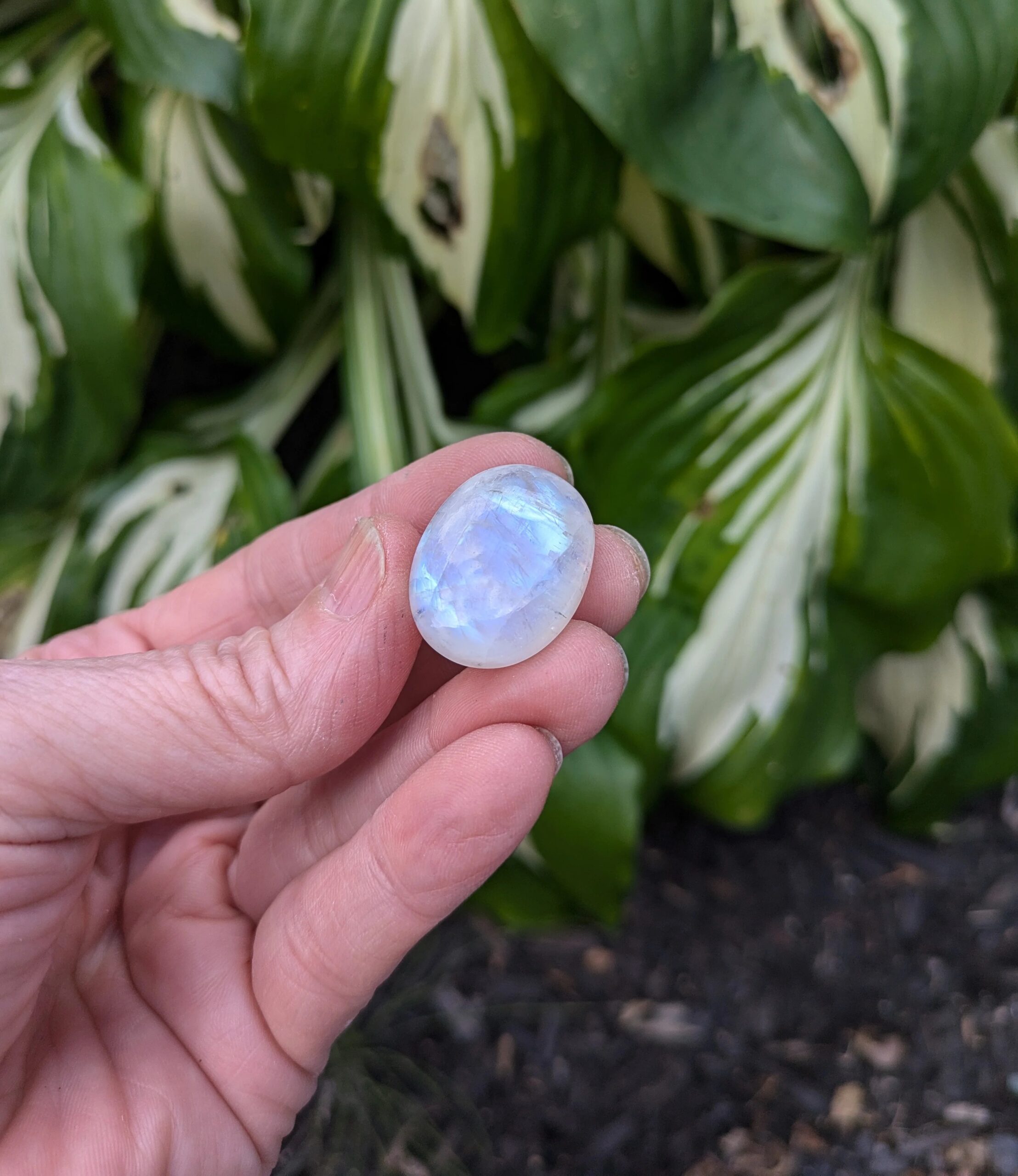
Sebuah tangan memegang batu bulan oval yang dipoles dengan permukaan cabochon di luar ruangan, menampilkan kilauan biru yang cerah dan berkilau di latar belakang daun hijau yang kabur.

Batu Bulan: Tinjauan Gemologi Profesional

Moonstone is a member of the feldspar mineral group and is best known for its distinctive optical phenomenon called adularescence, a soft, floating glow that appears to move across the surface of the stone as it is viewed from different angles. This effect gives moonstone its characteristic “moonlight” appearance and is the primary reason it has been valued in jewelry for thousands of years. Mineralogical Composition and The Physics of Light From a mineralogical perspective, moonstone is primarily a variety of orthoclase feldspar containing microscopic alternating layers of albite. This layered structure is the result of exsolution—a process where two minerals intermix at high temperatures but separate into distinct, alternating lamellae as the magma cools. The physics of the glow is a matter of light interference and scattering: Gemological Properties of Moonstone In gemological terms, moonstone is classified as a feldspar gemstone with moderate durability, making it suitable for jewelry when properly set and handled with care. It has a Mohs hardness of approximately 6 to 6.5, which allows it to resist minor scratches but also means it is more vulnerable than harder gemstones such as sapphire or diamond. As a result, moonstone is better suited for earrings, pendants, and necklaces, or for rings designed with protective settings.Moonstone typically exhibits a refractive index ranging from about 1.518 to 1.526 and a specific gravity averaging between 2.56 and 2.59, values that are consistent with orthoclase–albite feldspar compositions. Its optical character contributes to a vitreous to pearly luster, which enhances the gemstone’s soft, luminous appearance rather than sharp brilliance. One of the most important structural characteristics of moonstone is its perfect cleavage, a feature common to feldspars, which makes the stone susceptible to chipping or cracking if subjected to sudden impact. Because of these properties, moonstone requires thoughtful cutting, setting, and long-term care. Cabochon cuts are most commonly used, as they best display adularescence while minimizing stress on cleavage planes. In jewelry design, moonstone is often set in bezels or other protective mountings to reduce the risk of damage, especially in rings and bracelets that experience frequent wear. Colors and Varieties of Moonstone Moonstone occurs in a variety of body colors, including colorless, white, gray, peach, brown, and green. Among these, near-colorless stones displaying vivid blue adularescence are considered the most valuable in the gem market. Transparency also plays a significant role in value assessment; stones that are transparent to semi-transparent with a strong, centered glow are generally more desirable than cloudy or dull material. Formation and Geological Occurrence Geologically, moonstone forms in feldspar-rich igneous environments where molten rock cools slowly enough to allow mineral phases to separate through a process known as exsolution. During this cooling stage, an originally homogeneous feldspar crystal gradually divides into intergrown layers of orthoclase and albite. These microscopic lamellae later become responsible for the optical phenomenon of adularescence, as light interacts with the alternating mineral structures inside the stone. Moonstone is most commonly associated with granitic pegmatites and other feldspar-dominant igneous rocks, where large crystal growth is possible due to extended cooling periods. The quality of the internal layering—particularly the thickness, regularity, and orientation of the albite lamellae—plays a major role in determining the strength and color of the sheen observed in finished gems. Stones formed under stable geological conditions with very fine, uniform layers are more likely to display the desirable blue adularescence prized in the jewelry trade.Important commercial sources of moonstone include Sri Lanka, India, Madagascar, Myanmar, Australia, and parts of the United States. Sri Lanka has long been regarded as one of the most significant producers of high-quality moonstone, especially material showing strong blue sheen combined with good transparency. India is also a major supplier, often producing a wider range of body colors such as peach, gray, and brown varieties commonly used in decorative and designer jewelry. Madagascar has become an increasingly important modern source, contributing both orthoclase moonstone and related feldspar gems to the global market. Historically, fine blue-sheen moonstone from Myanmar was highly valued, though such material is now less commonly encountered. Smaller deposits in regions such as Norway and the United States contribute limited quantities, often sought by collectors rather than mass-market jewelry production. Overall, the geographic origin of moonstone can influence not only color and transparency but also the intensity and character of its adularescent effect, making provenance an additional consideration in gem evaluation. Internal Characteristics and Identification Under a jeweler’s loupe or microscope, moonstone reveals its “birthmarks.” The most diagnostic feature is the “centipede” inclusion—small, stress-induced fissures that resemble many-legged insects. Distinguishing natural moonstone from imitations is crucial: Professional Care and Maintenance Moonstone is sensitive to environmental stressors. Its vulnerability to heat and chemicals means it should never be cleaned in an ultrasonic or steam cleaner, as the vibrations can trigger cleavage fractures. For details, please refer to our Gemstone Care Guide. Today, moonstone remains an important gemstone in both fine jewelry and designer collections. As one of the recognized birthstones for June, it holds lasting appeal for consumers seeking meaningful and symbolic jewelry. Its unique optical behavior, relatively accessible price range, and long cultural history—from ancient Roman and Indian traditions to modern contemporary design—continue to make moonstone one of the most recognizable and commercially significant feldspar gemstones in the global market.

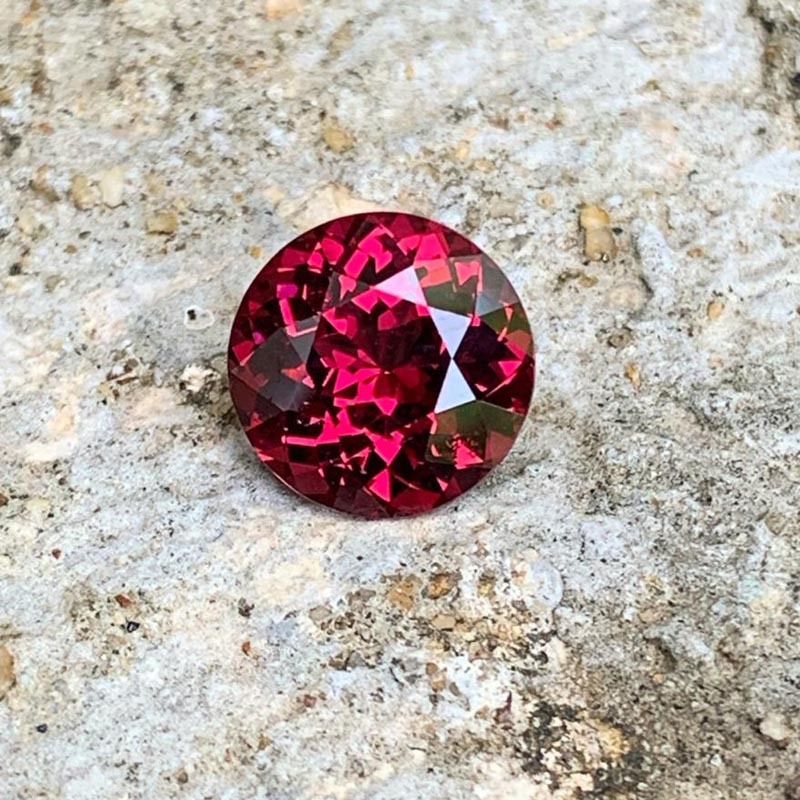
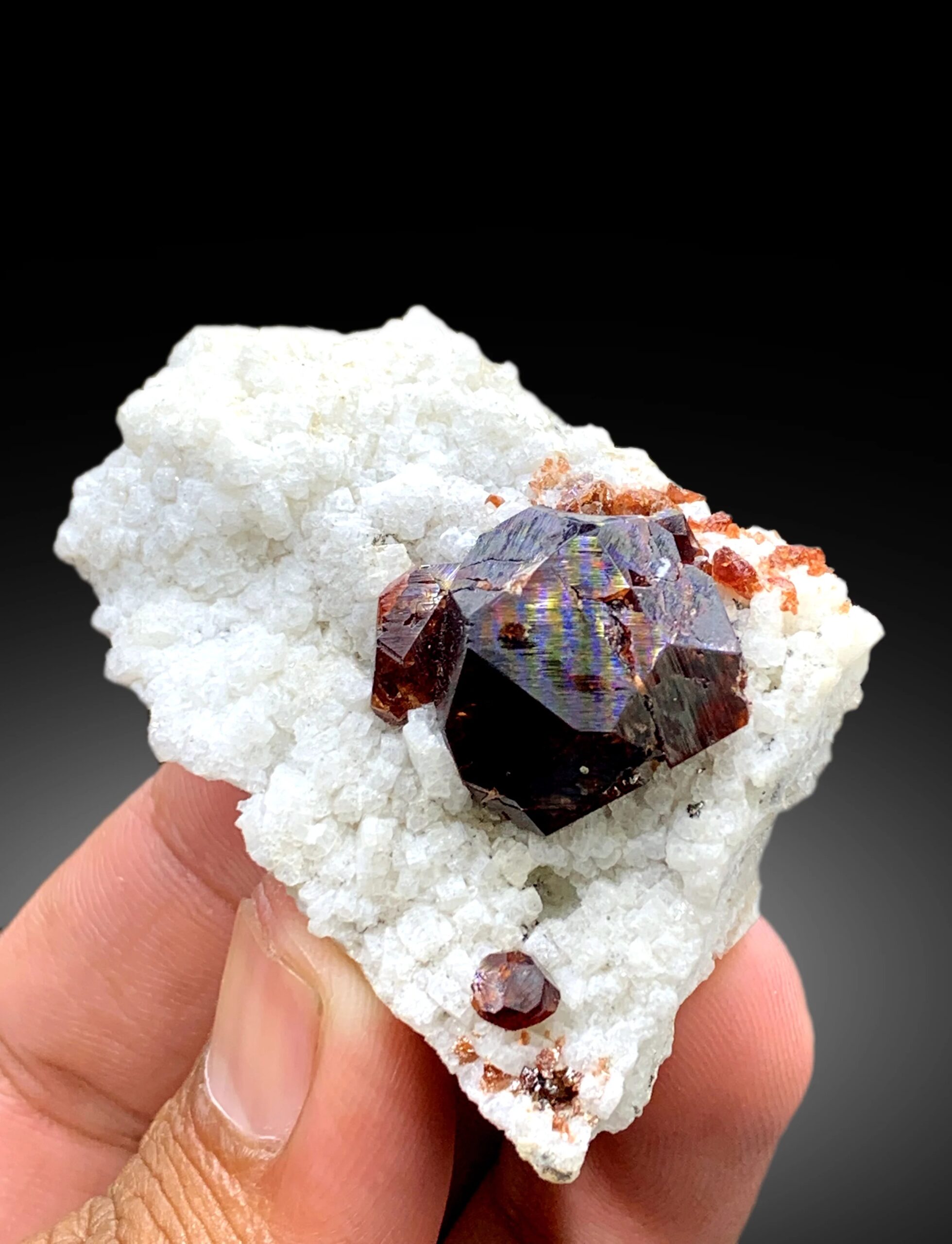
Pemandangan dekat kristal garnet grossular oranye yang terbentuk dengan baik pada matriks mineral putih.

Grossular Garnet: Sifat, Pembentukan, Varietas, dan Signifikansi Geologis

Grossular garnet is a calcium–aluminum silicate mineral belonging to the garnet group, with the chemical formula Ca₃Al₂(SiO₄)₃. It is one of the most compositionally pure endmembers of the garnet family and is best known for its unusually wide range of colors, which distinguish it from many other garnet species.Unlike the more familiar red almandine or pyrope garnets, grossular occurs in shades of green, yellow, orange, brown, pink, colorless, and even rare bluish-green tones. This diversity results from trace elemental substitutions rather than major structural changes, making grossular an important mineral for studying solid-solution behavior in silicate systems. Major Varieties of Grossular Garnet Tsavorite Tsavorite is a vivid green variety colored by chromium and vanadium. Discovered in East Africa, it is valued for its saturation, brilliance, and natural clarity. Unlike emerald, tsavorite typically lacks significant inclusions and does not require treatments. Hessonite Hessonite is an orange to reddish-brown variety often called “cinnamon stone.” It commonly shows internal swirl-like inclusions and lower transparency compared to other garnets, yet remains mineralogically significant. Hydrogrossular Hydrogrossular forms when hydroxyl groups partially replace silica within the structure. This variety often appears opaque and is commonly found in massive or granular aggregates rather than well-formed crystals. Colorless and Pale Grossular Rare colorless or very light-colored grossular garnets occur when trace impurities are nearly absent. These specimens are important for scientific study because they represent the most chemically pure form of the mineral. Identification and Diagnostic Features of Grossular Garnet In gemological laboratory testing, Grossular garnet is distinguished by several diagnostic features that separate it from other members of the garnet group and its common stimulants. Crystal Habit and Internal Zoning Grossular garnets often present as well-formed dodecahedral or trapezohedral crystals. Internally, they may exhibit distinct growth zoning. In the Hessonite variety, this is often accompanied by a characteristic “roiled” or “treacle” appearance—a swirly internal texture caused by the irregular distribution of transparency and minute inclusions, such as rounded apatite or zircon crystals. Anomalous Double Refraction (ADR) While the garnet species belongs to the isometric system and should theoretically remain dark under crossed polars (isotropic), Grossular frequently exhibits Anomalous Double Refraction. When viewed through a polariscope, this appears as “snake-like” extinction patterns or patchy strain shadows, a result of structural tension during the crystal’s growth. Ultraviolet and X-Ray Fluorescence Fluorescence serves as a helpful secondary test. Many Grossular specimens are inert, but specific varieties may show distinctive reactions. For instance, some yellow or light green grossulars may fluoresce a weak to moderate orange or pink under long-wave (LW) and short-wave (SW) ultraviolet light. Under X-ray excitation, certain specimens may also exhibit a noticeable orange or yellowish glow. Spectroscopic Analysis For definitive separation from other species like Andradite or Hydrogrossular, gemologists look for specific absorption bands. Hessonite typically shows manganese-related bands at 407nm and 430nm. Tsavorite, the green variety, displays a distinct chromium and vanadium spectrum, with absorption in the violet and a transmission window in the green. By integrating these physical and optical observations—specifically the refractive index, specific gravity, and internal strain patterns—gemologists can effectively distinguish Grossular from the iron-rich Almandine or the magnesium-rich Pyrope species. Global Distribution and Notable Localities Grossular garnet is found in diverse geological environments across the globe, with reports of both gem-quality and specimen-grade material from nearly every continent. In North America, the United States offers significant occurrences in California, the New England region, and Vermont, while Canada’s Quebec province, particularly the Jeffrey Mine, has historically produced world-class crystals. Africa remains a premier source for high-value varieties, with Kenya and Tanzania leading production for the vibrant green tsavorite and the luminous Merelani Mint grossular. In Asia, important deposits are located in China, Pakistan, and Sri Lanka, the latter being famous for its characteristic hessonite gravels. European and other regional sources include the alpine-type fissures of Italy and Switzerland, along with the historically significant deposits in Russia. Each of these localities produces grossular with unique gemological properties, crystal habits, and color profiles, providing a wealth of diversity for researchers and mineral collectors alike. Applications in Jewelry Design As a gemstone material, grossular offers a remarkable spectrum of colors that makes it suitable for a wide range of jewelry design styles, from high-end statement pieces to delicate everyday wear. Its moderate hardness, ranging from 6.5 to 7.5 on the Mohs scale, implies that while it is durable, protective settings should be considered for high-impact jewelry such as rings to ensure longevity and resist abrasion.One of the most appealing aspects of grossular for modern consumers is that it typically does not undergo heat treatment or artificial dyeing. This makes it a preferred choice for those seeking natural and untreated gemstones. Whether it is the intense green of tsavorite or the warm, honey-like tones of hessonite, grossular provides designers with a pure and versatile palette. Care and Maintenance Recommendations To maintain the luster and integrity of grossular garnet, proper care is essential. Like most natural gemstones, it should be protected from sudden thermal shocks and intense mechanical vibrations or impacts. For routine cleaning, it is best to use lukewarm water combined with a mild, neutral detergent and a soft-bristled brush.While grossular is relatively durable, its scratch resistance is slightly lower than that of corundum species such as ruby or sapphire. Therefore, owners should exercise caution during wear and ensure the gemstone is stored separately from harder minerals to prevent surface scratches. By following these simple preservation steps, the brilliance and structural wholeness of the gem can be maintained for generations. FAQ Is Grossular a Garnet? Yes. Grossular is a true member of the garnet family, scientifically classified as a garnet species rather than a variety. Garnets are defined by a shared crystal structure and general chemical formula, and grossular represents the calcium–aluminum endmember of this group.In gemology, any stone identified as grossular is, by definition, a garnet. Is Grossular Garnet Rare? Grossular as a mineral is not rare, but gem-quality grossular in certain colors—such as vivid green tsavorite or clean colorless stones—is relatively rare. Rarity depends

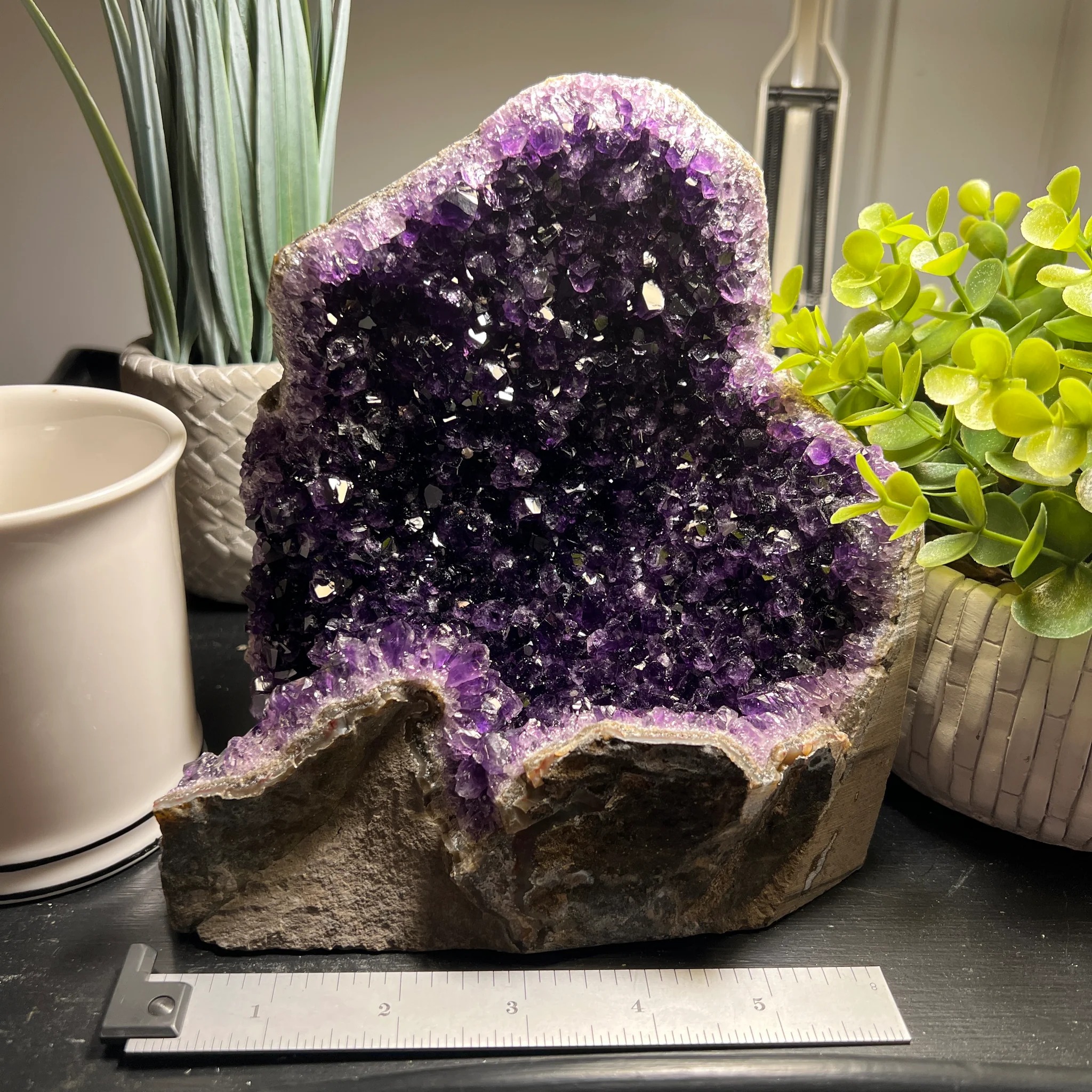
Kluster geode amethyst ungu tua di atas meja dengan penggaris skala 6 inci.

Panduan Lengkap Amethyst: Arti, Sifat, Penilaian, Nilai, dan Perawatan

Amethyst is a violet-to-purple variety of quartz (SiO₂). Its distinctive color is caused by trace amounts of iron and natural irradiation during crystal formation. With a Mohs hardness of 7, amethyst is durable enough for everyday jewelry while still being easy to cut and polish.As a purple variety of quartz, amethyst has been admired for thousands of years for its beauty, durability, and symbolic meaning. From ancient royal jewelry to modern gemstone collections, amethyst continues to hold a special place in gemology and culture. Amethyst Color and Rarity Amethyst is the violet to purple variety of quartz, a mineral that is widely distributed throughout the Earth’s crust. While quartz itself is extremely common, truly exceptional amethyst is not. The finest quality is often referred to in the trade as “Siberian color,” a term used to describe a deep, rich purple resembling concord grapes, combined with subtle red or blue secondary flashes when viewed under incandescent light.These secondary flashes are a key indicator of top-quality amethyst and are typically visible only in stones with strong color saturation. Lighter or weaker purple material rarely displays this effect, which is why deeply colored amethyst with red or blue undertones is considered especially rare and desirable. Most amethyst found on the market occurs in shades ranging from pale lavender and light violet to soft pinkish-purple tones. When cut properly, even lighter-colored amethyst can be very attractive, often showing excellent brilliance and liveliness due to the stone’s transparency. In recent years, Brazil has produced notable lavender-pink amethyst that can occasionally resemble fine kunzite or morganite in appearance. This color was seen decades ago but disappeared from the market for many years, making its reappearance particularly interesting to cutters and collectors. Although exact matches remain rare, similar material continues to surface and is valued for its unique aesthetic. Where Amethyst Comes From The term “Siberian” refers to a color standard rather than a modern mining location. Despite its name, truly fine amethyst from Siberia is rarely seen today. Historically, one of the most important sources of top-quality amethyst was Zambia, especially during the 1980s and early 1990s. Zambian amethyst was prized for its deep, velvety purple color with strong red and blue secondary hues. However, this material often contained significant inclusions, requiring skilled cutting and careful removal of flawed sections. Production from this source declined sharply after the mid-1990s. Brazil has long been the world’s largest producer of amethyst, known more for quantity and crystal size than consistent top color. Major Brazilian sources include Rio Grande do Sul, Bahia, and Marabá. Brazil is also unique in producing pink amethyst, bi-color material, and unusually clear purple stones that are rarely found elsewhere. After Zambian production declined, Uruguay emerged as an important source. Uruguayan amethyst is known for its excellent crystal structure, high clarity, and saturated color, making it especially attractive to gemstone cutters. The strong crystal form often produces stones with deep color and exceptional brilliance. Bolivia is famous for ametrine, a natural bi-color quartz combining purple amethyst with golden citrine in a single crystal. While Bolivia also produces amethyst-only stones, their color is generally lighter compared to material from other major sources. North America produces limited quantities of amethyst, with notable deposits in Thunder Bay, Canada, and the Four Peaks mine in Arizona. Smaller occurrences are also found in Colorado and Maine. Madagascar, however, is considered by many experienced gem professionals to be one of the finest sources of all, producing deep amethyst with intense red and blue secondary flashes and outstanding color saturation. Amethyst Grading Explained Amethyst grading focuses primarily on color and clarity, rather than carat weight, because these two factors have the greatest influence on the gemstone’s appearance and value. How to Grade Amethyst Clarity Amethyst clarity is graded by evaluating the presence, size, and visibility of internal inclusions and surface-reaching features. High-quality amethyst is typically considered eye-clean, meaning no inclusions are visible to the naked eye when the stone is viewed face-up under normal lighting conditions. Common inclusions in amethyst may include tiny crystals, faint fractures, color zoning, or needle-like mineral growths, all of which are natural characteristics of quartz. Stones with fewer and less noticeable inclusions allow light to pass through more freely, resulting in better brilliance and overall appearance. While minor inclusions are generally acceptable in amethyst, especially in larger stones, those that are easily visible, disrupt transparency, or weaken durability will lower the clarity grade and overall value of the gemstone. Inclusions: The Amethyst Grading Chart AAAA – Top-tier amethyst with a deep, saturated purple color and excellent clarity; no visible inclusions to the naked eye. AAA – High-quality stones with medium to dark purple hues and minimal inclusions. AA – Medium purple with more noticeable inclusions; still attractive but less intense than higher grades. A–B – Lighter or uneven color with visible inclusions; often used in beads or less formal jewelry. Amethyst: Meaning, Symbolism, and Birthstone Significance Amethyst has been revered across cultures for millennia, prized not only for its mesmerizing violet shades but also for its profound symbolic weight. From ancient legends to modern wellness, this gemstone remains one of the most storied jewels in history. The Legend of Sobriety The name “amethyst” finds its roots in the ancient Greek word amethystos, which translates literally to “not intoxicated.” This etymology reflects an early belief that the stone possessed the power to prevent drunkenness and instill a sense of mental clarity. To harness this protection, ancient Greeks and Romans would often fashion drinking vessels from amethyst, hoping the stone would ward off the physical and cognitive effects of excess wine. Spiritual and Royal Heritage Beyond its association with temperance, amethyst has long served as a vessel for spiritual and protective significance: The February Birthstone Amethyst is universally celebrated as the official birthstone for February. This tradition evolved from ancient customs that linked specific gems to the months of the year, a practice rooted in religious texts and later standardized into modern gemstone calendars. Today, giving amethyst to

Ensiklopedia Batu Permata

Daftar lengkap batu permata dari A hingga Z beserta informasi detail untuk masing-masing.

Batu kelahiran

Pelajari lebih lanjut tentang batu permata populer ini dan makna di baliknya.