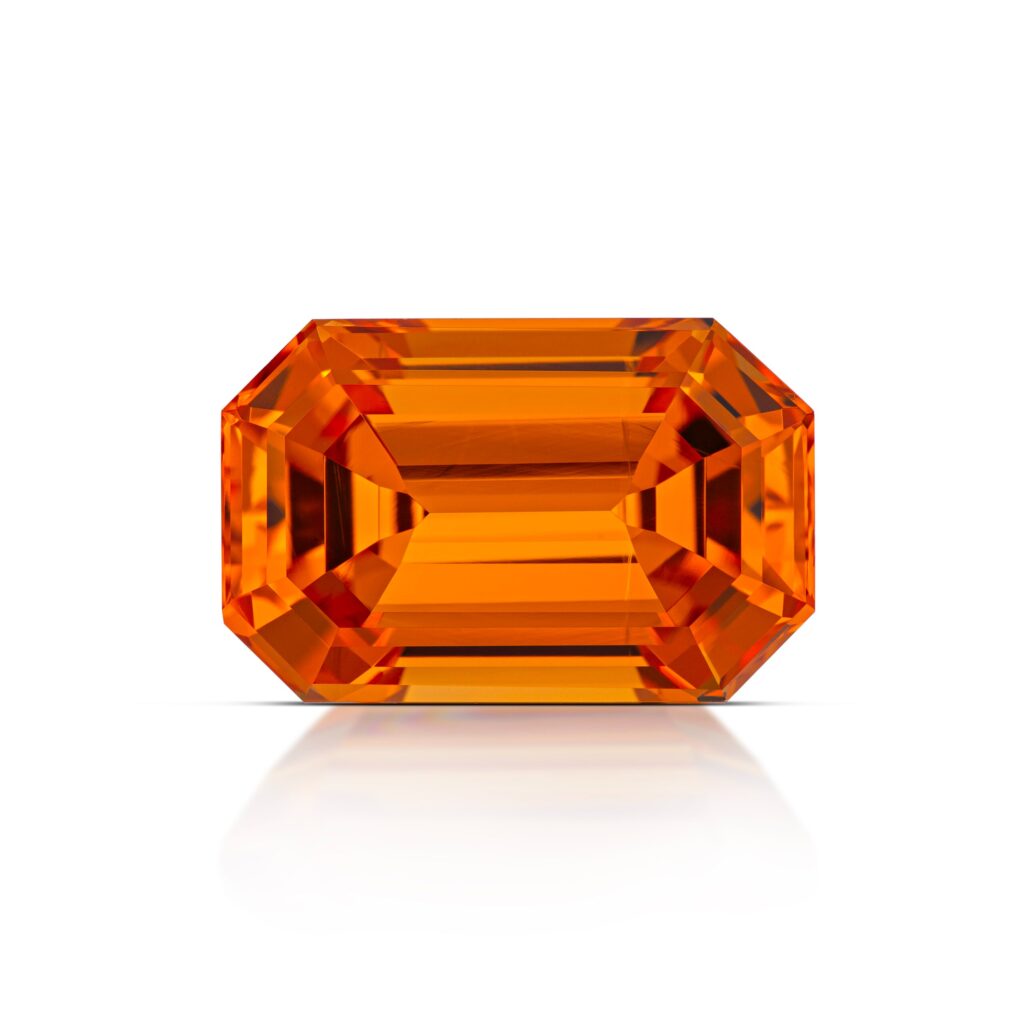
Spessartite garnet is a standout member of the garnet family, widely recognized for its brilliant shades of orange, ranging from soft apricot to a deep, fiery reddish-orange. In the gem world, it is often called the “Mandarin garnet” or “Fanta garnet” because of its vivid, citrus-like color. Unlike many other gemstones that get their color from tiny impurities, spessartite’s orange hue is a natural part of its core makeup. It is a durable stone with a high level of brilliance, meaning it reflects light exceptionally well and sparkles intensely when cut and polished.
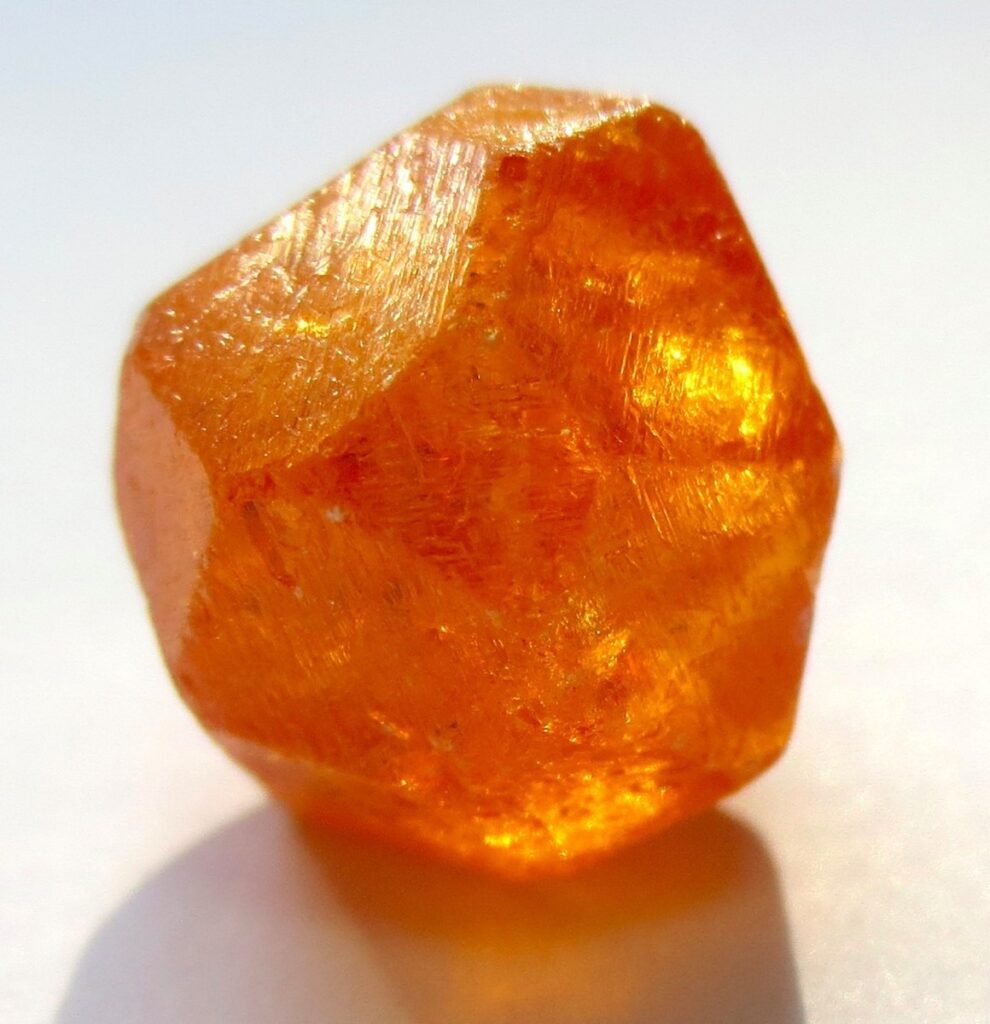
How is it Formed?
This gemstone is born deep within the Earth under very specific geological conditions. It most commonly forms in a type of rock called granitic pegmatite. As molten magma cools down over thousands of years, the leftover fluids—which are rich in manganese and aluminum—gather in the cracks and pockets of the surrounding rock. Under high temperatures and intense pressure, these fluids slowly crystallize into the bright orange crystals we find today. It can also form in certain metamorphic rocks that have been squeezed and heated by the movement of the Earth’s tectonic plates, provided there is enough manganese present in the environment.
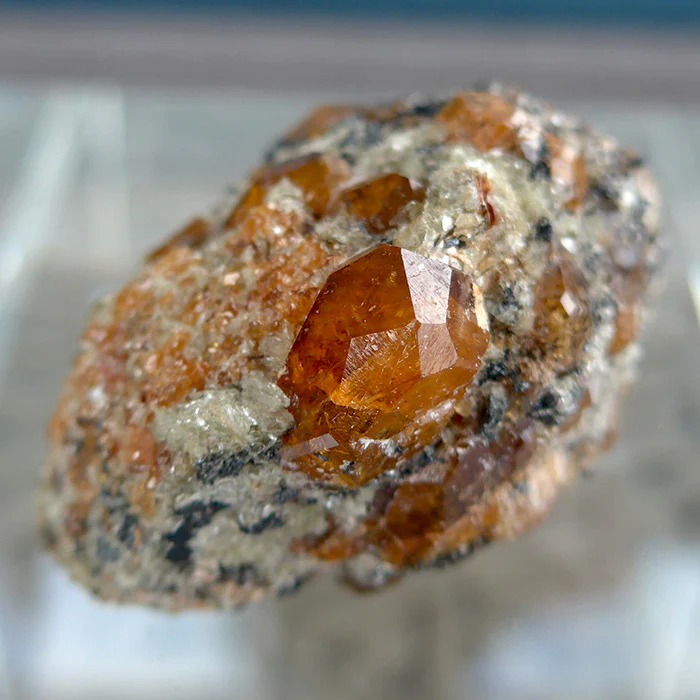
History and Famous Locations
The history of spessartite began in the mid-1800s when it was first discovered in the Spessart Mountains of Bavaria, Germany. This original discovery site gave the mineral its name. For over a century, spessartite remained a rare “collector’s gem” that few people knew about because high-quality, transparent pieces were so hard to find. Everything changed in the early 1990s when a major deposit of incredibly bright, clean orange garnets was discovered in Namibia. Shortly after, more finds were made in Nigeria and Madagascar. Today, while the original German mines are no longer active, these African locations remain the most important sources for the world’s finest spessartite.
Varieties and Classification of Spessartite Garnet
Mandarin Garnet
Mandarin garnet is the most famous and highly prized trade variety of spessartite. This name is reserved for specimens that exhibit a pure, intense, and saturated orange color, often compared to the skin of a mandarin orange. This variety was brought to global prominence following the 1991 discovery in Namibia. These stones are characterized by their exceptional clarity and the absence of brownish secondary tones, making them the benchmark for “ideal” spessartite color.
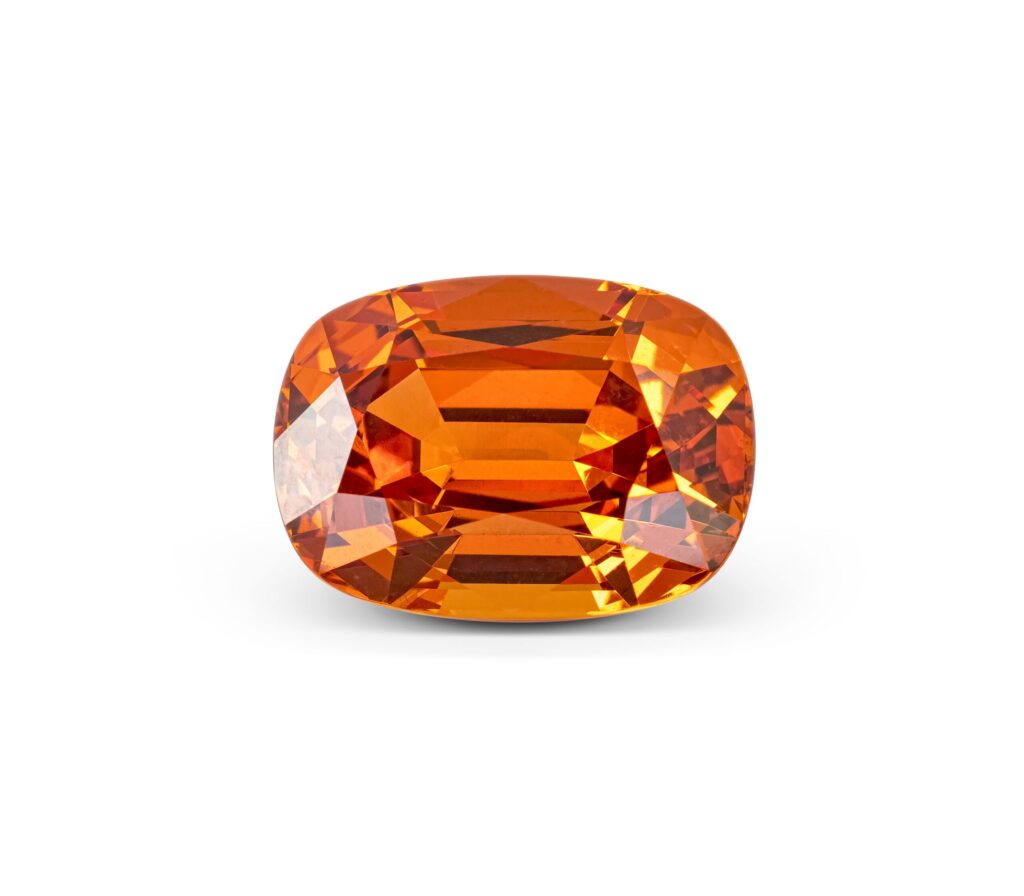
“Fanta” Orange Spessartite
The term “Fanta” orange is a popular commercial descriptor used to identify spessartite with a bright, neon-like orange hue reminiscent of the famous soda. While similar to Mandarin garnet, “Fanta” stones are often associated with the high-quality deposits found in Nigeria. These gems are noted for their high brilliance and a slightly lighter, more “electric” saturation that performs exceptionally well under various lighting conditions.
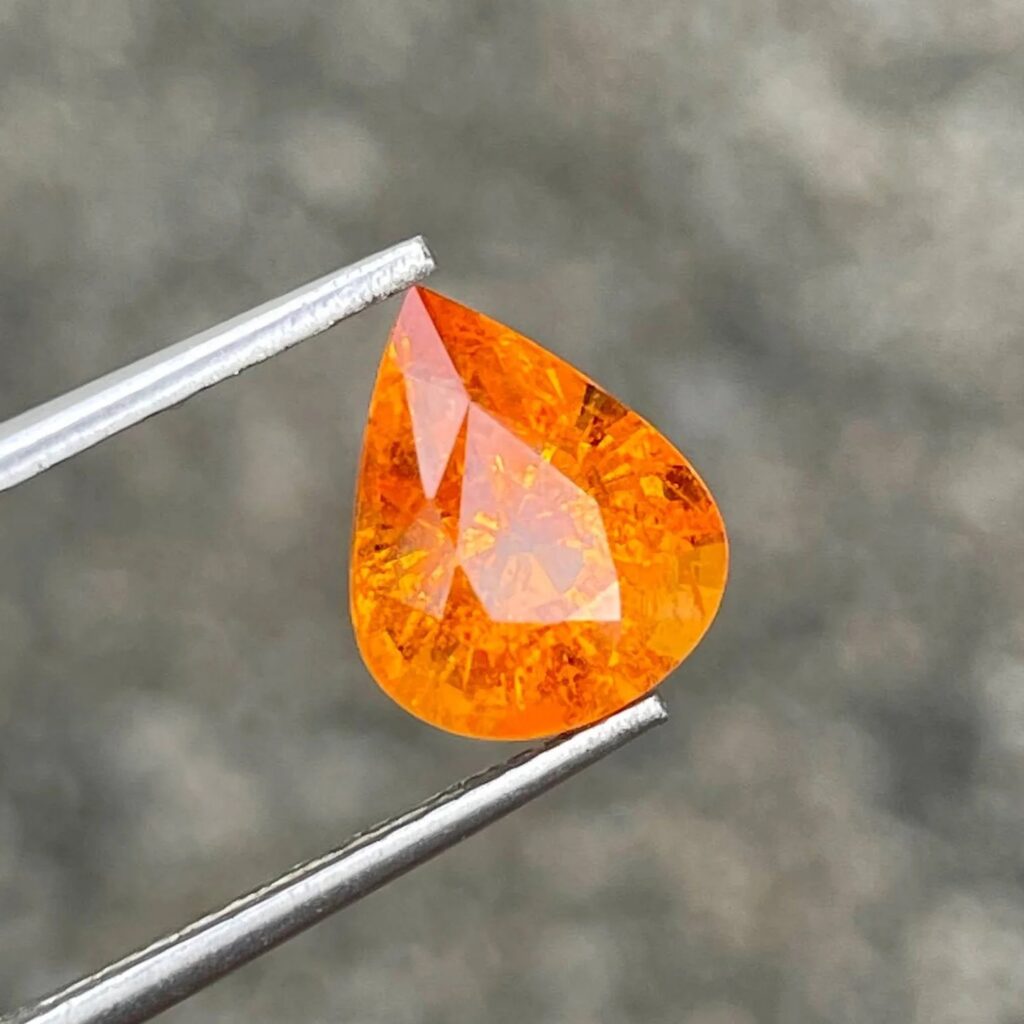
Malaia (Malaya) Garnet
Malaia garnet is a unique chemical hybrid, representing a mixture between the spessartite and pyrope species. Because it contains both manganese and magnesium, it displays a broader color palette than pure spessartite, including “peach,” “pinkish-orange,” and “sunset” hues. Originally discovered in the Umba Valley of East Africa, these stones are highly sought after by collectors for their unique, shifting colors that do not fit into the standard orange category.
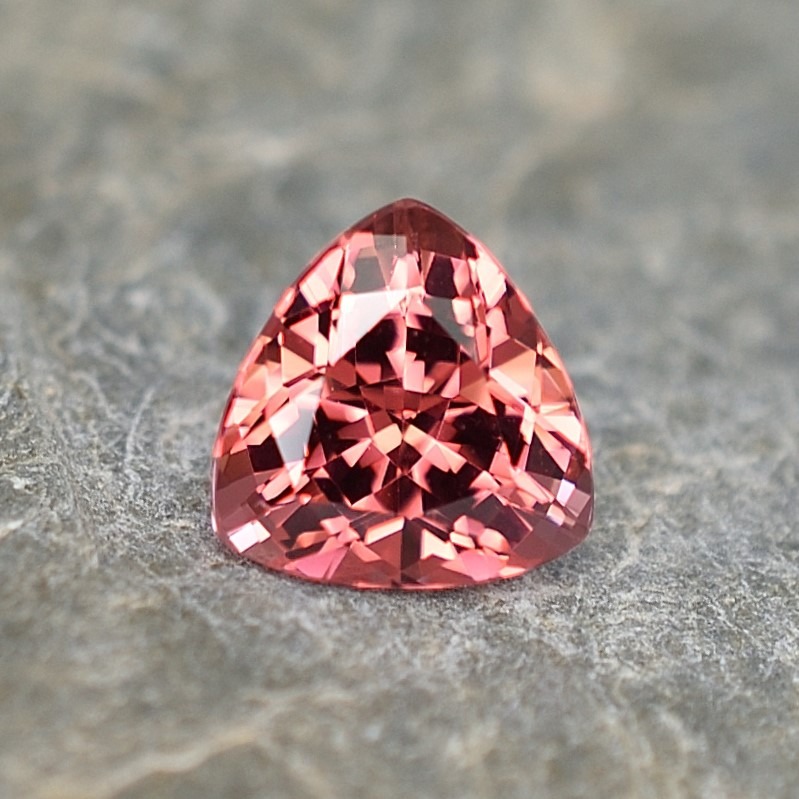
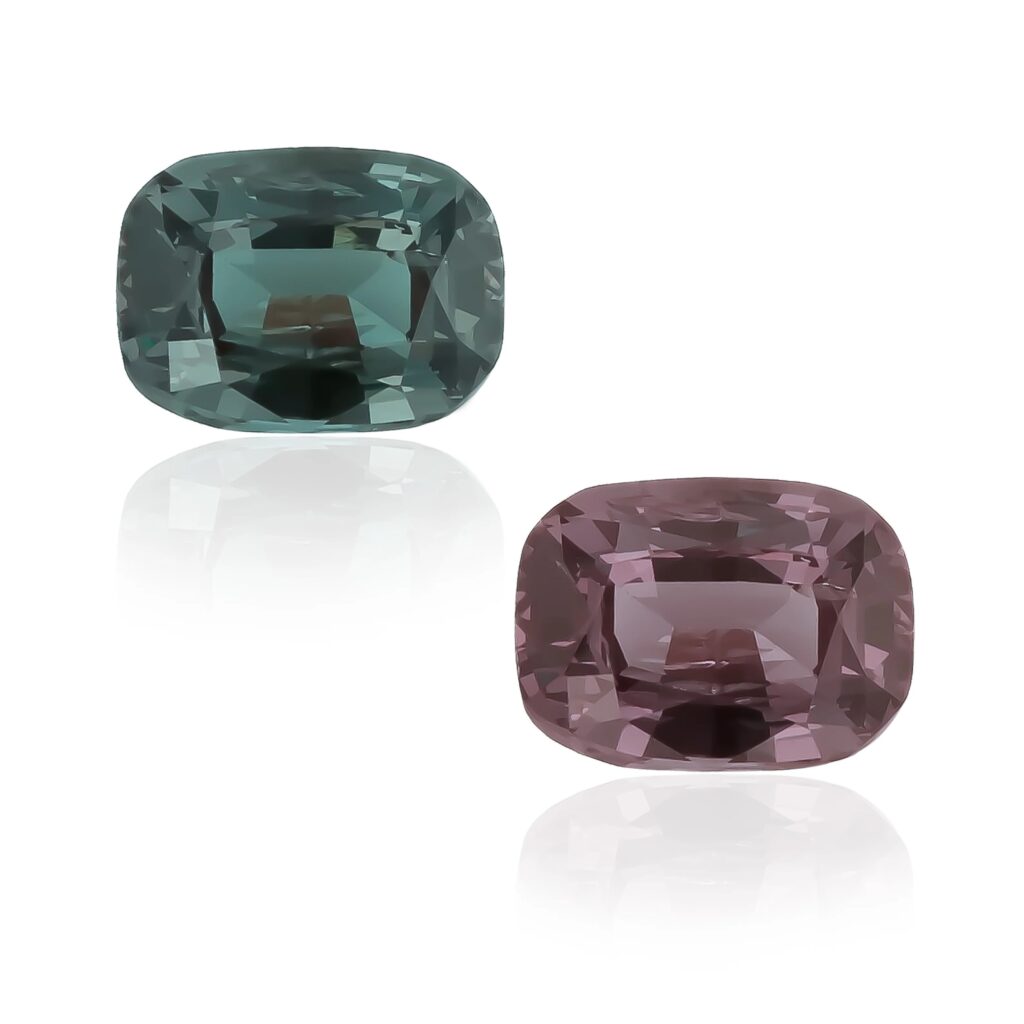
Color-Change Spessartite
In very rare instances, spessartite-rich garnets can exhibit color-change phenomena. These are typically complex mixtures of spessartite, pyrope, and almandine, containing trace amounts of vanadium or chromium. These stones may appear brownish-green or blue-green in daylight and shift to a distinct purplish-pink or raspberry red under incandescent light. These are considered among the rarest and most geologically interesting varieties in the entire garnet group.
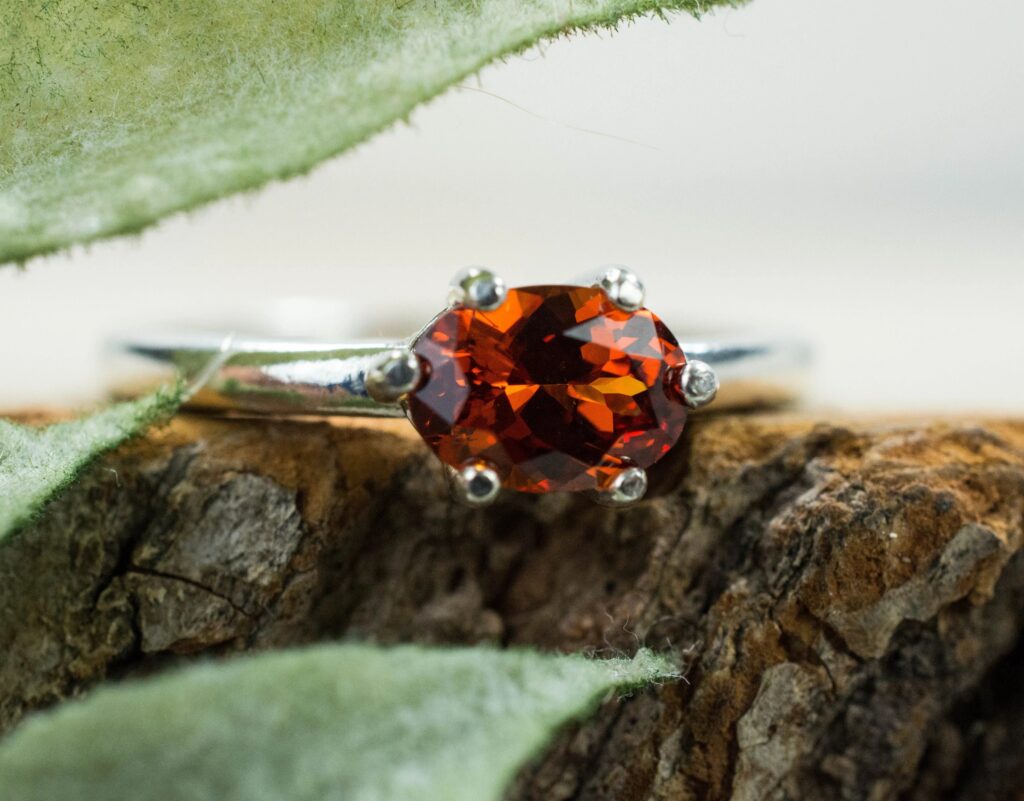
Brownish-Red Spessartite
The most common form of spessartite found globally—including the original specimens from the Spessart Mountains in Germany—tends toward a darker, brownish-red or “root beer” color. This occurs when iron (almandine component) begins to mix with the manganese structure. While these stones are less prized in the jewelry market than the bright orange varieties, they often form large, well-defined crystals that are highly valued by mineral collectors as matrix specimens.
Global Sources and Occurrences of Spessartite Garnet
Spessartite garnet is found in several key geological locations worldwide, with its quality and color often dictated by the specific chemistry of the regional deposits. While it was originally discovered in Europe, the most significant modern sources for gem-quality material are now located in Africa and Asia.The most famous historical source is the Spessart Mountains in Bavaria, Germany, which serves as the type locality for the mineral. However, these deposits primarily produce smaller, darker crystals that are more prized by mineral collectors than by jewelers. In contrast, the most celebrated source for vivid “Mandarin” orange spessartite is Namibia, specifically the Kunene Region. The 1991 discovery there introduced exceptionally clean and saturated crystals to the global market. Nigeria also serves as a major producer, yielding high-clarity “Fanta” orange stones from deposits in the Oyo and Plateau States.
In addition to African sources, significant deposits are located in Madagascar, particularly in the Antsiranana and Itremo regions, which produce a wide variety of hues ranging from bright orange to deep reddish-brown. Across Asia, Myanmar (Burma) and Sri Lanka provide high-quality specimens, often found in alluvial deposits alongside other gemstones. Other notable occurrences include the Gilgit-Baltistan region of Pakistan—known for the bright “Kashmirine” variety—and various granitic pegmatites in Brazil, China, and the United States (specifically California and Virginia). The diversity of these locations ensures a steady supply of spessartite, though stones with the perfect balance of high clarity and pure orange saturation remain rare and restricted to a few select mines.
The Distinction Between Spessartite Garnet and the Broader Garnet Group
See also: What is Garnet?
To understand the relationship between spessartite and garnet, it is first necessary to view garnet not as a single mineral, but as a complex supergroup consisting of multiple distinct species. While all members of this group share a common crystal structure and a similar chemical formula, they are divided into different species based on the specific elements present in their composition. Spessartite is a specific species within this group, and its primary distinction from other garnets lies in its unique concentration of manganese and aluminum. While the general term garnet is often associated with the deep red iron-bearing varieties like almandine, spessartite is a manganese-aluminum silicate. This chemical difference is responsible for the stone’s characteristic orange-to-reddish-brown hues, which set it apart from the greens, purples, and deep reds found in other branches of the garnet family.
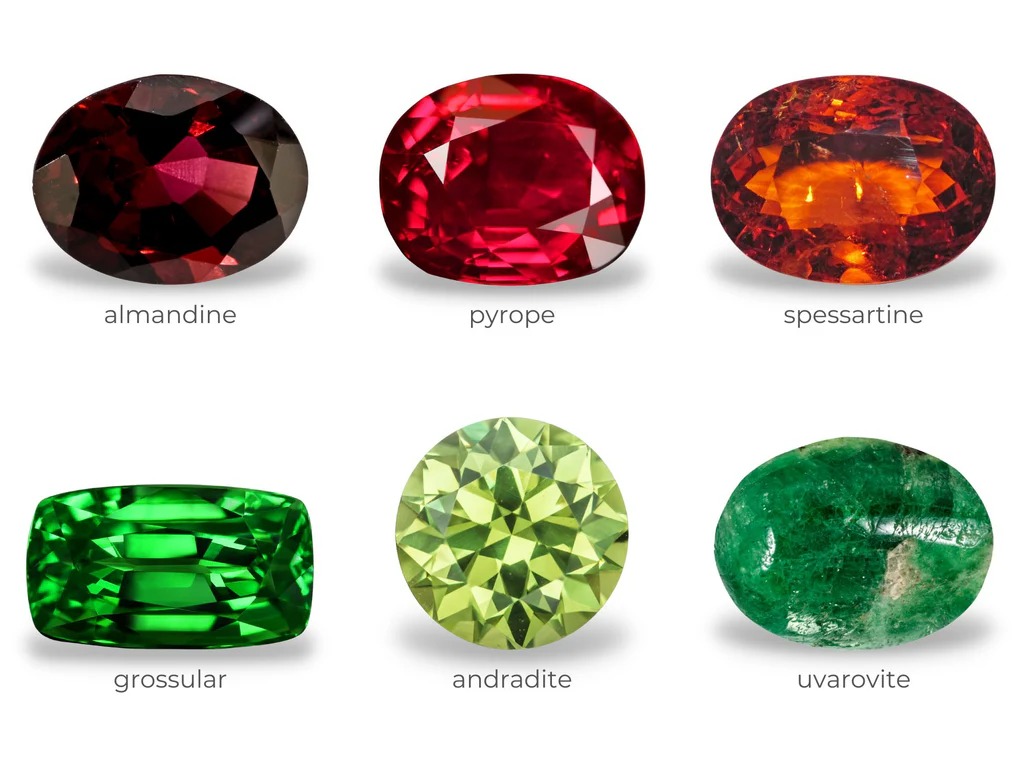
Another significant difference involves the optical properties and rarity of the material. Spessartite typically possesses a higher refractive index than the more common red garnets. In practical terms, this means that light travels through a spessartite crystal in a way that creates more brilliance and visible fire, often making it appear brighter and more vivid than a standard almandine or pyrope garnet. Furthermore, most common garnets are found in widespread metamorphic rocks like schist or gneiss, whereas gem-quality spessartite requires much rarer geological conditions. It is most often discovered in granitic pegmatites where manganese was highly concentrated during the cooling of magma. This specific geological requirement makes spessartite significantly less common in the earth’s crust compared to the broader garnet group.Finally, the trade and classification of these stones highlight their functional differences. In the gemstone industry, the general word garnet is frequently used as a broad category for January birthstones or affordable red gems. However, spessartite is categorized as a specialty or “connoisseur” gem due to its vibrant saturation and the fact that it is idiochromatic, meaning its color is a fundamental part of its chemistry rather than an accident of nature. While other garnets may require trace elements like chromium or vanadium to turn green or pink, spessartite is orange because of the manganese that defines its very existence. Therefore, while spessartite shares the same physical durability and isometric crystal system as all other garnets, its chemical rarity, superior optical performance, and specific volcanic origins mark it as a premium variety within the wider mineral family.
Applications of Spessartite Garnet in Fine Jewelry
The use of spessartite garnet in fine jewelry has grown significantly due to its exceptional refractive index and natural, untreated brilliance that allows it to stand out even in complex settings. As a centerpiece, it is frequently featured in statement rings and pendants, where its vivid orange hues—often categorized as Mandarin or Fanta—are accentuated by brilliant cuts like cushion or oval to maximize light return. Because of its respectable hardness of 7 to 7.5 on the Mohs scale, it is durable enough for frequent wear, and it is often paired with colorless diamonds in white gold or platinum to create a high-contrast, modern aesthetic that emphasizes the gem’s inner fire. Beyond solitary settings, designers utilize the stone’s diverse color range, from pale apricot to deep reddish-brown, to create intricate gradient “sunset” patterns in pavé work or floral motifs alongside yellow sapphires and rubies. Whether set in yellow gold to enhance its warmth or in cooler metals for a sharp, contemporary look, spessartite remains a premier choice for jewelers seeking a stone that combines natural authenticity with intense, high-energy saturation.