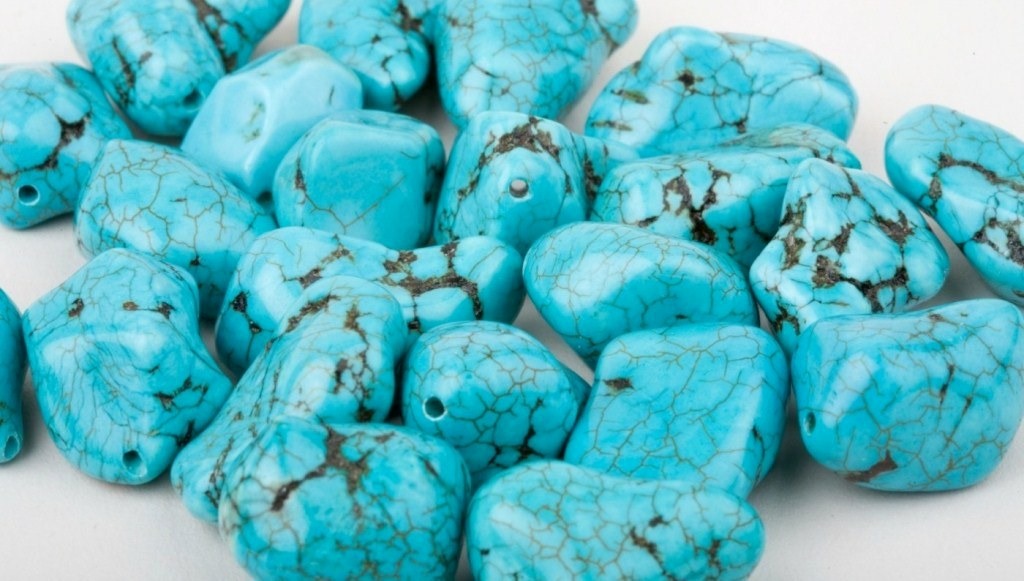
Prosopite is a rare hydroxy-fluoride mineral primarily composed of calcium and aluminum. It typically occurs in the monoclinic crystal system, manifesting as colorless, white, or pale blue-green masses and tabular crystals. Geologically, the mineral forms through hydrothermal alteration processes, often occurring in tin-bearing veins or granitic pegmatites. It is frequently created when fluorine-rich fluids react with aluminum-bearing minerals, such as cryolite, during the late stages of mineral crystallization.
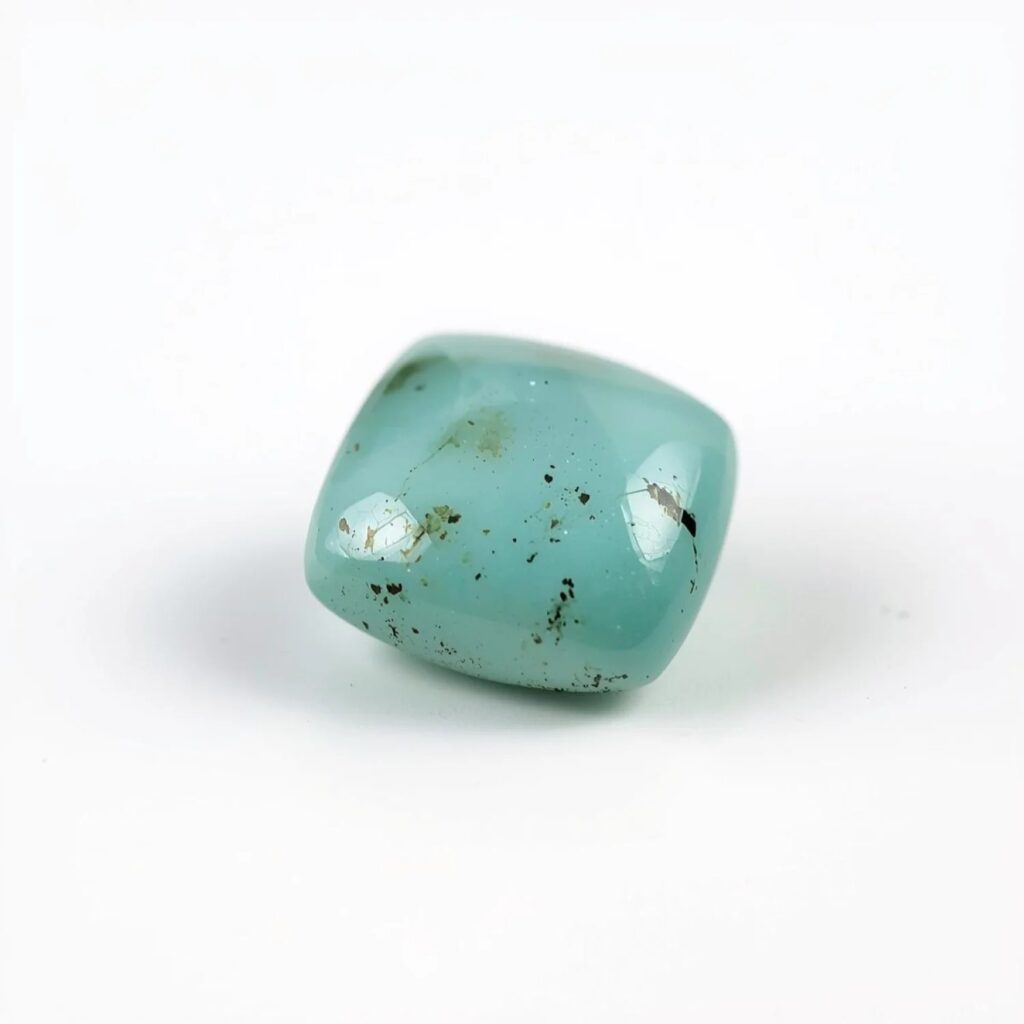
The history of Prosopite dates back to 1853, when it was first described by the German mineralogist August Breithaupt. Its name is derived from the Greek word prosopon, which translates to mask. This nomenclature refers to the mineral’s tendency to form pseudomorphs, where it replaces the internal structure of another mineral while retaining the original mineral’s external shape, effectively masking its true identity. While it lacks significant industrial utility, it remains scientifically relevant for its unique chemical structure and is highly regarded by mineral collectors for its rarity and association with famous mining localities in Germany, Greenland, and Mexico.
Morphological Varieties of Prosopite
Prosopite manifests in several distinct physical habits that reflect the specific hydrothermal conditions of its environment. Because it often forms through the alteration of pre-existing minerals, its appearance can range from clearly defined crystalline structures to deceptive replacement forms. In its most developed state, the mineral develops as small, distinct crystals that are usually tabular or short prismatic in habit, often appearing as tiny plates clustered within the cavities of a host rock. However, in many deposits, it is more commonly found as massive, fine-grained aggregates. These stony or earthy masses are generally opaque and can range in texture from dense and hard to relatively friable, depending on the purity of the specimen.
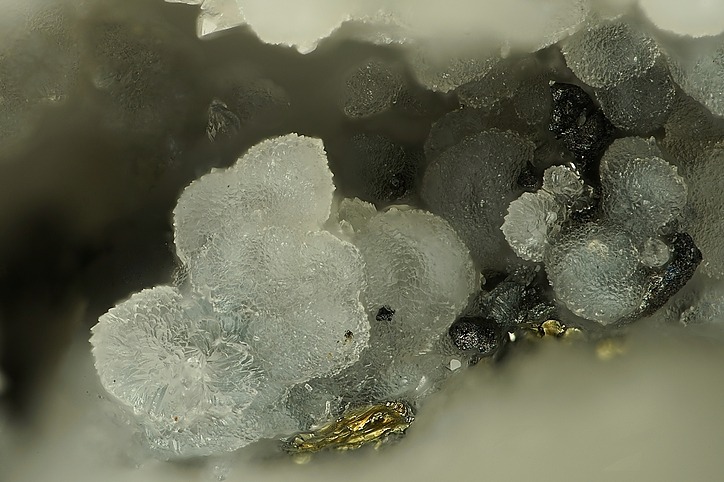
A defining characteristic of Prosopite is its existence as a pseudomorph, where it replaces crystals of other minerals, such as cryolite, by filling their original geometric shapes. This masked morphology is the primary reason for the mineral’s scientific name and remains a point of significant interest in mineralogical studies. Additionally, Prosopite sometimes develops as thin, protective crusts or radiating fibrous clusters on the surface of associated minerals, occasionally appearing in botryoidal forms with a smooth, rounded exterior. While the pure mineral is colorless or white, it frequently presents in various shades of pale blue or green. These color varieties are often the result of trace copper inclusions or proximity to copper-bearing minerals, which can lead to its visual similarity to turquoise.
Is Prosopite a Gemstone? Understanding Its Uses and Industrial Value
Prosopite is primarily classified as a rare collector’s mineral rather than a mainstream gemstone. In the field of gemology, its use is limited by its physical properties, specifically a Mohs hardness of 4 to 4.5. This relatively low level of hardness makes the mineral susceptible to scratching and wear, rendering it impractical for most commercial jewelry applications like rings or bracelets. While the vibrant blue and green varieties are occasionally cut into cabochons or polished as tumbled stones, these are generally regarded as exotic specimens for specialized collectors. Such pieces are usually reserved for display or for use in protected jewelry, such as pendants, where the stone is less likely to experience physical impact. Due to its visual similarity to turquoise in its massive form, it is sometimes studied as a potential simulant, though its rarity usually makes it more valuable as a mineral specimen than as a turquoise substitute.
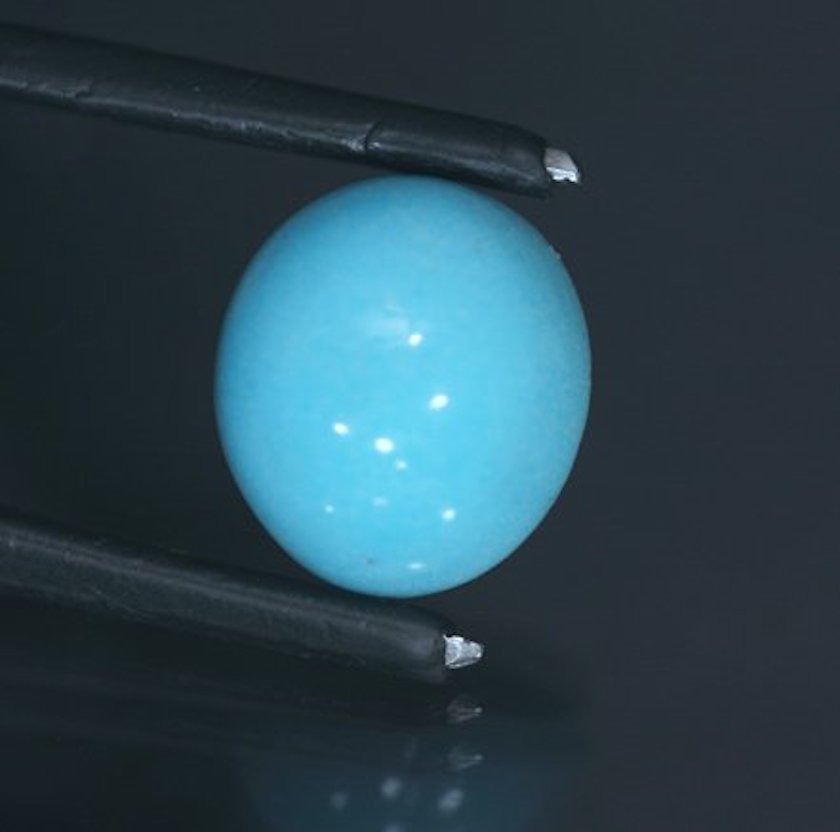
Outside of the lapidary arts, Prosopite has no significant industrial or commercial applications. It does not occur in large enough concentrations to serve as a viable ore for aluminum or fluorine extraction. Therefore, its primary utility is found within the scientific and educational sectors. For geologists and mineralogists, Prosopite serves as an important indicator for understanding the hydrothermal alteration of cryolite and the geochemical evolution of granitic pegmatites. The mineral’s value is almost entirely defined by its scarcity and its role in documenting specific geological processes. Consequently, while it can be shaped and polished for aesthetic purposes, it remains a mineral of interest to researchers and rare stone enthusiasts rather than a material for mass-market industry or jewelry.
Distinguishing Between Prosopite and Turquoise
To distinguish Prosopite from Turquoise clearly, start by testing their hardness. While they look identical, Prosopite is much softer with a Mohs hardness of only 4.0 to 4.5, meaning a steel nail will easily scratch it. In contrast, Turquoise is harder (5.0 to 6.0) and usually resists such scratches. Next, consider their weight and density; Prosopite feels slightly heavier because it is more compact than Turquoise. For a definitive identification, a refractive index (RI) test is used: Prosopite measures around 1.50, which is significantly lower than the 1.61 to 1.65 range of Turquoise. Finally, their geological origins differ; Turquoise typically forms in volcanic copper deposits in dry climates, whereas Prosopite is almost always found in rare tin-bearing veins or associated with cryolite.