
Moonstone is a member of the feldspar mineral group and is best known for its distinctive optical phenomenon called adularescence, a soft, floating glow that appears to move across the surface of the stone as it is viewed from different angles. This effect gives moonstone its characteristic “moonlight” appearance and is the primary reason it has been valued in jewelry for thousands of years.
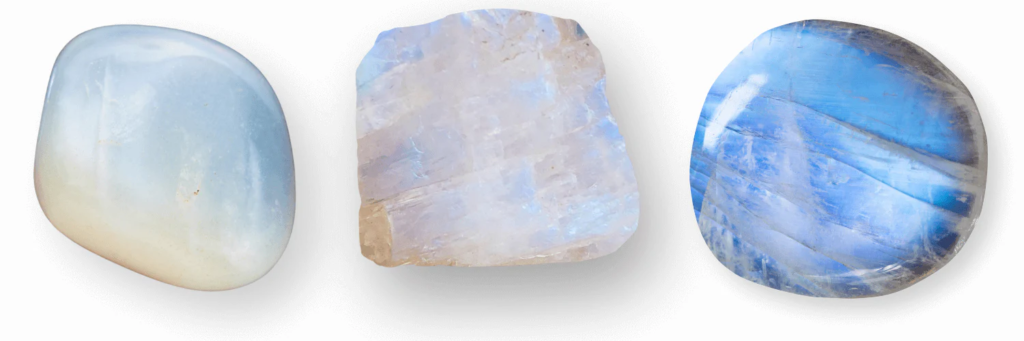
Mineralogical Composition and The Physics of Light
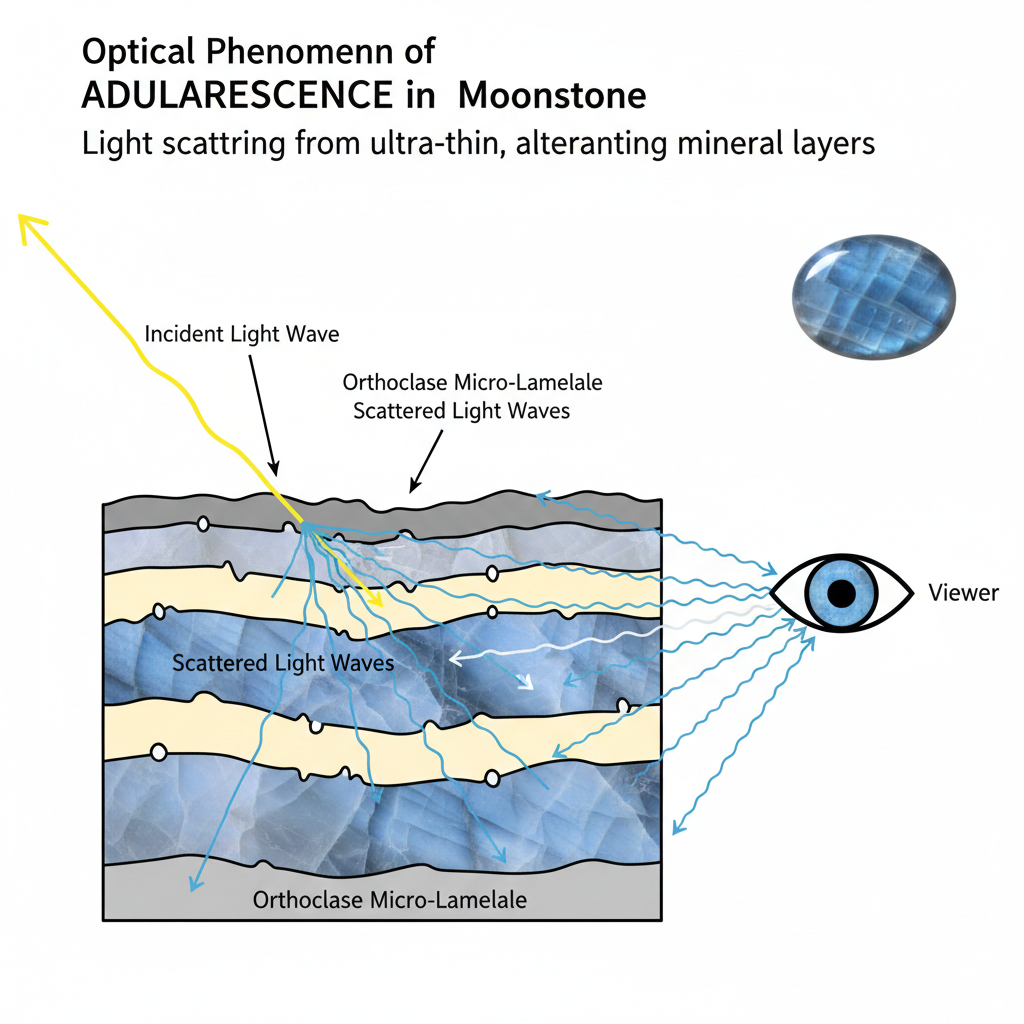
From a mineralogical perspective, moonstone is primarily a variety of orthoclase feldspar containing microscopic alternating layers of albite. This layered structure is the result of exsolution—a process where two minerals intermix at high temperatures but separate into distinct, alternating lamellae as the magma cools.
The physics of the glow is a matter of light interference and scattering:
- Rayleigh Scattering: When light enters the stone, it hits these microscopic layers.
- Layer Thickness: The thickness of these internal lamellae dictates the color of the adularescence. Extremely thin layers produce the coveted vivid blue sheen, whereas thicker layers result in a silvery or white “adularia” effect.
Gemological Properties of Moonstone
In gemological terms, moonstone is classified as a feldspar gemstone with moderate durability, making it suitable for jewelry when properly set and handled with care. It has a Mohs hardness of approximately 6 to 6.5, which allows it to resist minor scratches but also means it is more vulnerable than harder gemstones such as sapphire or diamond. As a result, moonstone is better suited for earrings, pendants, and necklaces, or for rings designed with protective settings.Moonstone typically exhibits a refractive index ranging from about 1.518 to 1.526 and a specific gravity averaging between 2.56 and 2.59, values that are consistent with orthoclase–albite feldspar compositions. Its optical character contributes to a vitreous to pearly luster, which enhances the gemstone’s soft, luminous appearance rather than sharp brilliance. One of the most important structural characteristics of moonstone is its perfect cleavage, a feature common to feldspars, which makes the stone susceptible to chipping or cracking if subjected to sudden impact.
Because of these properties, moonstone requires thoughtful cutting, setting, and long-term care. Cabochon cuts are most commonly used, as they best display adularescence while minimizing stress on cleavage planes. In jewelry design, moonstone is often set in bezels or other protective mountings to reduce the risk of damage, especially in rings and bracelets that experience frequent wear.
Colors and Varieties of Moonstone
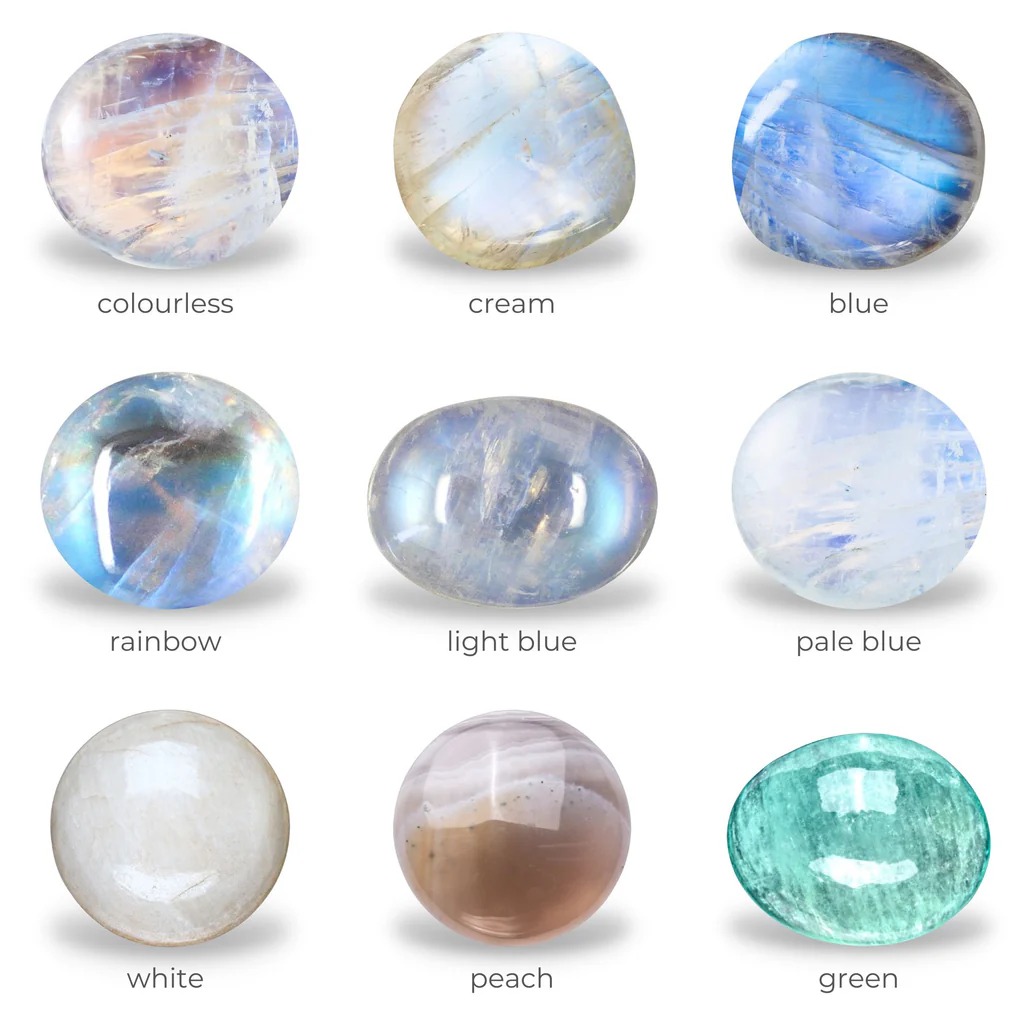
Moonstone occurs in a variety of body colors, including colorless, white, gray, peach, brown, and green. Among these, near-colorless stones displaying vivid blue adularescence are considered the most valuable in the gem market. Transparency also plays a significant role in value assessment; stones that are transparent to semi-transparent with a strong, centered glow are generally more desirable than cloudy or dull material.
Formation and Geological Occurrence
Geologically, moonstone forms in feldspar-rich igneous environments where molten rock cools slowly enough to allow mineral phases to separate through a process known as exsolution. During this cooling stage, an originally homogeneous feldspar crystal gradually divides into intergrown layers of orthoclase and albite. These microscopic lamellae later become responsible for the optical phenomenon of adularescence, as light interacts with the alternating mineral structures inside the stone.
Moonstone is most commonly associated with granitic pegmatites and other feldspar-dominant igneous rocks, where large crystal growth is possible due to extended cooling periods. The quality of the internal layering—particularly the thickness, regularity, and orientation of the albite lamellae—plays a major role in determining the strength and color of the sheen observed in finished gems. Stones formed under stable geological conditions with very fine, uniform layers are more likely to display the desirable blue adularescence prized in the jewelry trade.Important commercial sources of moonstone include Sri Lanka, India, Madagascar, Myanmar, Australia, and parts of the United States. Sri Lanka has long been regarded as one of the most significant producers of high-quality moonstone, especially material showing strong blue sheen combined with good transparency. India is also a major supplier, often producing a wider range of body colors such as peach, gray, and brown varieties commonly used in decorative and designer jewelry. Madagascar has become an increasingly important modern source, contributing both orthoclase moonstone and related feldspar gems to the global market.
Historically, fine blue-sheen moonstone from Myanmar was highly valued, though such material is now less commonly encountered. Smaller deposits in regions such as Norway and the United States contribute limited quantities, often sought by collectors rather than mass-market jewelry production. Overall, the geographic origin of moonstone can influence not only color and transparency but also the intensity and character of its adularescent effect, making provenance an additional consideration in gem evaluation.

Internal Characteristics and Identification
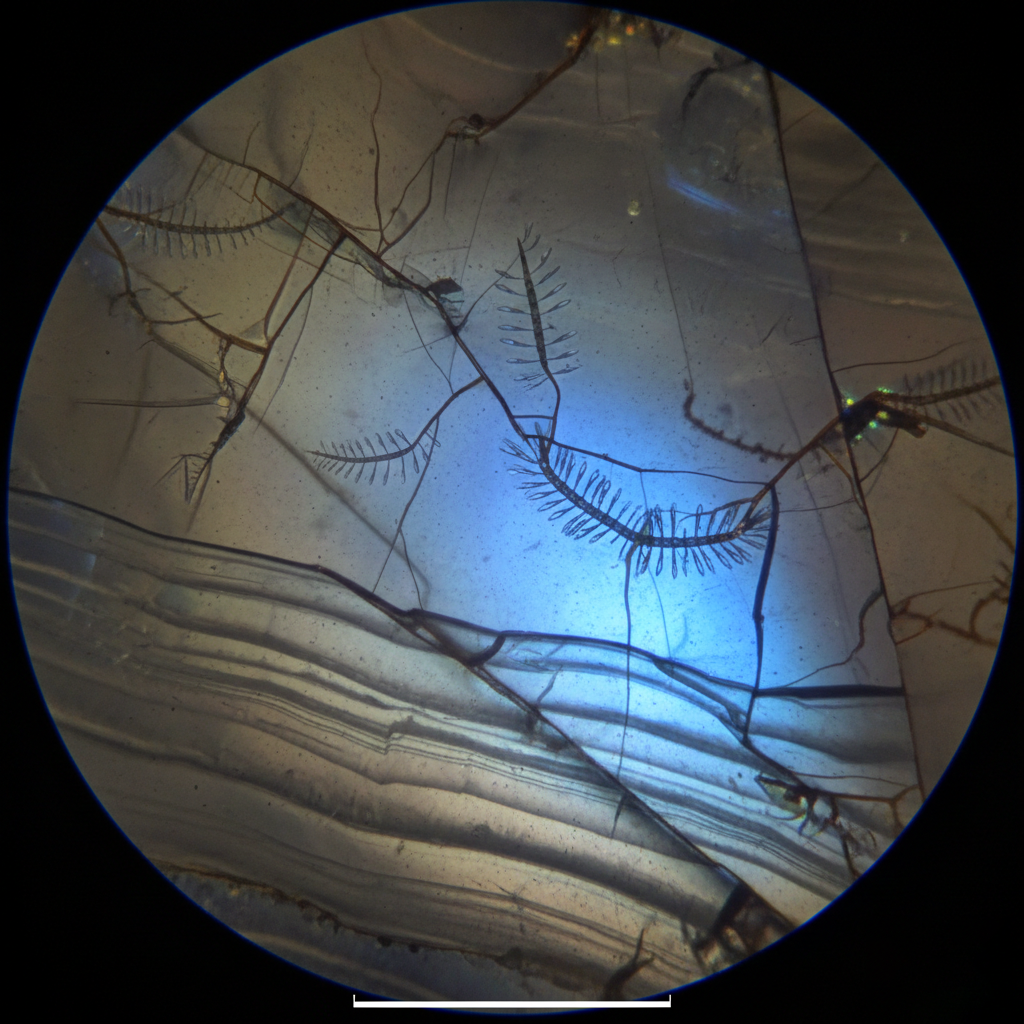
Under a jeweler’s loupe or microscope, moonstone reveals its “birthmarks.” The most diagnostic feature is the “centipede” inclusion—small, stress-induced fissures that resemble many-legged insects.
Distinguishing natural moonstone from imitations is crucial:
- Opalite (Glass): Often shows bubbles and lacks the “directional” movement of true adularescence.
- Synthetic/Coated Stones: Often show a surface-only flash that doesn’t “roll” within the stone.
Professional Care and Maintenance
Moonstone is sensitive to environmental stressors. Its vulnerability to heat and chemicals means it should never be cleaned in an ultrasonic or steam cleaner, as the vibrations can trigger cleavage fractures.
For details, please refer to our Gemstone Care Guide.
Today, moonstone remains an important gemstone in both fine jewelry and designer collections. As one of the recognized birthstones for June, it holds lasting appeal for consumers seeking meaningful and symbolic jewelry. Its unique optical behavior, relatively accessible price range, and long cultural history—from ancient Roman and Indian traditions to modern contemporary design—continue to make moonstone one of the most recognizable and commercially significant feldspar gemstones in the global market.