
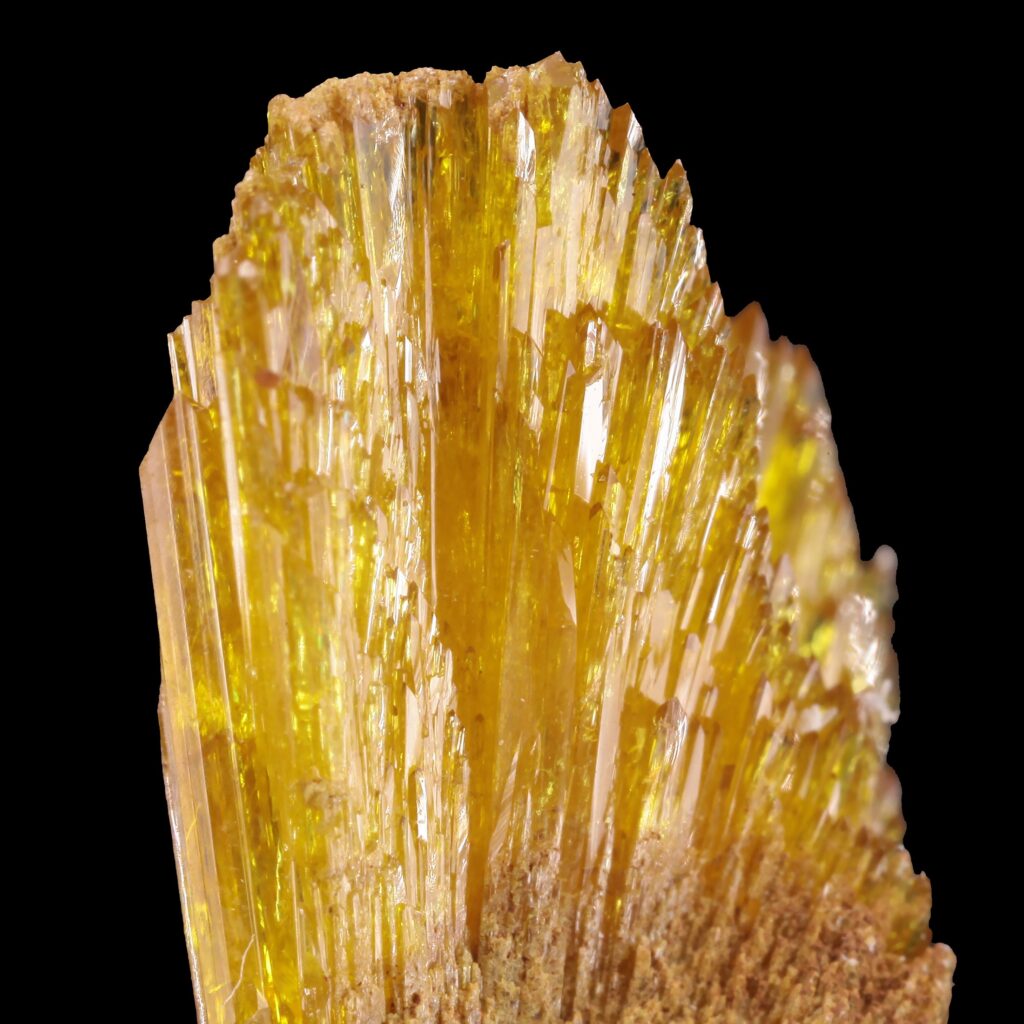
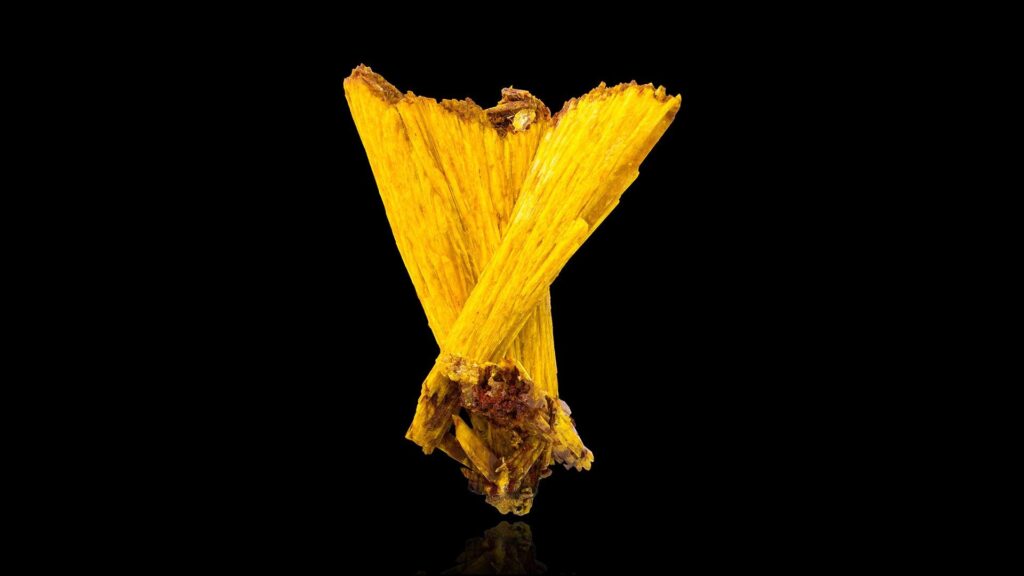
Legrandite is a rare secondary mineral composed of hydrated zinc arsenate, distinguished primarily by its vibrant and intense yellow coloration. Often referred to in the mineralogical community as “canary” or “lemon” yellow, its striking appearance sets it apart from other zinc-based species. Legrandite belongs to the monoclinic crystal system and typically develops as transparent to translucent prismatic crystals. These crystals are frequently found in aesthetically pleasing arrangements, such as radiating sprays, fan-like structures, or “sunburst” aggregates. Although it is relatively soft—measuring between 4 and 5 on the Mohs scale of mineral hardness—its unique crystal habit and vivid saturation make it a priority for both scientific documentation and high-level mineralogical preservation.
Formation and History of Legrandite
Legrandite is not merely a mineral; it is a geological anomaly. It is classified as a secondary mineral, meaning it does not crystallize during the initial formation of an ore body. Instead, it emerges much later within the oxidation zones of arsenic-rich zinc deposits. This process begins when primary sulfide minerals are exposed to the relentless chemical action of oxygenated groundwater near the Earth’s surface.The birth of Legrandite requires a remarkably narrow “geochemical window.” It demands a high concentration of dissolved arsenic and zinc, but it is highly sensitive to its surroundings. Specifically, the environment must be low in carbonate; if the surrounding limestone or carbon-rich fluids dominate the site, nature will produce more common minerals like Smithsonite or Adamite instead. This finicky chemical temperament is the primary reason why Legrandite is found in only a handful of locations worldwide, making it a true rarity of the natural world.
The historical record of Legrandite began in 1932 at the Flor de Peña Mine in Nuevo León, Mexico. It was named as a tribute to Louis Charles Antoine Legrand, a Belgian mining engineer whose keen eye first identified the unique specimens. For the first few decades following its discovery, Legrandite was little more than a footnote in mineralogy—a rare, microscopic curiosity that few had ever seen.This obscurity ended in the mid-20th century with the opening of deeper pockets in the legendary Ojuela Mine in Mapimí, Durango. This locality transformed Legrandite’s reputation from a rare mineral to a world-class treasure. The most defining moment in its history occurred in the 1970s with the discovery of the “Aztec Sun,” a breathtaking specimen featuring a perfect radiating spray of vivid yellow crystals. This single find cemented Mexico’s status as the premier source of the species. While secondary occurrences have since been mapped in Tsumeb (Namibia), Lavrion (Greece), and parts of the United States, these locales generally produce smaller, less vibrant crystals that pale in comparison to the iconic, high-luster “canary” sprays found in the Mexican deposits.
Where is Legrandite Found?
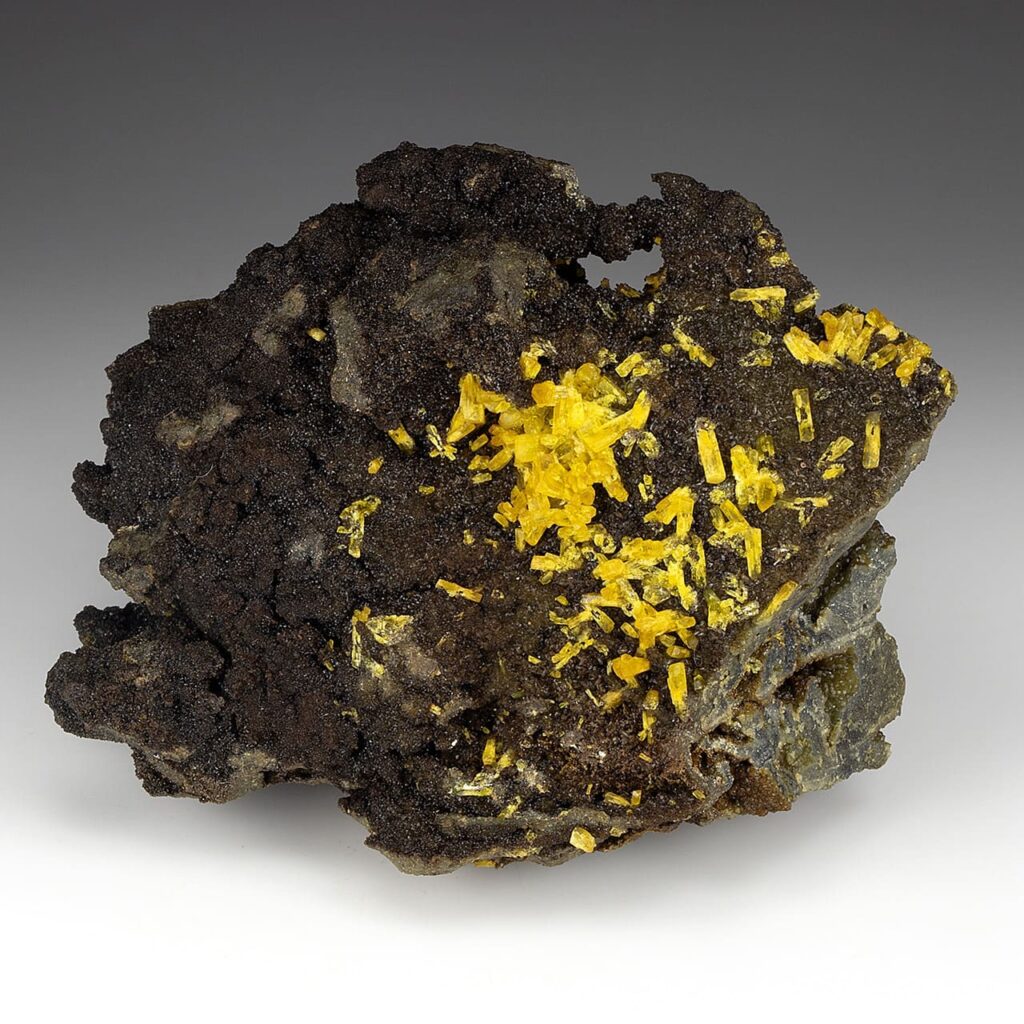
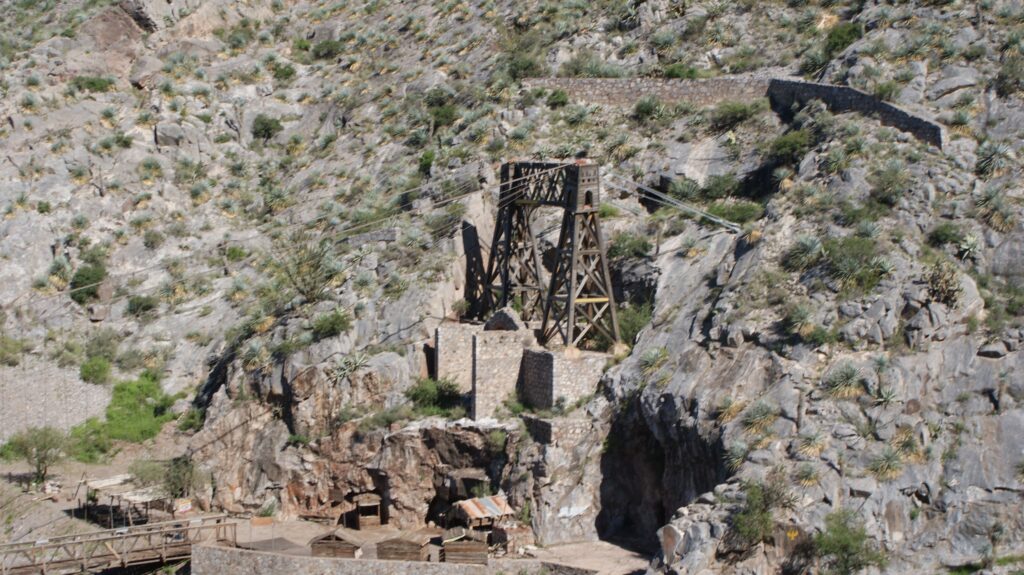
The undisputed world capital for Legrandite is the Ojuela Mine in Mapimí, Durango, Mexico. This historic locality is responsible for nearly every world-class, museum-quality specimen in existence today. What truly sets Mexican Legrandite apart is its signature “canary yellow” hue and its iconic “sunburst” crystal habit, where prismatic crystals radiate outward in breathtaking fan-like sprays. These vibrant crystals are almost always found perched upon a dark brown Limonite matrix, a natural pairing that provides a stunning visual contrast and serves as the definitive hallmark of a premium Mexican specimen. The mine’s legendary status was forever cemented in the 1970s with the discovery of the “Aztec Sun,” a specimen so perfect it remains the gold standard for the species.
Other Notable Global Occurrences
While Mexico dominates the market, Legrandite has been documented in a handful of other locations, though these finds are generally much smaller and far rarer. In the “mineralogical wonderland” of the Tsumeb Mine in Namibia, Legrandite has been recovered, but it remains an extreme rarity; specimens from this site usually consist of tiny, isolated crystals rather than the grand sprays found in Durango.Similarly, the ancient silver mines of the Lavrion District in Greece—specifically the Kamariza area—have yielded Legrandite in the form of microscopic, needle-like crystals that are highly prized by “micromount” collectors. In the United States, the famous zinc deposits of Sterling Hill and Franklin, New Jersey, have produced traces of the mineral, though they often lack the transparency and intense saturation of their Mexican counterparts. Finally, small occurrences have been noted in the phosphate-rich environments of Minas Gerais, Brazil, contributing valuable data to our scientific understanding of this elusive mineral’s global range.
Is Legrandite a Gemstone? Jewelry Potential and Practical Applications
Legrandite is not a traditional gemstone used in the commercial jewelry industry, despite its vivid color and occasional transparency. On the Mohs scale of mineral hardness, it ranks between 4 and 5, which means it is significantly softer than common jewelry stones like quartz or sapphire. Furthermore, its distinct cleavage makes it prone to splitting or shattering upon impact. Because of these physical vulnerabilities, legrandite cannot withstand the friction of daily wear or the heat involved in jewelry settings. While a master lapidary may occasionally facet a legrandite for a specialized collector, such stones are intended for display in protected cases rather than for use in rings or pendants.
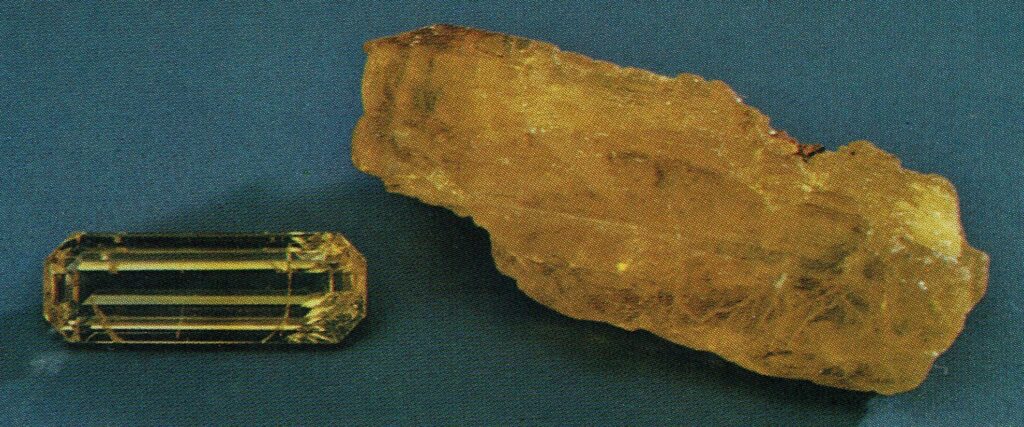
In terms of practical applications, legrandite has no industrial or commercial use due to its extreme rarity. It is far too scarce to be mined as a source of zinc or arsenic. Instead, its primary value is found within the realms of mineralogy and high-end collecting. Scientists study the mineral to understand the specific oxidation processes of arsenic-rich ore deposits, while museums and private collectors view it as a premier aesthetic specimen. For enthusiasts, the application of legrandite is purely as a natural masterpiece, with high-quality sunburst sprays serving as significant investments and centerpieces for geological education.