
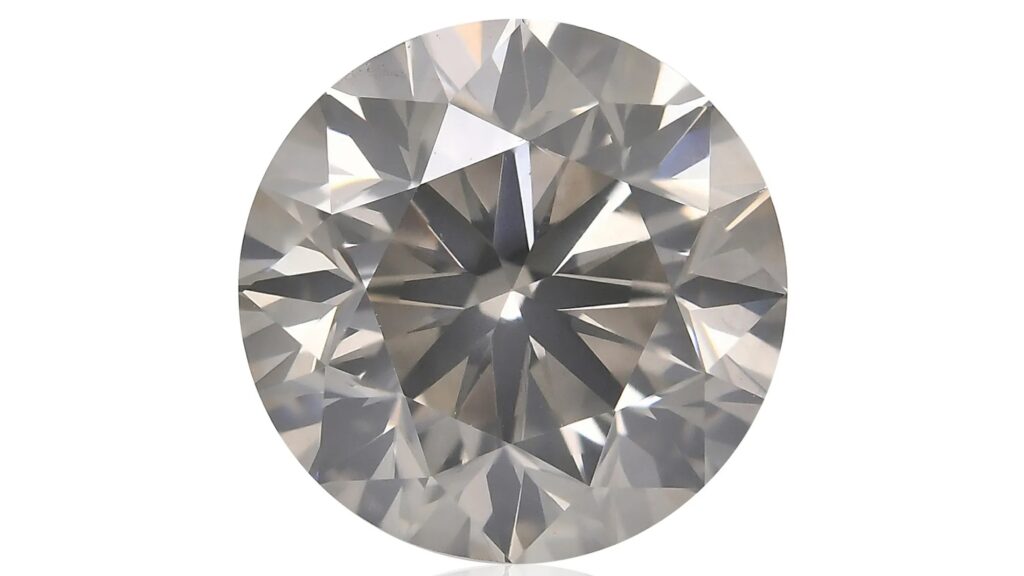
A gray diamond is a rare category of natural fancy color diamond characterized by its distinct smoky, metallic, or silvery appearance. Unlike colorless diamonds, which are prized for the absence of color, gray diamonds owe their unique aesthetic to the presence of high concentrations of hydrogen or, more rarely, boron within the carbon lattice during their formation deep within the Earth. In the gemstone industry, these stones are scientifically classified as Fancy Gray diamonds and are evaluated based on their tone and saturation. Their color palette is remarkably broad, ranging from the pale, ethereal shimmer of a “Silver” diamond to the dark, moody intensity of “Charcoal” or “Steel” hues. While they are often found with secondary modifying tints—such as blue, green, or violet—pure gray diamonds are exceptionally rare and valued for their sophisticated, neutral brilliance that offers a modern alternative to traditional white stones.
How gray diamonds get their color
Related Reading: What are natural diamonds?—Understand the basics of diamond formation.
The creation of a gray diamond is a remarkable geological event that takes place over billions of years deep beneath the Earth’s surface. At its core, a diamond is made of carbon atoms, but gray diamonds get their unique smoky look because of specific “impurities” that enter the mix while the crystal is forming. The most common cause for this gray hue is the presence of hydrogen. When high levels of hydrogen are trapped inside the diamond’s structure, they change how the stone absorbs light, reflecting back those cool, metallic tones we see as silver or charcoal.
In some rarer cases, boron can also play a role. While boron is famous for making diamonds blue, if the concentration is just right or if there are other structural shifts in the crystal, the stone can end up looking gray instead. It is important to distinguish these from salt and pepper diamonds; while salt and pepper stones look gray because they are filled with tiny black and white spots of carbon, a true fancy gray diamond gets its color from these microscopic atomic elements. This results in a stone that has a smooth, consistent color throughout its body rather than a speckled appearance.
Beyond these atomic-level interactions, a third natural process involves the presence of micro-inclusions scattered throughout the crystal. Some gray diamonds do not derive their color from chemical elements like hydrogen or boron, but rather from millions of tiny particles trapped inside the stone during a period of rapid growth. These are often referred to as cloud-like inclusions, which are so small and dense that they diffuse light, creating a misty or smoky gray aesthetic. In many cases, these clouds are made of graphite—a form of carbon that failed to fully convert into diamond—or high concentrations of nitrogen. Because these individual particles are often only a few micrometers in size, they can tint the entire stone a uniform gray while technically being classified as internal features rather than a chemical change in the diamond’s lattice.
The difference between hydrogen and boron gray diamonds
While both hydrogen and boron can turn a diamond gray, they create very different visual results that experts can often distinguish at a glance. Hydrogen-induced gray diamonds are the most common and are known for having a slightly “oily” or smoky appearance. These stones often lean toward a warm or neutral gray, sometimes showing subtle hints of violet or olive when held under certain lights. Because hydrogen is very common in the Earth’s mantle, these diamonds usually have a dense, steely look that feels solid and metallic.
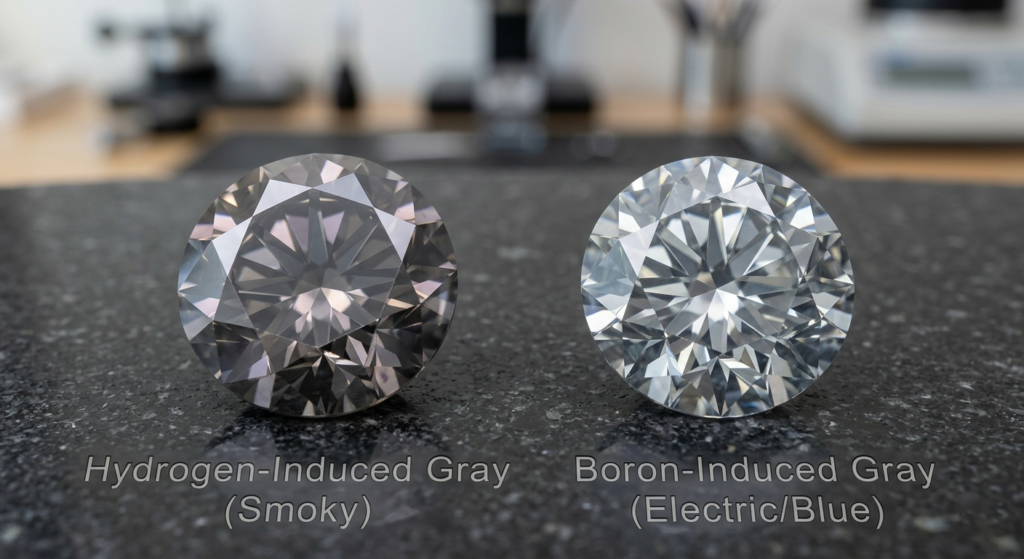
On the other hand, boron-induced gray diamonds are much rarer and typically belong to the same family as famous blue diamonds. These stones often have a much cooler, “electric” undertone. Instead of a smoky look, they tend to display a bluish-gray or even a silver-gray tint that feels lighter and more airy. Another major technical difference is that boron-affected diamonds can often conduct electricity, a physical property that hydrogen-gray diamonds do not have. Essentially, hydrogen creates a deep, cloudy charcoal effect, while boron results in a clearer, cooler metallic silver.
Where gray diamonds are found
Natural gray diamonds are sourced from several key diamond-producing regions around the world, though they are rarely found in large concentrations in any single location. Historically, the most significant source for high-quality gray diamonds was the Argyle Mine in Western Australia. While primarily famous for its rare pink diamonds, the Argyle Mine also produced a consistent supply of hydrogen-rich gray and silver-toned stones until its closure in 2020. Since then, the global market has looked toward other major deposits to fill the void.
Today, Russia is one of the primary producers of gray diamonds, particularly from the Siberian region. These Russian deposits are often noted for producing stones with a distinct metallic or steely luster. Other consistent sources include South Africa, Botswana, and Brazil. The gray diamonds recovered from African mines frequently yield larger specimens that may carry subtle secondary overtones of blue or green. Despite being found in these various locations, gem-quality gray diamonds remain a very small percentage of the total diamond output from these mines, as many gray-tinted stones are typically reserved for industrial use rather than fine jewelry.
The rarity of natural gray diamonds
In the global diamond market, natural fancy gray diamonds occupy a specialized niche between common colorless stones and the ultra-rare vivid colors like pink or blue. While gray is a relatively frequent secondary tint found in many diamonds, a true “Fancy Gray” diamond—one where gray is the dominant and uniform body color—is statistically rare. Only a very small percentage of all diamonds mined annually possess the specific geological conditions and trace element concentrations required to be classified by gemological laboratories as high-quality gray specimens.
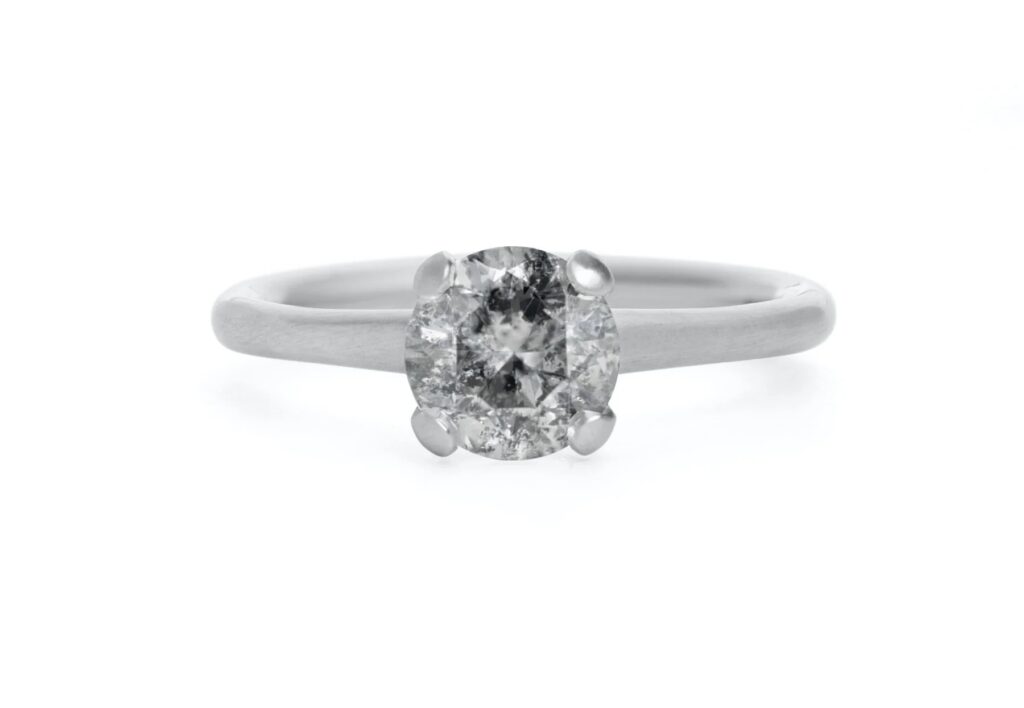
The use of gray diamonds spans across two distinct worlds, ranging from high-end luxury jewelry to essential industrial technology. In the world of fine jewelry, gray diamonds have seen a surge in popularity as a sophisticated alternative to traditional colorless stones. Because of their neutral, metallic tones, they are frequently used in modern engagement rings and high-fashion pieces. Designers often pair them with rose gold to create a warm contrast or with platinum to enhance their sleek, monochromatic look. Beyond their aesthetic appeal, gray diamonds are valued by collectors for their unique “intellectual” beauty, offering a rare and understated elegance that stands out in a market dominated by classic white diamonds.While gem-quality gray diamonds are reserved for jewelry, a much larger volume of gray-tinted diamonds is utilized for industrial applications. These stones, often referred to as industrial-grade or “bort,” are prized for their extreme physical hardness rather than their visual clarity. Because they are the hardest natural substance known, gray industrial diamonds are indispensable in the manufacturing and construction sectors. They are embedded into specialized tools for precision cutting, grinding, and drilling, and are essential for machining high-strength materials in the aerospace and automotive industries. This duality makes the gray diamond a unique mineral that serves both as a symbol of modern luxury and as a critical component in global technological advancement.
The scarcity of these stones is further defined by their clarity and brilliance. Many industrial-grade diamonds appear gray due to heavy internal inclusions or “clouds,” but gem-quality gray diamonds that maintain high transparency and light performance are far less common. Because they are not produced in large commercial volumes like white diamonds, finding a specific cut or a matching pair of gray diamonds can be a selective process. This limited supply, combined with their unique atomic origin, positions them as a distinct and uncommon choice within the natural fancy color diamond family.