
Friedelite is a relatively rare manganese silicate mineral belonging to the humite group. It is best known for its deep pink to reddish coloration and its close association with manganese-rich metamorphic environments. Although occasionally encountered in gem collections, friedelite is primarily valued for its mineralogical importance rather than widespread commercial use.
Note:Historically associated with the humite group, but currently the namesake of the Friedelite group.
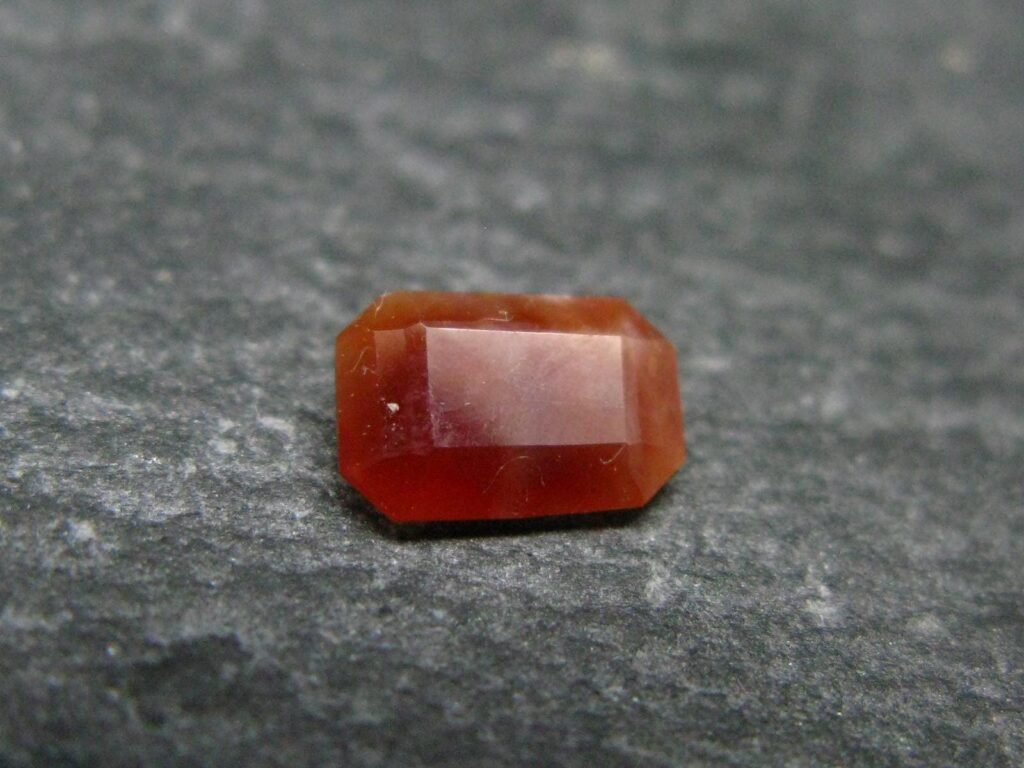
The mineral was first described in 1876 and named in honor of Charles Friedel, a French chemist and mineralogist known for his contributions to crystallography and organic chemistry. Since its discovery, friedelite has remained a mineral of interest mainly to researchers, collectors, and those studying manganese-bearing geological systems.

Chemical Composition and Mineral Classification
Chemically, friedelite is a hydrated manganese silicate with the idealized formula Mn₈Si₆O₁₅(OH)₁₀. In natural specimens, manganese is commonly partially substituted by iron, magnesium, or zinc. These substitutions lead to slight variations in chemical composition and can influence color intensity and texture, though they do not significantly change the mineral’s fundamental structure.
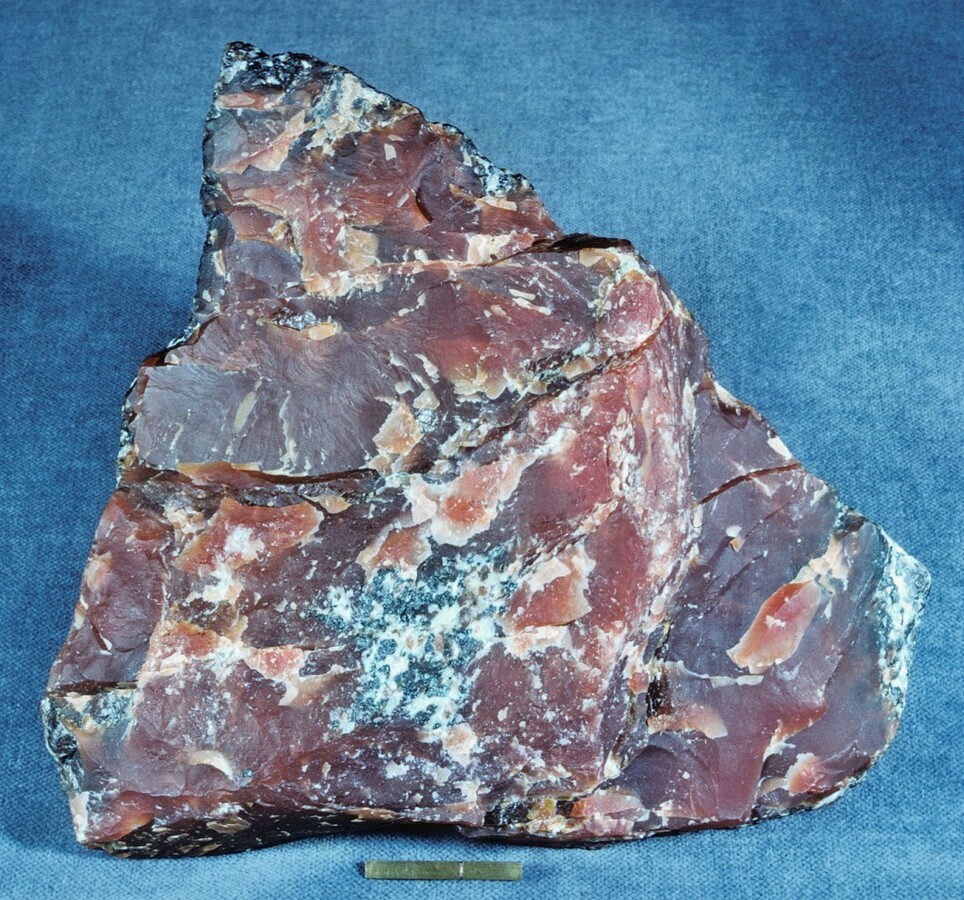
Friedelite is a member of the humite group, a family of nesosilicate minerals characterized by alternating layers of silicate tetrahedra and hydroxyl-bearing octahedral sheets. Other minerals in this group include humite, clinohumite, and norbergite. What distinguishes friedelite within this group is its unusually high manganese content, which plays a key role in both its coloration and geological occurrence.
Crystal Structure and Physical Properties
Friedelite crystallizes in the trigonal crystal system, although well-formed individual crystals are relatively uncommon. Most specimens occur as granular masses, fibrous or lamellar aggregates, or compact crusts intergrown with other manganese-rich minerals. The layered nature of its crystal structure often gives friedelite a foliated or slightly micaceous appearance, particularly in fibrous varieties.
The most distinctive feature of friedelite is its color, which typically ranges from deep rose pink to reddish pink and brownish red, with occasional orange-red tones. This coloration is primarily caused by manganese ions within the crystal lattice. Friedelite is generally translucent to opaque, and its luster varies from vitreous to silky, especially on fibrous surfaces.
On the Mohs scale, friedelite has a hardness of approximately 4.5 to 5, placing it among moderately soft minerals. Its specific gravity typically ranges from about 3.1 to 3.3. These physical properties make friedelite unsuitable for most jewelry applications, particularly where durability is required.
Geological Formation and Environment
Metamorphic Origin
Friedelite forms predominantly in manganese-rich metamorphic environments, particularly where sedimentary manganese deposits have undergone regional or contact metamorphism. Its formation typically requires medium to high temperatures, silica-rich fluids, and the presence of hydroxyl-bearing components. Under these conditions, friedelite develops as part of complex mineral assemblages within metamorphosed manganese ores.
Associated Minerals
Friedelite commonly occurs alongside other manganese silicates and oxides, including rhodonite, pyroxmangite, spessartine garnet, hausmannite, tephroite, and quartz. These associations make friedelite a useful indicator mineral for interpreting the paragenesis and metamorphic history of manganese deposits.
Occurrence and Global Distribution
Major Localities
Friedelite is considered geologically uncommon, with well-documented occurrences restricted to specific regions. Notable localities include France, which produced classic type locality specimens, as well as Sweden and Italy in manganese-rich metamorphic zones. Additional occurrences have been reported in the United States, particularly in New Jersey and parts of the western states, and in Japan within complex manganese ore bodies.
The most significant and world-renowned localities are the Franklin and Sterling Hill mines in New Jersey. These sites are globally recognized for producing the highest quality specimens, including rare, transparent material with the greatest gem-quality potential. Friedelite from these locations often exhibits exceptional color saturation and is highly sought after by collectors of Franklin’s unique mineral suite.
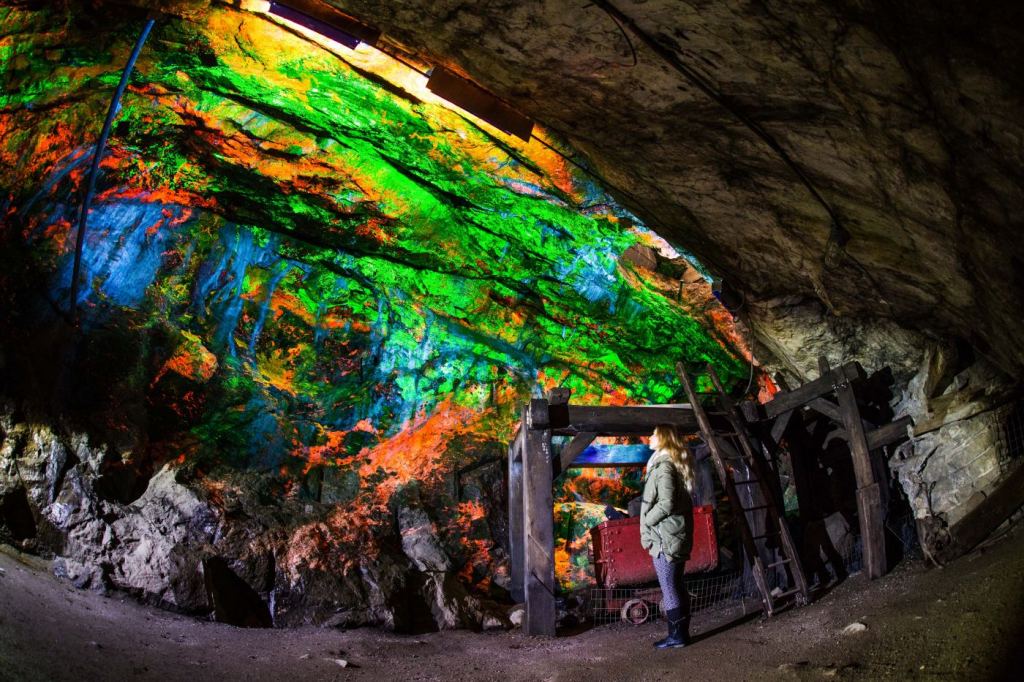
Specimens from different regions may vary in color saturation, texture, and associated mineral assemblages, reflecting local geological conditions.
Friedelite in Mineral Collecting
Although friedelite is not widely used as a gemstone, it holds significance among systematic mineral collectors and institutional collections. Specimens displaying intense coloration, well-developed fibrous textures, or clear associations with other manganese minerals are especially valued for educational and research purposes.
Due to its moderate hardness and tendency to fracture, friedelite is rarely faceted. When cut, it is typically shaped into cabochons or polished sections intended for display rather than commercial jewelry.
Distinguishing Friedelite from Similar Minerals
Friedelite can be confused with other pink or red manganese minerals, particularly rhodonite, rhodocrosite, and pyroxmangite. Rhodonite is generally harder and often displays black manganese oxide veining, while rhodocrosite is a carbonate mineral with distinct cleavage and lighter pink tones. Pyroxmangite has a similar chemical composition but differs in crystal structure and cleavage behavior.
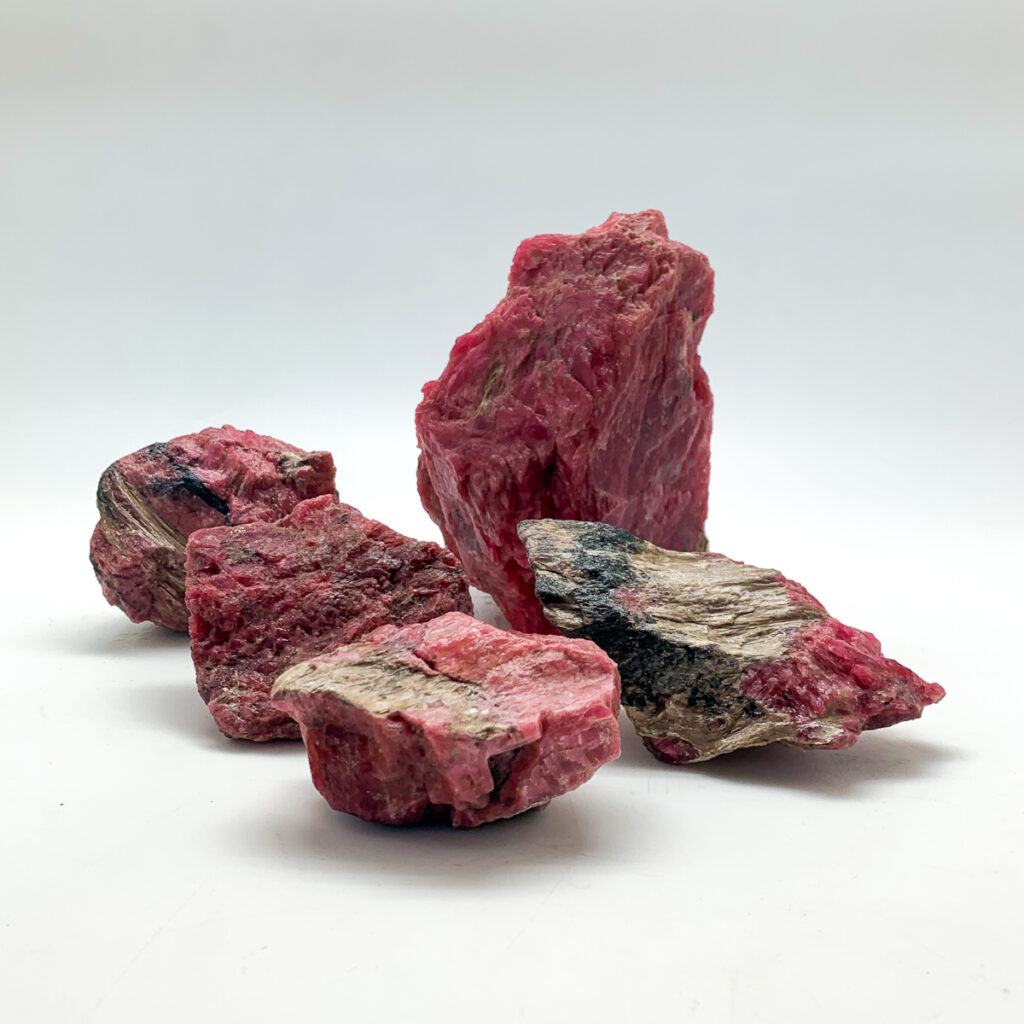
Accurate identification of friedelite usually requires analytical methods such as X-ray diffraction or electron microprobe analysis, especially when it occurs within complex mineral assemblages.
Is Friedelite Rare?
While friedelite is not among the rarest minerals known, it is considered geologically uncommon. Its formation requires a specific combination of high manganese concentration, silica availability, and suitable metamorphic conditions, which limits its global distribution. As a result, high-quality specimens are relatively scarce and more commonly found in museum or academic collections than on the open mineral market.
Chemical Identification Tip: > A traditional and effective mineralogical test for distinguishing Friedelite from other silicates is its reaction to acids. Unlike many similar-looking minerals, Friedelite gelatinizes in hydrochloric acid (HCl). This characteristic “gel test” is a classic chemical method used to identify certain layered silicate minerals and can help confirm a specimen’s identity when visual inspection is insufficient.