
Bustamite is a rare manganese silicate mineral known for its attractive pink to reddish coloration and complex crystal chemistry. Although it is not widely used in mainstream jewelry, bustamite holds strong appeal among mineral collectors and gem enthusiasts due to its vibrant color, geological rarity, and association with famous mineral localities around the world.
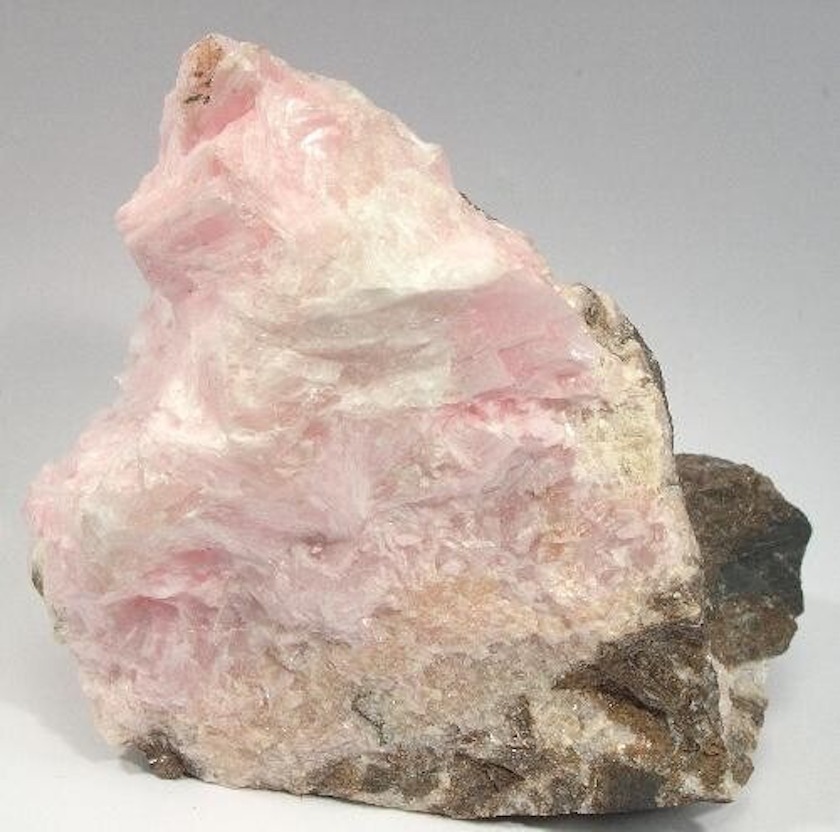
What Is Bustamite?
A rare and captivating manganese inosilicate, Bustamite is defined by the chemical formula (Mn,Ca)₃Si₃O₉ and belongs to the pyroxenoid group of chain silicates—a structural family closely related to pyroxenes but distinguished by its unique atomic arrangements. Formally described in 1822 and named in honor of former Mexican President Anastasio Bustamante, this mineral was first identified in Mexico but has since been discovered in various manganese-rich metamorphic environments worldwide. Mineralogically, it is a near-twin to rhodonite; their similarities in composition and triclinic crystal structure often make them indistinguishable without rigorous laboratory testing. Unlike common gemstones like quartz which consist primarily of silicon dioxide, Bustamite’s identity is forged by its substantial manganese content, which acts as a natural pigment to produce a stunning spectrum of soft pinks, rose-reds, and occasionally deep orange-brown tones. It typically forms in metamorphosed manganese deposits where limestone or other calcium-rich rocks undergo contact metamorphism, allowing calcium and manganese to bond with silicate chains over vast geological timescales. While well-formed crystals are a rarity, it is frequently found in massive, granular, or fibrous aggregates. Though its moderate hardness and distinct cleavage limit its presence in mainstream jewelry, the mineral remains highly prized among collectors and lapidary enthusiasts for its aesthetic warmth and geological rarity.
Is Bustamite Used in Jewelry?
Pale pink and brownish red bustamites can make very attractive faceted gems. However, stones in large sizes are rare and difficult to cut.
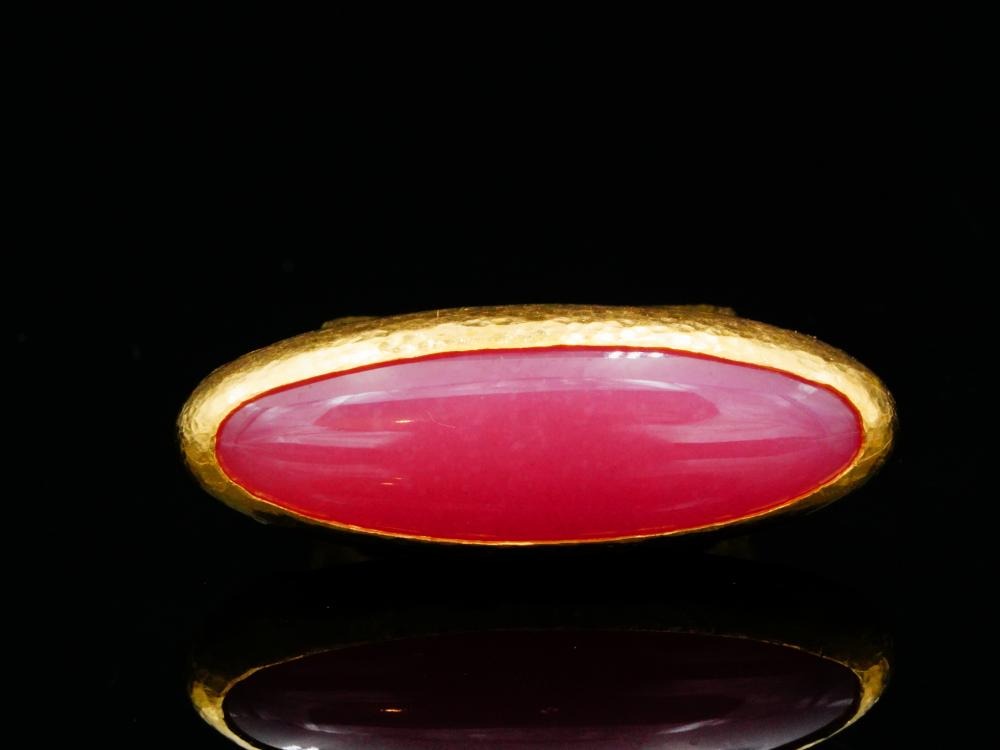
Ultimately, bustamite is a mineral far better suited for the curated displays of a gem collection than the rigors of a jewelry setting. With a moderate hardness ranging from 5.5 to 6.5 on the Mohs scale and the presence of both perfect and good cleavage planes in two directions, the stone remains highly susceptible to surface scratches and structural fracturing. These same cleavage properties pose a formidable challenge to lapidaries, as the material tends to split during the grinding process; consequently, one will seldom encounter faceted bustamite on the open market, as its delicate nature demands the protection of a collector’s case rather than the exposure of daily wear.
Bustamite vs. Rhodonite: What’s the Difference?
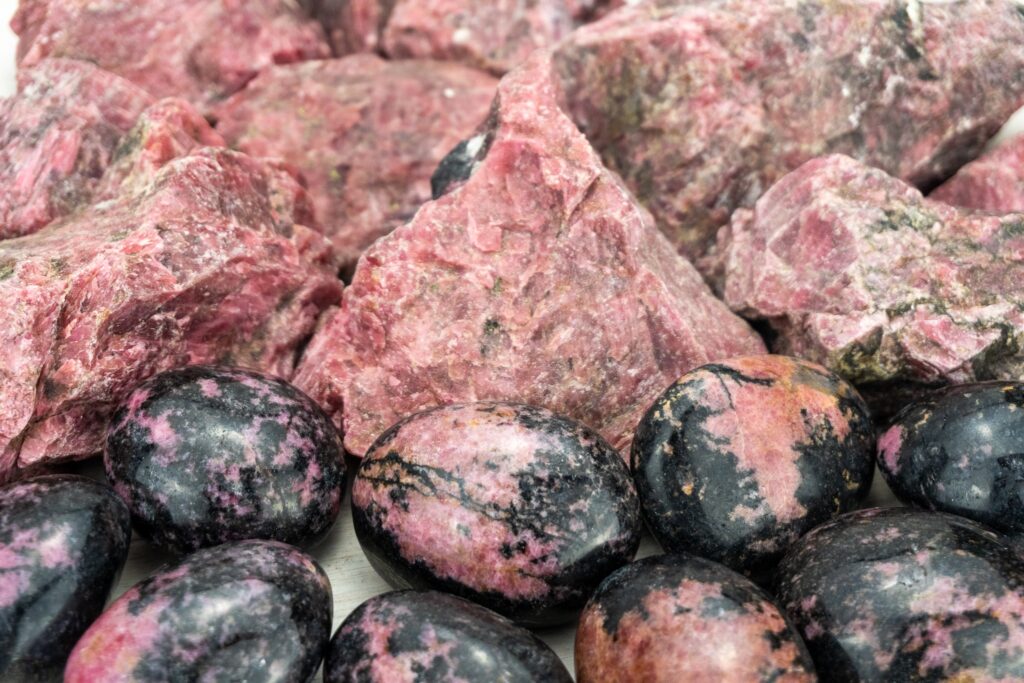
Bustamite and rhodonite are gemological twins that share a striking physical resemblance and frequently coexist within the same mineral deposits, a similarity so profound that the material originally identified as bustamite in 1826 was later revealed to be merely a mixture of rhodonite and johannsenite. Due to their challenging cleavage and moderate hardness, both minerals are notoriously difficult to facet, making them rare encounters for gemologists—though rhodonite is more frequently seen in cut form. To definitively separate these two species, practitioners rely on three primary diagnostic tests: first, a refractive index reading will show that bustamite possesses a lower range (1.662 to 1.707) compared to rhodonite’s higher values (1.711 to 1.752); second, their optical signatures differ, as bustamite is biaxial negative while rhodonite is biaxial positive; and third, bustamite exhibits a lower specific gravity (3.32 to 3.43) than the denser rhodonite (3.57 to 3.76). While not a definitive test, bustamite is also generally characterized by its paler, more delicate pink tones compared to the often bolder saturation of its counterpart.
Where Is Bustamite Found?
Bustamite forms in manganese-rich metamorphic deposits, especially in contact metamorphic zones and skarn environments. Because it requires specific geochemical conditions rich in manganese and calcium, its occurrences are relatively limited compared to more common silicate minerals.
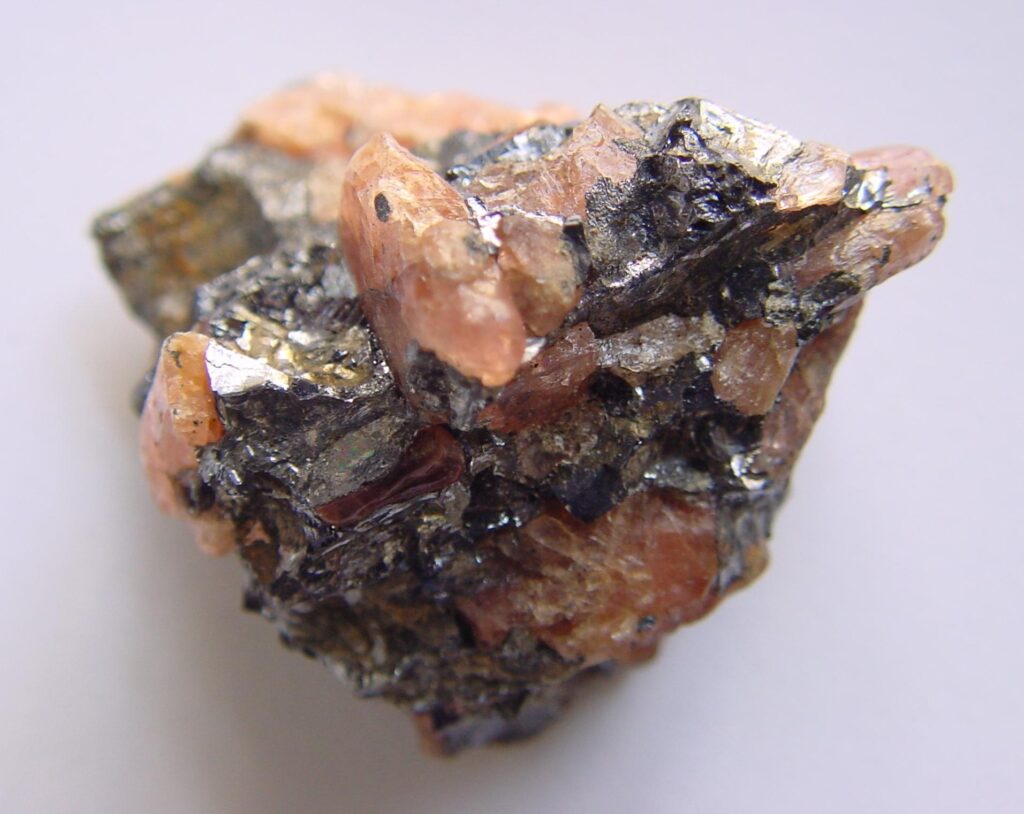
Below are the most important bustamite-producing localities worldwide:
United States
Franklin Mining District
This historic mining area is one of the most famous manganese mineral localities in the world. Bustamite from Franklin is typically massive to granular and often associated with rhodonite, willemite, and other manganese minerals.
Sterling Hill Mining Museum
Located near Franklin, this site also produced bustamite as part of its complex manganese ore deposits.
Mexico
Bustamite was first described from Mexico and named after Anastasio Bustamante. Mexican deposits remain historically significant, although most specimens available today come from other countries.
Namibia
Tsumeb Mine
One of the world’s most famous mineral localities, Tsumeb produced high-quality bustamite crystals. These specimens are especially valued by collectors due to their well-formed crystal structure and vibrant coloration.
Japan
Japan has produced fine pink bustamite crystals from metamorphosed manganese deposits. Japanese specimens are often well-crystallized and collectible.
South Africa
Manganese mining regions in South Africa have also yielded bustamite, typically in massive or granular form rather than large transparent crystals.
The rarity of bustamite stems from its stringent chemical proportions and fragile physical structure. While it is ill-suited as a durable center stone for an engagement ring, it remains an exceptional treasure for advanced collectors who pursue unique, vibrant coloration and geological depth.