
Hercynite is an iron-aluminum oxide mineral belonging to the spinel supergroup, represented by the chemical formula FeAl₂O₄. As the iron-rich end member of the aluminum spinel series, it develops primarily in aluminum-rich, silica-deficient geological settings—most notably in metamorphic rocks subjected to extreme temperatures. During high-grade metamorphism, reactions between iron-bearing and aluminous phases trigger its crystallization.
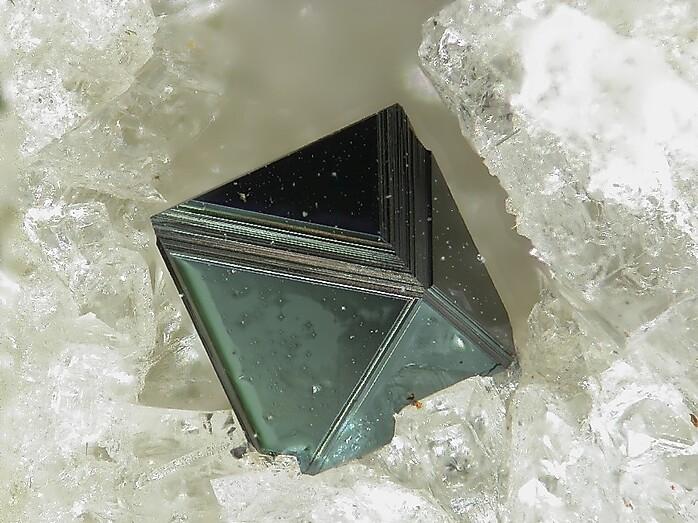
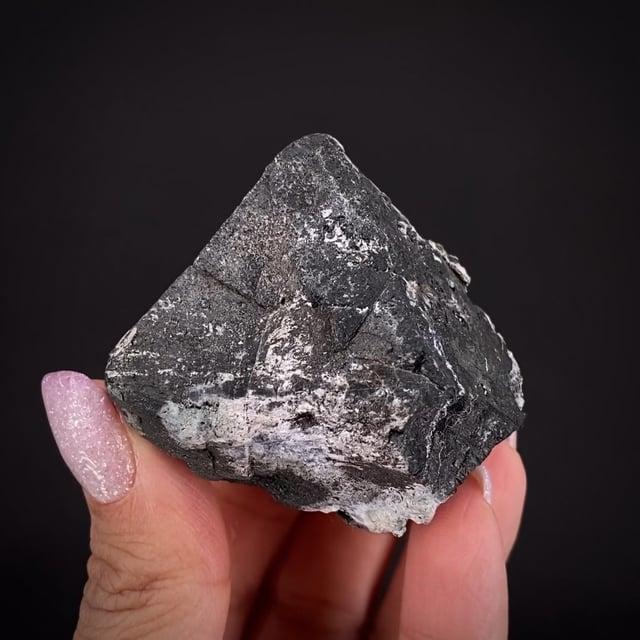
In nature, hercynite typically displays deep shades of dark green, greenish-black, brownish-black, or near-black, though trace impurities and structural variations can subtly shift its hue. It crystallizes within the cubic (isometric) system, forming sharp octahedral crystals, dense granular masses, or scattered grains embedded in host rock. Geologists frequently encounter it in contact metamorphic aureoles and granulite-facies terrains, where it serves as a reliable indicator of the thermal history and bulk chemistry of surrounding formations.
Within the broader spinel supergroup, hercynite shares close structural and chemical ties with magnesium spinel (MgAl₂O₄), gahnite (ZnAl₂O₄), and chromite (FeCr₂O₄). Fluctuations in the ratios of iron, magnesium, zinc, and chromium directly alter its density, color, and optical behavior. Unlike gem-grade magnesium spinel, natural hercynite is rarely faceted for jewelry; instead, its primary significance lies in petrology, mineral assemblages, and high-temperature oxide research.
Discovery and Naming History
Austrian mineralogist František Xaver Maximilian Zippe formally described hercynite in 1839. Rather than naming the mineral after a physical trait or chemical element, Zippe derived its name from Silva Hercynia, the ancient Latin designation for the Bohemian Forest—a Central European mountain range where the original type specimens were collected. Its exact type locality lies near Poběžovice (historically called Ronsberg) in the Plzeň Region of modern-day Czech Republic.
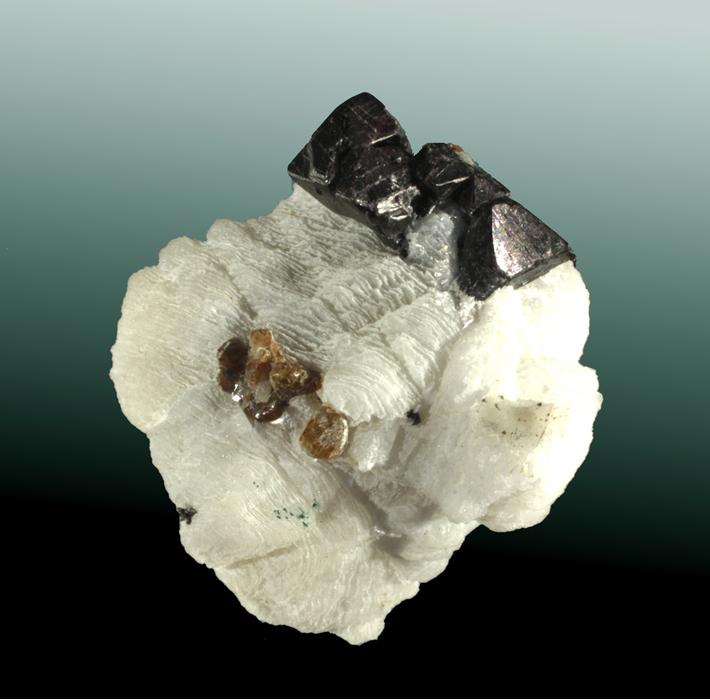
Early mineralogical investigations confirmed hercynite as an iron-aluminum oxide structurally aligned with the spinel group, setting it apart from visually similar dark oxides found in comparable rocks. Over subsequent decades, advances in wet chemical analysis, polarized light microscopy, and X-ray diffraction (XRD) mapped out its atomic arrangement and solid-solution pathways. Laboratory synthesis of hercynite further clarified how iron and aluminum cations distribute across its crystal lattice and how magnesium or zinc substitutions govern its stability at elevated temperatures.
Chemical Composition and Crystallography
Ideally composed of ferrous iron (Fe²⁺), aluminum (Al³⁺), and oxygen (O²⁻), pure hercynite (FeAl₂O₄) breaks down by weight to roughly 32.1% iron, 37.0% aluminum, and 30.9% oxygen. Naturally occurring specimens almost always incorporate minor to substantial amounts of magnesium, chromium, zinc, manganese, and titanium substituting into the lattice.
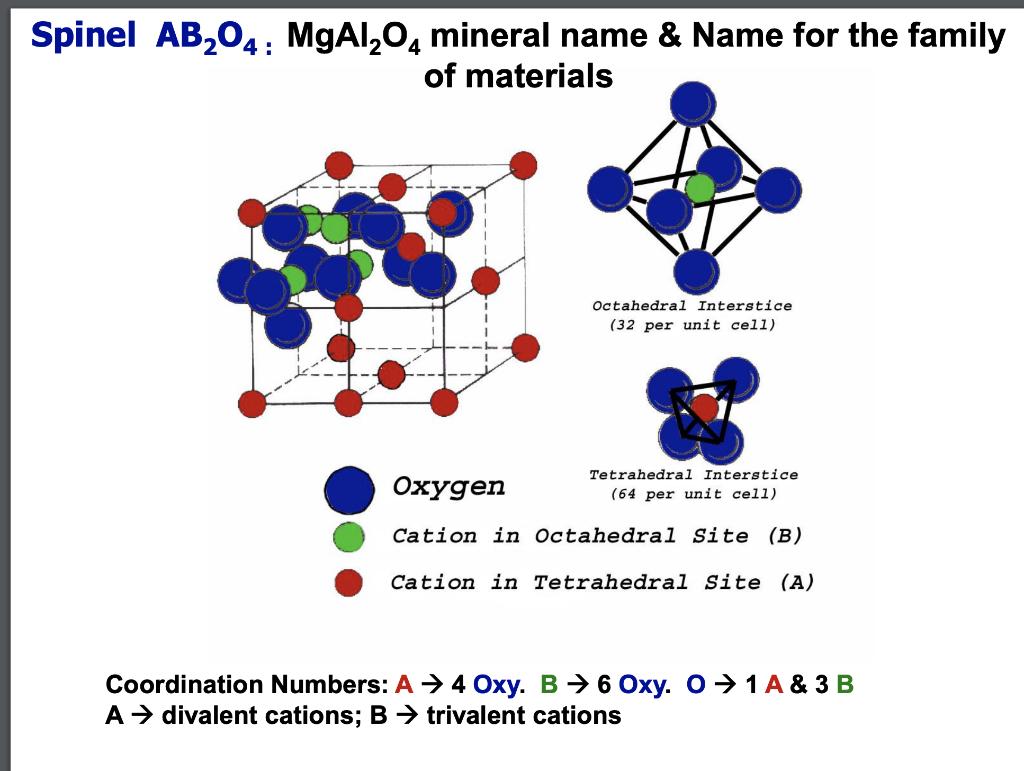
Structurally, hercynite adopts the classic normal spinel framework (space group Fd3̅m):
- Anion Framework: Oxygen ions form a tightly packed cubic close-packed lattice.
- Tetrahedral Sites: Divalent ferrous iron (Fe²⁺) occupies interstitial sites coordinated by four oxygen atoms.
- Octahedral Sites: Trivalent aluminum (Al³⁺) occupies sites coordinated by six oxygen atoms.
Because of its cubic symmetry, well-formed crystals typically exhibit octahedral faces and occasionally display contact twinning along {111} planes (the spinel law). In most rocks, however, it occurs as irregular disseminated grains or granular aggregates. Because environmental temperature, pressure, and oxygen fugacity govern cation exchange, natural hercynite frequently bridges compositional gaps toward spinel (Mg²⁺ ↔ Fe²⁺), gahnite (Zn²⁺ ↔ Fe²⁺), and chromite (Cr³⁺ ↔ Al³⁺).
Physical and Optical Characteristics
Hercynite is a dense, durable oxide mineral in the spinel supergroup (FeAl₂O₄) that crystallizes in the cubic (isometric) system, typically forming octahedral crystals, granular aggregates, or massive habits. It is characterized by dark coloration, a bright vitreous luster, and transparency ranging from translucent along thin edges to completely opaque in thicker specimens. Macroscopic crystals and massive aggregates usually appear black, greenish-black, or very dark green due to intense light absorption, whereas thin crystal edges and petrographic thin sections reveal rich dark green, bluish-green, or yellowish-brown tones. Freshly broken surfaces exhibit a glass-like sheen and leave a diagnostic dark grayish-green to dark green streak.
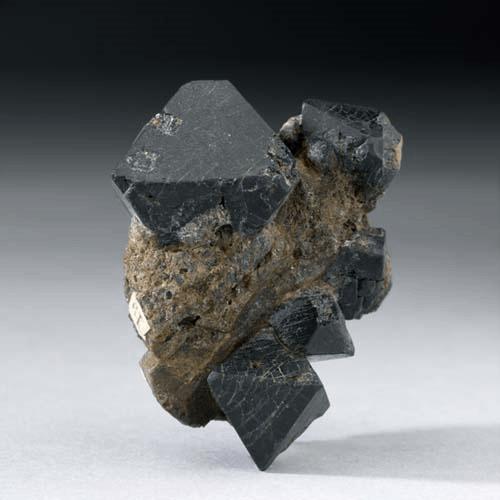
With a Mohs hardness of 7.5 to 8, hercynite easily scratches quartz and most common silicate minerals. Despite its high hardness, its tenacity is brittle, breaking with a conchoidal to uneven fracture under mechanical stress. True cleavage is generally absent, though parting along octahedral {111} planes is occasionally noted. Its high iron content yields a specific gravity of approximately 4.39.
Optically, hercynite is isotropic due to its cubic crystal lattice, remaining completely dark (extinct) under cross-polarized light in a petrographic microscope. It possesses a high refractive index ranging from 1.80 to 1.83. While these optical traits readily separate it from anisotropic silicates, fine-grained intergrowths with other dark opaque oxides often require microprobe analysis or XRD for definitive confirmation.
Geological Formation and Occurrence
Hercynite crystallizes under high-temperature, silica-undersaturated conditions where abundant aluminum and iron are present. If excess silica is available, iron and aluminum preferentially form silicates—such as garnet, cordierite, or staurolite—rather than oxide spinels, making hercynite a hallmark of silica-poor thermal environments. In regional high-grade metamorphic settings, such as granulite-facies terrains derived from iron- and aluminum-rich pelitic sediments, precursor clays and iron oxides break down and recrystallize. Under these conditions, hercynite routinely coexists with sillimanite, corundum, magnetite, ilmenite, and cordierite, providing petrologists with key constraints on peak metamorphic temperatures and oxygen fugacity.
Hercynite also develops in contact metamorphic environments where intruding magma bodies bake adjacent aluminous country rocks, generating localized hornfels zones studded with tiny octahedral crystals or granular clusters. Less commonly, it crystallizes directly within mafic to ultramafic igneous intrusions and volcanic ejecta. Because of its high hardness and strong chemical resistance to weathering, eroded hercynite grains also survive fluvial transport and accumulate in secondary heavy-mineral placer deposits.
Compositional Series and Variations
Rather than dividing into named gem varieties, hercynite is categorized mineralogically through its solid-solution series with neighboring spinels. The most widespread natural substitution occurs within the hercynite–spinel series (FeAl₂O₄ – MgAl₂O₄), in which magnesium replaces ferrous iron. Intermediate members of this series—historically termed pleonaste or ceylonite—exhibit progressively lower specific gravity and slightly lighter green-to-brown coloration as magnesium content increases.
Additional solid-solution pathways link hercynite to zinc- and chromium-bearing spinels. In the hercynite–gahnite series (FeAl₂O₄ – ZnAl₂O₄), zinc substitutes for ferrous iron within zinc-rich metamorphosed ore deposits and metasomatic zones, producing ferroan gahnite or zincian hercynite. Similarly, in the hercynite–chromite series (FeAl₂O₄ – FeCr₂O₄), chromium replaces aluminum in the octahedral lattice sites, a substitution commonly observed in thermally altered ultramafic rocks and layered igneous intrusions.
Notable Global Localities
Although hercynite is widespread in high-grade metamorphic terrains worldwide, sharp, collectible crystals remain relatively scarce. Central Europe hosts the most historically significant occurrences, beginning with the Czech Republic, where specimens occur at the type locality of Poběžovice (Ronsberg) as well as classic Bohemian sites near Nacetín and Hošlau. Neighboring Germany has also yielded well-documented finds from Schenkenzell in the Black Forest, Plößberg and Bodenmais in Bavaria, and volcanic-metamorphic assemblages around Mendig and Laacher See in the Eifel region.
Elsewhere in Europe, notable specimens have been recovered near Lake Lherz in the French Pyrenees, on the Isle of Mull in Scotland, across the Khibiny Massif on Russia’s Kola Peninsula, and in multiple Italian Alpine regions including Piedmont, Liguria, and the Aosta Valley. Beyond Europe, significant occurrences are recorded in North America at Peekskill (New York), several sites in Virginia, and near San Carlos (Arizona), alongside documented localities in India, Madagascar, China, Colombia, Mexico, and Tasmania.
Industrial, Scientific, and Collector Uses
Natural hercynite has no commercial value as an iron or aluminum ore because it occurs in dispersed, modest quantities compared to hematite, magnetite, or bauxite. Nevertheless, the iron-aluminum oxide system plays an important role across several specialized fields, particularly in refractory ceramics. Synthetic hercynite exhibits a high melting point, strong thermal shock resistance, and chemical stability in reducing atmospheres, prompting engineers to incorporate hercynite-based additives into magnesia-hercynite bricks for cement rotary kilns and metallurgical furnaces as a chrome-free alternative to traditional magnesia-chrome refractories.
In academic and scientific contexts, researchers study synthetic FeAl₂O₄ to investigate cation ordering, defect chemistry, and magnetic or electrical transitions in transition-metal spinel oxides. Petrologists likewise rely on natural hercynite in geothermobarometry, analyzing its chemical equilibria with corundum, sillimanite, and quartz to reconstruct the pressure–temperature paths of deep crustal rocks. For mineral collectors, sharp octahedral crystals perched on contrasting light matrices are prized as systematic specimens, though the mineral’s dark opacity precludes widespread lapidary use.
How to Identify Hercynite
Because dark coloration alone is shared by dozens of oxides and silicates, confirming hercynite requires evaluating multiple diagnostic criteria together. Initial physical screening focuses on spotting octahedral crystal faces or dense granular grains displaying a bright vitreous luster, a Mohs hardness of 7.5 to 8, an absence of true cleavage, high heft with a specific gravity near 4.39, and a characteristic dark greenish-gray streak. A quick magnetic check helps separate it from magnetite in the field, as pure hercynite is non-magnetic or only weakly paramagnetic.
When hand-specimen traits remain ambiguous, laboratory techniques provide reliable verification. Under a petrographic microscope, thin sections of hercynite appear dark green to opaque and remain completely isotropic under cross-polarized light, with a high refractive index between 1.80 and 1.83. Because ferroan spinel, gahnite, and chromite overlap both visually and optically, definitive species identification relies on electron microprobe analysis or energy-dispersive X-ray spectroscopy (EDS) to confirm that iron and aluminum are the dominant cations, paired with X-ray diffraction (XRD) to verify unit-cell parameters.
Distinguishing Hercynite from Similar Minerals
Several members of the spinel supergroup share identical cubic symmetry and dark coloration, making side-by-side comparison essential. Magnesium-dominant spinel (MgAl₂O₄) typically displays a vibrant color palette—including red, pink, blue, and lavender—and a noticeably lower specific gravity of 3.55 to 3.63 compared to 4.39 for hercynite, though dark green iron-rich spinel overlaps closely. Gahnite (ZnAl₂O₄) forms similar dark green to black octahedra with high hardness and overlapping densities between 4.00 and 4.62, meaning reliable differentiation requires chemical analysis to determine whether zinc or iron predominates.
Dark opaque oxides can also cause confusion in metamorphic and igneous rocks. Chromite (FeCr₂O₄) tends toward brownish-black with a submetallic luster and a dark brown streak, occurring predominantly in ultramafic igneous rocks rather than aluminous metamorphic assemblages. Magnetite (Fe₃O₄) is readily distinguished by its opaque iron-black color, metallic luster, black streak, higher specific gravity around 5.15 to 5.20, and strong ferromagnetism that causes grains to adhere easily to a standard hand magnet.
| Mineral | Formula | Dominant Cations | Typical Color | Specific Gravity | Key Distinguishing Trait |
|---|---|---|---|---|---|
| Hercynite | FeAl₂O₄ | Fe²⁺, Al³⁺ | Dark green to black | ~4.39 | Vitreous luster; dark green streak; non-magnetic |
| Spinel | MgAl₂O₄ | Mg²⁺, Al³⁺ | Red, pink, blue, violet | 3.55–3.63 | Lower specific gravity; vivid color range |
| Gahnite | ZnAl₂O₄ | Zn²⁺, Al³⁺ | Dark green to dark blue | 4.00–4.62 | Zinc-dominant chemistry (requires EDS/microprobe) |
| Chromite | FeCr₂O₄ | Fe²⁺, Cr³⁺ | Brownish-black to black | 4.50–4.80 | Submetallic luster; brown streak; ultramafic host |
| Magnetite | Fe₃O₄ | Fe²⁺, Fe³⁺ | Iron-black | 5.15–5.20 | Strongly magnetic; metallic luster; black streak |