
Analcime is a sodium aluminosilicate mineral belonging to the zeolite group. Its ideal chemical formula is NaAlSi₂O₆·H₂O, although variations in chemical composition can occur through the substitution of sodium by other cations and changes in the proportions of silicon and aluminum within its crystal structure. Analcime is typically colorless, white, or pale gray, but specimens may also appear pink, yellowish, greenish, or reddish because of trace elements, inclusions, and associated minerals. It commonly forms well-developed trapezohedral crystals, often appearing nearly spherical or rounded in outline, as well as granular, massive, and compact aggregates.
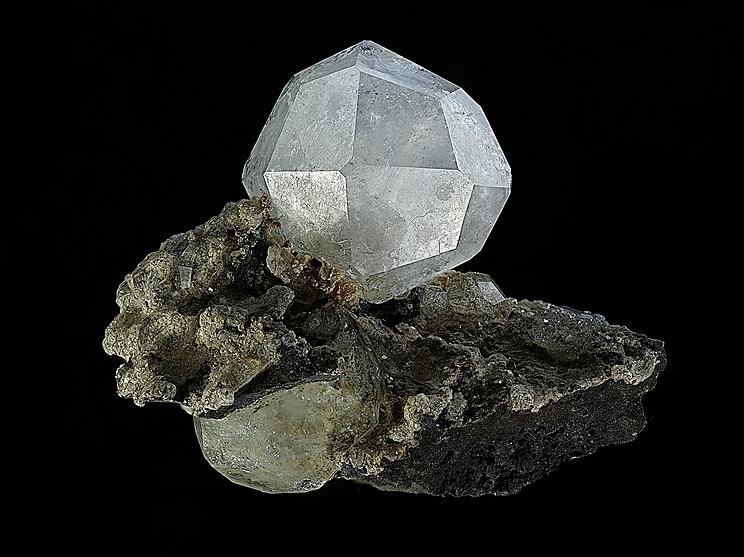
Analcime occurs in a range of geological environments, particularly in cavities and fractures within basaltic and other mafic volcanic rocks. It is also found in certain alkaline igneous rocks, hydrothermal deposits, and sedimentary environments where chemical alteration produces suitable conditions for zeolite formation. Its relatively open aluminosilicate framework contains channels that accommodate water molecules and exchangeable cations, giving it structural characteristics shared with other zeolites. Analcime is primarily of interest to mineralogists, geological researchers, and mineral collectors, while its physical and chemical properties also make it relevant to the study of zeolite minerals and low-temperature alteration processes.
History and Naming of Analcime
Analcime was first described in the late 18th century by French geologist Déodat de Dolomieu, who identified the mineral in volcanic rocks from the Cyclops Islands near Sicily, Italy. The name analcime derives from the Greek word analkimos, meaning weak or lacking strength, referring to the mineral’s relatively weak electrical response under certain conditions. The mineral has also historically been known as analcite, a name that remains in use in some mineralogical references.
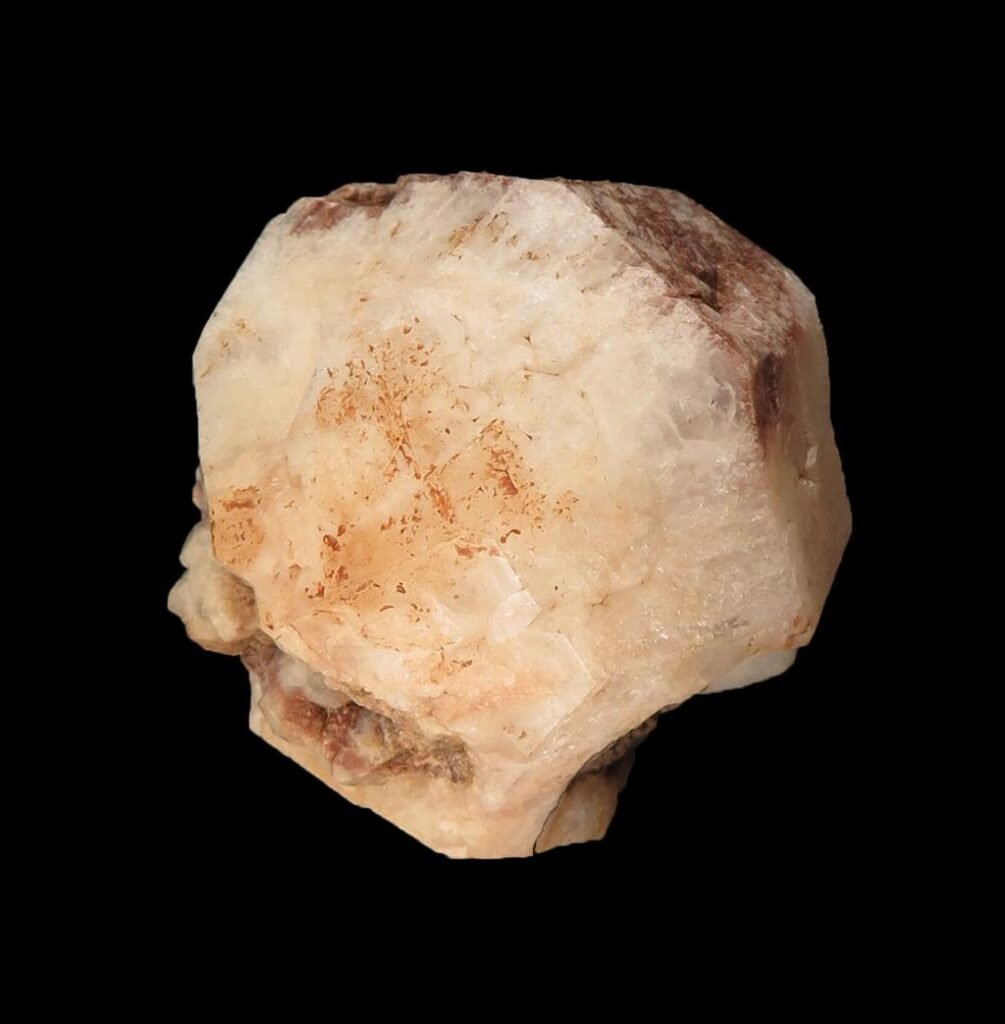
Early studies of analcime focused on its external crystal form, chemical composition, and relationship to other zeolite minerals. As mineralogical methods developed, researchers investigated its internal structure and the role of water within its aluminosilicate framework. These studies showed that analcime shares structural characteristics with other framework silicates, including minerals that contain exchangeable cations and water molecules within their crystal structures. Its relationship to minerals such as leucite, pollucite, and wairakite has also received attention because these minerals have related framework topologies but differ in composition and structural ordering.
Modern research on analcime extends beyond the description of individual crystals. Geologists study its occurrence in volcanic rocks, hydrothermal systems, saline lakes, and sedimentary basins to understand the chemical conditions under which it forms. In sedimentary geology, analcime can provide evidence of interactions among volcanic material, alkaline fluids, and burial-related alteration. Its distribution and composition are also investigated in relation to changes in rock porosity and permeability during diagenesis.
Formation and Geological Occurrence of Analcime
Analcime forms in several geological environments, with its development controlled by temperature, fluid chemistry, the availability of sodium and aluminum, and the composition of the surrounding rocks. It is commonly associated with low-temperature alteration of volcanic rocks, particularly basalt, diabase, and other silica-poor igneous rocks. In these settings, analcime may crystallize in vesicles and fractures after the original magma has solidified. Sodium-rich hydrothermal fluids react with volcanic glass and pre-existing minerals, supplying the chemical components needed for analcime growth. Individual crystals may develop on cavity walls, sometimes alongside calcite, natrolite, apophyllite, and other secondary minerals.
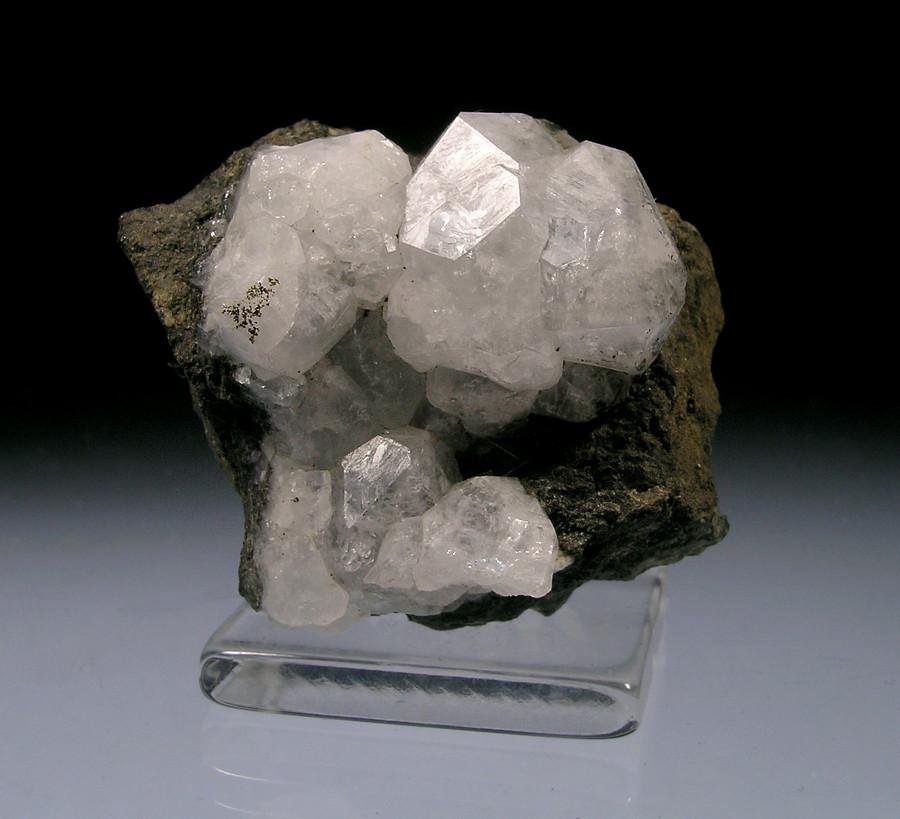
Analcime also occurs in sedimentary rocks, especially those deposited in saline and alkaline lake environments. Volcanic ash and glass incorporated into lake sediments can undergo chemical alteration, releasing silicon, aluminum, and other elements into pore water. Under suitable alkaline conditions, these components combine with sodium to form analcime during sedimentation or subsequent diagenesis. In some deposits, the mineral develops through the transformation of earlier zeolites, feldspars, or clay minerals; in others, it precipitates directly from alkaline water or pore fluids. Burial temperature, salinity, pH, and the availability of dissolved elements influence its formation and distribution.
A further occurrence is in alkaline igneous rocks, where analcime may form as a primary mineral or as a product of later alteration. It can also develop through hydrothermal activity, filling cracks and cavities or replacing earlier mineral phases. These different origins can produce distinct crystal habits, grain sizes, and associations with other minerals. For this reason, geologists often examine analcime’s texture, chemical composition, crystal morphology, and surrounding mineral assemblage when determining how a particular specimen formed.
Crystal Structure of Analcime
Analcime is a framework aluminosilicate whose structure consists of interconnected silicon-oxygen and aluminum-oxygen tetrahedra. Each tetrahedron shares oxygen atoms with neighboring tetrahedra, producing a three-dimensional framework containing small cavities that accommodate sodium ions and water molecules. Its ideal chemical formula, NaAlSi₂O₆·H₂O, reflects the relationship between the aluminosilicate framework, the sodium cations, and the water incorporated into the structure. Minor substitutions involving potassium, calcium, and magnesium may occur in natural specimens, resulting in variations from the ideal composition.
The crystal structure of analcime is commonly described as cubic, although tetragonal, orthorhombic, and monoclinic structural forms have also been reported. These differences are associated with variations in the ordering of silicon and aluminum atoms within the framework. Even when the underlying symmetry is lower than cubic, crystals may retain an approximately cubic external appearance, a feature known as pseudocubic morphology. This explains why analcime commonly develops crystals with a rounded, polyhedral outline rather than the simple cubic habit associated with some other minerals.
The cavities and channels within analcime are characteristic of zeolite-type structures, although their dimensions and accessibility differ from those of many other zeolites. Water is incorporated into the framework’s internal spaces, and its behavior can change with temperature and environmental conditions. The arrangement of the framework also influences the mineral’s density, optical properties, and response to chemical alteration. Structural studies of analcime therefore provide information about both its mineral classification and the processes through which it forms in volcanic and sedimentary environments.
Types of Analcime
Analcime is generally recognized as a single mineral species, but specimens can be classified according to their geological origin, formation process, and crystal structure. These distinctions are useful in mineralogical and geological studies because analcime can develop through several different processes, ranging from direct crystallization from magma to hydrothermal alteration and sedimentary diagenesis.
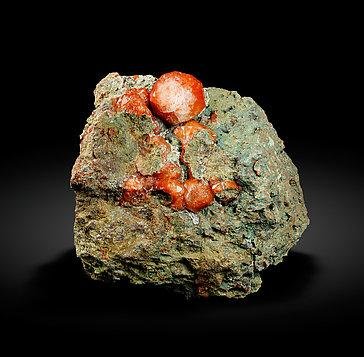
- Primary Igneous Analcime: This type crystallizes directly from silica-undersaturated, sodium-rich magma, typically in alkaline igneous rocks. It may occur as well-formed crystals within the host rock and can display pink, reddish, or other colors depending on its composition and inclusions.
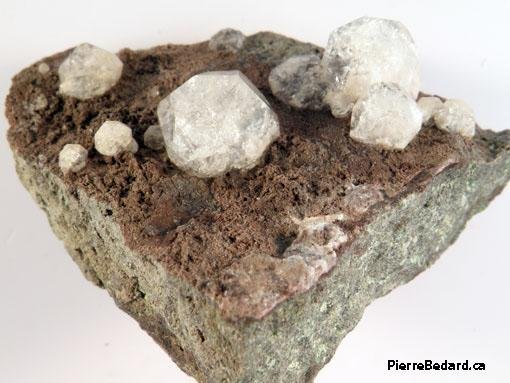
- Hydrothermal Analcime: Hydrothermal analcime forms from heated aqueous fluids that react with existing minerals or precipitate analcime within fractures and cavities. It commonly occurs in altered volcanic rocks and may be associated with other zeolite minerals and secondary silicates.
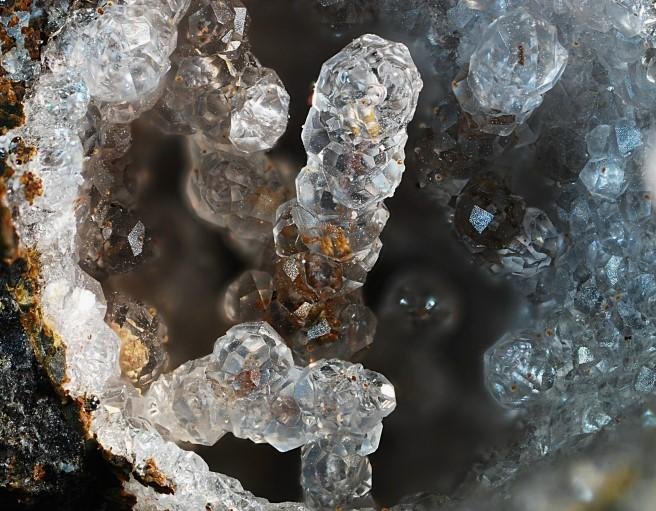
- Alteration-Derived Analcime: This type develops through the chemical transformation of pre-existing minerals, including leucite and other feldspathoid minerals. Sodium-rich fluids facilitate the alteration process, allowing analcime to form while partially or completely replacing the original mineral.
- Sedimentary and Diagenetic Analcime: Sedimentary analcime forms through the alteration of volcanic glass, clay minerals, or earlier zeolites, particularly in saline and alkaline lake deposits. Diagenetic analcime can also develop during burial as temperature, fluid chemistry, and pressure conditions change.
These categories describe the origins of analcime rather than separate mineral species or officially recognized gemstone varieties. Individual specimens may show overlapping characteristics, and determining their origin generally requires examination of the host rock, associated minerals, crystal textures, and chemical composition.
Physical and Chemical Properties of Analcime
Analcime is generally colorless or white, although gray, pale pink, greenish, and yellowish specimens are also known. It has a vitreous luster on fresh crystal surfaces and ranges from transparent to translucent, becoming less transparent in larger or more compact aggregates. Its streak is white, and its Mohs hardness ranges from 5 to 5.5, placing it between apatite and orthoclase on the hardness scale. Analcime is brittle and exhibits very poor or indistinct cleavage, with fracture surfaces that are commonly uneven to subconchoidal. Its measured specific gravity generally ranges from 2.24 to 2.29, reflecting its sodium aluminosilicate composition and the presence of water within its framework.
The principal chemical constituents of analcime are sodium, aluminum, silicon, oxygen, and hydrogen, represented by the ideal formula NaAlSi₂O₆·H₂O. The mineral belongs to the tectosilicate subclass of silicates, in which the silicon-oxygen and aluminum-oxygen tetrahedra form a connected three-dimensional framework. Sodium ions occupy structural sites within this framework, while water molecules are accommodated in its internal spaces. Natural specimens may contain minor amounts of other elements, including potassium and calcium, depending on their geological environment and the composition of the fluids from which they formed. These compositional variations can influence measured physical properties without necessarily changing the mineral’s identification.
Analcime has a relatively low refractive index, generally reported between approximately 1.479 and 1.493. Although it is commonly described as optically isotropic, some specimens display anomalous birefringence under polarized light, a behavior associated with structural ordering and deviations from ideal cubic symmetry. Its dispersion is weak, so it does not typically display the strong spectral color separation seen in some gemstones. Analcime may also exhibit weak electrical effects when rubbed or heated, a characteristic historically associated with its name. Some specimens show fluorescence under ultraviolet light, although the response varies with composition, impurities, and the conditions of examination.
From a practical perspective, analcime is moderately hard but remains brittle, making it susceptible to chipping and damage from impact. Its relatively low refractive index and generally subdued optical dispersion limit its use in conventional faceted gemstone jewelry. Transparent crystals can nevertheless be cut or polished for mineralogical display and occasional collector-oriented gem use. When examining a specimen, the combination of its characteristic trapezohedral crystal habit, vitreous luster, white streak, hardness, and geological associations is generally more informative than color alone.
Crystal Habits and Varieties of Analcime
Analcime displays several crystal habits, although well-formed trapezohedral crystals are among its most characteristic forms. These crystals commonly have a roughly equidimensional, many-faced appearance and may resemble rounded polyhedra. Individual crystals can be colorless or white, with some developing pink, gray, greenish, or yellowish coloration. Their surfaces may be smooth and glassy, while weathered or altered specimens can appear dull. Well-developed crystals may reach considerable sizes, with exceptional examples reported at up to several tens of centimeters across.
In addition to distinct crystals, analcime occurs as granular, compact, massive, and occasionally concentric aggregates. Crystals may line cavities in volcanic rocks, occur as isolated grains within igneous rocks, or replace earlier minerals during alteration. Some specimens display rounded or nearly spherical external forms created by the arrangement of multiple crystal faces or by the growth of closely packed crystals. Twinning has also been documented, adding further variation to its crystal morphology.
Analcime is a recognized mineral species rather than a gemstone variety defined by color. Differences among specimens are therefore generally described in terms of color, transparency, crystal habit, locality, and associated minerals. Although the mineral has historical connections with the name analcite, that name is an alternative designation for analcime rather than a separate species. Its structural relationship to other framework silicates is important mineralogically, but visually similar specimens cannot reliably be assigned to a related species on crystal shape alone.
Major Occurrences and Localities of Analcime
Analcime has been documented in volcanic rocks, alkaline igneous complexes, hydrothermal deposits, and sedimentary formations in many parts of the world. Its occurrence is particularly common in cavities within basaltic rocks, where crystals develop from fluids circulating through fractures and vesicles after the host rock has solidified. The size, color, and quality of crystals vary according to the local geological conditions, including the composition of the fluids, temperature, and availability of space for crystal growth.
Italy is an important locality in the historical study of analcime, particularly the Cyclops Islands near Sicily, where the mineral was described in the late eighteenth century. Analcime also occurs in volcanic regions of Scotland, including basaltic formations associated with the British Tertiary Volcanic Province. In these environments, it may be found with other zeolite minerals, calcite, and secondary silicates that formed during the alteration of volcanic rocks.
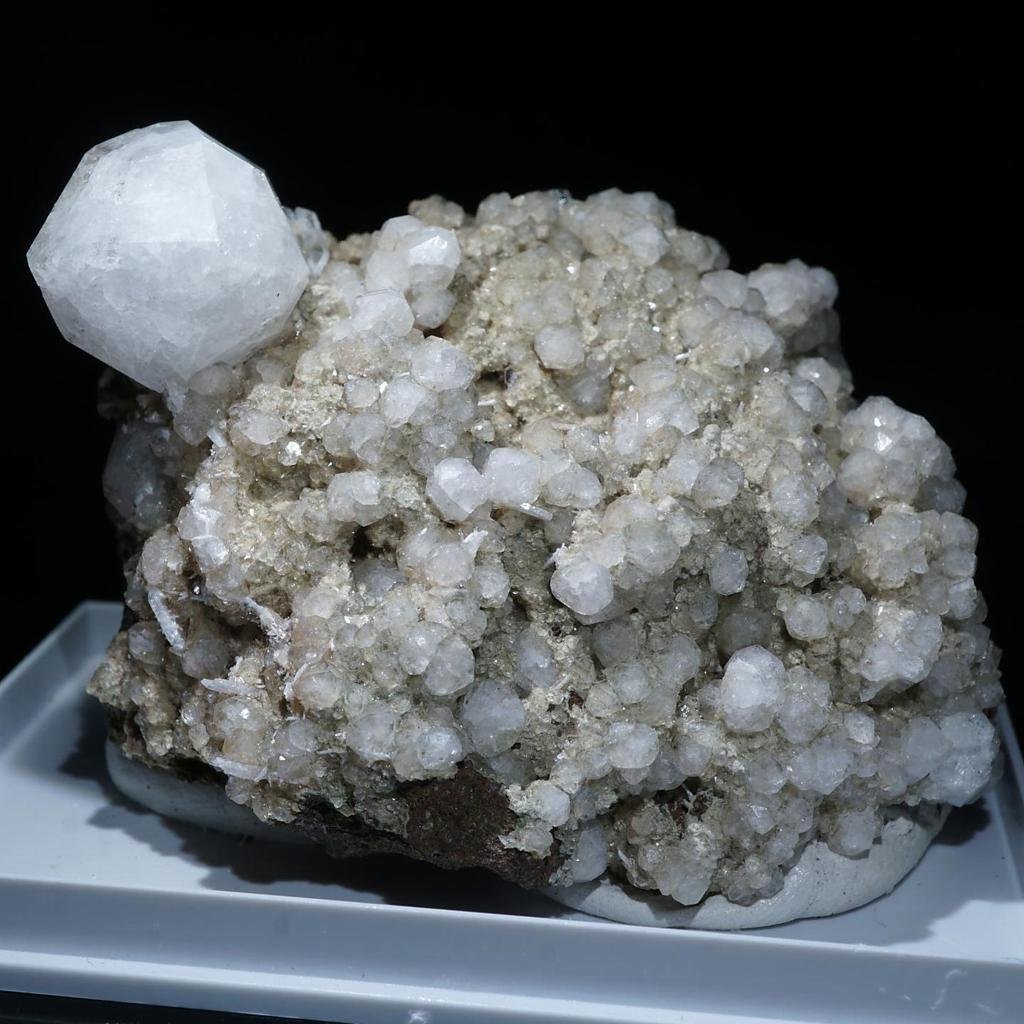
Canada and the United States contain numerous analcime occurrences, particularly in basaltic provinces and alkaline igneous complexes. In the United States, specimens have been reported from several volcanic regions, including areas of New Jersey and Oregon, where analcime occurs in association with other sodium-rich minerals. Canada also has notable occurrences in volcanic rocks and alkaline complexes, where the mineral may form cavity-lining crystals or occur as part of a broader assemblage of secondary silicates.
Analcime is also found in Greenland, India, Australia, and other regions with suitable volcanic or sedimentary geological settings. In some alkaline lake deposits, it occurs as fine-grained material rather than as large, well-formed crystals. These occurrences are particularly relevant to geological research because analcime can record changes in the chemistry of pore fluids and the alteration of volcanic ash during sedimentation and burial. For mineral collectors, locality information is useful when evaluating specimens, but accurate identification still depends on crystal characteristics, chemical composition, and, where necessary, analytical testing.
Uses of Analcime
Analcime has limited direct industrial use compared with several other zeolite minerals, but it remains relevant to mineralogical research, geological interpretation, and mineral collecting. Its importance is primarily associated with its crystal structure, geological distribution, and ability to record chemical changes in the environments where it forms.
In geological research, analcime is used to investigate the alteration of volcanic rocks, the evolution of alkaline fluids, and the mineralogical changes that occur during sediment burial. Its presence in saline lake sediments and volcanic deposits can help researchers reconstruct the conditions under which secondary minerals formed. In sedimentary basins, analcime may also be examined as an indicator of diagenetic processes that affect rock composition, porosity, and permeability. However, its occurrence must be interpreted alongside other minerals and geological evidence rather than treated as a definitive indicator of a single formation condition.
Analcime is also studied for its framework structure and the behavior of water and cations within its internal spaces. These characteristics make it relevant to research on zeolite crystallography, mineral stability, and structural changes under varying temperature and pressure conditions. Although some zeolites have established commercial applications in adsorption, ion exchange, and catalysis, analcime’s relatively restricted pore accessibility means that its practical performance differs from that of commonly used industrial zeolites. Its principal value in this context is therefore scientific rather than large-scale commercial.
In the mineral collecting market, analcime is valued for its well-formed crystals, range of colors, and associations with other cavity minerals. Transparent or translucent crystals and specimens with clearly developed trapezohedral faces are especially suitable for display collections. Some material may be cut or polished for specialist collectors, but analcime is not widely used in mainstream jewelry because of its moderate hardness, brittleness, and relatively low optical dispersion.
How to Identify Analcime
Analcime can often be recognized by its characteristic trapezohedral crystals, which typically have a rounded, many-faced appearance and may resemble small polyhedra. Its common colors include white, colorless, gray, pale pink, green, and yellow. The mineral generally has a vitreous to subvitreous luster, a white streak, and a Mohs hardness of 5 to 5.5. These properties can help distinguish it from other minerals found in volcanic cavities, although no single characteristic is sufficient for reliable identification.
Several zeolite minerals, including chabazite, natrolite, and heulandite, may occur in similar geological environments. Chabazite can form blocky or rhombohedral crystals, while natrolite commonly develops slender prismatic or fibrous crystals. Heulandite typically has tabular crystals and more distinct cleavage. Analcime, by comparison, is frequently equidimensional and trapezohedral, with cleavage that is very poor or indistinct. These differences are useful for preliminary examination, but crystal habits can vary and overlapping appearances are possible.
For specimens that cannot be identified confidently by appearance, X-ray diffraction is a reliable method for determining the mineral’s crystal structure. Chemical analysis can provide additional evidence by confirming the presence and proportions of sodium, aluminum, and silicon. Optical examination and Raman spectroscopy may also help distinguish analcime from visually similar minerals. These analytical methods are particularly useful for fine-grained material, altered specimens, and samples in which several zeolite minerals occur together.
Analcime and Similar Minerals
| Mineral | Key differences from analcime |
|---|---|
| Chabazite | Commonly forms rhombohedral crystals and has distinct cleavage; belongs to a different zeolite framework group. |
| Natrolite | Typically forms slender prismatic or fibrous crystals and has a more elongated habit. |
| Heulandite | Commonly develops tabular crystals with prominent cleavage. |
| Pollucite | A cesium-rich framework silicate with a structure closely related to analcime; typically distinguished by its chemical composition. |
| Wairakite | A calcium-rich zeolite structurally related to analcime, commonly associated with hydrothermal alteration. |
These minerals may occur alongside analcime or resemble it in hand specimens. Reliable identification depends on combining crystal morphology and physical properties with structural or chemical analysis when necessary.