
Apatite is a group of phosphate minerals with the general chemical formula Ca₅(PO₄)₃(F,Cl,OH). It occurs in a wide range of geological environments, including igneous, metamorphic, and sedimentary rocks, and is an important source of phosphorus for the production of phosphate fertilizers. Apatite typically crystallizes in the hexagonal system and has a Mohs hardness of 5. Its color varies from colorless and white to green, blue, yellow, violet, and brown, depending on its chemical composition, trace elements, and conditions of formation. The mineral commonly occurs as hexagonal prismatic crystals, granular aggregates, or fine-grained masses, although its crystal size and appearance vary considerably among deposits.
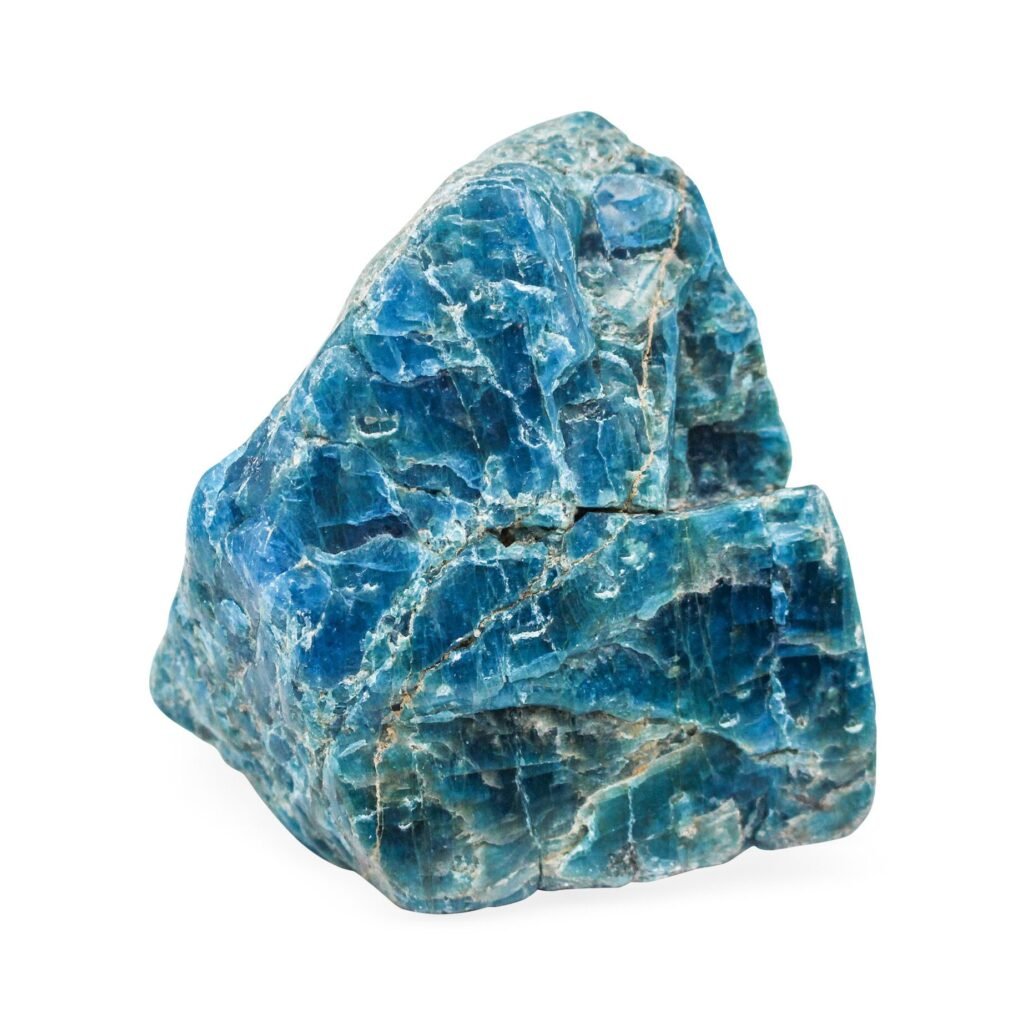
The term apatite refers to a mineral group that includes fluorapatite, chlorapatite, and hydroxylapatite, distinguished by the dominant anion in their chemical structures. Apatite is widely distributed in the Earth’s crust and commonly occurs as an accessory mineral in many igneous rocks, although it can also form concentrated phosphate deposits. Transparent specimens with suitable color and clarity are occasionally cut as gemstones, but apatite is relatively soft compared with many other commonly used gemstones. Apatite is also relevant to biological and geological research because hydroxylapatite and related compositions form the principal inorganic component of vertebrate bones and teeth, while the mineral’s ability to incorporate trace elements makes it useful for investigating the formation and evolution of rocks.
History and Discovery of Apatite
The name apatite is derived from the Greek word apate, meaning deception, a reference to the mineral’s resemblance to several other minerals. Depending on its color, transparency, and crystal habit, apatite can be mistaken for beryl, tourmaline, peridot, or other crystalline minerals. These similarities historically made identification difficult, particularly before chemical analysis and modern crystallographic methods became available. In 1786, German mineralogist Abraham Gottlob Werner formally described apatite and introduced the name that remains in use today.
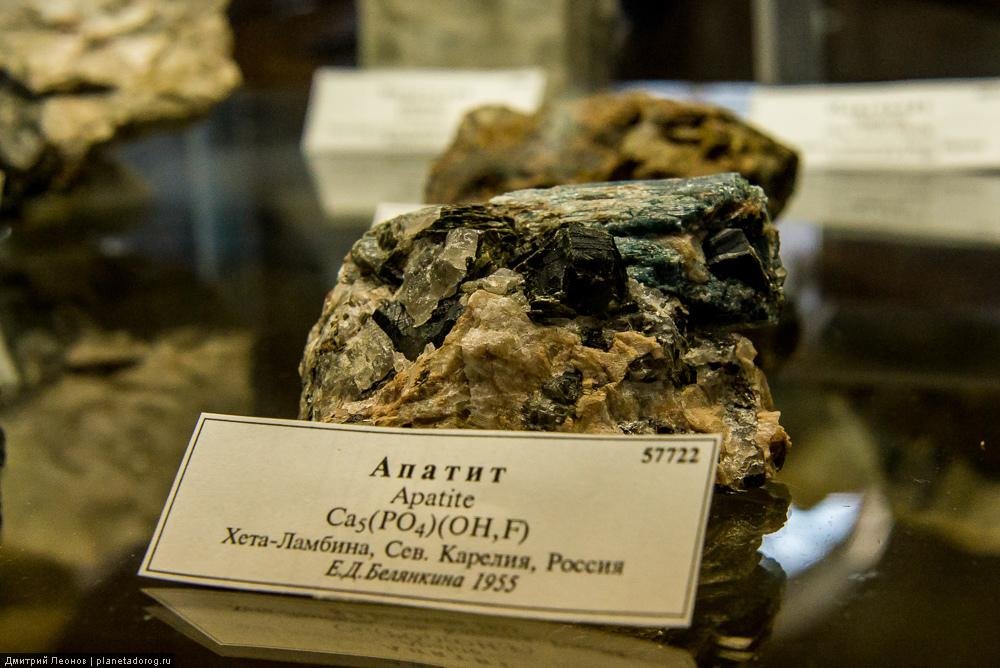
During the nineteenth century, further mineralogical and chemical investigations clarified apatite’s composition and its relationship to other phosphate minerals. Researchers identified variations associated with fluoride, chloride, and hydroxyl content, establishing the basis for distinguishing the principal members of the apatite group. The recognition of apatite as a major phosphorus-bearing mineral also contributed to its industrial importance. As agricultural demand for phosphorus increased, naturally occurring phosphate deposits became an important raw material for fertilizer production. In modern mineralogy, apatite continues to be studied for its role in igneous and sedimentary processes, its trace-element composition, and its applications in geochronology and the study of biological mineralization.
Chemical Composition and Crystal Structure of Apatite
Apatite has the general chemical formula Ca₅(PO₄)₃(F,Cl,OH), reflecting a calcium phosphate structure in which fluoride, chloride, or hydroxyl groups occupy a specific anion site. Its three principal end-members are fluorapatite, Ca₅(PO₄)₃F; chlorapatite, Ca₅(PO₄)₃Cl; and hydroxylapatite, Ca₅(PO₄)₃OH. These minerals share the same basic structural arrangement but differ in their dominant anions. Fluorapatite is widespread in igneous and sedimentary rocks, chlorapatite is less common, and hydroxylapatite occurs in geological environments as well as in biological tissues. Natural apatite can contain mixtures of these anions, so its composition does not always correspond to a single pure end-member.
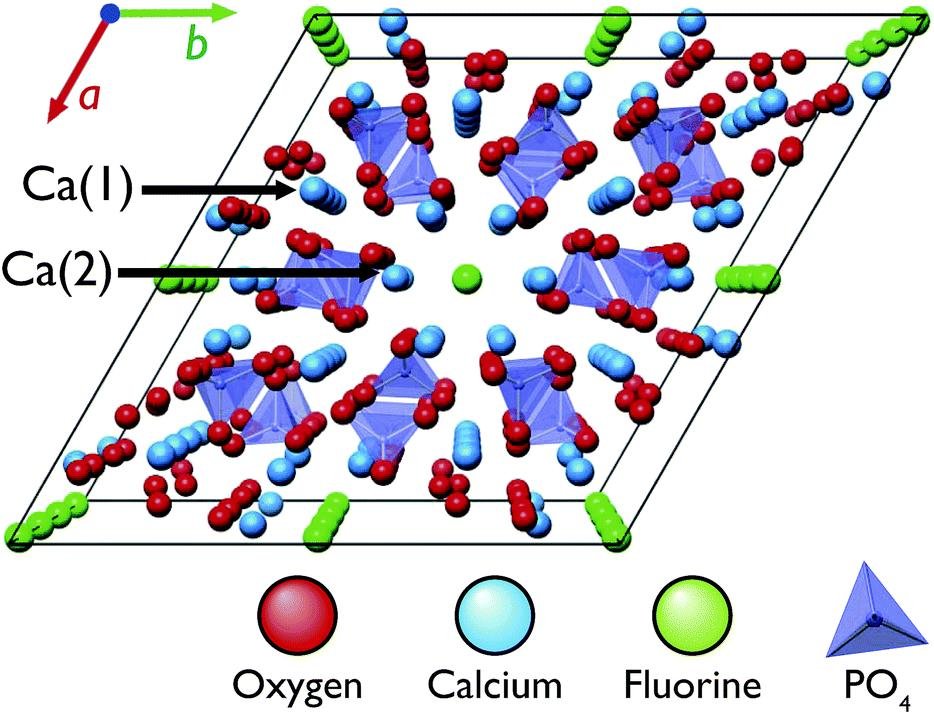
Apatite generally crystallizes in the hexagonal crystal system. Its structure consists of phosphate groups, each containing one phosphorus atom surrounded by four oxygen atoms, linked with calcium ions to form a three-dimensional framework. Channels parallel to the crystallographic c-axis accommodate the fluoride, chloride, or hydroxyl ions. This arrangement produces the characteristic hexagonal symmetry and allows certain chemical substitutions without substantially changing the overall structure. Calcium may be partly replaced by elements such as strontium, manganese, and rare-earth elements, while trace amounts of other elements can also enter the crystal lattice. These substitutions influence apatite’s chemical composition and may affect its color, luminescence, and physical characteristics. Because apatite can incorporate trace elements and radioactive elements such as uranium, its composition is also used to investigate the chemical evolution of magmas, the formation of mineral deposits, and the geological history of rocks.
Formation and Geological Occurrence of Apatite
Apatite forms through several geological processes and occurs in igneous, sedimentary, and metamorphic rocks. In igneous environments, it commonly crystallizes from cooling magma as an accessory mineral. Small apatite crystals are frequently found in granites, syenites, diorites, basalts, and other intrusive or volcanic rocks. Its formation depends on the availability of phosphorus, calcium, and suitable crystallization conditions. In some phosphorus-rich magmatic systems, particularly carbonatites and certain alkaline igneous complexes, apatite can accumulate in substantial concentrations and form economically important deposits. These accumulations may develop through magmatic crystallization, mineral separation, or the concentration of phosphate-bearing phases during the evolution of a magma.
In sedimentary environments, apatite is commonly associated with phosphorite deposits, which develop through the accumulation and alteration of phosphate-rich material. Marine phosphorites form through complex interactions involving seawater chemistry, biological activity, sedimentation, and diagenesis. Phosphorus released during the decomposition of organic matter can be recycled within sediments and contribute to the formation of fine-grained apatite-group minerals. Weathering and erosion may also transport phosphate-bearing particles from existing rocks into sedimentary basins, where they become concentrated over time. These processes can produce extensive phosphate deposits that serve as major sources of raw material for fertilizer production.
Apatite also occurs in metamorphic rocks, where it may survive from the original rock or recrystallize during changes in temperature, pressure, and fluid composition. It is found in rocks such as gneiss, schist, and marble, although its abundance varies with the composition of the original material and the degree of metamorphism. Hydrothermal fluids can transport phosphorus and promote apatite crystallization in veins or along mineralized zones, particularly where fluids interact with calcium-bearing rocks. Because apatite can retain information about trace-element concentrations, temperature conditions, and geological age, it is frequently used in studies of rock formation, magmatic evolution, and the thermal history of the Earth’s crust.
Physical and Optical Properties of Apatite
Apatite has a Mohs hardness of 5, placing it between fluorite and feldspar on the mineral hardness scale. It can be scratched by harder minerals and is susceptible to abrasion, which limits its durability in applications exposed to frequent wear. Its specific gravity generally ranges from approximately 3.1 to 3.2, although the exact value varies with chemical composition. Apatite typically exhibits a vitreous luster on fresh crystal surfaces and a white streak. Its cleavage is generally poor or indistinct, while fracture may be uneven to conchoidal. Crystals commonly develop as hexagonal prisms terminated by pyramidal faces, but apatite also occurs as granular aggregates, compact masses, and fine-grained material. Individual crystals may be transparent, translucent, or opaque, depending on their composition, inclusions, and degree of alteration.
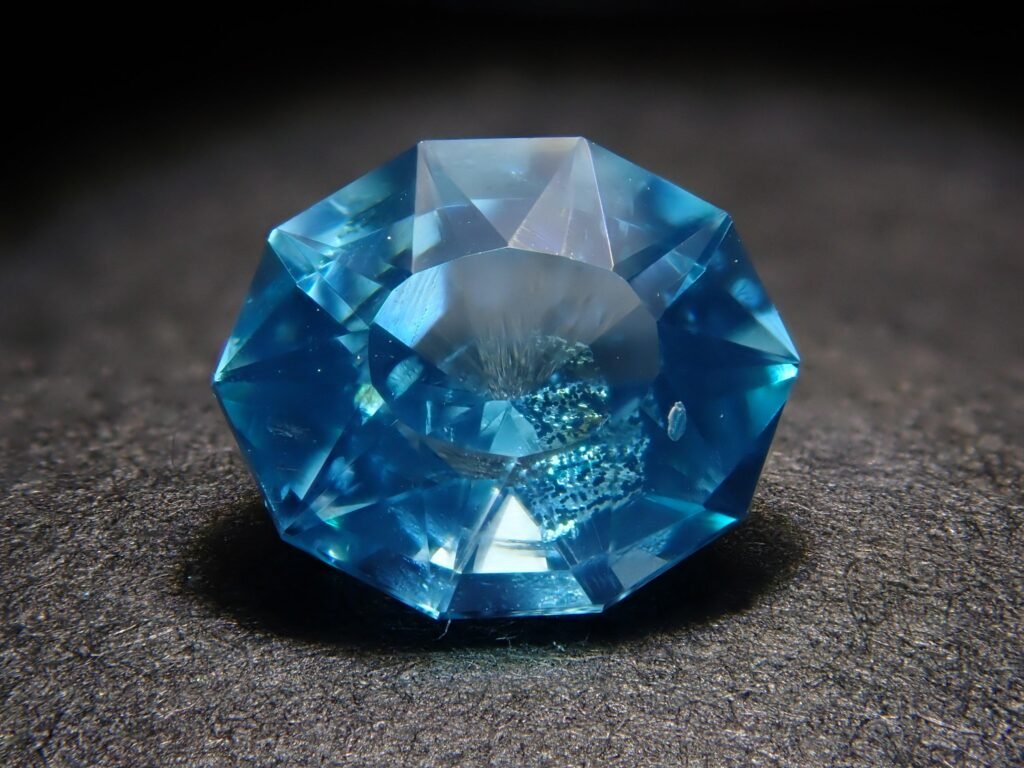
The color of apatite varies widely, including colorless, white, pale yellow, green, blue, violet, and brown. These colors are influenced by trace elements, structural defects, and other variations in chemical composition. Blue and green specimens are among the varieties used in gemstone cutting, while yellow and violet material also occurs. Apatite has a refractive index of approximately 1.63 to 1.65, with slight variations among compositions, and exhibits birefringence typical of a uniaxial mineral. Its optical properties can help distinguish it from minerals with similar colors and crystal habits. Some specimens display fluorescence under ultraviolet light, although the response varies according to trace-element content and other structural characteristics. When identifying apatite, hardness, crystal form, optical properties, and chemical composition should be considered together because color alone is not a reliable diagnostic feature.
Types and Varieties of Apatite
Apatite comprises several mineral species distinguished by their chemical composition, particularly the dominant anion occupying a specific position in the crystal structure. These species share the same basic structural framework but differ in the proportions of fluorine, chlorine, and hydroxyl groups. Apatite also occurs in a broad range of colors, some of which are used to describe gemstone varieties. The principal members and commonly recognized varieties include the following.
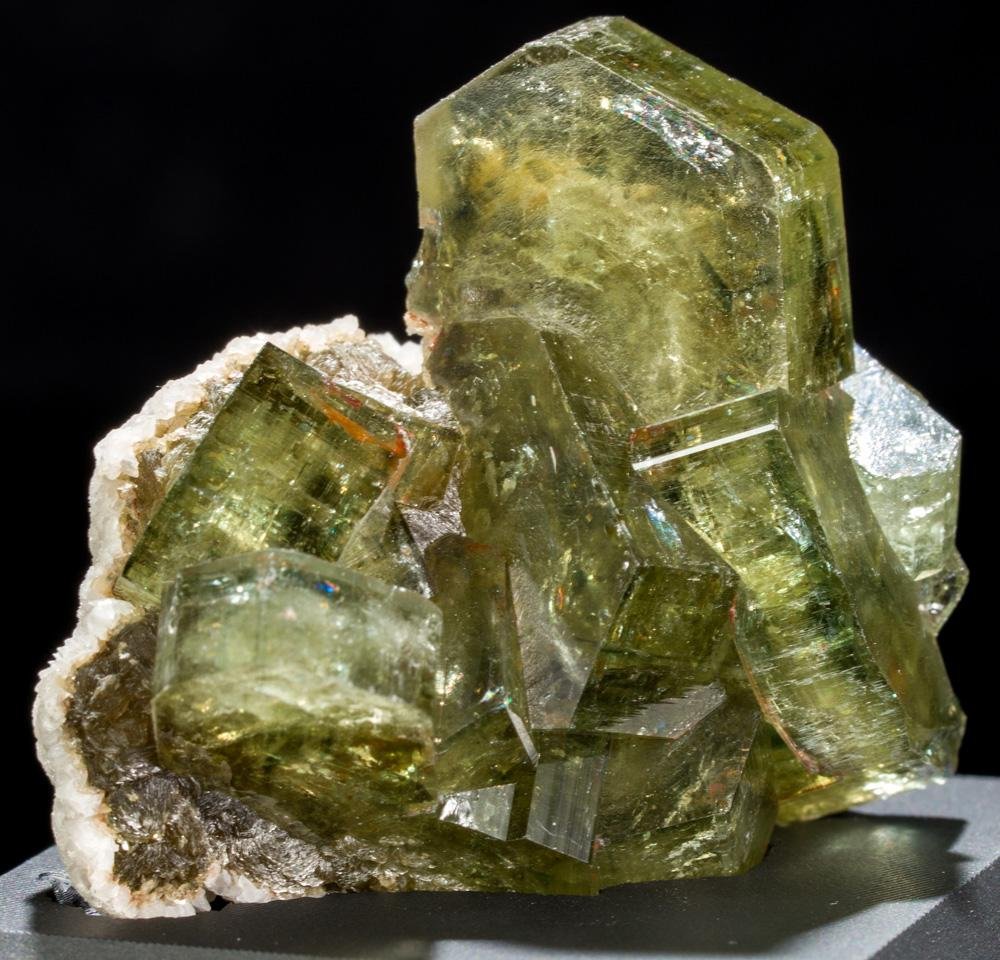
Fluorapatite: Fluorapatite has the chemical formula Ca₅(PO₄)₃F and is one of the most widespread members of the apatite group. It occurs in igneous, metamorphic, and sedimentary rocks and is a major phosphate-bearing mineral in many economically important deposits. Its color varies from colorless and white to green, blue, yellow, and brown.
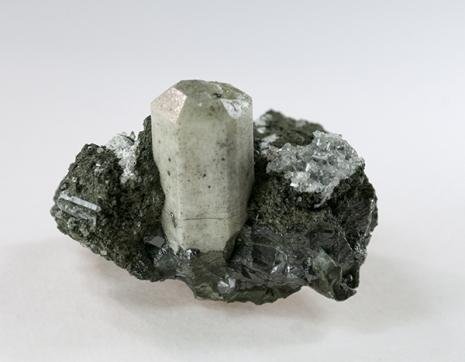
Chlorapatite: Chlorapatite has the chemical formula Ca₅(PO₄)₃Cl, with chlorine as the dominant anion. It is less common than fluorapatite and occurs in geological environments where chlorine is available during mineral formation. Its physical and structural characteristics are broadly similar to those of other apatite-group minerals.
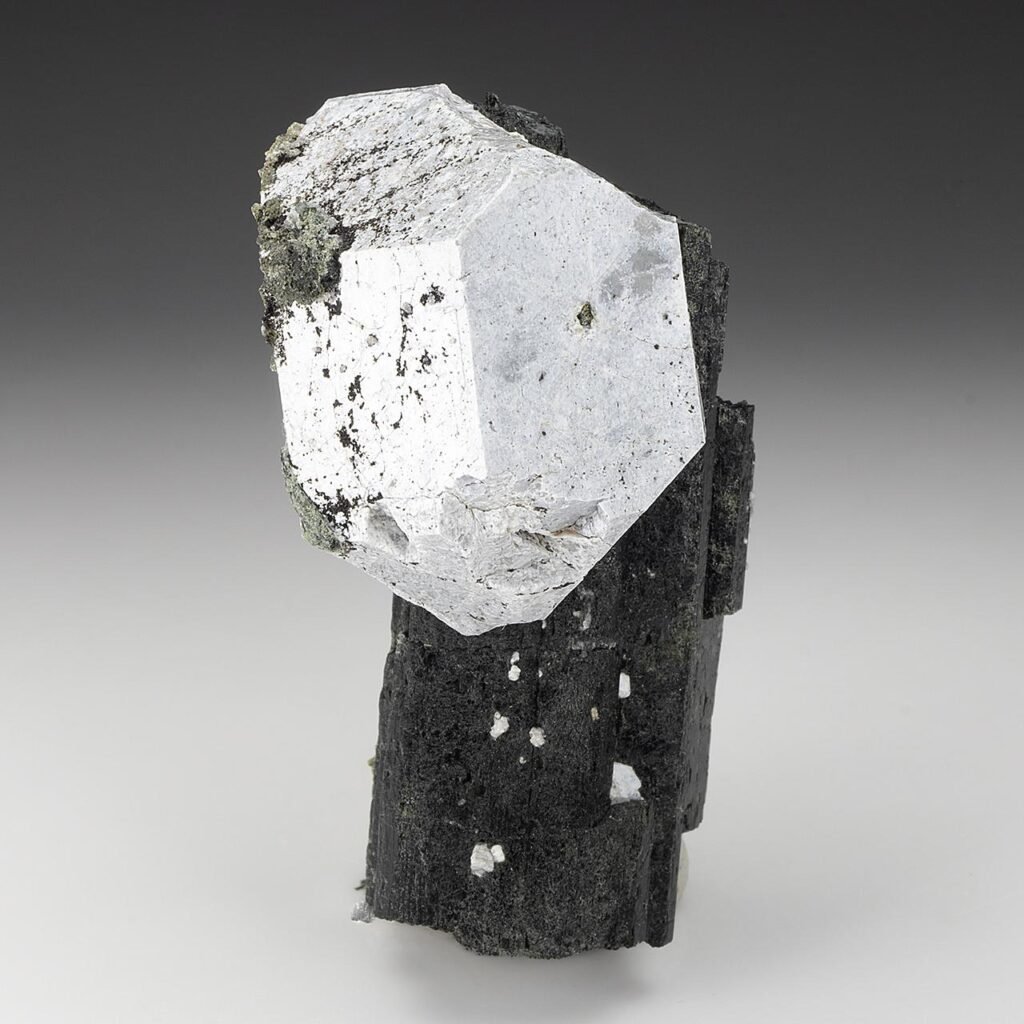
Hydroxylapatite: Hydroxylapatite has the chemical formula Ca₅(PO₄)₃OH and contains hydroxyl groups in place of fluorine or chlorine. It occurs in geological deposits and is the principal mineral component of vertebrate bones and teeth. Biological apatite, however, typically contains carbonate and other substitutions, making its composition more complex than that of pure hydroxylapatite.
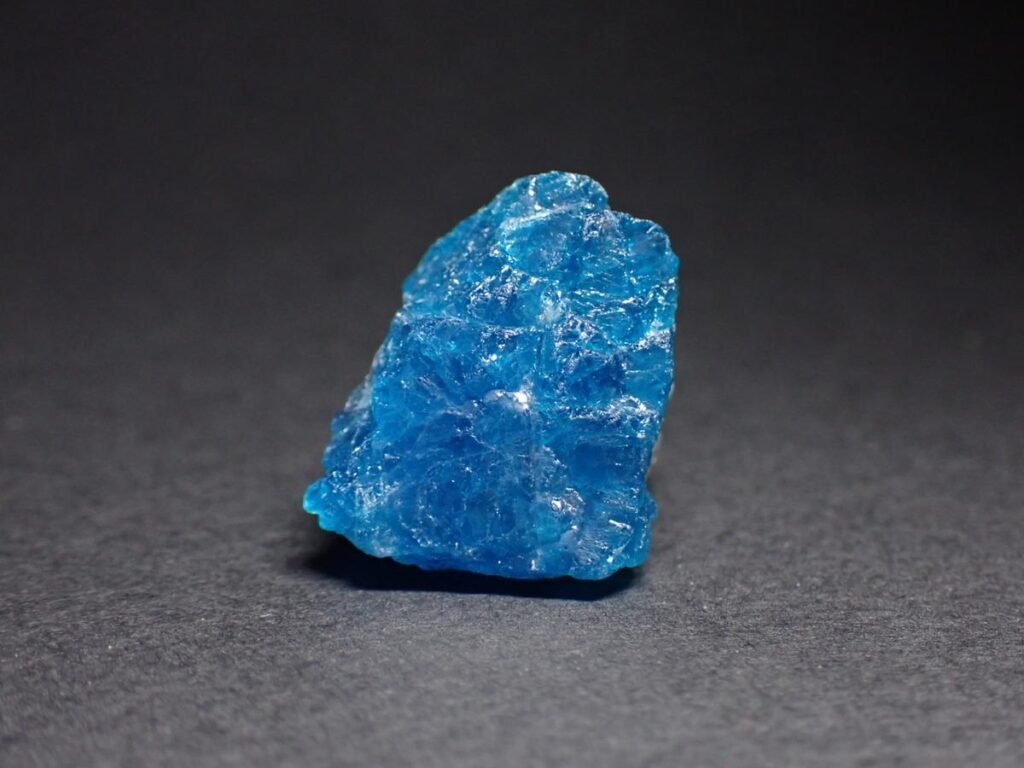
Blue Apatite: Blue apatite is a color-based variety that ranges from pale blue to deep blue and blue-green. Transparent specimens may be cut into faceted gemstones, while translucent material can be fashioned into cabochons. Its moderate hardness makes it more susceptible to scratching and abrasion than many commonly used jewelry gemstones.
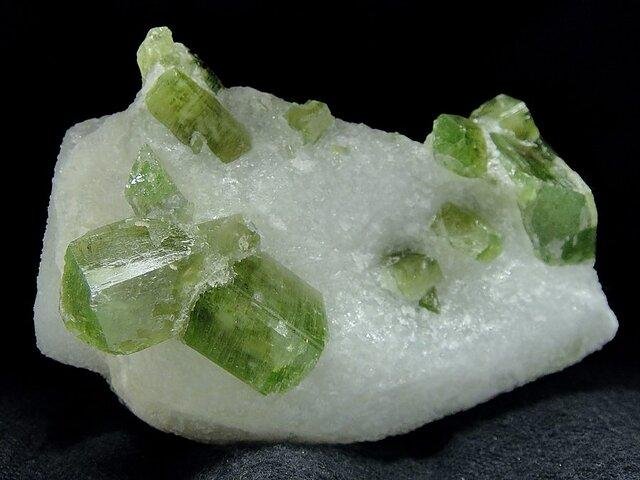
Green Apatite: Green apatite occurs in shades ranging from pale green to dark green. It is found in several geological settings and may be used as a gemstone when crystals possess suitable transparency, clarity, and color. The appearance of individual specimens varies according to trace elements, inclusions, and other compositional factors.
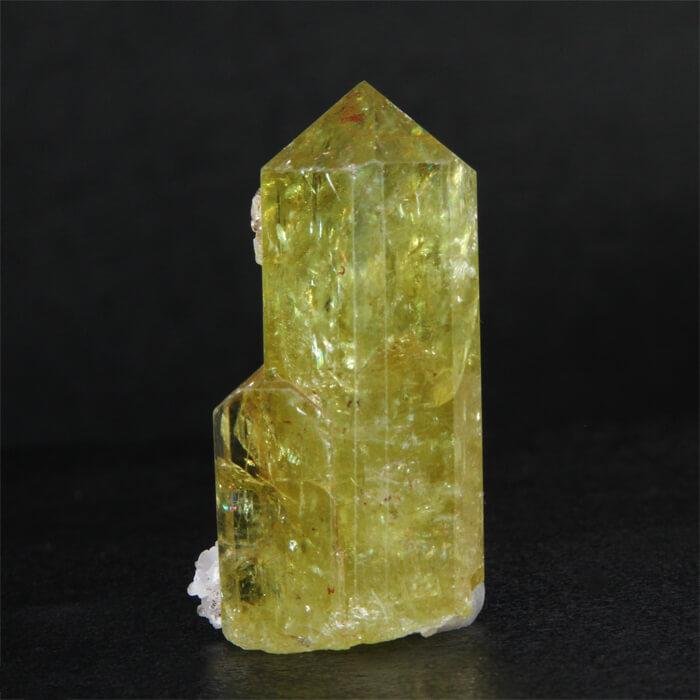
Yellow Apatite: Yellow apatite ranges from pale yellow to golden yellow and may occur as transparent crystals or massive material. Its color can vary with chemical composition and structural characteristics. Transparent specimens with suitable clarity may be faceted for jewelry or retained as mineral collection pieces.
These categories differ in mineralogical status. Fluorapatite, chlorapatite, and hydroxylapatite are compositionally defined mineral species, whereas blue apatite, green apatite, and yellow apatite are descriptive color varieties rather than separate mineral species. The identification of a particular apatite specimen therefore depends on its chemical composition and mineralogical characteristics, rather than color alone.
Uses of Apatite
Apatite is primarily used as an industrial source of phosphorus. Phosphate rock containing apatite is mined and processed to produce phosphoric acid, which is then used in the manufacture of phosphate fertilizers. These fertilizers supply phosphorus, an essential plant nutrient involved in root development, energy transfer, and other biological processes. Depending on the deposit and its chemical composition, apatite-bearing rock may undergo beneficiation to increase its phosphate content before further processing. Phosphate materials derived from apatite are also used in certain animal feed supplements and in the production of various industrial chemicals.
Apatite has applications in scientific research because its crystal structure can accommodate a range of trace elements and radioactive elements. Geologists analyze apatite compositions to investigate magma evolution, the origin of igneous rocks, and the chemical conditions under which minerals form. Uranium-bearing apatite can be used in uranium lead dating, while apatite fission track analysis and related thermochronological methods help researchers reconstruct the cooling and thermal histories of rocks. These techniques are particularly useful in studies of mountain building, sedimentary basin development, and the movement of rocks through the Earth’s crust.
Gem-quality apatite is used in jewelry and mineral collections. Transparent crystals with suitable color and clarity may be faceted or cut into cabochons, with blue, green, yellow, and violet specimens among the colors encountered in the gemstone trade. However, its Mohs hardness of 5 makes it more vulnerable to scratching and abrasion than harder gemstones such as quartz, corundum, and beryl. Apatite jewelry therefore requires careful handling and is generally better suited to occasional wear than to jewelry exposed to frequent impact. In addition to these uses, synthetic apatite materials, particularly hydroxylapatite, are investigated and applied in biomedical research, dental materials, and bone repair because of their chemical similarity to the mineral component of natural bone and teeth.