
Citrine is a yellow to orange variety of quartz, a silicon dioxide mineral with the chemical formula SiO₂. Its color ranges from pale yellow and lemon yellow to golden yellow, honey brown, and reddish orange, depending on the concentration and distribution of color-producing defects within its crystal structure. Citrine belongs to the trigonal crystal system and has a Mohs hardness of 7, making it relatively resistant to scratching and suitable for a wide range of jewelry applications. It commonly occurs as transparent to translucent crystals with a vitreous luster and can develop well-defined hexagonal prismatic forms with characteristic pyramidal terminations.
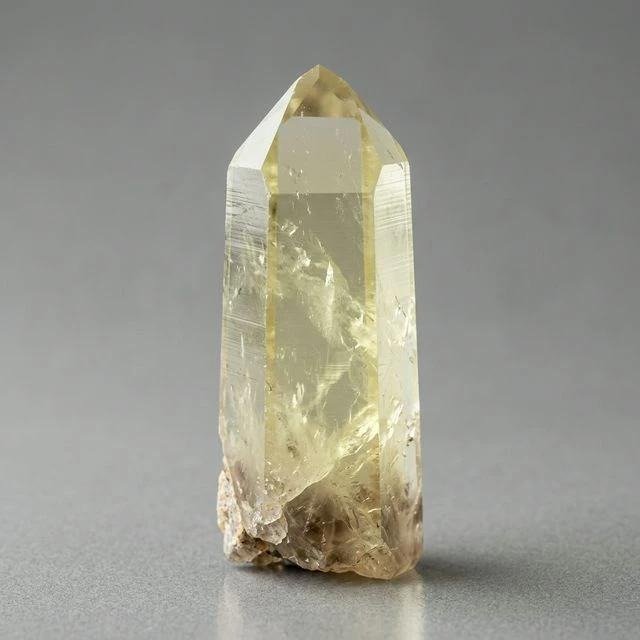
Natural citrine is comparatively uncommon in the commercial gemstone market, and much of the citrine sold in jewelry is produced by heat-treating amethyst or, less commonly, other varieties of quartz. Natural citrine typically displays pale yellow to golden or brownish-yellow colors, while heat-treated amethyst often develops deeper orange, reddish-orange, or burnt-orange tones. Although these materials share the same fundamental chemical composition, their geological histories and color-producing mechanisms differ. Citrine is valued as a facetable gemstone, a material for cabochons and ornamental objects, and a variety of quartz frequently collected by mineral enthusiasts. Accurate identification therefore involves considering its color, crystal habit, inclusions, and geological origin, as well as whether the material has undergone artificial treatment.
History and Etymology of Citrine
The name citrine is derived from the French word citron, meaning lemon, which refers to the yellow coloration characteristic of this variety of quartz. The term reflects the gemstone’s visual resemblance to citrus fruits and is consistent with the naming conventions historically used for minerals and gemstones based on their appearance. Yellow quartz has been known and used since antiquity, although historical descriptions do not always distinguish citrine from other yellow or golden-colored gemstones. Before modern mineralogical classification developed, stones with similar colors could be grouped together according to their appearance rather than their chemical composition or crystal structure.
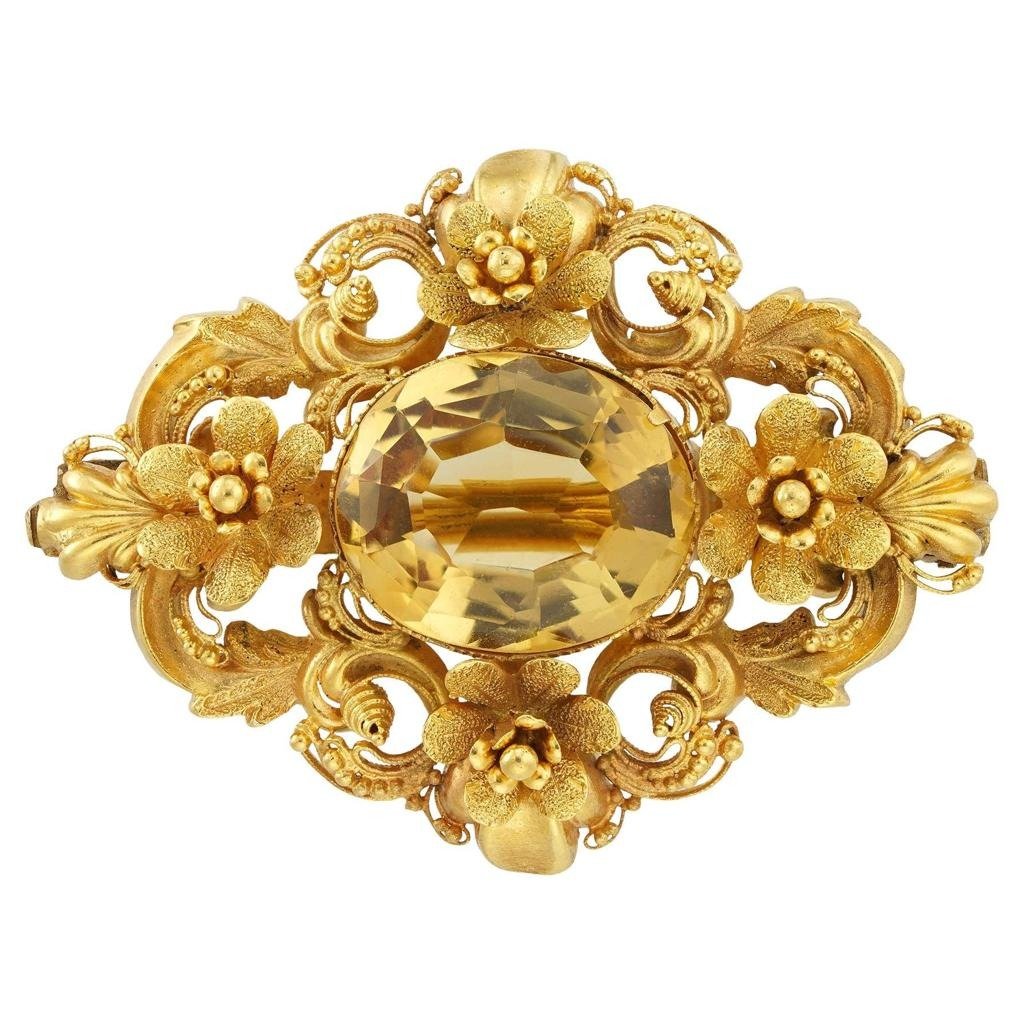
Citrine has been used in decorative objects, personal ornaments, and jewelry for centuries. During the Hellenistic and Roman periods, quartz varieties were fashioned into engraved stones, beads, and other ornamental pieces, although identifying specific historical examples as natural citrine can be difficult without detailed examination. In later European jewelry traditions, yellow quartz was sometimes used as a more accessible alternative to rarer yellow gemstones. Its availability in relatively large, transparent crystals also made it suitable for cutting into faceted stones.
The commercial use of citrine expanded considerably during the development of modern gemstone processing and international mineral trading. Heat treatment became an important method for producing yellow and orange quartz from more widely available amethyst and other quartz materials. As a result, the commercial category of citrine came to include both naturally colored material and treated quartz. Today, gemological laboratories distinguish natural citrine from heat-treated amethyst when the available evidence permits, using characteristics such as color distribution, inclusions, and spectroscopic properties. This distinction remains relevant to gemstone identification, documentation, and trade.
Geological Formation and Occurrence of Citrine
Citrine forms through geological processes that produce yellow coloration in quartz, most commonly in hydrothermal environments and certain igneous rocks. Quartz crystallizes from silica-rich fluids or melts under suitable temperature and pressure conditions, developing its characteristic framework of silicon and oxygen atoms. The yellow color of natural citrine is associated with defects and trace chemical components within the crystal structure, particularly those involving iron. The exact mechanisms responsible for its coloration can vary, and the relationship between iron content, irradiation, and the thermal history of quartz is complex. Natural citrine is therefore distinguished not simply by the presence of iron, but by the specific conditions under which its color developed.
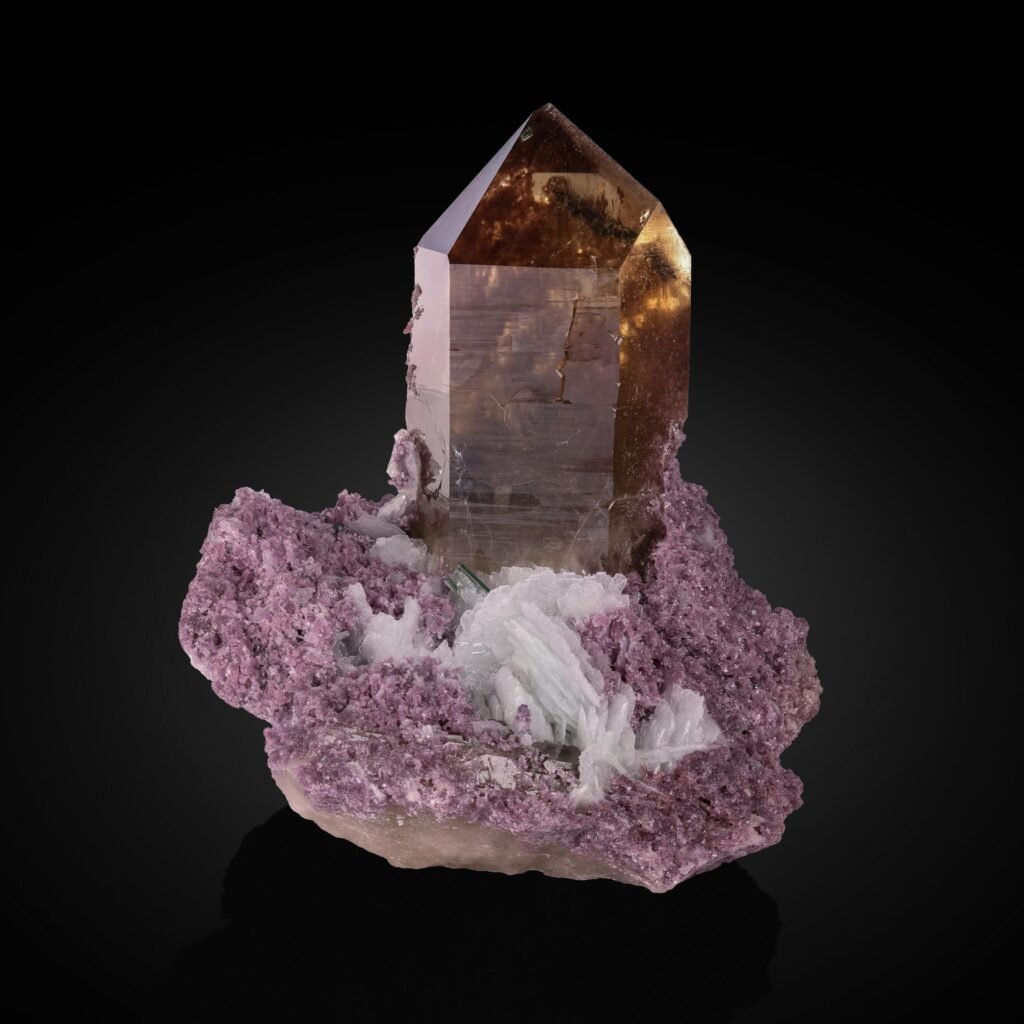
Natural citrine is commonly associated with hydrothermal veins, pegmatites, and cavities within silica-rich rocks. In hydrothermal environments, mineral-bearing fluids circulate through fractures and open spaces in the Earth’s crust. As temperature, pressure, and fluid chemistry change, dissolved silica can precipitate and form quartz crystals. Where the necessary chemical and physical conditions are present, these crystals may develop yellow coloration during or after crystallization. Citrine may occur as individual crystals, crystal clusters, or masses of quartz associated with other minerals, including feldspar, mica, and various quartz varieties. The size, transparency, and crystal habit of the resulting material depend on the available space, growth rate, fluid composition, and subsequent geological alteration.
Brazil is one of the most important sources of commercial citrine, particularly material obtained from quartz-rich pegmatites and amethyst-bearing deposits. Other occurrences have been reported in countries including Madagascar, Russia, Spain, and several African nations. However, the identification of natural citrine at a particular locality requires care because yellow quartz recovered from many deposits may subsequently be heat-treated before entering the gemstone market. Amethyst-bearing deposits are especially significant to the commercial supply because heating can transform the purple coloration of suitable material into yellow, orange, or brownish-orange tones. Consequently, the geographic origin of a quartz specimen alone does not establish whether its color is natural or treatment-induced. Mineralogical examination and, where necessary, gemological testing are used to assess its formation history and treatment status.
Crystal Structure and Chemical Composition of Citrine
Citrine is a variety of quartz composed primarily of silicon dioxide (SiO₂). It shares the same fundamental chemical composition and crystal structure as other quartz varieties, including amethyst, rose quartz, smoky quartz, and colorless rock crystal. Quartz belongs to the trigonal crystal system, although its external crystal habit commonly exhibits six-sided prismatic forms that reflect the underlying symmetry of its structure. The mineral consists of a continuous three-dimensional framework of silicon-oxygen tetrahedra, with each silicon atom bonded to four oxygen atoms. These tetrahedra are linked through shared oxygen atoms, forming a stable network that contributes to quartz’s hardness, durability, and characteristic physical properties.
The yellow coloration of citrine is not caused by a separate yellow mineral component but by color-producing defects and trace elements within the quartz structure. Iron is particularly relevant to the coloration of natural citrine, where iron-related defects may interact with natural radiation and other geological factors to produce yellow to brownish-yellow hues. The precise mechanisms depend on the conditions under which the quartz formed and subsequently changed. Heat-treated citrine, commonly produced from amethyst, develops its color through changes in existing color centers during heating. These processes can produce yellow, orange, and reddish-orange tones, although the resulting appearance depends on the original material and the treatment conditions.
Citrine crystals commonly develop elongated prismatic shapes with six-sided cross sections and pyramidal terminations. They may also occur as massive aggregates, irregular grains, or crystal clusters, depending on the geological environment. Well-formed crystals are particularly associated with open cavities and mineral-filled fractures where sufficient space is available for growth. Internally, citrine may be transparent or translucent and can contain liquid inclusions, gas bubbles, fractures, and other mineral inclusions. These features can provide information about its growth environment and geological history. Although its structure is the same as that of other quartz varieties, differences in color, inclusions, and crystal development allow citrine to be described as a distinct gemological variety rather than a separate mineral species.
Color and Optical Properties of Citrine
Citrine displays a range of yellow and orange colors, including pale lemon yellow, golden yellow, honey yellow, yellowish brown, and reddish orange. The intensity and distribution of its color vary according to the origin of the material, the nature of its color-producing defects, and any subsequent treatment. Natural citrine commonly exhibits relatively pale yellow to golden or brownish-yellow hues, while heat-treated amethyst often shows stronger orange, reddish-orange, or burnt-orange coloration. These patterns are useful for preliminary examination, but color alone cannot reliably establish whether a specimen is natural or treated. Some natural citrine has a saturated orange appearance, and treated material can also display relatively light yellow tones.
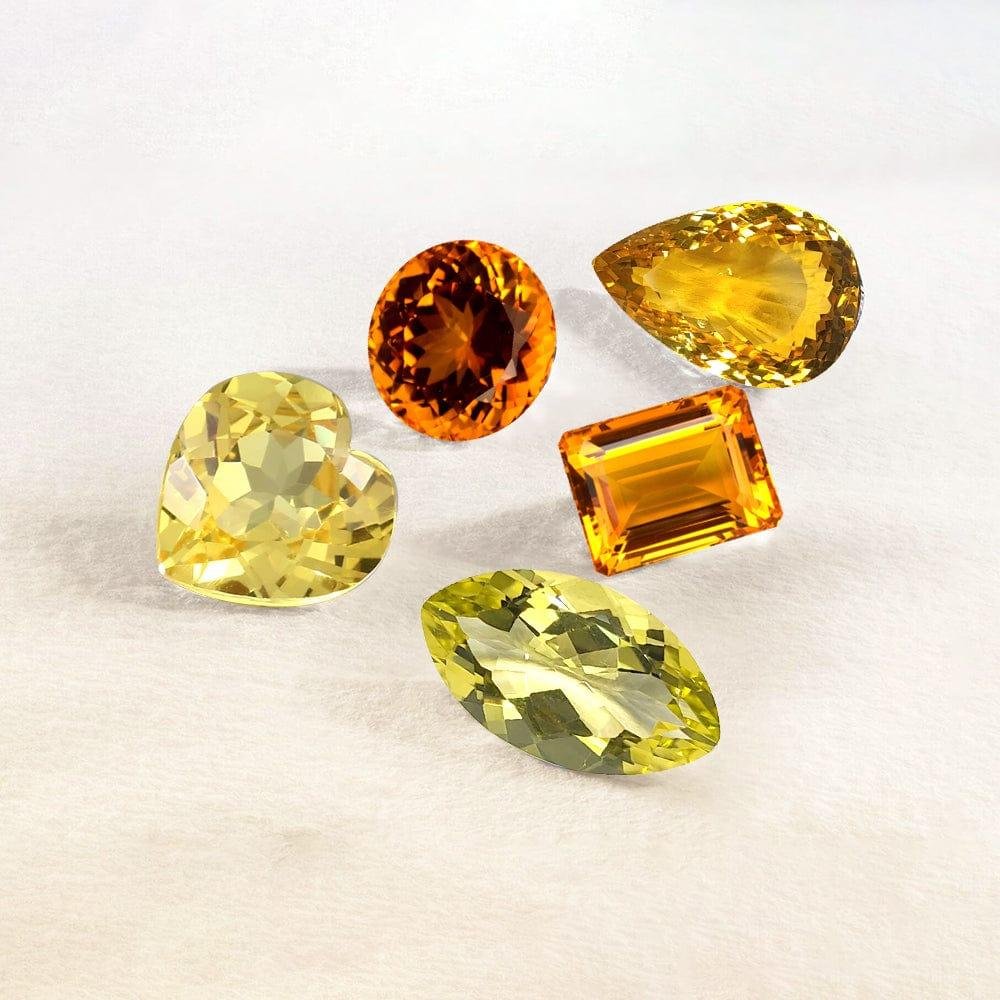
Citrine has a vitreous luster, meaning that its polished surfaces exhibit a glass-like appearance. Transparent specimens can show good clarity and transmit light effectively, making them suitable for faceted gemstones. Translucent varieties are also encountered, particularly in massive material or crystals containing numerous inclusions. Citrine has a refractive index of approximately 1.544–1.553 and is optically uniaxial positive. Its birefringence is relatively low, typically around 0.009, which can produce subtle differences in the behavior of light passing through different crystallographic directions. These optical characteristics are shared broadly with other varieties of crystalline quartz and are useful in gemological identification.
The gemstone generally has weak pleochroism or may show no readily distinguishable pleochroism under ordinary observation. Its apparent color can vary slightly with lighting conditions, gemstone orientation, and the thickness of the material. Well-cut citrine can display a combination of brightness and color distribution, while poorly oriented or unevenly colored rough may produce faceted stones with noticeable differences in saturation. Unlike gemstones with strong dispersion, citrine typically exhibits limited spectral color separation, so its visual appearance depends primarily on its body color, transparency, cut, and surface polish. These properties make it suitable for a variety of faceting styles, including oval, round, cushion, pear, and emerald cuts.
Physical and Chemical Properties of Citrine
Citrine has a Mohs hardness of 7, placing it above many common minerals in resistance to scratching and making it suitable for everyday jewelry when properly set and maintained. Its toughness is generally good, although it is not completely resistant to chipping or fracture. Quartz lacks true cleavage and typically breaks with a conchoidal fracture, producing curved, shell-like surfaces. This fracture pattern is characteristic of quartz and can be observed in broken or unpolished specimens. Citrine has a specific gravity of approximately 2.65 and a vitreous luster, while its streak is white. These properties are consistent with the broader quartz group and help distinguish citrine from some yellow-colored minerals with different chemical compositions and physical characteristics.
The chemical composition of citrine is silicon dioxide (SiO₂), consisting of silicon and oxygen in a continuous crystalline framework. Pure quartz is generally colorless, and the yellow coloration of citrine results from trace elements and structural defects rather than from a major change in its chemical composition. Iron-related color centers are particularly important in natural citrine, although the exact mechanisms responsible for its coloration can differ according to its geological history. As a crystalline form of silica, quartz is chemically stable under ordinary environmental conditions and is resistant to many common chemical agents. However, it can be attacked by hydrofluoric acid, which reacts with silica, and it may undergo alteration under certain high-temperature or chemically aggressive conditions.
Citrine is generally stable during normal handling and wear, but prolonged exposure to intense heat can alter its color. This sensitivity is especially relevant to treated quartz, as heating may change the distribution or behavior of color centers and produce yellow, orange, or brownish tones. Sudden temperature changes can also create thermal stress, particularly in stones containing internal fractures or inclusions. Strong impacts may cause chips or breaks despite the mineral’s relatively high hardness. For jewelry care, citrine can usually be cleaned with warm water, mild soap, and a soft brush. Abrasive materials should be avoided, and steam or ultrasonic cleaning is best approached cautiously when the stone has significant inclusions, fractures, or an uncertain treatment history.
Types and Varieties of Citrine
Citrine is classified as a color variety of quartz rather than a separate mineral species. Its different forms are generally described according to color, geological origin, crystal habit, and treatment history. Although these categories are useful in mineral collecting and gemstone trading, they do not represent distinct mineral species with different chemical formulas.
- Natural Citrine: Natural citrine develops its yellow coloration through geological processes without artificial heat treatment. It commonly displays pale yellow, golden yellow, or brownish-yellow hues and occurs in several types of quartz-bearing geological environments. Naturally colored material is relatively uncommon in the commercial gemstone market.
- Heat-Treated Citrine: Heat-treated citrine is produced by heating suitable quartz, most commonly amethyst, to modify its color. The resulting material can range from yellow-orange to deep orange or reddish orange. It is widely available in the gemstone trade and is often sold simply as citrine, although disclosure of treatment is relevant to accurate gemstone description.
- Lemon Citrine: Lemon citrine is a descriptive trade term for material with a light, bright yellow color resembling that of a lemon. The term refers to appearance rather than a formally recognized mineralogical variety. Depending on the specimen, the color may occur naturally or result from treatment.
- Golden Citrine: Golden citrine describes quartz with a medium to saturated golden-yellow color. This appearance is commonly associated with faceted gemstones and decorative crystal specimens. The designation does not independently establish the stone’s natural origin or treatment status.
- Madeira Citrine: Madeira citrine is a commercial name for citrine with a deep orange to reddish-orange color, often compared with the color of Madeira wine. Much of the material marketed under this name is heat-treated amethyst. It is a trade designation rather than a distinct mineral species.
- Smoky Citrine: Smoky citrine refers to quartz displaying a combination of yellow or golden coloration and brownish or smoky tones. Such material may occur naturally, while similar appearances can also be produced or modified through treatment. The term is used descriptively and does not denote a formally established mineral variety.
These categories are useful for describing the appearance and commercial presentation of citrine, but color names alone are insufficient for determining provenance or treatment. For mineralogical and gemological documentation, citrine is best identified as quartz, with additional information provided about its color, transparency, locality when known, and any confirmed treatment history.
How to Identify Citrine
Citrine can be identified through a combination of color, crystal form, hardness, optical properties, and geological context. Its yellow to orange coloration is the most immediately recognizable feature, but this characteristic is not unique to citrine. Other minerals, including yellow beryl, yellow sapphire, heliodor, and yellow calcite, can have a similar appearance. In addition, heat-treated amethyst and other treated quartz materials may be sold as citrine. Reliable identification therefore requires evaluating several properties rather than relying on color alone.
Crystal habit provides one useful identification feature. Well-formed citrine crystals commonly exhibit six-sided prismatic shapes with pyramidal terminations, although the precise habit depends on the conditions under which the quartz formed. Citrine may also occur as irregular fragments, massive aggregates, or transparent faceted stones. Under magnification, inclusions, growth features, and color distribution can provide additional clues. Some heat-treated amethyst displays concentrated orange coloration near crystal tips or uneven color zoning inherited from the original material. However, these characteristics are not universal, and their absence does not prove that a specimen is naturally colored.
Physical testing can help distinguish citrine from other yellow minerals. With a Mohs hardness of 7, quartz is harder than calcite, which has a hardness of 3, and can scratch glass under suitable conditions. Nevertheless, scratch testing is potentially damaging and should not be used as the sole identification method, especially for faceted gemstones. Citrine has a vitreous luster, a white streak, a specific gravity of approximately 2.65, and no true cleavage. Its refractive index, typically around 1.544–1.553, can be measured with a gemological refractometer when the stone’s shape and surface allow suitable contact.
Distinguishing natural citrine from heat-treated amethyst can require more specialized examination. Gemologists may assess internal color zoning, inclusions, spectroscopic characteristics, and other diagnostic features to determine whether the observed color is consistent with natural formation or artificial treatment. No single visual characteristic is conclusive in every case. For valuable gemstones or specimens whose origin and treatment status affect their documented identity, examination by a qualified gemologist or gemological laboratory is the most reliable approach.
Uses and Applications of Citrine
Citrine is primarily used as a gemstone in jewelry, including rings, necklaces, pendants, earrings, bracelets, and brooches. Its yellow to orange color range, relatively high hardness, and availability in transparent crystals make it suitable for a variety of cutting styles. Faceted citrine is commonly fashioned into round, oval, cushion, pear, and emerald cuts, while translucent or included material may be shaped into cabochons or used in decorative settings. Its color can complement both yellow and white metals, and larger stones are often incorporated into statement jewelry. Compared with many rarer colored gemstones, citrine is generally available in a broad range of sizes and price points, although value depends on factors such as color, clarity, cut, carat weight, origin, and treatment history.
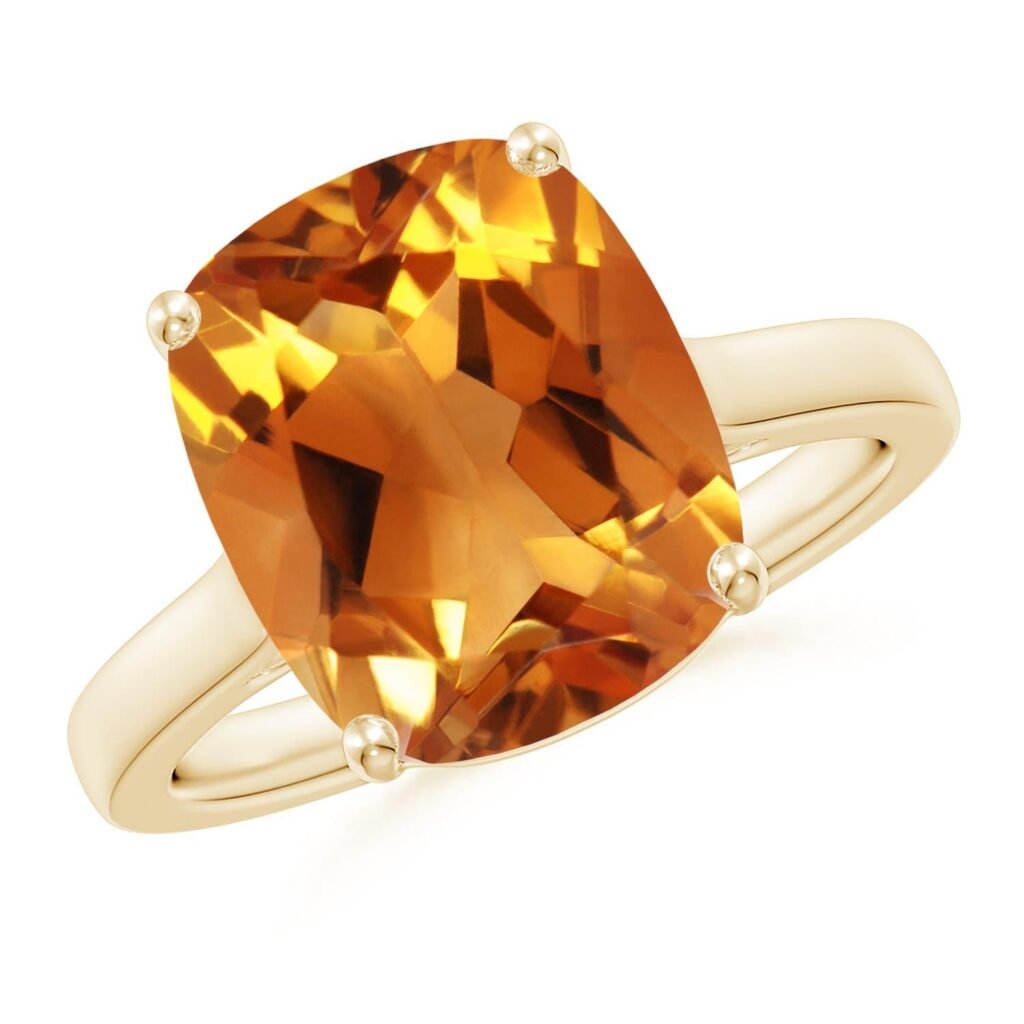
Citrine is also widely used in mineral collections and as a decorative material. Natural crystals with well-developed terminations may be displayed as individual specimens, while crystal clusters and larger quartz formations are used in interior decoration. Some specimens are polished into spheres, points, towers, carvings, and other ornamental objects. These products may be made from natural citrine, heat-treated quartz, or other materials marketed under citrine-related trade names, so the material’s identification can be important to collectors. Mineral specimens with documented localities or distinctive crystal features may be of particular interest to mineral enthusiasts and geological collections.
In addition to its use in jewelry and decoration, citrine appears in the metaphysical and crystal retail markets, where it is commonly associated with prosperity, abundance, and positive energy. These associations form part of contemporary spiritual and commercial traditions rather than established mineralogical or scientific properties. From a scientific perspective, citrine has the same fundamental chemical composition and crystal structure as other quartz varieties, and there is no reliable scientific evidence that it produces specific financial, emotional, or health outcomes through its color or presence. Its established applications remain primarily ornamental, decorative, and collectible.