
Carnelian is a reddish-orange to brownish-red variety of chalcedony, a microcrystalline form of quartz composed primarily of silicon dioxide (SiO₂). It is best known for its warm orange, red-orange, and deep reddish-brown colors, which result mainly from iron-bearing impurities within the silica. Carnelian typically has a translucent to semi-translucent appearance, a vitreous to waxy luster, and a fine-grained structure that does not display the individual crystals visible in many other quartz varieties.
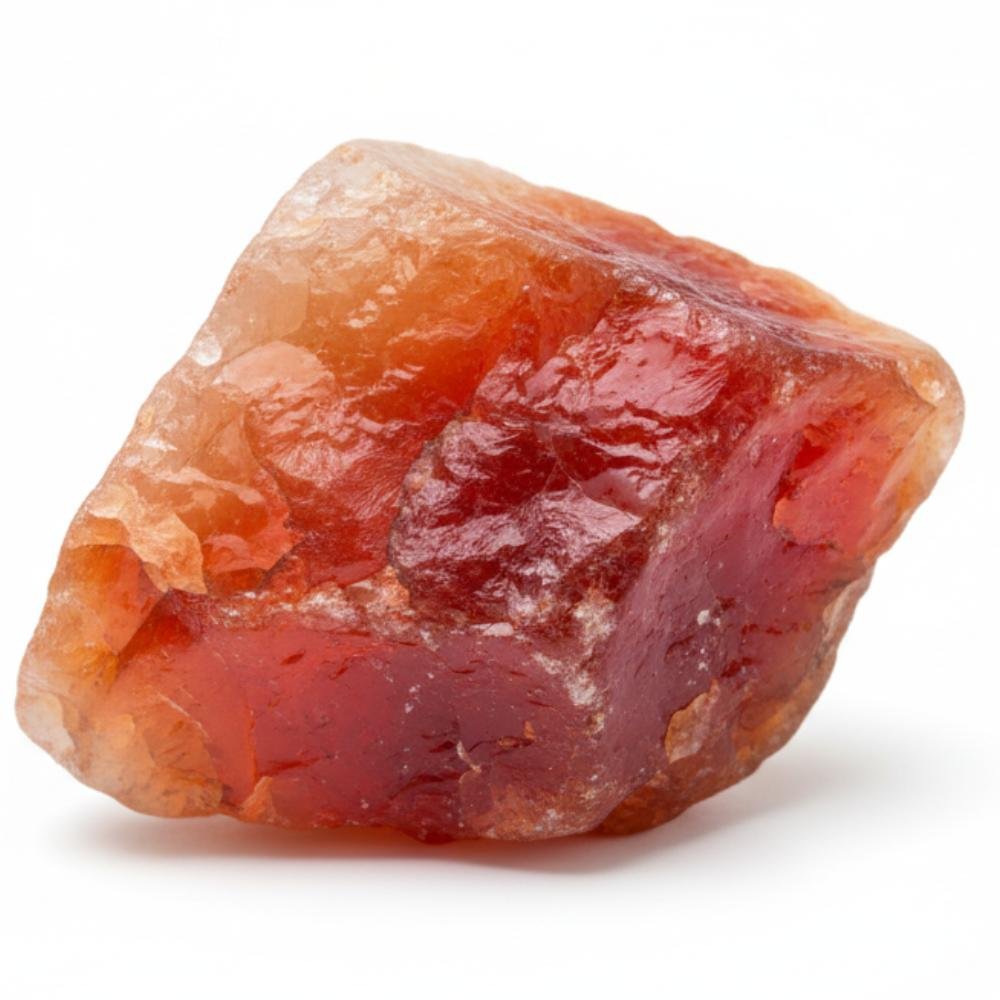
As a variety of chalcedony, carnelian belongs to the quartz mineral family and shares many of its physical and chemical properties with agate, jasper, and other microcrystalline silica materials. Its color can range from pale orange and peach to vivid orange-red and dark reddish brown, depending on the concentration and distribution of coloring agents, as well as the geological conditions under which it formed. Some specimens display relatively uniform coloration, while others show subtle variations in tone or cloudy internal patterns. Unlike banded agate, carnelian generally has a more uniform color distribution, although the distinction between these materials can sometimes be gradual.
Carnelian has been used for thousands of years in beads, seals, rings, pendants, carved ornaments, and other decorative objects. Its moderate hardness, ability to take a smooth polish, and availability in a range of warm colors have made it suitable for both traditional craftsmanship and modern jewelry production. Today, carnelian is commonly cut into cabochons, faceted stones, beads, and ornamental carvings. It is classified as a gemstone variety of chalcedony rather than a separate mineral species.
History and Etymology of Carnelian
Carnelian has a long history of use in jewelry, personal ornaments, and engraved objects, with archaeological evidence demonstrating its importance in several ancient civilizations. Beads and other objects made from carnelian have been discovered at archaeological sites associated with ancient Egypt, Mesopotamia, the Indus Valley Civilization, and the Mediterranean world. Its relatively durable structure and suitability for shaping made it a practical material for artisans who produced decorative objects and engraved stones using traditional tools.
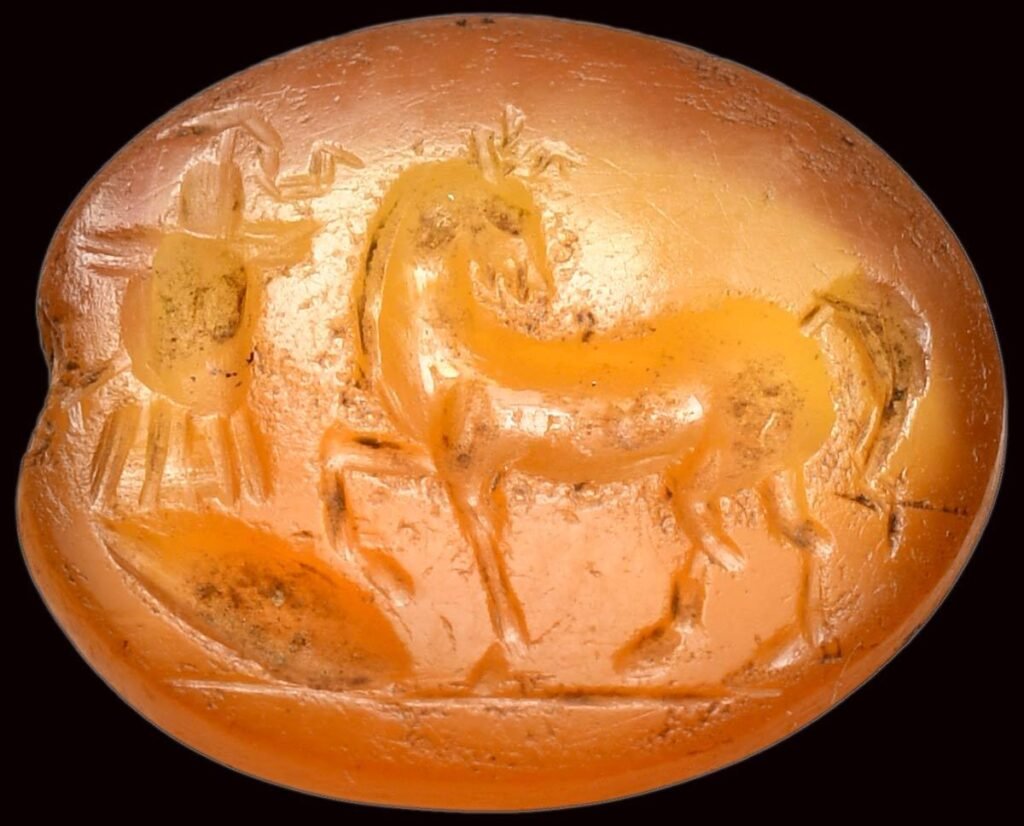
In ancient Egypt, carnelian was used in beads, amulets, pendants, and inlays. Its red and orange colors were incorporated into objects associated with Egyptian religious practices and funerary traditions. Carnelian was also widely used in the Indus Valley Civilization, where skilled craftspeople produced finely worked beads that circulated through regional and long-distance trade networks. In ancient Mesopotamia and Rome, the stone was fashioned into engraved seals, including signet rings and intaglios. Its ability to withstand ordinary handling while retaining detailed engravings made it suitable for objects used to identify individuals, authenticate documents, and mark ownership.
The name carnelian is generally associated with the Latin word carneus, meaning flesh-colored, a reference to the stone’s characteristic reddish-orange appearance. The related term cornelian has also been used historically. In mineralogical and gemological literature, carnelian is sometimes discussed alongside sard, another reddish to brownish-red variety of chalcedony. The two terms are not always applied consistently, although sard is commonly used for darker, browner, or less orange material.
Carnelian remains an established gemstone in contemporary jewelry and lapidary work. Although its historical applications included seals and carved objects, modern production focuses largely on polished beads, cabochons, pendants, rings, bracelets, and decorative pieces.
Mineral Composition and Chemical Formula of Carnelian
Carnelian is composed predominantly of silicon dioxide, with the chemical formula SiO₂. It is a variety of chalcedony, which consists of extremely fine quartz crystals and may contain associated silica phases and minor impurities. Unlike a distinct mineral species with a narrowly defined chemical composition, carnelian is identified primarily by its color and its relationship to chalcedony.
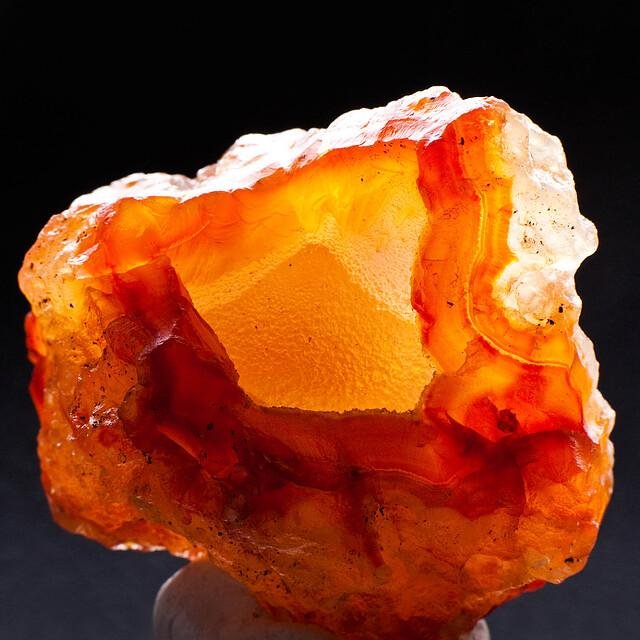
Its orange to reddish coloration is commonly associated with iron-bearing impurities. Iron may occur in different chemical states and mineralogical forms within the silica, and its distribution can influence the intensity and character of the color. The precise mechanism responsible for the color can vary among specimens, so not every carnelian sample has an identical composition or coloring process. Trace elements and microscopic inclusions may also contribute to differences in appearance.
Carnelian does not have a unique chemical formula separate from chalcedony or quartz. Its main chemical component is silica, while minor impurities generally occur in amounts too small to change its basic classification. This composition gives carnelian many of the same properties as other quartz varieties, including relatively high hardness, chemical stability under ordinary conditions, and resistance to everyday wear.
Formation and Geological Occurrence of Carnelian
Carnelian forms through the deposition and gradual consolidation of silica-rich fluids in geological environments where dissolved silica can accumulate within cavities, fractures, and porous rocks. These fluids may originate from groundwater circulating through rocks, hydrothermal activity, or the alteration of silica-bearing materials. As temperature, pressure, fluid chemistry, and other conditions change, silica precipitates and develops into fine-grained chalcedony. The process can occur in volcanic rocks, sedimentary formations, and other geological settings where suitable sources of silica and open spaces are present.
One common environment for chalcedony formation is the cavities and vesicles found in volcanic rocks, particularly basalt. These cavities may initially form when gas bubbles become trapped in cooling lava. Later, silica-bearing fluids enter the openings and deposit successive layers or masses of microcrystalline silica. Depending on the chemical composition of the fluids and the conditions of formation, the resulting material may develop as agate, carnelian, or other forms of chalcedony. Carnelian may occur as cavity fillings, nodules, veins, or irregular masses within the host rock.
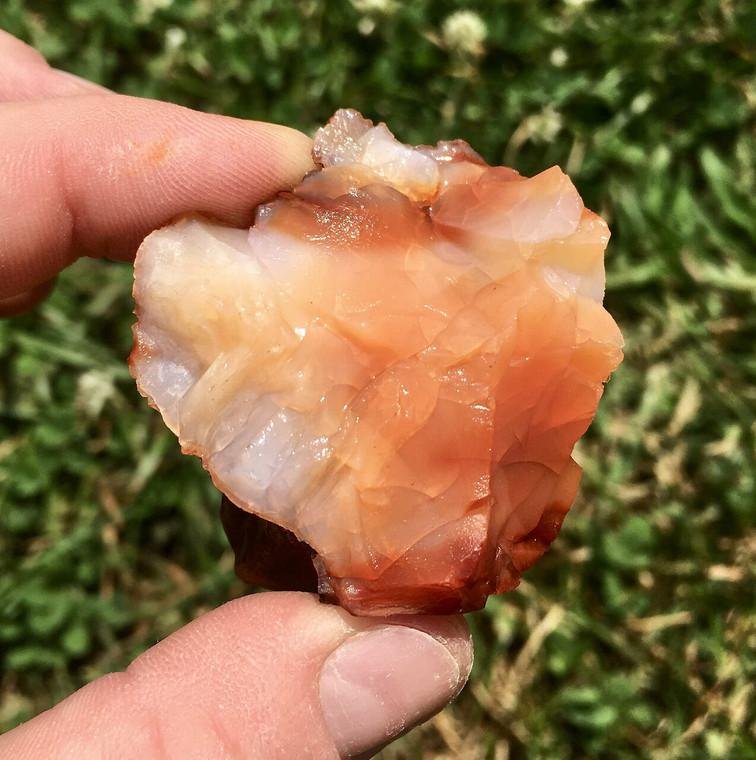
The development of carnelian’s characteristic color depends on the presence and distribution of iron-bearing components during or after silica deposition. Variations in iron concentration, oxidation conditions, and subsequent geological alteration can produce colors ranging from pale orange to deep red-brown. Some specimens acquire or intensify their color through later heating, whether through natural geological processes or human treatment. Because color development can involve several mechanisms, the appearance of a specimen alone does not always reveal its precise formation history.
Carnelian occurs in a variety of geological settings and is found in many parts of the world. It has been collected from volcanic formations, silica-rich sedimentary deposits, weathered rocks, and secondary deposits where erosion has released durable chalcedony fragments from their original host rocks. Its hardness and resistance to weathering allow pieces to accumulate in gravel beds and alluvial deposits, where they can be recovered for lapidary use.
The geological conditions responsible for carnelian formation are not restricted to a single region or rock type. Its occurrence depends primarily on the availability of silica, suitable spaces for mineral deposition, and the chemical conditions needed to produce its characteristic coloration. These factors account for the wide geographic distribution and the considerable variation in color, translucency, and texture found among natural carnelian specimens.
Crystal Structure of Carnelian
Carnelian is composed primarily of chalcedony, a microcrystalline form of silica in which extremely small quartz crystals occur in a dense, intergrown structure. The principal chemical component is silicon dioxide (SiO₂), and the underlying crystalline structure is based on the arrangement of silicon and oxygen atoms characteristic of quartz. Each silicon atom is bonded to four oxygen atoms, forming silicon–oxygen tetrahedra that connect through shared oxygen atoms to create a three-dimensional framework. This framework provides the structural basis for the hardness, durability, and chemical stability associated with carnelian.
Unlike large, well-developed quartz crystals, the quartz crystallites in carnelian are microscopic and commonly intergrown with one another. Their size, orientation, and distribution contribute to the stone’s relatively uniform appearance and fine-grained texture. Chalcedony may also contain minor amounts of other silica phases, including moganite, although the proportions vary between specimens. These microscopic structural characteristics distinguish chalcedony from coarser crystalline varieties of quartz, such as amethyst and citrine, even though they share the same principal chemical composition.
Carnelian does not typically display visible crystal faces or a distinct external crystal form because it develops as compact masses, nodules, veins, or cavity fillings rather than as large individual crystals. Its internal structure is generally dense and relatively homogeneous at the macroscopic scale, although microscopic pores, inclusions, and variations in silica deposition can occur. These features influence translucency, surface polish, and the distribution of color throughout the material. The absence of prominent cleavage planes also contributes to carnelian’s suitability for carving and jewelry, as it can be shaped into a variety of forms without separating readily along preferred internal planes.
Physical Properties of Carnelian
Carnelian is a variety of chalcedony composed primarily of silicon dioxide (SiO₂). Its Mohs hardness typically ranges from 6.5 to 7, while its specific gravity is approximately 2.58–2.64 and its refractive index is around 1.53–1.54. It generally occurs as compact masses, nodules, veins, or cavity fillings rather than as well-formed individual crystals. Its physical properties are largely consistent with those of other microcrystalline quartz varieties.
Carnelian has a waxy to vitreous luster and ranges from translucent to opaque. Its streak is white, and its fracture is commonly conchoidal or uneven. It has no distinct cleavage and is brittle, meaning that it may fracture under sufficient impact. The stone’s fine-grained structure gives it a relatively uniform appearance, although internal inclusions, variations in silica deposition, and differences in iron-bearing impurities can affect its color and translucency.
The color of carnelian ranges from pale orange and orange-red to deep reddish brown. These variations are associated primarily with iron-bearing impurities and their distribution within the silica. Translucent specimens may transmit light through thinner edges, while thicker areas often appear darker or more saturated. The surface luster also varies according to the stone’s natural texture and degree of polishing. Because carnelian can be shaped and polished without distinct cleavage planes interfering with the process, it is commonly used for cabochons, beads, engraved stones, and ornamental carvings. Its hardness provides reasonable resistance to everyday abrasion, although scratches, chips, and fractures can still occur during use.
Color and Optical Properties of Carnelian
Carnelian occurs in a range of colors, including pale orange, yellowish orange, orange-red, reddish brown, and deep red. Its coloration is primarily associated with iron-bearing impurities distributed within the microcrystalline silica. Differences in iron concentration, oxidation state, particle distribution, and geological alteration can produce variations in hue and intensity. Some specimens exhibit relatively uniform coloration, while others contain cloudy areas, subtle color gradients, or localized zones of darker red and brown. These variations reflect differences in the material’s composition and formation history.
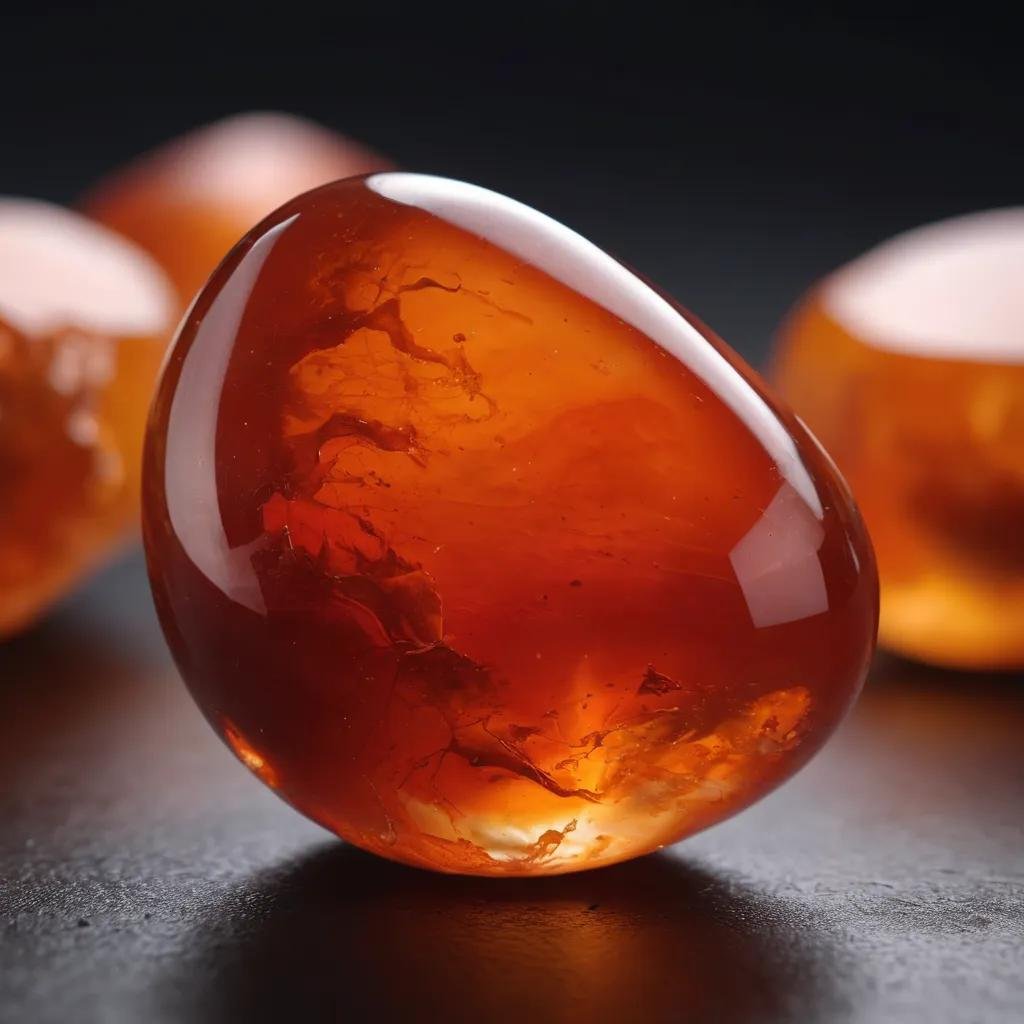
Carnelian is typically translucent to opaque, although the degree of translucency varies between specimens. Light may pass through thinner portions of a stone, particularly along its edges, creating a brighter appearance than in thicker areas. Its luster ranges from waxy to vitreous, depending on the surface finish and internal texture. Unlike transparent quartz varieties such as amethyst and citrine, carnelian generally does not display strong internal reflections or visible crystal formations. Its optical appearance is instead determined by its body color, fine-grained structure, and the scattering and transmission of light within the material.
Carnelian is commonly distinguished from other varieties of chalcedony by its predominantly orange to red coloration and generally limited or absent banding. Agate typically displays visible bands or concentric patterns, whereas carnelian is often more uniform in color. However, the distinction is not always absolute, and some specimens exhibit transitional characteristics between carnelian and banded agate. Darker reddish-brown material is sometimes classified as sard, although the terminology can vary among gemological and commercial sources. Heat treatment may also intensify or modify the color of some chalcedony, so color alone cannot always establish whether a specimen is naturally colored or treated.
Types and Varieties of Carnelian
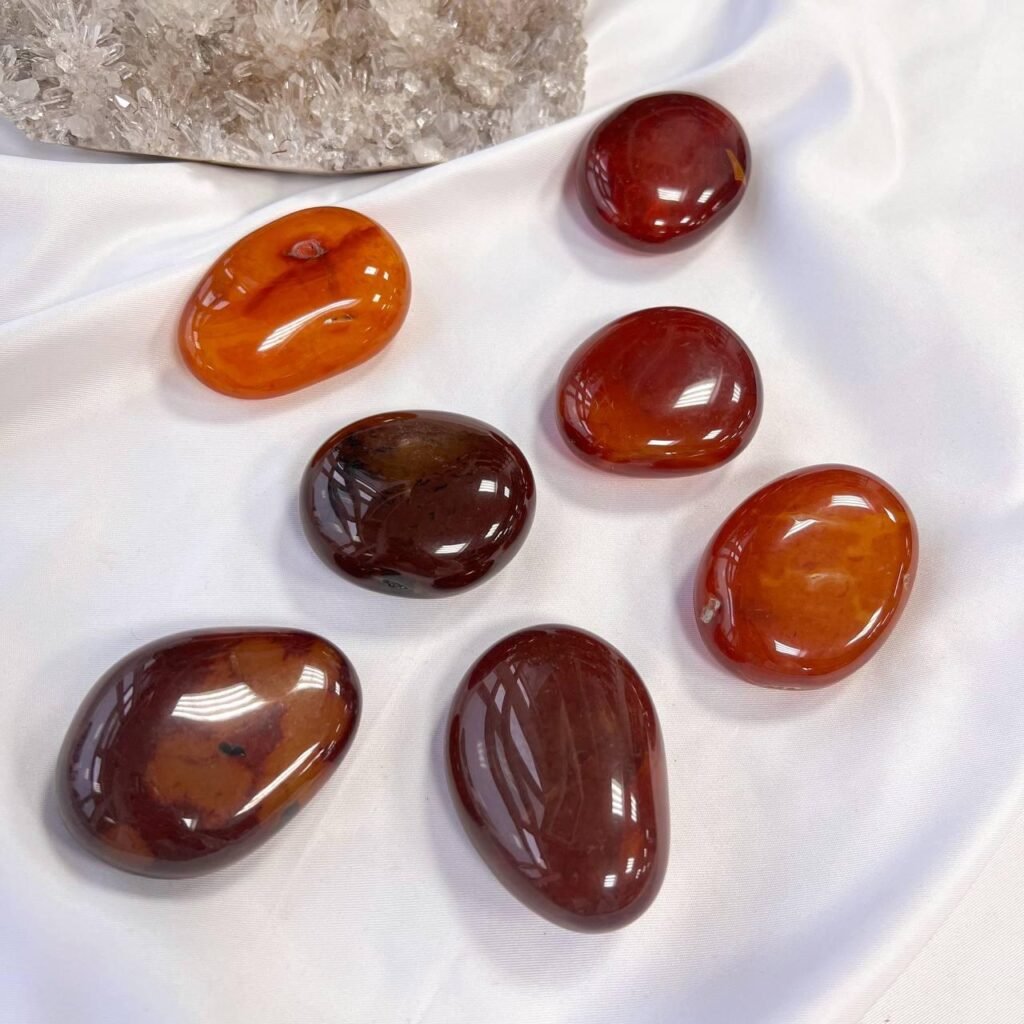
Carnelian is classified as a color variety of chalcedony rather than a separate mineral species. Its varieties are generally distinguished by differences in color, translucency, and internal patterning. The boundaries between these varieties are not always standardized, and some terms are used differently in gemological literature and the gemstone trade.
– Light Carnelian: Light carnelian ranges from pale orange to peach and yellowish orange. Its relatively light coloration is associated with the concentration and distribution of coloring impurities within the chalcedony.
– Red Carnelian: Red carnelian ranges from orange-red to deep red. Its color is commonly associated with iron-bearing components in the silica, although the precise coloration mechanism may vary among specimens.
– Brown Carnelian: Brown carnelian exhibits reddish-brown, chestnut, or dark brown tones. It may overlap in appearance with sard, a darker variety of chalcedony that is commonly described as brownish red.
– Banded Carnelian: Banded carnelian contains visible layers or zones of differing colors, usually within the orange, red, and white ranges. Specimens with distinct and repeated bands may also be classified as carnelian agate, depending on the pattern and terminology used.
– Sard: Sard is a dark-colored variety of chalcedony that commonly ranges from brownish red to deep reddish brown. It is closely related to carnelian, and the distinction between the two is based primarily on color rather than a fundamental difference in chemical composition or crystal structure.
– Heat-Treated Carnelian: Some carnelian or related chalcedony materials are heated to alter or intensify their coloration. Heat treatment may produce stronger reddish or orange tones, depending on the original material and treatment conditions. This is a treatment category rather than a natural mineral variety, and treated specimens should be distinguished from naturally colored material when relevant.
Major Sources and Localities of Carnelian
Carnelian occurs in numerous geological environments worldwide, particularly in regions with silica-rich volcanic rocks, sedimentary formations, and secondary deposits. Its distribution reflects the widespread occurrence of chalcedony, which forms when silica-bearing fluids deposit microcrystalline silica in cavities, fractures, and porous rocks. The quality, color, and texture of carnelian vary according to local geological conditions, including the composition of the host rock and the availability of iron-bearing impurities.
India is an important source of carnelian and has a long history of producing the material for beads, ornaments, and engraved objects. Gujarat, particularly the region around Khambhat (Cambay), is historically associated with carnelian bead manufacturing. Raw material from regional deposits has supported traditional lapidary industries, in which stones are shaped, polished, and sometimes heat-treated to modify their color.
Brazil produces carnelian and other varieties of chalcedony from several geological settings, including volcanic formations and silica-rich deposits. The country’s extensive quartz-bearing geological resources support the production of decorative stones and lapidary materials. Carnelian specimens from Brazil vary in color and translucency, ranging from pale orange to reddish brown.
Uruguay is known for chalcedony and agate deposits associated with volcanic rocks, particularly in the northern part of the country. Although agate is the principal commercial material from many of these deposits, reddish and orange chalcedony may also occur. The geological association between carnelian and agate means that both can be recovered from similar rock formations.
Madagascar produces various forms of chalcedony, including orange and red material used in jewelry and ornamental objects. Deposits occur in different geological environments across the island, and the appearance of the material varies between localities. Carnelian may be collected alongside other silica-rich gemstones and decorative stones.
Australia contains chalcedony occurrences in several regions, including areas associated with volcanic rocks and sedimentary deposits. Carnelian and related varieties may occur as nodules, cavity fillings, and fragments released by weathering. Their commercial importance depends on the color, size, and quality of the available material.
Carnelian and related reddish chalcedony varieties are also reported from other parts of the world, including the United States, Indonesia, and parts of Africa and Europe. Because chalcedony can form under a wide range of geological conditions, its occurrence is not limited to a small number of mineral-producing regions. However, the presence of chalcedony does not necessarily indicate a commercially significant carnelian deposit, as the color and quality required for gemstone production vary considerably.
Uses of Carnelian
Carnelian is used primarily as a gemstone, ornamental material, and lapidary material. Its applications are related to its hardness, compact microcrystalline structure, range of orange to red colors, and ability to be cut, engraved, and polished. The stone has been used for thousands of years, and many traditional applications continue in contemporary jewelry and decorative crafts.
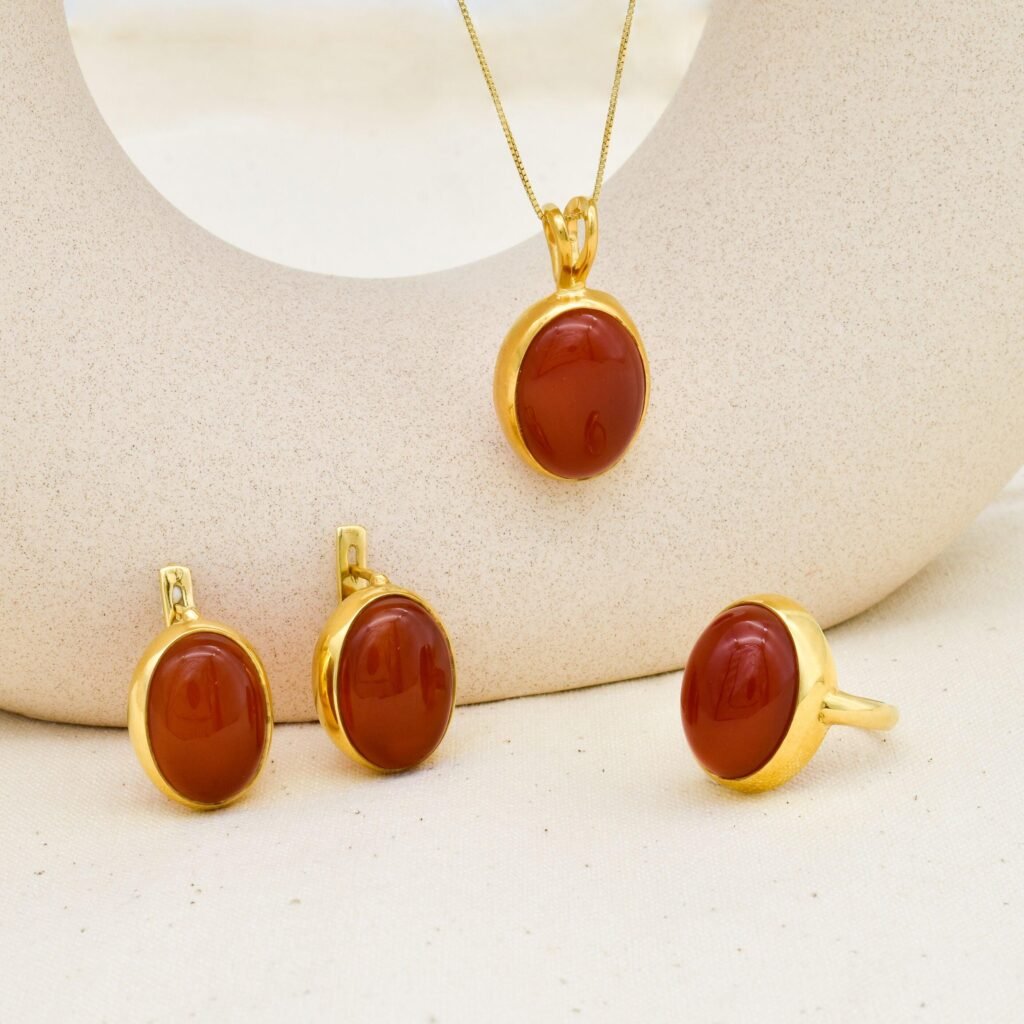
In jewelry, carnelian is commonly fashioned into beads, pendants, rings, bracelets, earrings, and necklaces. Cabochon cuts are frequently used because they display the stone’s color and translucency without requiring pronounced internal reflections. Carnelian can also be faceted, particularly when the material has sufficient transparency and consistent coloration. Beads are among its established forms of use and may be produced in spherical, oval, cylindrical, or irregular shapes. The stone’s hardness of approximately 6.5–7 on the Mohs scale makes it suitable for many jewelry applications, although it can still be scratched or fractured by impact.
Carnelian is also used for carving and engraving. Its compact structure and lack of distinct cleavage allow craftspeople to shape it into small figures, seals, cameos, and other objects. In antiquity, engraved carnelian was widely used for signet rings and seal stones, particularly in regions such as Mesopotamia, Egypt, Greece, and Rome. These objects could carry inscriptions, symbols, portraits, or decorative designs. Today, engraved carnelian remains part of traditional lapidary production and is also used in collectible objects and reproductions of historical designs.
In decorative arts, carnelian is fashioned into small sculptures, polished stones, inlays, ornamental boxes, and display pieces. Larger specimens may be cut and polished to emphasize their color distribution, while smaller fragments can be incorporated into mosaics or composite decorative objects. Its availability in different sizes and colors allows it to be used in both individually crafted items and standardized jewelry components.
Carnelian is also sold in the crystal and mineral collecting markets. Collectors may acquire rough specimens, polished pieces, nodules, and examples showing distinctive color patterns or geological associations. In some cultural and commercial settings, carnelian is associated with traditional beliefs about protection, vitality, or good fortune. These associations are part of its historical and contemporary cultural use rather than established mineralogical properties. There is no reliable scientific evidence that carnelian produces specific health benefits or therapeutic effects beyond its use as a physical material.