
Chrysoprase is a green variety of chalcedony, a cryptocrystalline form of quartz composed primarily of silicon dioxide (SiO₂). Its characteristic green color is mainly associated with small amounts of nickel incorporated into the silica-rich material. The color can range from pale apple green and yellowish green to deeper green, depending on the concentration and distribution of nickel-bearing compounds. Chrysoprase is usually translucent to nearly opaque, although higher-quality material can show a relatively even, slightly translucent appearance. As a variety of chalcedony, it has the fine-grained texture, lack of visible individual quartz crystals, and conchoidal fracture commonly associated with microcrystalline quartz.
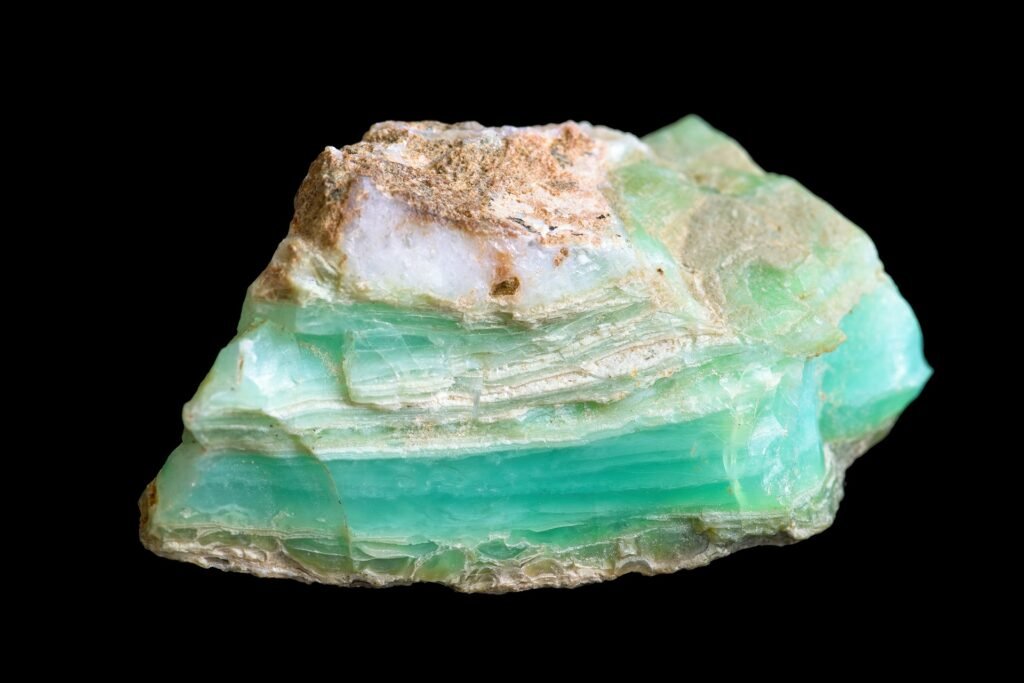
Unlike many green gemstones whose color is produced by chromium or iron, chrysoprase is particularly notable for its association with nickel. The distribution of nickel-related coloring material can be uneven, resulting in variations in tone and saturation within individual specimens. Chrysoprase is commonly cut as a cabochon because its color and fine texture are better displayed by smooth, curved surfaces than by faceting. It may also be used for beads, carvings, ornamental objects, and other lapidary materials. In gemological and mineralogical contexts, chrysoprase is generally discussed as a distinctive colored variety of chalcedony rather than as a separate mineral species.
Chrysoprase belongs to the broader quartz family and shares many physical characteristics with other varieties of chalcedony, including relatively high hardness, a vitreous to waxy luster, and good resistance to ordinary abrasion. Its green coloration, however, gives it a distinct place among ornamental quartz materials. Natural chrysoprase may also contain areas of lighter or darker color, inclusions, fractures, or other features related to the geological conditions under which the material formed. Because color is one of its most recognizable characteristics, the identification and evaluation of chrysoprase commonly involve examining its color, translucency, texture, hardness, and overall relationship to chalcedony.
History and Name of Chrysoprase
The name chrysoprase is derived from the Greek words chrysos, meaning “gold,” and prason, meaning “leek,” referring broadly to its characteristic yellowish-green to green coloration. Green chalcedony has been known and used as an ornamental stone for centuries, and chrysoprase has appeared in jewelry, carved objects, decorative materials, and historical collections. Its use became particularly notable in Europe during the eighteenth century, when deposits of green chalcedony from Central Europe supplied material for jewelry and ornamental work.
Historical descriptions of chrysoprase are sometimes difficult to separate from those of other green stones because older mineral and gem terminology was less standardized than modern classification. Stones described simply as green chalcedony or green quartz were not always distinguished according to their precise chemical cause of coloration. Modern gemological usage generally applies the name chrysoprase to nickel-colored chalcedony, helping distinguish it from other green varieties of quartz whose coloration may result from different elements or mineral inclusions.
Chrysoprase has also been associated with several historically important deposits, particularly in Central Europe and later in Australia. Australian chrysoprase became especially well known because of its relatively attractive green colors and occurrence in weathered ultramafic and nickel-rich geological environments. Today, chrysoprase remains primarily a gemstone and lapidary material, while mineralogical study focuses on its relationship to chalcedony, nickel-bearing alteration processes, and the geological environments responsible for its formation.
Formation and Geological Occurrence of Chrysoprase
Chrysoprase forms primarily in geological environments where silica-rich fluids interact with nickel-bearing rocks or weathered nickel-rich minerals. Unlike crystalline quartz, which develops well-defined individual crystals under suitable conditions, chrysoprase forms as a microcrystalline or cryptocrystalline aggregate of quartz. Its formation is commonly associated with the alteration and weathering of ultramafic rocks, including serpentinite and related nickel-bearing rocks. During prolonged weathering, nickel can be released from primary minerals and transported by groundwater or other low-temperature fluids. When these fluids encounter suitable silica-rich environments, chalcedony can precipitate and incorporate nickel-bearing material, producing the characteristic green coloration of chrysoprase.
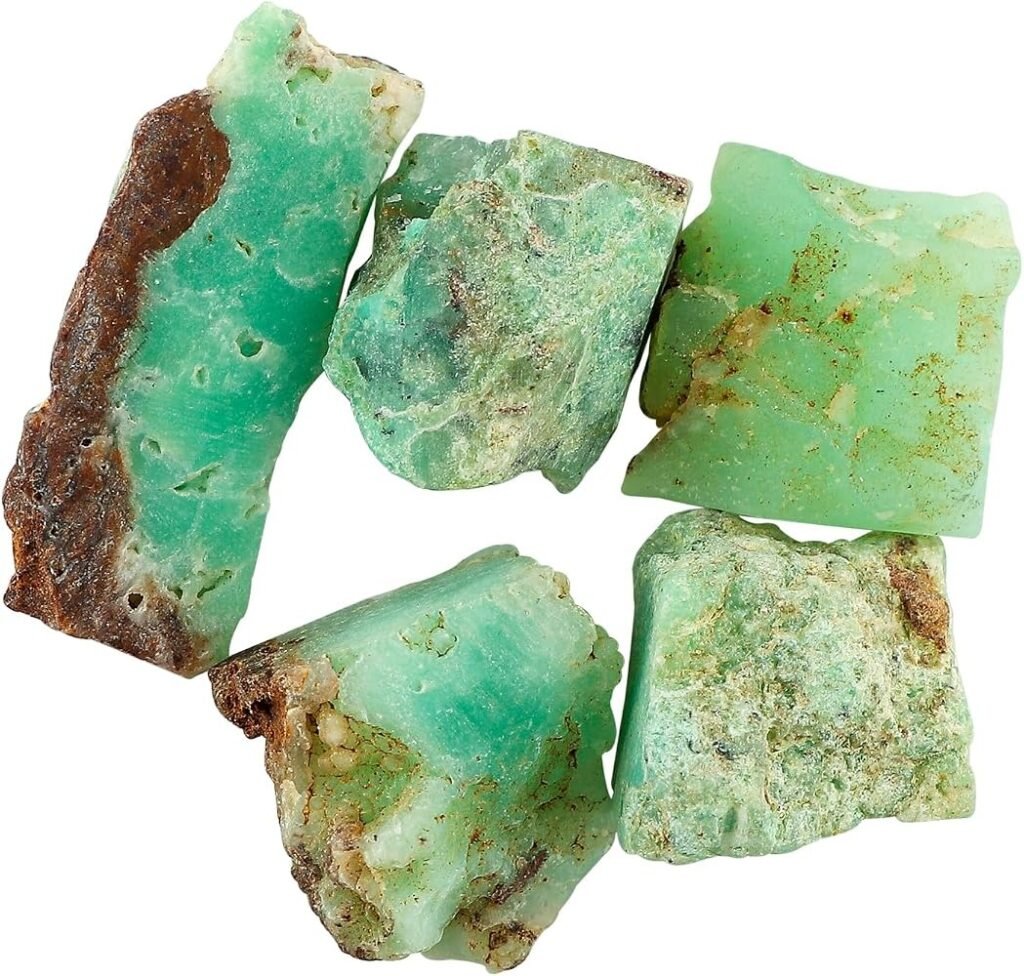
The exact mechanism responsible for the green color can vary between deposits. Nickel may occur in extremely fine-grained mineral phases or as dispersed nickel-bearing compounds within the chalcedony rather than as a major structural component of the quartz itself. This helps explain why chrysoprase can show significant differences in color intensity, transparency, and distribution of green areas. Pale material may contain relatively small amounts of coloring material, while stronger green specimens generally contain a greater concentration or more favorable distribution of nickel-related components. Geological alteration can also produce zones with different textures and colors within the same deposit, so chrysoprase is often found together with other forms of chalcedony, quartz, iron oxides, clay minerals, and altered host rock.
Important chrysoprase occurrences are associated with nickel-rich geological regions in several parts of the world. Australia is particularly well known for chrysoprase deposits, especially in Western Australia, where the gemstone occurs in weathered ultramafic terrains and lateritic profiles associated with nickel mineralization. Other historical and documented occurrences include Poland and parts of Central Europe, as well as deposits in countries such as Brazil, Tanzania, Zimbabwe, and the United States. The geological setting differs from locality to locality, but the combination of abundant silica, nickel-bearing source rocks, weathering, and suitable low-temperature conditions is an important factor in the development of chrysoprase.
Crystal Structure and Mineralogical Characteristics of Chrysoprase
Chrysoprase does not have a separate crystal structure from other forms of chalcedony because it is a variety of cryptocrystalline quartz. Its fundamental chemical composition is dominated by silicon dioxide (SiO₂), with silicon and oxygen forming the structural framework of quartz at the microscopic level. However, instead of forming large, easily visible quartz crystals, the silica occurs as an aggregate of extremely small quartz crystallites, commonly accompanied by microfibrous or granular structures. This fine-grained arrangement is responsible for the smooth appearance and relatively uniform texture that make chrysoprase suitable for cabochons and other polished forms.
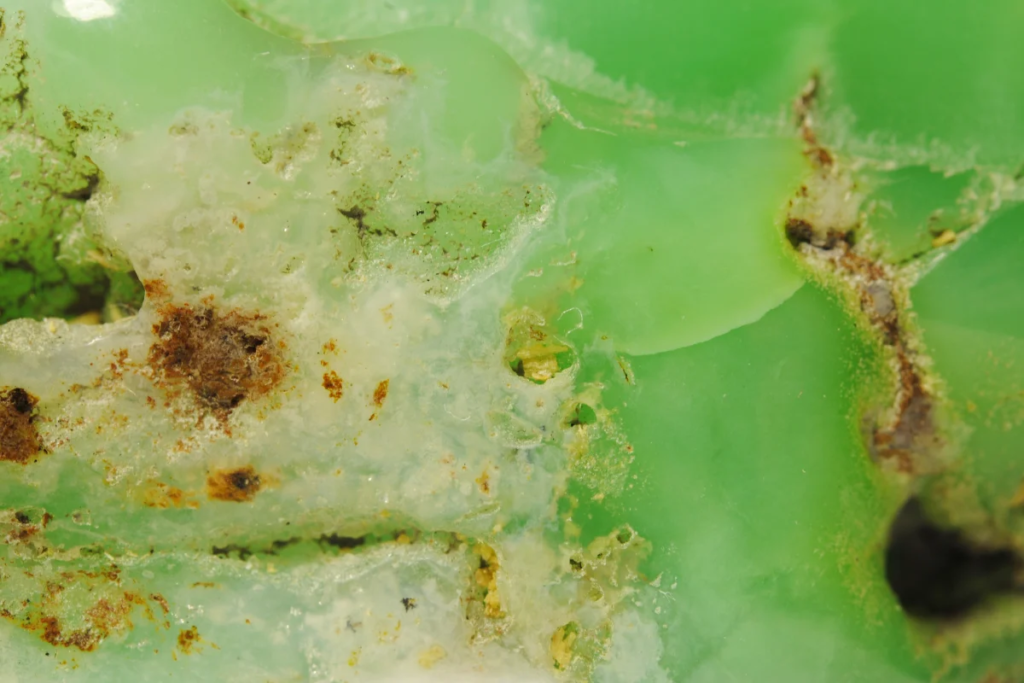
The green coloration of chrysoprase is not produced by a major change to the basic silica framework. Instead, it is associated mainly with nickel-bearing material dispersed through the chalcedony. The concentration and distribution of these components can vary considerably, producing differences in color from pale green to stronger apple-green tones. Some specimens may contain areas where the nickel-related coloration is concentrated, while others show relatively even coloration throughout the material. Microscopic features, including the size and arrangement of silica particles, pores, inclusions, and secondary minerals, can also influence the way light passes through the stone and therefore affect its apparent color and translucency.
From a mineralogical perspective, chrysoprase is therefore best understood as a colored variety of chalcedony rather than an independent mineral species. Chalcedony itself belongs to the quartz group and has the same basic chemical composition as quartz, although naturally occurring material may contain small amounts of other elements and associated mineral phases. The cryptocrystalline structure gives chrysoprase a hardness and durability broadly comparable to other forms of quartz, while its fine texture allows it to take a smooth polish. These structural and compositional characteristics distinguish chrysoprase from green crystalline quartz varieties and from other green gemstones whose colors arise from different chemical or mineralogical processes.
Color, Transparency, and Optical Properties of Chrysoprase
The color of chrysoprase is its most distinctive gemological characteristic. It typically ranges from pale yellowish green and soft green to stronger apple-green and deeper green shades. The coloration is mainly associated with nickel-bearing components dispersed within the chalcedony. Because the concentration and distribution of these components are rarely perfectly uniform, natural chrysoprase can display subtle variations in tone and saturation. Some pieces have an even green color throughout, while others contain lighter patches, darker zones, or gradual transitions between different shades of green. These variations are natural features of the material and are related to the conditions under which the chalcedony formed and was subsequently altered.
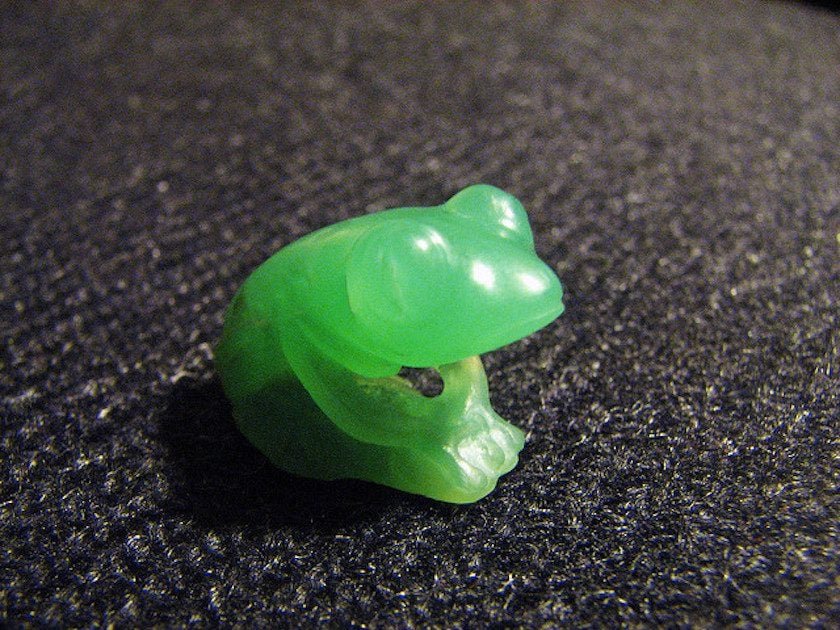
Chrysoprase is generally translucent, although its transparency can range from nearly opaque to moderately translucent depending on the material. Finer and more evenly distributed microcrystalline silica can produce a relatively smooth visual appearance, while inclusions, fractures, pores, and associated minerals may reduce transparency or create cloudy areas. In polished specimens, the stone commonly exhibits a vitreous to waxy luster, with the surface becoming brighter and more reflective after a good polish. Its color is usually most apparent under neutral or diffuse lighting, while strong directional light can emphasize differences in translucency and internal texture.
As a chalcedony variety, chrysoprase does not normally display the strong pleochroism or pronounced optical effects associated with some crystalline gemstones. Its cryptocrystalline structure also means that individual quartz crystals are generally not visible without magnification. Some specimens may exhibit weak chatoyancy or other localized optical effects when fibrous or oriented internal structures are present, but these effects are not characteristic of all chrysoprase. In gemological examination, color, transparency, luster, internal texture, and the relationship between these features provide useful information when distinguishing chrysoprase from other green chalcedony varieties and similarly colored ornamental stones.
Physical and Chemical Properties of Chrysoprase
Chrysoprase shares most of its physical and chemical properties with other varieties of chalcedony because it is composed primarily of microcrystalline silicon dioxide (SiO₂). It has a Mohs hardness of approximately 6.5 to 7, making it relatively resistant to scratching under normal conditions. This hardness, combined with its compact and fine-grained structure, contributes to its suitability for jewelry, carvings, beads, and decorative objects. Chrysoprase does not have cleavage and typically breaks with a conchoidal fracture, producing smooth, curved surfaces similar to those observed in other forms of quartz. Its tenacity is generally considered brittle, meaning that although it is durable, it can still chip or fracture if subjected to strong impacts.
The specific gravity of chrysoprase generally ranges from about 2.58 to 2.64, which is consistent with most chalcedony materials. It commonly exhibits a vitreous to waxy luster, especially when polished, and is usually translucent to nearly opaque. The refractive index is typically around 1.53 to 1.54, reflecting its quartz composition. Because chrysoprase is cryptocrystalline, its optical properties are more uniform than those of many crystalline gemstones, and it generally lacks noticeable cleavage planes or directional optical effects. Internal features may include small inclusions, fractures, pores, or associated minerals, depending on the geological environment in which the material formed.
Chemically, chrysoprase consists mainly of silicon and oxygen, with minor amounts of nickel-bearing compounds responsible for its green color. Trace amounts of iron, manganese, or other elements may also occur, depending on the locality and host rock. Chrysoprase is relatively stable under ordinary environmental conditions, but prolonged exposure to heat, strong sunlight, or dehydration may affect the appearance of some material, particularly specimens with delicate color. The stability of the green coloration can vary between deposits because the nickel-related coloring components may differ in composition and distribution. For this reason, gemological studies often consider both the physical properties and the geological origin of chrysoprase when evaluating individual specimens.
Physical Properties of Chrysoprase
| Property | Chrysoprase |
|---|---|
| Mineral Type | Variety of Chalcedony (Quartz) |
| Chemical Formula | SiO₂ |
| Color | Pale green, apple green, yellowish green, deep green |
| Crystal System | Trigonal (Quartz structure); cryptocrystalline aggregate |
| Hardness (Mohs) | 6.5–7 |
| Specific Gravity | 2.58–2.64 |
| Luster | Vitreous to waxy |
| Transparency | Translucent to opaque |
| Cleavage | None |
| Fracture | Conchoidal |
| Streak | White |
| Refractive Index | Approximately 1.53–1.54 |
Types and Varieties of Chrysoprase
Although chrysoprase is generally classified as a single green variety of chalcedony, gem materials sold under this name can display noticeable differences in color, translucency, texture, and geological origin. These differences are often related to the concentration of nickel-bearing compounds, the nature of the host rocks, and the conditions under which the material formed.
- Apple-Green Chrysoprase – The most widely recognized variety, characterized by a bright, medium green color and moderate translucency.
- Deep Green Chrysoprase – Material with stronger color saturation, sometimes associated with higher concentrations of nickel-related coloring compounds.
- Yellowish-Green Chrysoprase – A lighter variety showing green tones mixed with yellow or olive hues.
- Translucent Gem-Quality Chrysoprase – Higher-quality material with relatively even color and greater translucency, commonly used in jewelry.
- Opaque Chrysoprase – Material containing more inclusions, pores, or associated minerals, often used for carvings, beads, and ornamental objects.
- Australian Chrysoprase – A trade name frequently applied to material from well-known Australian nickel-rich deposits.
- Polish Chrysoprase – Historically important chrysoprase from Central European deposits, particularly those associated with serpentinized rocks.
These categories are primarily descriptive rather than formal mineralogical classifications, as chrysoprase remains a color variety of chalcedony rather than a separate mineral species.
Chrysoprase in Jewelry and Lapidary Use
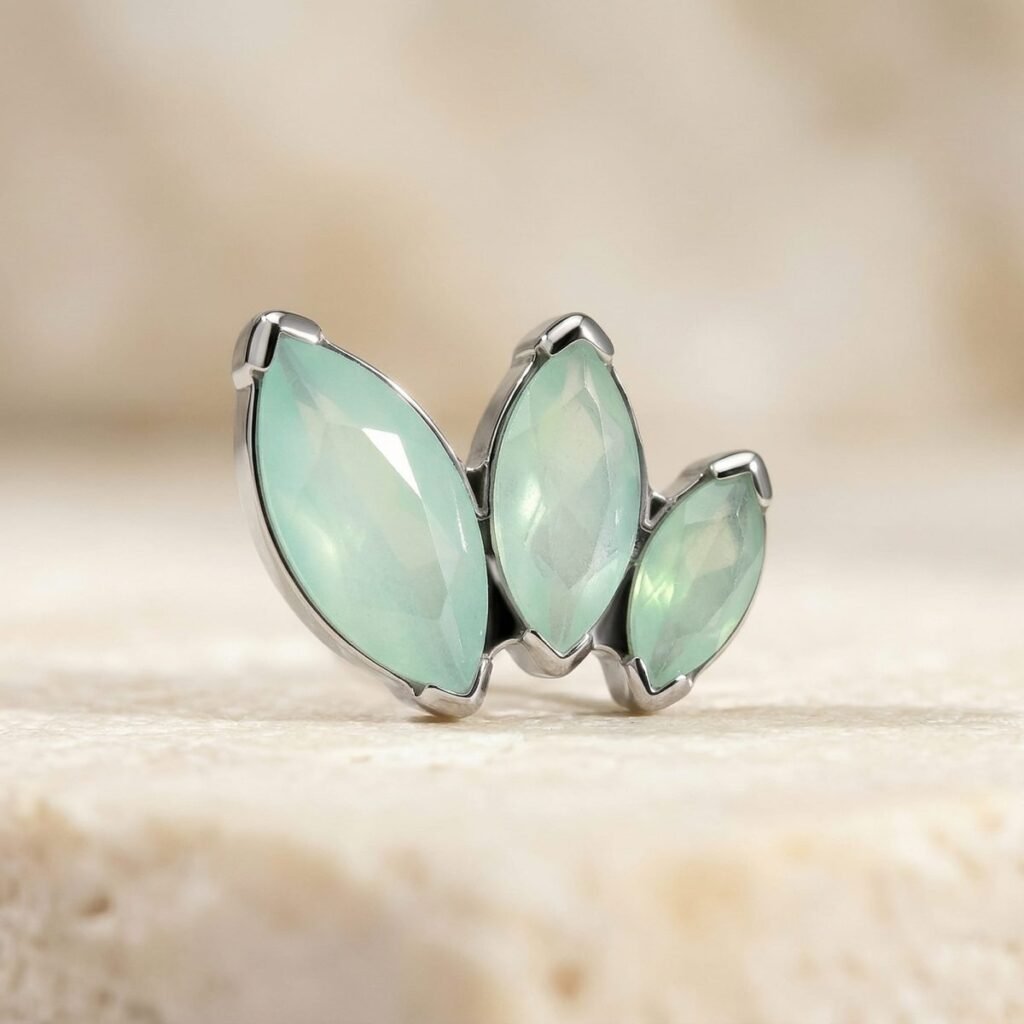
Chrysoprase has been used primarily as an ornamental gemstone because its green color, compact texture, and ability to take a smooth polish make it suitable for a variety of lapidary applications. It is commonly cut into cabochons, in which the curved polished surface allows the color and translucency of the material to remain visually prominent. Beads, polished slabs, pendants, earrings, rings, bracelets, and small carved objects can also be produced from chrysoprase. Material with relatively even color and good translucency is generally more suitable for gemstone cutting, while pieces with irregular coloration, inclusions, or lower transparency may be used for larger ornamental objects or carvings.
The hardness of approximately 6.5–7 on the Mohs scale provides reasonable durability for jewelry, although chrysoprase is not completely resistant to scratching, chipping, or fracture. Jewelry made from chrysoprase should therefore be protected from strong impacts and prolonged contact with harder materials. Its color can also be affected by prolonged exposure to intense heat or unfavorable environmental conditions in some specimens. For routine care, gentle cleaning with lukewarm water, mild soap, and a soft cloth is generally appropriate. Harsh chemicals, ultrasonic cleaners, and sudden temperature changes are best avoided when the composition or treatment history of a specimen is uncertain.
Chrysoprase and Other Green Gemstones
Chrysoprase can resemble several other green gemstones and ornamental stones, particularly when it has a pale or yellowish-green color. Its identification depends on a combination of appearance, physical properties, internal characteristics, and, when necessary, gemological testing. Unlike emerald, which is a crystalline variety of beryl and owes its green color mainly to chromium and/or vanadium, chrysoprase is a cryptocrystalline variety of chalcedony and is associated primarily with nickel-related coloration. Chrysoprase also differs from jadeite and nephrite, both of which have distinct mineralogical compositions and tougher aggregate structures.
Green aventurine is another quartz-related material that can sometimes be confused with chrysoprase. Aventurine commonly contains visible reflective inclusions, often mica or other minerals, producing a characteristic aventurescent effect. Chrysoprase generally has a smoother and more homogeneous appearance and does not normally show the same glittering effect. Prase quartz and other green quartz materials may also resemble chrysoprase, but their color-producing mechanisms and internal textures can differ. In professional gemological identification, refractive index, specific gravity, microscopic examination, spectroscopy, and chemical analysis may be used to distinguish similar green materials when visual examination alone is insufficient.
How to Identify Chrysoprase
Identifying chrysoprase begins with its characteristic green color and chalcedony-like appearance. Natural specimens commonly show a pale green, yellowish green, or apple-green body color and are usually translucent rather than completely transparent. The color may be relatively uniform or show subtle variations caused by the uneven distribution of nickel-bearing material. A polished surface generally has a vitreous to slightly waxy luster, while the material itself has a fine, compact texture without visible large quartz crystals. Under magnification, chrysoprase may reveal microscopic inclusions, fractures, pores, or other features related to its geological origin.
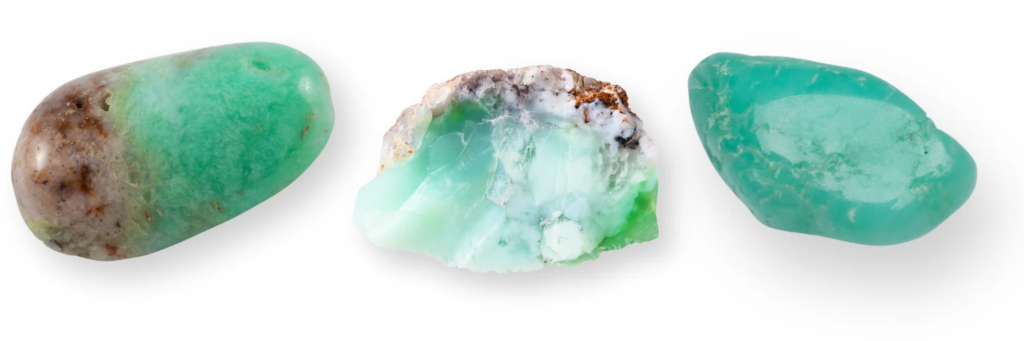
Physical testing can provide additional evidence. Chrysoprase has a Mohs hardness of about 6.5–7, no cleavage, and a characteristic conchoidal fracture. Its refractive index is generally around 1.53–1.54, while its specific gravity is commonly approximately 2.58–2.64. These properties are consistent with chalcedony and can help distinguish chrysoprase from unrelated green gemstones. However, individual values can vary slightly depending on the composition and structure of the specimen, so identification should not normally rely on a single test.
Microscopic examination is particularly useful when chrysoprase needs to be distinguished from other green chalcedony or quartz materials. The presence, distribution, and nature of inclusions can provide information about the stone’s origin and composition. In more difficult cases, spectroscopy or chemical analysis can help determine whether nickel-bearing components are responsible for the green coloration. This is especially relevant for commercial material because green stones sold under similar names can have different mineralogical compositions or may have been treated to modify their color.
Chrysoprase Localities and Geological Occurrence
Chrysoprase is found in geological environments where silica-rich fluids or groundwater interact with nickel-bearing rocks, particularly altered ultramafic rocks and serpentinite. Many occurrences are associated with intensely weathered zones in which nickel has been released from the original host minerals and redistributed by circulating fluids. Under suitable chemical conditions, silica can precipitate as chalcedony within fractures, cavities, veins, and weathered rock. Nickel-bearing material incorporated into or associated with the chalcedony produces the characteristic green coloration. The resulting chrysoprase can occur as compact masses, irregular nodules, vein fillings, or patches within a weathered host rock.
Australia is one of the most important sources of chrysoprase and has produced material ranging from pale yellowish green to relatively strong apple-green. Significant occurrences are associated with nickel-rich ultramafic terrains and lateritic weathering profiles, particularly in Western Australia. Poland is another historically important locality, especially the Lower Silesian region, where chrysoprase occurs in association with serpentinized ultramafic rocks and became an important ornamental material in Europe. Chrysoprase has also been reported from localities in Brazil, Tanzania, Zimbabwe, the United States, and other countries. Differences in host rock, weathering intensity, fluid chemistry, and nickel distribution can result in substantial variations in color, translucency, texture, and overall appearance between deposits.
Uses of Chrysoprase
Chrysoprase is primarily used as a lapidary and ornamental material. Because it is usually translucent rather than transparent and has a relatively fine-grained structure, it is commonly shaped and polished as cabochons rather than cut into traditional faceted gemstones. It can also be fashioned into beads, pendants, small carvings, polished specimens, and decorative objects. Material with an even green color and moderate translucency is generally suitable for smaller gemstone pieces, while specimens containing strong color zoning, inclusions, or visible relationships with the host rock may be retained as mineral or geological specimens.
In addition to its ornamental applications, chrysoprase has value as a representative example of nickel-related coloration in chalcedony and of silica deposition in weathered ultramafic environments. Geological specimens can provide information about the interaction between groundwater, weathering processes, nickel-bearing minerals, and silica during mineral formation. Its importance is therefore primarily gemological, lapidary, and geological rather than industrial. As with other varieties of chalcedony, its physical properties also make it suitable for polished reference specimens that can be examined for color distribution, translucency, internal structure, inclusions, and relationships with associated minerals.