
Senarmontite is a relatively rare antimony oxide mineral with the chemical formula Sb₂O₃. It is the cubic polymorph of antimony(III) oxide and is closely related to valentinite, which has the same chemical composition but crystallizes in the orthorhombic crystal system. Senarmontite is typically colorless, white, grayish-white, or occasionally pale yellow, and it may occur as transparent to translucent crystals, granular aggregates, coatings, or compact masses. Well-developed crystals are commonly associated with octahedral forms, reflecting its cubic crystal structure, and fresh crystal surfaces may exhibit a vitreous to adamantine luster. The mineral has a relatively high specific gravity and refractive index because of its high antimony content, while its comparatively low hardness makes it a relatively soft mineral when compared with many common oxide and silicate minerals.
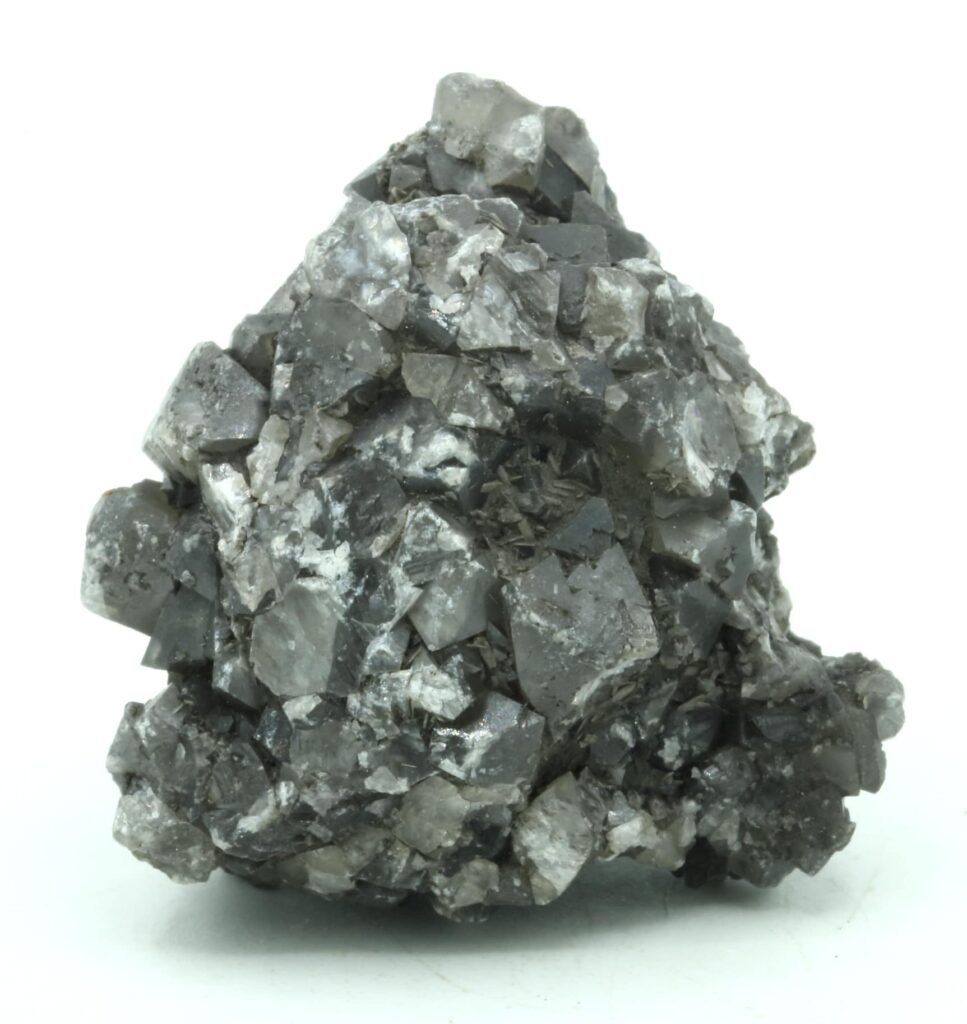
From a geological perspective, Senarmontite is primarily regarded as a secondary mineral formed in oxidized portions of antimony-bearing deposits. It commonly develops through the alteration and oxidation of primary antimony sulfide minerals, especially stibnite, when these minerals interact with oxygen-rich groundwater or other oxidizing fluids. As weathering and oxidation progress, the original sulfide minerals may become unstable and release antimony, which can subsequently combine with oxygen to form secondary antimony oxides such as Senarmontite. Its occurrence can therefore provide useful information about the oxidation history and geochemical evolution of an ore deposit. Although Senarmontite is not among the most abundant minerals in the Earth’s crust and has limited direct commercial value as a naturally occurring mineral, it is significant to mineralogists, geologists, crystallographers, and mineral collectors because it represents an important polymorph of Sb₂O₃ and provides a natural example of the relationship between chemical composition, crystal structure, and mineral stability.
History and Discovery of Senarmontite
Senarmontite was first recognized as a distinct mineral species during the nineteenth century, a period when advances in mineral chemistry and crystallography allowed scientists to better distinguish minerals with similar appearances but different internal structures. The mineral was named in honor of Henri Hureau de Senarmont (1808–1862), a French mineralogist, physicist, and crystallographer who made important contributions to the study of optical mineral properties and crystallography. His research helped improve the understanding of how the internal arrangement of atoms within crystals influences their physical and optical characteristics, making his name closely associated with the development of mineralogical science.
The identification of Senarmontite was particularly important because antimony oxide can exist in more than one structural form. Before modern crystallographic techniques became widely available, minerals with similar chemical compositions and appearances were often difficult to separate accurately. Senarmontite and valentinite provide a classic example of mineral polymorphism, where two minerals share the same chemical formula, Sb₂O₃, but differ in their crystal structures and physical properties. Through detailed crystallographic studies, mineralogists established that Senarmontite belongs to the cubic crystal system, while valentinite has an orthorhombic structure. This discovery contributed to a broader understanding of how atomic arrangement plays a fundamental role in defining mineral species.
Historically, Senarmontite has been found mainly in regions associated with antimony mining and hydrothermal ore deposits. Early mineral collectors and researchers studied specimens from oxidized zones of antimony deposits, where the mineral commonly formed alongside stibnite, valentinite, and other secondary antimony minerals. Although it has never been considered a major ore mineral itself, Senarmontite has remained an important specimen mineral because of its well-defined crystal forms, its connection to antimony mineralization, and its value in studies of mineral alteration processes. Today, it continues to be examined in mineralogical research as an example of secondary mineral formation and as a naturally occurring representation of the cubic structure of antimony(III) oxide.
Formation of Senarmontite
Senarmontite is primarily formed as a secondary mineral through the oxidation and alteration of antimony-bearing minerals, especially stibnite (Sb₂S₃), which is the most common primary ore mineral of antimony. Unlike minerals that crystallize directly from molten magma or high-temperature hydrothermal fluids, Senarmontite usually develops after an existing antimony mineral deposit has been exposed to oxygen-rich conditions near the Earth’s surface. When stibnite and other antimony sulfide minerals come into contact with oxygen, water, and weathering fluids, they gradually break down through chemical reactions. During this process, sulfur is released or transformed into sulfate compounds, while antimony is oxidized and combines with oxygen to form secondary antimony oxide minerals, including Senarmontite.
The formation of Senarmontite is strongly influenced by the chemical environment of the oxidation zone. Factors such as oxygen availability, groundwater chemistry, temperature, pH conditions, and the composition of surrounding rocks all affect whether Senarmontite can form and remain stable. In highly oxidizing environments, antimony released from the breakdown of sulfide minerals may migrate through mineral-bearing fluids before precipitating as oxide minerals. Under suitable conditions, these fluids deposit Sb₂O₃ in cavities, fractures, or open spaces within the host rock, allowing Senarmontite crystals to grow. When enough space and stable conditions are available, the mineral may develop well-formed octahedral crystals, while restricted growth environments often produce granular aggregates, coatings, or massive forms.
Senarmontite commonly occurs in the upper oxidized zones of hydrothermal antimony deposits, where weathering has significantly modified the original mineral assemblage. These environments often contain a combination of primary sulfide minerals and secondary oxidation products, creating complex mineral associations. It may occur together with stibnite remnants, valentinite, quartz, calcite, iron oxides, and other alteration minerals depending on the geological setting. The coexistence of Senarmontite and valentinite is particularly significant because both minerals represent different structural arrangements of the same chemical compound, Sb₂O₃. Their presence can provide clues about the temperature, oxidation conditions, and chemical evolution of the deposit during mineral alteration.The formation of Senarmontite is therefore an important example of secondary mineral development in geological environments. It demonstrates how minerals can transform over time as environmental conditions change, with primary minerals becoming unstable and being replaced by new phases that better match the surrounding chemical conditions. Although Senarmontite is relatively rare compared with common oxide minerals, its occurrence provides valuable information about the weathering processes of antimony deposits and the long-term interaction between minerals, fluids, and the Earth’s surface environment.
Crystal Structure of Senarmontite
Senarmontite crystallizes in the cubic crystal system and belongs to the isometric crystal class, making it the cubic polymorph of antimony(III) oxide (Sb₂O₃). It has the same chemical composition as valentinite, but the two minerals differ in the arrangement of atoms within their crystal lattices, resulting in different crystal systems and physical characteristics. In the structure of Senarmontite, antimony and oxygen atoms are arranged in a highly symmetrical three-dimensional framework, which gives the mineral its distinctive geometric appearance and influences properties such as refractive index, density, and optical behavior. The cubic symmetry of the structure allows Senarmontite to form crystals with balanced and regular shapes, making it an important example of how internal atomic arrangement determines the external form and characteristics of a mineral.
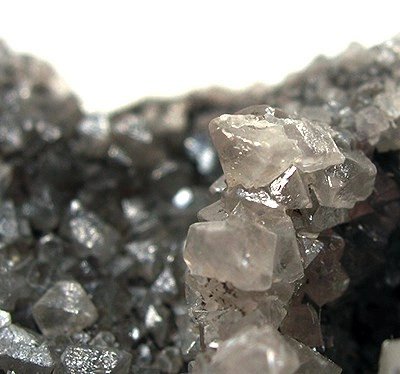
The most common crystal habit of Senarmontite is the octahedral form, where crystals develop eight triangular faces arranged according to cubic symmetry. These well-formed octahedral crystals are considered the most recognizable and desirable specimens among collectors. However, depending on the conditions during mineral growth, Senarmontite may also occur as granular masses, compact aggregates, or coatings on other minerals. The final crystal shape is influenced by factors such as temperature, fluid composition, oxidation conditions, and available space within the host rock. Because Senarmontite and valentinite share the same chemical formula but have different structures, they are often studied together as a classic example of polymorphism in mineralogy. Their relationship demonstrates that chemical composition alone does not fully define a mineral; the precise arrangement of atoms within the crystal lattice is equally important in determining mineral identity, stability, and physical properties.
Types and Varieties of Senarmontite
Senarmontite is generally recognized as a single mineral species and does not have officially accepted varieties based on chemical composition. However, natural specimens can display different forms and appearances depending on crystal growth conditions, geological environment, impurities, and the degree of aggregation. These variations are commonly described by mineral collectors and researchers according to crystal habit, transparency, and physical appearance rather than as separate mineral varieties.
- Crystalline Senarmontite – This is the most characteristic and highly valued form of Senarmontite, consisting of well-developed individual crystals or crystal groups. The crystals most commonly display octahedral shapes that reflect the mineral’s cubic crystal structure. Transparent to translucent crystals with sharp faces and well-defined geometric forms are particularly attractive for mineral collections and are often used for crystallographic study.
- Massive Senarmontite – Massive specimens occur when the mineral forms as compact, fine-grained aggregates rather than distinct crystals. This type usually appears white, grayish-white, or opaque and may lack the obvious crystal forms seen in more developed specimens. Massive Senarmontite commonly forms in areas where crystal growth was restricted by limited space, rapid mineral deposition, or changes in the chemical environment.
- Granular Senarmontite – Granular forms consist of numerous small crystals grouped together, creating a textured or grain-like appearance. These specimens often develop in cavities, fractures, or replacement zones within antimony-bearing deposits. Although individual crystals may be too small to observe easily, granular Senarmontite still preserves the same cubic crystal structure and chemical composition as larger crystals.
- Transparent to Translucent Senarmontite – Some specimens contain clearer crystals that allow light to pass through partially or completely. These examples usually represent relatively pure material with fewer inclusions or impurities. Their optical qualities, including strong luster and high refractive index, make them especially interesting for collectors and mineral researchers.
- White or Impure Senarmontite – Natural Senarmontite may appear white, pale gray, or slightly yellowish due to microscopic inclusions, surface alteration, or the presence of minor impurities introduced during formation. These color variations do not represent separate mineral species but rather reflect differences in the conditions under which the mineral developed.
Although these forms differ in appearance, all Senarmontite specimens share the same essential chemical composition of Sb₂O₃ and the same cubic crystal structure. The variation between specimens mainly reflects the geological environment, mineral growth conditions, and alteration history of each occurrence.ot necessarily be regarded as formal mineral varieties. They primarily represent differences in crystal development, impurities, aggregation, and geological conditions.
Physical and Chemical Properties of Senarmontite
Senarmontite has a distinctive combination of physical and chemical properties that reflects its composition as an antimony oxide mineral. It has the chemical formula Sb₂O₃ and is composed primarily of antimony and oxygen, with antimony occurring in the +3 oxidation state. The mineral is usually colorless, white, grayish-white, or occasionally pale yellow, and it commonly exhibits a vitreous to adamantine luster on fresh crystal surfaces. Its transparency ranges from transparent to translucent in well-formed crystals, while massive or granular specimens are usually more opaque. Senarmontite has a Mohs hardness of approximately 2.5 to 3, making it a relatively soft mineral that can be scratched by harder materials. Its specific gravity is relatively high, generally around 5.2–5.8, which is mainly caused by the presence of heavy antimony within its crystal structure. The mineral also has a high refractive index, giving transparent crystals a bright appearance and strong optical relief when examined under a microscope.
Chemically, Senarmontite is an oxide mineral that forms under oxidizing conditions, especially in the weathered zones of antimony-rich deposits. Its stability is closely related to environmental factors such as oxygen availability, temperature, fluid chemistry, and pH conditions. Because it shares the same chemical formula as valentinite, Senarmontite demonstrates the importance of crystal structure in mineral classification. Although both minerals are composed of Sb₂O₃, their different atomic arrangements produce different crystal systems and physical properties. Senarmontite is generally stable under surface oxidation conditions but may transform into other antimony-bearing phases depending on changes in the surrounding geological environment. Its chemical behavior and association with stibnite make it an important indicator mineral for studying the oxidation processes of antimony deposits and the long-term alteration of sulfide minerals.
Senarmontite vs Valentinite: Key Differences
Senarmontite and Valentinite are two closely related antimony oxide minerals with the same chemical formula, Sb₂O₃. Although they share identical chemical compositions, they are considered separate mineral species because their atoms are arranged differently within their crystal structures. This difference, known as polymorphism, creates variations in crystal shape, optical behavior, and physical properties.
| Feature | Senarmontite | Valentinite |
|---|---|---|
| Chemical Formula | Sb₂O₃ | Sb₂O₃ |
| Crystal System | Cubic (Isometric) | Orthorhombic |
| Crystal Habit | Octahedral crystals with symmetrical faces | Prismatic, tabular, or elongated crystals |
| Color | Colorless, white, grayish-white, pale yellow | White, gray, yellowish-white, pale yellow |
| Luster | Vitreous to adamantine | Vitreous to pearly |
| Optical Behavior | Isotropic | Anisotropic |
| Mohs Hardness | 2.5–3 | 2.5–3 |
| Formation | Oxidized antimony deposits | Similar oxidation environments |
Occurrence and Localities of Senarmontite
Senarmontite is found mainly in the oxidized zones of antimony-bearing ore deposits around the world. Because it is a secondary mineral, its occurrence is closely connected with the weathering and alteration of primary antimony minerals, especially stibnite (Sb₂S₃). When antimony sulfide deposits are exposed to oxygen, groundwater, and surface weathering processes, new oxidation minerals can develop as the original sulfide minerals break down. Senarmontite commonly forms in cavities, fractures, and open spaces within these deposits, where antimony-rich fluids can circulate and precipitate the mineral. It is often associated with other secondary antimony minerals, including valentinite, as well as quartz, calcite, iron oxides, and remaining stibnite. These mineral associations provide important clues about the geological history and oxidation conditions of the deposit.
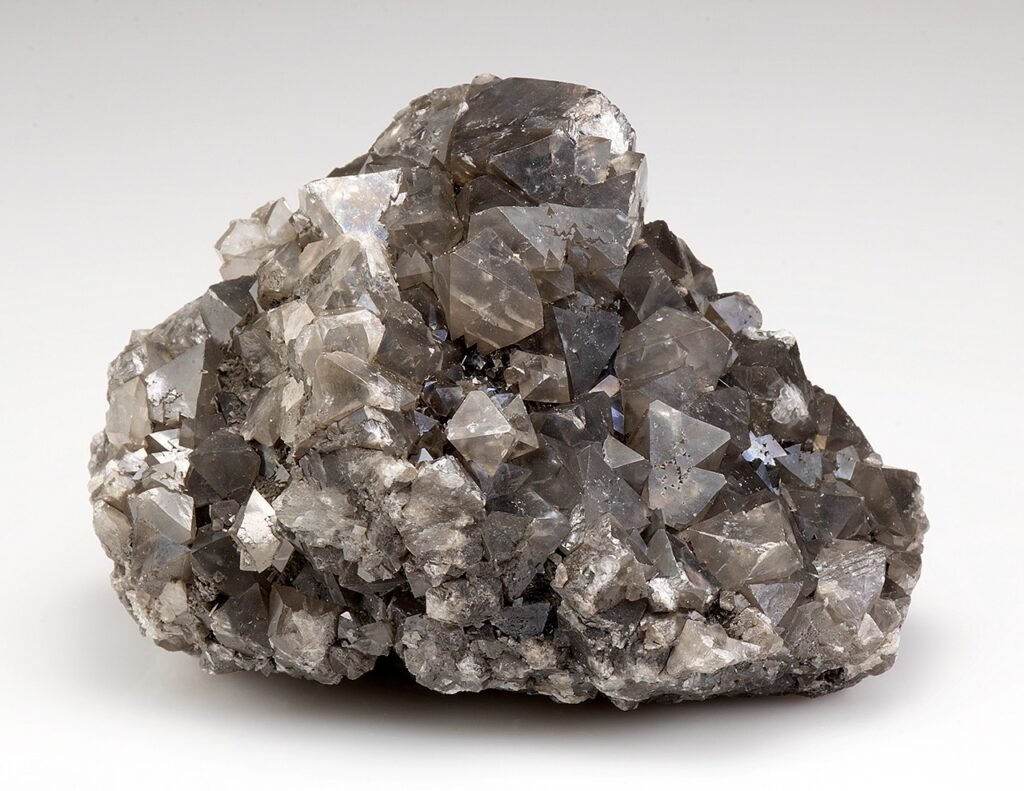
Important occurrences of Senarmontite have been reported from several regions known for antimony mineralization, including parts of Europe, Asia, Africa, and the Americas. Some historically significant localities are associated with hydrothermal antimony deposits where stibnite was mined as the primary source of antimony. In these areas, Senarmontite may appear as coatings, granular masses, or well-formed octahedral crystals within the oxidized portions of the ore bodies. Well-crystallized specimens are relatively uncommon, which makes high-quality crystals valuable among mineral collectors and museums. The exact appearance and abundance of Senarmontite can vary greatly between localities because its formation depends on many factors, including the composition of the host rock, the availability of oxygen-rich fluids, temperature conditions, and the length of time that oxidation processes have occurred.
Geologically, the presence of Senarmontite is significant because it represents an advanced stage of alteration in antimony deposits. Its occurrence indicates that primary sulfide minerals have undergone chemical transformation under oxidizing conditions near the Earth’s surface. By studying Senarmontite together with associated minerals, geologists can better understand the evolution of ore deposits, the movement of mineral-rich fluids, and the environmental processes that control secondary mineral formation. Although it is not a widespread mineral, Senarmontite provides valuable information about the interaction between minerals, fluids, and geological environments over time.
Uses and Applications of Senarmontite
Senarmontite itself has limited direct commercial applications because it is a relatively rare mineral and usually occurs only in small quantities within oxidized antimony deposits. Unlike major industrial minerals that are mined specifically for their natural crystal specimens or ore content, Senarmontite is mainly valued for scientific research, mineral collections, and educational purposes. Well-formed crystals, especially transparent to translucent octahedral specimens, are collected by mineral enthusiasts and preserved in museums and geological institutions because they demonstrate the cubic crystal structure and unique mineralogical characteristics of antimony(III) oxide.
From a scientific perspective, Senarmontite is important in mineralogy, crystallography, and geochemistry. Its relationship with valentinite provides a classic example of polymorphism, showing how the same chemical composition can produce different minerals when atoms are arranged in different ways within the crystal lattice. Researchers study Senarmontite to better understand crystal structure, mineral stability, oxidation processes, and the transformation of primary antimony sulfide minerals into secondary oxide minerals. Because it commonly forms during the alteration of stibnite, its presence can help geologists investigate the weathering history and chemical evolution of antimony-bearing ore deposits.
Although natural Senarmontite is not widely used as an industrial material, its chemical compound, antimony(III) oxide (Sb₂O₃), is an important industrial substance. Synthetic antimony(III) oxide produced through industrial processes is commonly used in applications such as flame-retardant systems, glass and ceramic production, pigments, and other specialized chemical materials. In these industries, the material is manufactured and processed rather than obtained from natural Senarmontite crystals. Therefore, the commercial importance of Sb₂O₃ should be distinguished from the mineralogical significance of Senarmontite itself.
Overall, Senarmontite’s greatest value lies in its role as a mineralogical and geological reference material. It helps scientists understand oxidation-zone mineral formation, antimony geochemistry, and crystal structure relationships, while also providing collectors with an interesting example of a rare cubic oxide mineral. Its combination of scientific importance, distinctive crystal forms, and connection to antimony deposits makes it a notable mineral despite its limited practical use as a natural resource.