
Cancrinite is a rare carbonate and silicate mineral belonging to the feldspathoid group, with the chemical formula Na₆Ca₂Al₆Si₆O₂₄(CO₃)₂·2H₂O. It is typically found in alkaline igneous rocks, especially nepheline syenites and related silica-undersaturated rocks. The mineral is recognized for its bright colors, including yellow, orange, white, green, and blue varieties, as well as its distinctive crystal structure containing both carbonate groups and aluminosilicate frameworks.
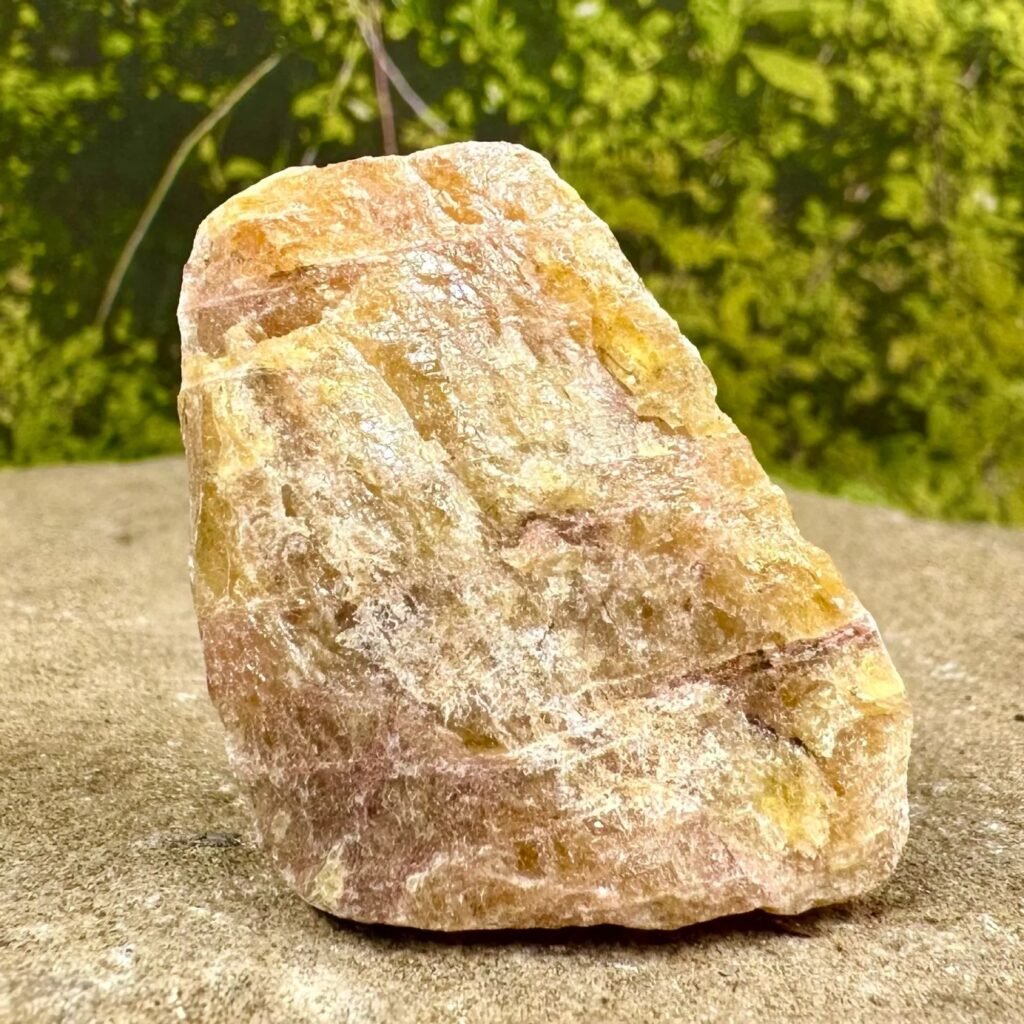
Cancrinite was first described in the early 19th century and was named in honor of Georgy Cancrin (1774–1845), a Russian statesman and minister of finance during the Russian Empire. Although it is not considered a major gemstone due to its relatively low hardness and limited availability, Cancrinite is valued by mineral collectors for its attractive colors, unusual chemistry, and association with rare alkaline mineral environments. Its presence often provides important geological information about the formation conditions of alkaline igneous rocks.From a mineralogical perspective, Cancrinite is an important example of a complex feldspathoid mineral. Unlike common silicate minerals that contain only silica-based structures, Cancrinite incorporates carbonate ions and water molecules within its crystal framework, giving it unique physical and chemical characteristics. It commonly occurs together with minerals such as nepheline, sodalite, calcite, natrolite, and other alkaline minerals, making it an interesting subject for both collectors and researchers studying unusual geological processes.
History and Discovery of Cancrinite
Cancrinite was first identified as a distinct mineral species in 1839 by the German mineralogist Gustav Rose, who studied specimens from the Ural Mountains of Russia. The mineral was later named in honor of Georg Ludwig Cancrin, a prominent Russian statesman and economist who served as the Minister of Finance of the Russian Empire from 1823 to 1844. This naming reflected the historical connection between mineral exploration in Russia and the scientific contributions supported during that period.
During the 19th century, the study of alkaline rocks expanded significantly, leading to the discovery of many unusual minerals associated with silica-poor igneous environments. Cancrinite became an important mineral for understanding feldspathoid-bearing rocks because its formation is closely related to the alteration of nepheline and other sodium-rich aluminosilicate minerals. Early mineralogists studied Cancrinite to better understand the chemical transformations that occur in alkaline magmatic systems, particularly processes involving carbonate-rich fluids.
Modern research has revealed that Cancrinite represents a complex group of minerals with variations in chemical composition caused by substitutions within its crystal structure. Advances in X-ray diffraction and analytical techniques have helped scientists understand its framework structure, hydration characteristics, and relationship with other feldspathoid minerals. Today, Cancrinite remains a significant mineralogical specimen, valued both for its scientific importance and its appeal among mineral collectors.
Formation and Occurrence of Cancrinite
Cancrinite forms mainly in alkaline igneous environments where silica is limited and elements such as sodium, calcium, aluminum, and carbonate are abundant. It commonly develops through the alteration of nepheline and other feldspathoid minerals when carbonate-rich hydrothermal fluids or late-stage magmatic fluids interact with existing minerals. This process allows the original aluminosilicate structures to transform into Cancrinite, often during the later stages of rock formation. Because its formation depends on specific chemical conditions, Cancrinite is considered a relatively uncommon mineral and is often used as an indicator of alkaline geological activity.
Cancrinite is typically found in nepheline syenites, alkaline pegmatites, and other silica-undersaturated igneous rocks. It may occur as small prismatic crystals, granular aggregates, or as replacement material within nepheline crystals. Common associated minerals include nepheline, sodalite, calcite, natrolite, and other feldspathoid minerals. Important occurrences have been reported from regions such as the Kola Peninsula in Russia, Canada, Norway, and parts of the United States, where alkaline rock formations provide suitable conditions for its development.
Types and Varieties of Cancrinite
Cancrinite is recognized as a mineral group rather than a single compositionally uniform mineral. Different varieties are classified based on variations in chemical composition, crystal structure, and the dominant components present within the mineral framework. These variations are caused by substitutions of ions such as carbonate, sulfate, chloride, and hydroxyl groups within its channels and structural cavities. Although these varieties are not always widely distinguished in mineral collecting, they provide important information about the geological conditions under which Cancrinite formed.
- Hydroxycancrinite – A variety in which hydroxyl groups are dominant within the structural channels. It commonly forms during the alteration of nepheline and is one of the more frequently encountered members of the Cancrinite group. It is usually white, pale yellow, or colorless and occurs as fine-grained aggregates or small crystals.
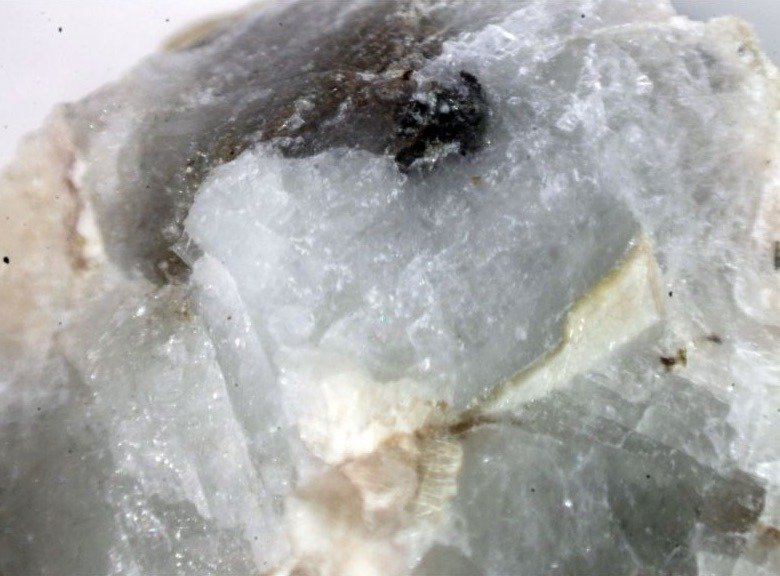
- Vishnevite – A sulfate-rich variety of Cancrinite containing significant sulfate groups within its structure. It is often associated with alkaline igneous rocks and may display white, yellow, or pale-colored crystals. Vishnevite is especially valued by mineral collectors because of its distinctive chemistry and association with rare alkaline mineral assemblages.
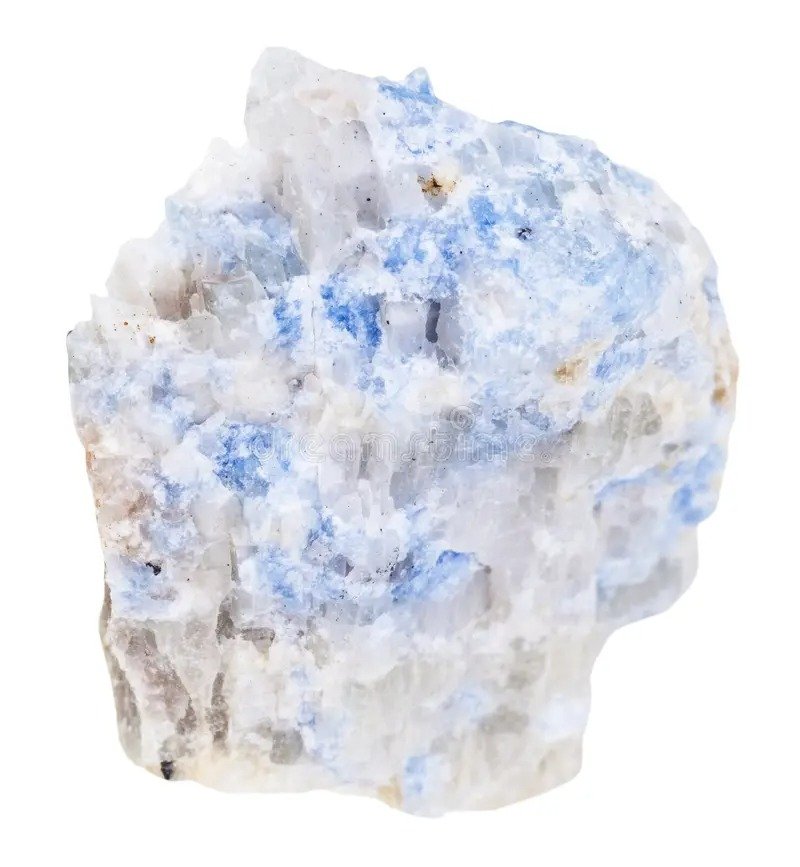
- Sulfatic Cancrinite – This variety contains elevated amounts of sulfate ions replacing carbonate groups in the crystal structure. It commonly develops in environments where sulfur-bearing fluids influence the formation of alkaline minerals.
- Carbonate-rich Cancrinite – The typical form of Cancrinite contains carbonate groups as a major structural component. It often appears in shades of yellow, orange, white, or green and represents the classic composition most commonly described in mineral references.
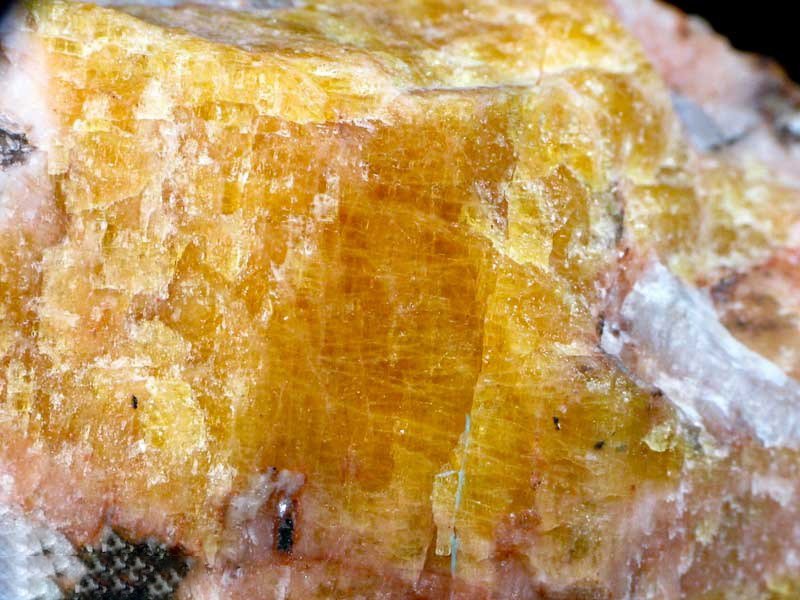
Although Cancrinite varieties may differ chemically, they share similar structural characteristics and geological origins. Their differences mainly reflect changes in the composition of mineral-forming fluids and the surrounding rock environment during crystallization and alteration.
Crystal Structure of Cancrinite
Cancrinite has a complex crystal structure belonging to the hexagonal crystal system and is classified within the feldspathoid group of minerals. Its framework is composed of interconnected aluminum and silicon tetrahedra that form a three-dimensional aluminosilicate network. Within this framework, large channels and cavities are present, which can accommodate various additional components, including sodium ions, calcium ions, water molecules, and anions such as carbonate, sulfate, or chloride. This open structural arrangement is one of the defining features of Cancrinite and explains its ability to incorporate different chemical groups.
The crystal structure of Cancrinite is closely related to that of nepheline, from which it often forms through alteration processes. However, unlike nepheline, Cancrinite contains carbonate-bearing components and water within its framework, resulting in a more complex and hydrated structure. The presence of these channels allows chemical substitutions to occur, producing different members of the Cancrinite group with slightly different compositions. These structural variations influence the mineral’s color, stability, and physical properties, making Cancrinite an important mineral for studies of feldspathoid chemistry and alkaline rock evolution.
Physical and Chemical Properties of Cancrinite
Cancrinite is a relatively soft mineral with a Mohs hardness of approximately 5 to 6, making it softer than many common silicate minerals such as quartz. It typically has a vitreous to pearly luster, especially on fresh crystal surfaces and cleavage planes. The mineral commonly appears in colors including white, yellow, orange, green, blue, and gray, although colorless varieties may also occur. Its streak is usually white, and it generally has a transparent to translucent appearance depending on crystal quality and impurities. Cancrinite has good cleavage in certain directions due to its layered and channel-containing crystal structure, while its fracture is typically uneven or subconchoidal.
Chemically, Cancrinite is a complex hydrated sodium calcium aluminum silicate carbonate mineral with the general formula Na₆Ca₂Al₆Si₆O₂₄(CO₃)₂·2H₂O. Its composition may vary because different anions, including carbonate, sulfate, chloride, and hydroxyl groups, can occupy structural channels. The mineral reacts weakly with dilute acids because of its carbonate content, which distinguishes it from many other feldspathoid minerals. Its density is relatively low, generally around 2.4 to 2.5 g/cm³, reflecting its open crystal structure containing water molecules and large internal cavities. These unique physical and chemical characteristics make Cancrinite an important mineral for understanding complex aluminosilicate structures and alkaline geological environments.
Locations and Mining of Cancrinite
Cancrinite is found in relatively limited locations around the world, mainly in regions containing alkaline igneous rocks and feldspathoid-rich geological formations. One of the most important occurrences is the Kola Peninsula in Russia, where extensive alkaline complexes host a wide variety of rare minerals, including Cancrinite. Other notable localities include areas of Canada, Norway, Greenland, Italy, and the United States, particularly regions containing nepheline syenites and related alkaline rocks. These deposits are generally studied for their unusual mineral assemblages rather than for large-scale commercial extraction of Cancrinite.
Because Cancrinite is a rare mineral and usually occurs as an accessory component within complex alkaline rocks, it is not mined as an industrial resource. Instead, specimens are collected primarily for mineralogical research, museum collections, and private collectors. Extraction typically involves careful removal of host rock material from mineral-rich zones, followed by cleaning and preparation to reveal the crystal surfaces. Well-formed Cancrinite crystals with attractive colors and associations with other rare minerals are especially valued among collectors due to their scarcity and distinctive appearance.
Uses and Applications of Cancrinite
Cancrinite has limited commercial applications compared with more abundant industrial minerals, but it holds considerable importance in mineralogical research and collector communities. Due to its complex chemical composition and unusual crystal structure, Cancrinite is frequently studied by geologists and mineralogists to better understand feldspathoid minerals, alkaline igneous processes, and the interaction between magmatic rocks and hydrothermal fluids. Its ability to contain carbonate groups, water molecules, and different anions within its structural channels makes it a valuable example for studying mineral stability and chemical substitution in open-framework silicate structures.
In the field of mineral collecting, Cancrinite is appreciated for its attractive colors, uncommon occurrence, and association with other rare alkaline minerals. Specimens showing bright yellow, orange, green, or well-developed crystalline forms are especially desirable among collectors. Although it is not commonly used as a gemstone because of its moderate hardness and limited durability, polished pieces and display specimens may occasionally be used for decorative purposes. Its value is mainly determined by crystal quality, color, locality, and association with other collectible minerals rather than by widespread ornamental use.
Cancrinite also contributes to geological studies by helping researchers identify and interpret the history of alkaline rock formations. Since it often forms through the alteration of nepheline under specific chemical conditions, its presence can provide clues about the availability of carbonate-rich fluids and the evolution of mineral systems after the initial crystallization of igneous rocks. Through these scientific applications, Cancrinite remains an important mineral despite its rarity and limited economic use.