
Stibiotantalite is a rare tantalum-bearing oxide mineral composed primarily of antimony, tantalum, and oxygen, represented by the chemical formula SbTaO₄. It crystallizes in the orthorhombic crystal system and belongs to the cervantite mineral group, forming a complete solid-solution series with its niobium-dominant analogue, stibiocolumbite. The name directly reflects its chemical composition: “stibio-” derives from stibium, the Latin word for antimony, while “tantalite” indicates its relationship to tantalum-bearing species. Visually, it typically appears in shades of yellow, reddish-brown, dark brown, or black, often displaying a resinous to adamantine luster on prismatic or tabular crystals with striated faces. Owing to the high atomic masses of tantalum and antimony, stibiotantalite is notably dense, with a high specific gravity ranging from 7.3 to 7.5 and a Mohs hardness of 5.5.
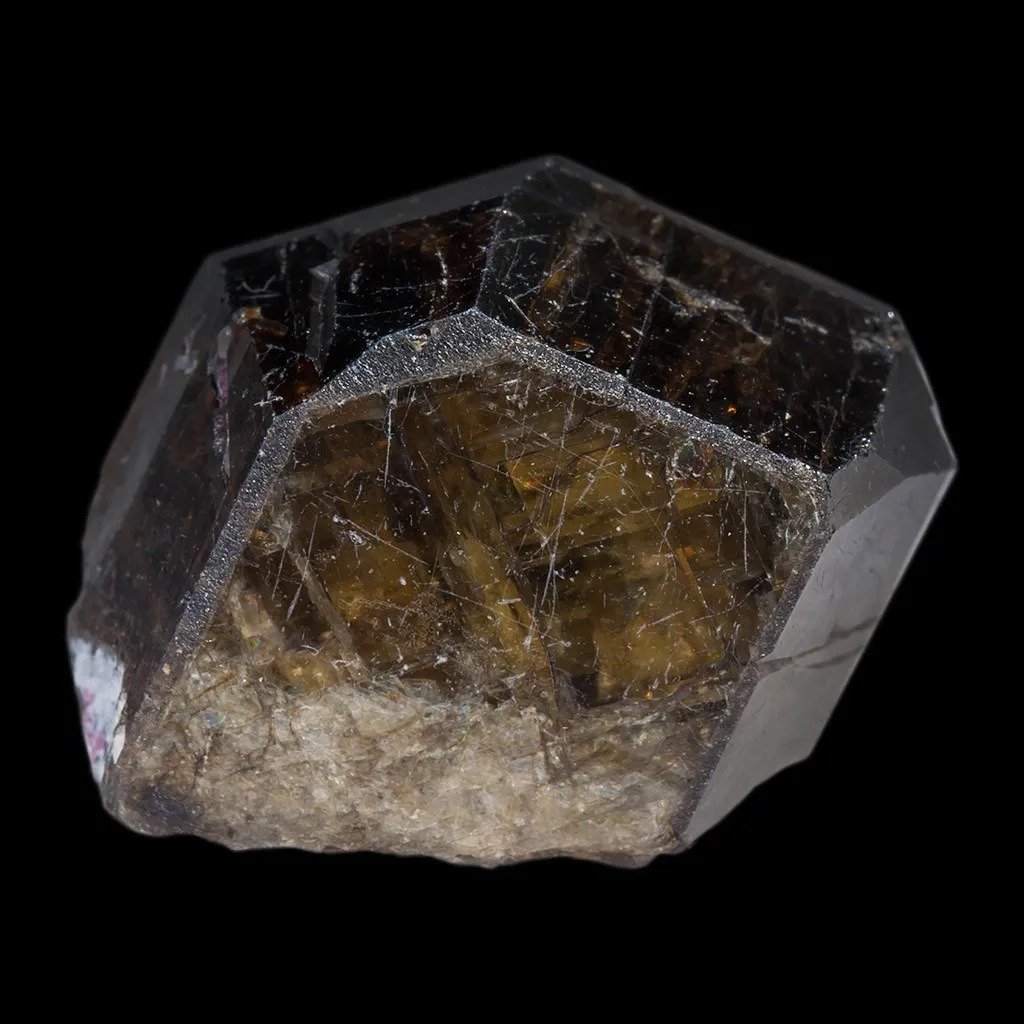
History of Stibiotantalite
Stibiotantalite was first described as a distinct mineral species in 1893 by George A. Goyder, who identified it from the Greenbushes tin placer deposits in Western Australia. The mineral was recognized because of its unusual combination of antimony and tantalum, distinguishing it from other tantalum oxides known at the time.
The discovery of stibiotantalite contributed to the understanding of complex pegmatite mineralogy, where rare-element minerals often occur as accessory phases formed during the late stages of magma crystallization. Later studies expanded knowledge of its crystal chemistry and confirmed relationships between stibiotantalite and related minerals such as stibiocolumbite and bismutotantalite.
Formation and Geological Occurrence of Stibiotantalite
Stibiotantalite forms mainly in rare-element granite pegmatites, particularly those classified as lithium-caesium-tantalum (LCT) pegmatites. These geological environments develop from highly evolved granitic magmas that become enriched in incompatible elements such as tantalum, niobium, lithium, cesium, and beryllium during the final stages of crystallization.
As pegmatite fluids cool, tantalum and antimony can combine with oxygen to form stibiotantalite crystals. The mineral commonly occurs alongside other pegmatite minerals, including quartz, feldspar, mica minerals such as lepidolite, and other tantalum oxides. Some specimens are found as isolated crystals embedded within pegmatite cavities, while others occur as granular masses or inclusions within larger mineral aggregates.
The formation of stibiotantalite requires specific chemical conditions, particularly environments with sufficient tantalum availability and relatively low niobium content. It is often associated with highly differentiated pegmatite systems where rare-element minerals become concentrated.
Types and Varieties of Stibiotantalite
Stibiotantalite is recognized as a single mineral species, but natural specimens may show variations caused by chemical substitutions and geological conditions.
Common forms and related varieties include:
- Typical Stibiotantalite
The standard form with an ideal composition close to SbTaO₄, containing antimony as the dominant A-site element and tantalum as the main B-site element. - Niobium-bearing Stibiotantalite
Some specimens contain partial substitution of tantalum by niobium, producing compositions closer to Sb(Ta,Nb)O₄. - Bismuth-bearing Stibiotantalite
Transitional compositions may occur between stibiotantalite and bismutotantalite, where bismuth partially replaces antimony. - Pegmatite-associated Crystals
Well-developed crystals found in pegmatites are especially valued by collectors due to their sharp crystal shapes and rarity.
Crystal Structure of Stibiotantalite
Stibiotantalite crystallizes in the orthorhombic crystal system and belongs to the cervantite mineral group. Its structure is based on the combination of antimony and tantalum coordinated with oxygen, forming a framework of metal-oxygen polyhedra.
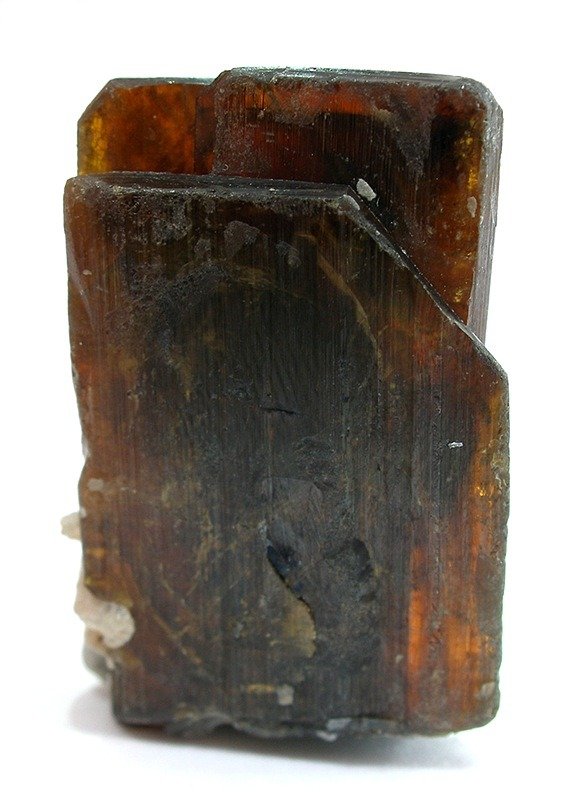
The ideal structure contains Sb³⁺ and Ta⁵⁺ ions arranged with oxygen atoms in a repeating three-dimensional lattice. Small amounts of niobium or bismuth may enter the structure through chemical substitution, resulting in variations in composition while maintaining the same basic crystal framework.
The orthorhombic structure contributes to the mineral’s typical crystal habits, which may include short prismatic or tabular crystals. However, well-formed crystals are uncommon because stibiotantalite generally occurs as an accessory mineral within complex pegmatite environments.
Physical and Chemical Properties of Stibiotantalite
Stibiotantalite is a rare oxide mineral defined by the chemical formula SbTaO₄, characterized chemically by a high concentration of heavy metallic cations, specifically antimony and tantalum. Structurally, it crystallizes in the orthorhombic crystal system and forms a complete solid-solution series with stibiocolumbite, a related species where niobium replaces tantalum in the crystal lattice. The presence of these heavy elements directly imparts a high specific gravity to the mineral, typically falling between 5.98 and 7.34 depending on the exact ratio of tantalum to niobium within a given specimen.
In terms of optical characteristics, stibiotantalite displays a varied color palette that includes shades of yellow, yellow-brown, reddish-brown, dark brown, and occasionally greenish-yellow, while consistently producing a light yellow streak when scraped across unglazed porcelain. Individual crystals range from transparent to translucent, though larger or darker specimens with higher iron or manganese impurities can appear nearly opaque. Fresh or polished crystal surfaces exhibit an attractive adamantine to resinous luster, giving the material a brilliant sheen. Mechanically, stibiotantalite is brittle and subject to breakage, exhibiting uneven to conchoidal fracture patterns alongside a Mohs hardness of approximately 5.5, which aligns its scratch resistance closely with that of orthoclase feldspar or knife steel.
Stibiotantalite and tantalite are closely related tantalum minerals, but they differ in their dominant chemical components.
| Feature | Stibiotantalite | Tantalite |
|---|---|---|
| Main elements | Antimony and tantalum | Iron, manganese, tantalum, niobium |
| Formula | SbTaO4 | (Fe,Mn)(Ta,Nb)2O6 |
| Crystal system | Orthorhombic | Orthorhombic |
| Rarity | Rare | More common |
| Main occurrence | Complex pegmatites | Granite pegmatites |
| Main value | Collector mineral | Tantalum ore source |
Both minerals are important examples of how rare elements become concentrated in pegmatite systems.
Major Localities of Stibiotantalite
Stibiotantalite has been documented across several major rare-element pegmatite regions worldwide, with its historical roots anchored at the Greenbushes tin deposit in Western Australia, which serves as the mineral’s type locality where it was first identified. Beyond Australia, complex tantalum-rich pegmatites in Mozambique have produced notable specimens prized for their crystal development and high tantalum content. In the United States, famous pegmatite districts in California, particularly the Himalaya Mine area within San Diego County, have yielded distinct collectible specimens. Additional Asian occurrences include the lithium-enriched pegmatites of Nagatare in Fukuoka Prefecture, Japan, alongside various documented rare-element pegmatite deposits across central China and other specialized geological formations globally.
Uses and Applications of Stibiotantalite
Due to its global scarcity and localized occurrence within specific pegmatite zones, stibiotantalite is not mined in large quantities to serve as a primary commercial ore for industrial tantalum or antimony extraction. Instead, its applications lie almost entirely in specialized fields. High-quality, well-crystallized specimens are highly prized by private mineral collectors and museums for display, valued for their rarity, adamantine luster, and distinctive crystal habits. Extremely rare transparent crystals with rich yellow to reddish-brown coloration are occasionally faceted into gemstones for collectors, though its relative softness and brittleness limit its use to display pieces rather than jewelry. Beyond collecting, stibiotantalite serves an important role in scientific research, where mineralogists and geochemists study its structural chemistry and solid-solution relationships with stibiocolumbite to better understand the crystallization history and geochemical evolution of late-stage, rare-element granite pegmatites.