
Proteus is an exceptionally rare and structurally complex mineral species renowned among geologists and mineralogists for its unusual chemical composition and highly restricted occurrence. Unlike ubiquitous, rock-forming minerals such as quartz, feldspar, or calcite that make up the bulk of the Earth’s crust, Proteus belongs to a specialized class of uncommon minerals. These minerals are primarily scrutinized by academic researchers and elite collectors due to their extreme rarity, distinct crystallographic characteristics, and the profound geological significance they hold. Proteus is intimately associated with complex, highly evolved geological environments where unusual trace elements become supersaturated and concentrated during late-stage mineral formation. Its presence is frequently linked to specific, localized hydrothermal processes or highly specialized geological systems, rendering it an invaluable subject for geochemical research rather than a material for industrial or commercial exploitation. The nomenclature of Proteus pays homage to its distinctive, multifaceted nature, mirroring the complexity inherently found in rare mineralogical species. Like many uncommon minerals, Proteus acts as a geological time capsule, providing critical empirical data regarding the ambient chemical conditions, temperature fluctuations, lithostatic pressure, and fluid compositions that were active during its initial crystallization. Because it is so scarce, Proteus is virtually nonexistent in the commercial gemstone or industrial markets; instead, exceptional specimens are meticulously curated by natural history museums, global research institutions, and private mineralogists deeply invested in anomalous mineral chemistry.
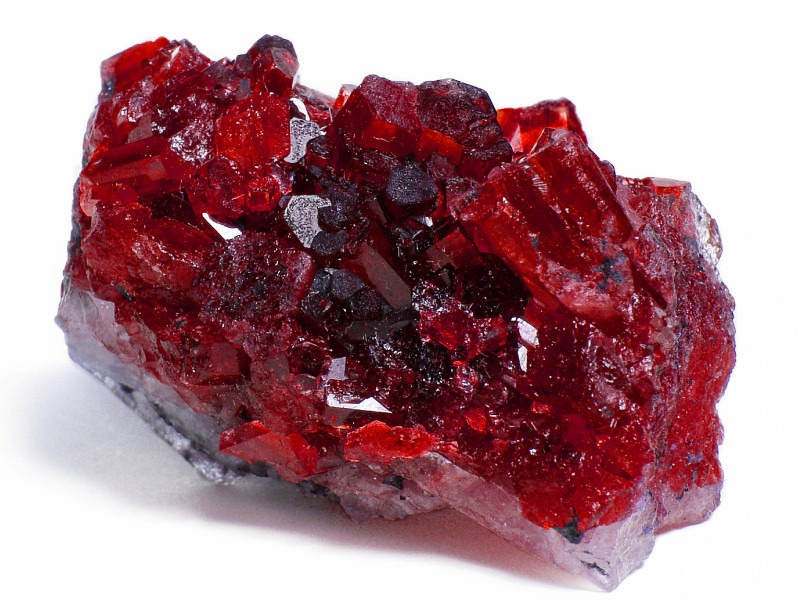
History and Discovery of Proteus
The initial identification of Proteus was the result of rigorous, detailed mineralogical investigations combining wet chemical analysis, advanced crystallography, and the exhaustive examination of unusual geological specimens. The discovery of rare mineral phases like Proteus typically unfolds when field researchers and geochemists probe anomalous mineral deposits or highly specialized geological micro-environments that host uncommon combinations of trace elements. The methodological process of recognizing and officially validating a new mineral species requires an extensive burden of scientific proof. Before formal recognition by international mineralogical governing bodies, researchers are obligated to definitively map its exact empirical formula, its three-dimensional crystal lattice structure, its distinct physical properties, and its paragenetic relationship with pre-existing, known mineral species. Following its peer-reviewed identification, Proteus was formally inducted into the ever-expanding catalog of rare Earth minerals documented by the scientific community. The ongoing study of Proteus contributes immensely to a broader, systemic understanding of global mineral diversity, serving as a textbook demonstration of how highly specific, localized geological processes can precipitate incredibly specialized mineral phases. Unlike historically prevalent minerals that have been harnessed by human civilizations for millennia, Proteus represents a triumph of modern scientific classification, where its primary intrinsic value is derived entirely from empirical research and taxonomic categorization.
Crystal Structure of Proteus
The internal crystal structure of Proteus is the fundamental blueprint that governs virtually all of its macroscopic physical properties, dictating its external crystal shape, Mohs hardness, cleavage planes, and complex optical behavior. As with all crystalline solids, Proteus possesses a highly organized, repeating atomic arrangement that defines its crystallographic classification. This internal lattice architecture controls how individual atoms are covalently or ionically bonded together, ultimately influencing the geometric manner in which the crystals propagate and develop under natural terrestrial conditions. Depending on the specific crystallographic system it belongs to, Proteus may manifest in a variety of distinct crystal habits, ranging from elongated prismatic and flattened tabular forms to granular or massive (formless) aggregates. Well-developed, euhedral crystals are exceptionally prized by mineral collectors and crystallographers alike, as these specimens macroscopically broadcast the mineral’s internal symmetry and historical growth patterns. Advanced analytical techniques, most notably X-ray powder diffraction (XRD) and single-crystal X-ray crystallography, are routinely deployed to resolve the structural mysteries of rare minerals like Proteus. These high-level structural studies empower solid-state chemists and geologists to map the exact atomic coordinates within the lattice and meticulously compare the mineral against structurally related geological species.
Formation and Geological Environment of Proteus
Proteus crystallizes exclusively under highly specialized, localized geological conditions, completely absent from standard surface or shallow-crustal environments. Its successful genesis requires a perfect thermodynamic storm: a precise intersection of suitable trace chemical elements, exact ambient temperature gradients, specific pressure thresholds, and highly reactive mineral-forming fluids. Rare minerals of this caliber most frequently develop as a direct consequence of late-stage hydrothermal activity, a process where superheated, chemically saturated aqueous fluids migrate through structural fissures, faults, and vesicles within the host rock. As these pressurized fluids gradually cool or chemically react with the surrounding country rock, previously dissolved elements become supersaturated and precipitate out of solution, crystallizing into entirely new mineral phases like Proteus. Furthermore, Proteus may also be discovered in association with intensely complex geological terrains, such as heavily altered igneous intrusions, high-grade metamorphic contact zones, or economically barren but mineralogically rich deposits where highly unusual redox or pH conditions prevailed. Consequently, the mere presence of Proteus acts as an invaluable diagnostic tool, providing researchers with vital clues necessary to reconstruct the complex tectonic and thermal history of the host rocks, helping scientists decode the dynamic, ongoing evolution of the Earth’s lithosphere.
Physical Properties of Proteus
The physical properties of Proteus are essential diagnostic markers that help mineralogists visually and mechanically differentiate it from accompanying mineral species. However, due to its extreme scarcity, purely visual examination is rarely sufficient, and these macroscopic observations must almost always be corroborated with stringent laboratory testing. Key physical characteristics encompass its color, which is highly variable and heavily dictated by trace chemical impurities incorporated into the lattice, and its crystal habit, which is a direct macroscopic reflection of the specific geological conditions present during its growth. Additionally, specimens exhibit varying degrees of transparency, ranging from perfectly clear to entirely opaque, and display a characteristic luster determined by the way light interacts with the mineral’s surface. Mechanically, the mineral is identified by its specific hardness, a direct measure of the strength of its internal atomic bonds, its cleavage patterns, which dictate how the mineral breaks along inherent planes of structural weakness, and its overall density or specific gravity, which is heavily influenced by the atomic mass of the specific elements confined within its crystalline architecture.
Chemical Composition of Proteus
Proteus boasts a highly complex and intricate chemical composition that firmly distinguishes it from more mundane, widely distributed minerals. Its precise chemical formula, resolved through sophisticated laboratory diagnostics such as electron microprobe analysis and mass spectrometry, reflects a unique amalgamation of elements seamlessly incorporated into its crystalline lattice. The mineral selectively integrates specific elements that could only coalesce under highly constrained geological parameters. Depending on its specific mineralogical group and structural subclass, its molecular framework may encompass a diverse array of transition metals, oxygen, silicon, phosphorus, sulfur, or other volatile components. This profound chemical complexity is precisely what commands intense scientific scrutiny; rare minerals like Proteus generally only precipitate when a geological environment experiences severe and unusual chemical fractionation, allowing dispersed, incompatible trace elements to forcefully bind into a stable, enduring mineral structure. A comprehensive understanding of the chemical makeup of Proteus allows geochemists to reverse-engineer the exact geological and thermodynamic processes responsible for its genesis, yielding unprecedented insights into the deep-time evolution of the mineral systems in which it resides.
Optical Properties of Proteus
Beyond its tactile and mechanical features, the optical properties of Proteus provide a wealth of data crucial for accurate mineralogical identification and rigorous scientific study. When prepared as a petrographic thin section and examined under a polarized light microscope, Proteus reveals a suite of complex optical behaviors, including specific refractive indices, distinct light transmission capabilities, and varying degrees of birefringence and pleochroism (the phenomenon where the mineral appears to be different colors when observed at different angles). These microscopic examinations also illuminate intricate internal crystal features, such as zoning or microscopic fluid inclusions. These highly specific optical effects are inextricably linked to the mineral’s underlying crystal structure and atomic symmetry, providing mineralogists with a non-destructive methodology to definitively distinguish Proteus from visually identical, impostor minerals. This optical analysis becomes especially critical when researchers are forced to identify microscopic mineral grains or massive specimens that entirely lack the well-developed external crystal faces required for geometric identification.
Types and Varieties of Proteus
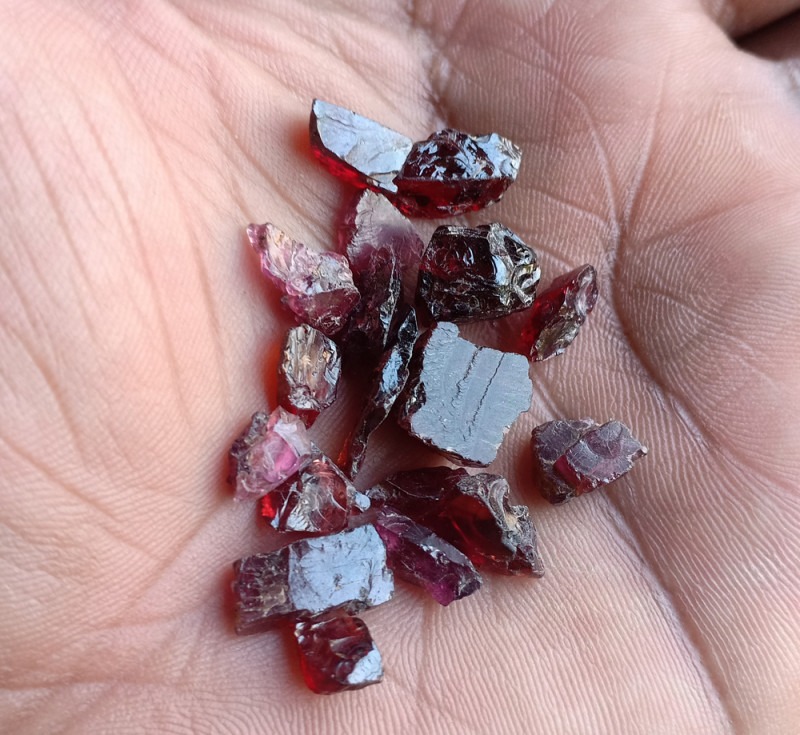
Proteus is formally recognized by the scientific community as a singular, distinct mineral species rather than a broad mineral group with officially delineated sub-varieties. However, distinct morphological and aesthetic differences frequently arise among specimens due to localized variations in the thermodynamic and chemical conditions of their formational environments. Common specimen variations include:
- Euhedral crystal specimens: Highly sought-after formations displaying well-developed, geometrically perfect external crystal faces.
- Fine-grained aggregates: Specimens where multiple microscopic crystals have rapidly intergrown into a dense, cohesive cluster.
- Massive mineral forms: Formations that grew in confined spaces, resulting in solid masses that lack any visible external crystal shape.
- Chromatically distinct specimens: Variations exhibiting a broad spectrum of colors caused by the localized introduction of transition metal impurities during crystallization.
- Divergent crystal habits: Structural variations (such as elongated vs. flattened growth) directly reflecting the specific spatial constraints and cooling rates of the immediate geological environment.
Occurrence and Localities of Proteus
Proteus is globally categorized as an exceptionally rare mineral, restricted to a highly limited number of documented geographical localities. It is exclusively discovered within highly specialized geochemical environments where an unusual confluence of chemical conditions facilitated its precipitation. These restrictive, rare-mineral localities are typically confined to complex granitic pegmatite systems, late-stage hydrothermal vein deposits, specific contact metamorphic zones, unusually highly fractionated igneous environments, and intensely metasomatized or hydrothermally altered rock formations. The precise geographical locations where Proteus is extracted are of paramount importance to both structural geologists and elite mineral collectors, as each unique locality imparts distinct morphological, chemical, and aesthetic characteristics to the specimens it yields. Because of this profound scarcity and highly restricted geological distribution, Proteus specimens remain exceedingly difficult to acquire, making them a rarity even within the most comprehensive institutional mineral collections.
Association with Other Minerals
In the field, Proteus is almost never discovered in absolute isolation; rather, it is found embedded within complex paragenetic assemblages alongside other mineral species that crystallized under identical or sequentially similar geological conditions. Analyzing these associated minerals—which frequently include ubiquitous rock-forming species such as quartz, diverse feldspars, and mica group minerals, as well as distinct carbonates, complex metallic oxides, and other rare-element minerals—provides researchers with an essential environmental context. By meticulously studying these associative mineral relationships, geochemists and petrologists can successfully map the entire sequence of mineral precipitation, ultimately decoding the broader thermal, chemical, and temporal evolution of the entire geological system in which Proteus was born.
Uses and Applications of Proteus
Because Proteus exists in such minute quantities globally and entirely lacks massive, economically viable ore deposits, it possesses absolutely no practical industrial applications and is entirely absent from the commercial gemstone trade. Instead, its primary and most vital applications are relegated strictly to the realms of high-level academia and specialized curation. In the sector of scientific research, Proteus serves as a crucial natural laboratory; it assists geochemists and crystallographers in studying the complex mechanics of crystal chemistry, mapping out unusual geological processes, and understanding the concentration mechanisms of rare elements within the Earth’s crust. In the context of mineral collections, its profound scarcity, coupled with its unique structural and aesthetic characteristics, makes Proteus highly coveted by museum curators and elite private collectors who specialize in preserving the planet’s most unusual natural anomalies. Finally, in broader geological studies, the mere presence of Proteus within a rock formation acts as a highly specific indicator mineral, supplying structural geologists with vital, high-resolution data regarding the exact thermal and chemical paleoenvironments that existed during the active period of mineral growth.