
Gaylussite is an exceptionally rare and scientifically valuable hydrated carbonate mineral. Because it readily undergoes physical and chemical changes in standard surface environments and atmospheric humidity, it is virtually absent from the conventional gem or commercial mineral markets. However, it remains a highly sought-after subject of study for geologists and advanced mineral collectors. It not only records the chemical evolution of paleolakes but also acts as a natural indicator of extreme evaporative environments.
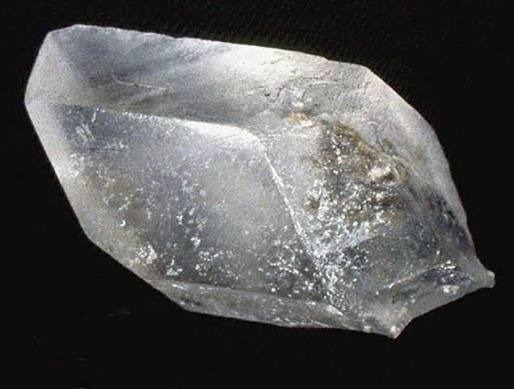
The core professional characteristics of Gaylussite include:
- Chemical Composition and Crystal System: Its standard chemical formula is Na₂Ca(CO₃)₂·5H₂O. The mineral crystallizes in the monoclinic crystal system, with primary crystals frequently exhibiting highly recognizable wedge-shaped, tabular, or short prismatic structures with a bright vitreous luster.
- Physical Identification Properties: It is a remarkably soft and fragile mineral, with a Mohs hardness ranging only between 2.5 and 3.0, and a specific gravity of approximately 1.99. Accompanied by a conchoidal fracture, it cannot withstand any conventional cutting or polishing processes.
- Environmental Instability: High susceptibility to efflorescence is its most prominent diagnostic feature. In dry air, Gaylussite rapidly dehydrates, losing its transparency and turning into a white powder. In aqueous solutions, it slowly decomposes, ultimately leaving behind a skeleton of calcite or aragonite.
Imprints in Scientific History: The Discovery of Gaylussite
The naming and discovery history of Gaylussite are deeply rooted in the golden age of European natural science exploration during the early 19th century. This era saw a profound intersection and integration of geology and chemistry, and the discovery of this mineral perfectly epitomizes this interdisciplinary advancement.
- Initial Geological Record (1826): This unique carbonate mineral was first officially recorded by the scientific community in 1826. Its initial type specimens were collected from the alkaline lake regions of Lagunillas in Mérida, Venezuela, South America.
- Honoring a Chemistry Giant: Its naming holds significant academic commemorative value. Geologists of the time officially named it Gaylussite in honor of the great French chemist and physicist Joseph Louis Gay-Lussac. His pioneering contributions to gas laws and quantitative chemical analysis laid a solid foundation for the subsequent development of geochemistry.
- New Discoveries in Modern Exploration: Although deposits yielding large crystals have been exceedingly rare since 1826, modern geological drilling technologies continue to broaden our understanding. For instance, traces of Gaylussite were discovered in deep drill cores from the Lonar crater in Maharashtra, India. This provided excellent physical evidence for studying the extreme alkaline hydrothermal environments formed after meteorite impacts.
Strict Natural Processes: The Geological Formation of Gaylussite
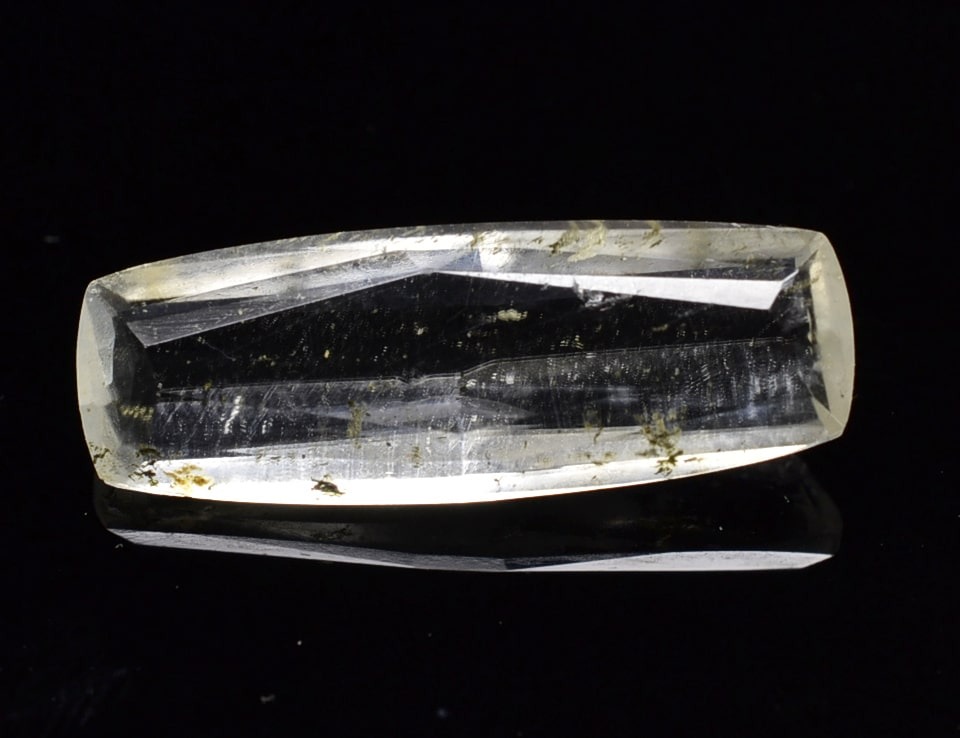
From the macro perspective of diagenesis and metallogeny, Gaylussite is by no means born from ordinary magmatic cooling or regional metamorphism. It is a quintessential non-marine evaporite mineral, and its formation mechanism is highly dependent on enclosed, arid continental inland basin environments with exceptionally stringent hydrochemical conditions.
- Evaporite Deposition in Alkaline Lakes: Its primary formation environment is within inland alkaline salt lakes (soda lakes) in arid or semi-arid climates. In these closed evaporite basins, when lake water rich in high concentrations of sodium, calcium, and carbonate ions undergoes prolonged high-temperature evaporation, and the brine reaches a critical point of supersaturation, Gaylussite crystallizes directly as a primary mineral.
- Symbiotic Mineral Networks: Within evaporite strata, it forms complex saline paragenetic associations. It is typically found alongside minerals such as trona, pirssonite, halite, and shortite. Classic global occurrences include Searles Lake in California, USA, the Gobi Basin in Mongolia, and Lake Amboseli in Kenya.
- Diagenetic Replacement and Pseudomorphs: This is the phenomenon of greatest interest in paleoclimatology. Over geological time and with shifts in groundwater chemistry, primary Gaylussite crystals are highly susceptible to complete replacement by calcite in calcium-rich solutions. This replacement leaves behind “calcite pseudomorphs” that perfectly retain the original wedge-shaped appearance of Gaylussite, serving as invaluable geological keys for scientists reconstructing ancient lake level fluctuations and paleoclimate shifts.
Varieties and Structural Forms of Gaylussite
Although Gaylussite is a specific mineral species without a wide array of colored varieties like quartz or beryl, it is classified within mineralogical databases by its distinct morphological and formational variations. The primary forms encountered in natural and laboratory environments include:
- Primary Unaltered Gaylussite: This is the pristine, original form of the mineral that crystallizes directly from supersaturated alkaline brines. These specimens typically present as highly perfect, transparent to translucent wedge-shaped or short prismatic crystals. Because they have not undergone diagenetic alteration, they are exceptionally fragile and require immediate preservation in climate-controlled environments to prevent spontaneous dehydration.
- Pseudogaylussite (Calcite Pseudomorphs): This is arguably the most famous and geologically significant variety. It occurs when the original Gaylussite crystals are subjected to changing hydrochemical conditions (often an influx of fresh, calcium-rich water), causing the Gaylussite to completely dissolve. Calcite subsequently precipitates into the exact mold left behind, perfectly retaining the original wedge or prismatic geometry. Mineral collectors often refer to these distinctive pseudomorphs colloquially as “barleycorn” crystals or “pseudogaylussite,” and they are frequently excavated from the ancient muds of dried Pleistocene lakebeds.
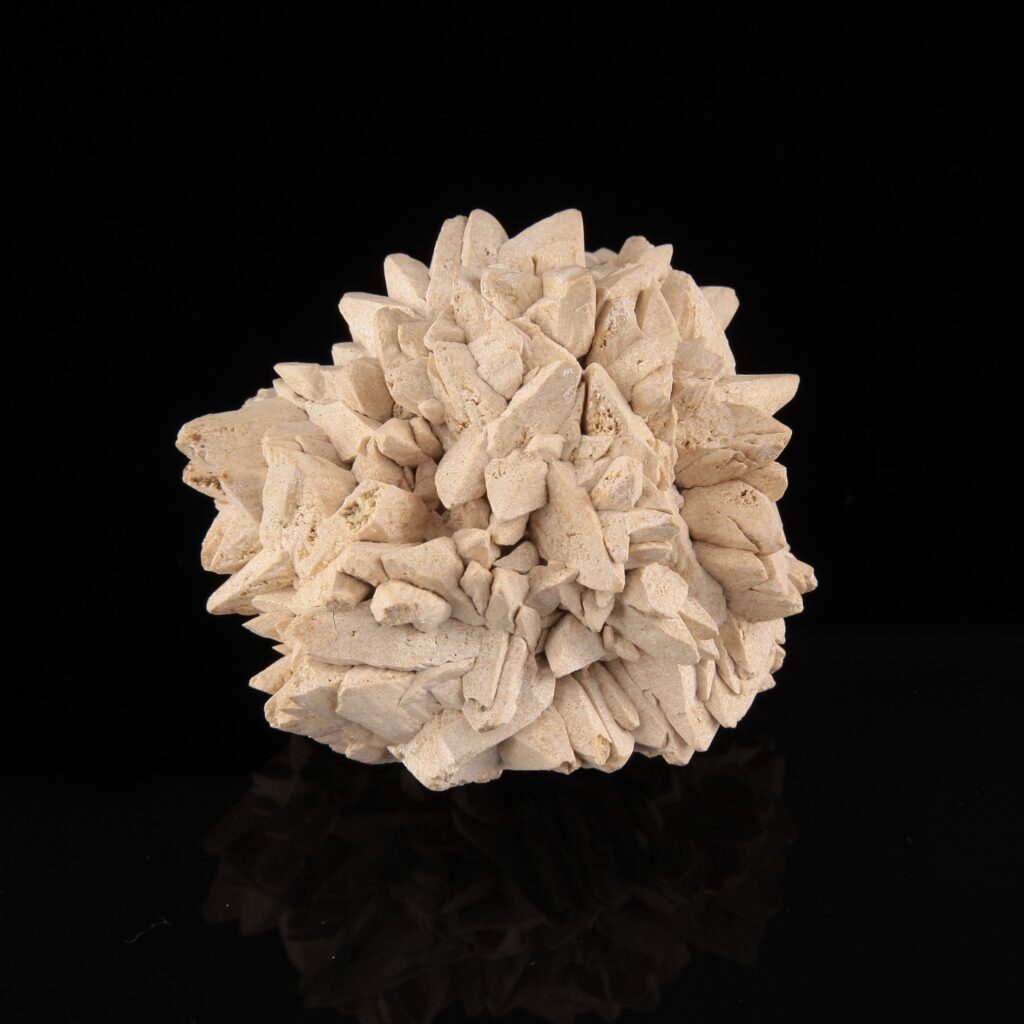
- Thinolite-Associated Casts: In specific paleo-lake environments, such as the ancient Lake Lahontan system in North America, Gaylussite is believed to have played a transitional role in the formation of complex, lattice-like tufa deposits known as thinolite. While the exact paragenetic sequence is still debated, molds and casts retaining Gaylussite’s crystallographic signatures are often found within these intricate carbonate structures.
- Synthetic and Industrial Scale Gaylussite: Beyond natural evaporite basins, Gaylussite frequently crystallizes in artificial settings. It is a notorious byproduct in the industrial processing of trona ore for soda ash (sodium carbonate) production. In these facilities, it forms as a hard, stubbornly affixed crystalline scale within pipes and heat exchangers, possessing the exact same structural and chemical identity as naturally occurring specimens.
Crystal Structure
Gaylussite crystallizes in the monoclinic crystal system, specifically falling within the prismatic class (2/m) and utilizing the crystallographic space group C2/c. From a micro-structural perspective, its internal atomic architecture is exceptionally complex, highly stratified, and inherently fragile. The crystal lattice is fundamentally defined by zigzag, undulating chains of calcium-oxygen (Ca-O) coordination polyhedra that run parallel to the c-axis. These chains do not exist in isolation; they are intricately cross-linked by rigid, planar carbonate (CO₃) triangular groups.
The sodium (Na) atoms and the five molecules of structural hydration water (H₂O) are accommodated within the relatively spacious interstitial gaps and layers between these cross-linked chains. The entire crystalline framework is held together through a delicate, extensive network of hydrogen bonds provided by the water molecules. This specific, water-dependent atomic arrangement dictates its highly recognizable external wedge-like morphology. Furthermore, the presence of these distinct structural layers results in distinct cleavage planes—specifically perfect cleavage on the {110} and {011} directional planes. Most importantly, because the structural integrity heavily relies on loosely bound interstitial water, the lattice is highly vulnerable to collapse when exposed to low-humidity environments, explaining the mineral’s notorious physical instability.
Physical and Chemical Properties
The diagnostic properties of Gaylussite make it a fascinating subject for advanced physical, optical, and chemical analysis. Physically, it is a remarkably soft and brittle mineral, registering a mere 2.5 to 3.0 on the Mohs hardness scale, making it softer than a copper penny. It features an exceptionally low specific gravity of approximately 1.99, which makes specimens feel unusually light for their size. Freshly extracted crystals display a brilliant vitreous (glassy) luster and are typically colorless to translucent white, though they invariably exhibit a distinct conchoidal (shell-like) fracture when mechanically broken. Optically, Gaylussite is biaxial negative, boasting high birefringence (strong double refraction) and refractive indices of approximately α=1.444, β=1.516, and γ=1.523.
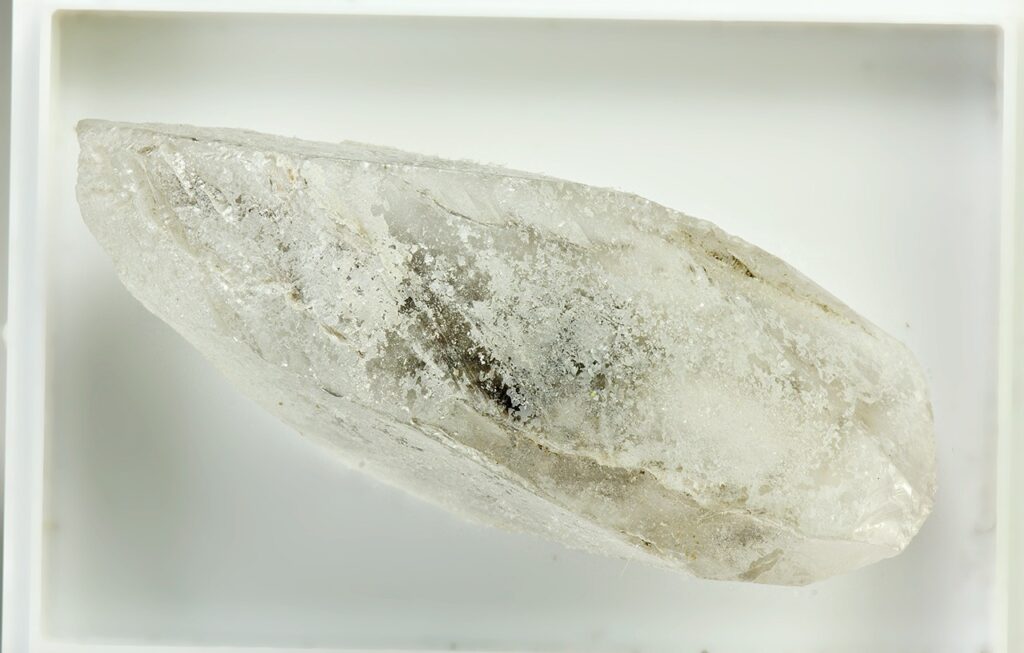
Chemically, its composition is rigorously defined as Na₂Ca(CO₃)₂·5H₂O, marking it as a highly reactive, hydrated double carbonate. Its most defining chemical behavior is its rapid efflorescence. Upon prolonged exposure to dry atmospheric conditions, the delicate hydrogen bonds within the lattice break, and the mineral loses its structural water. This dehydration causes the once-transparent crystal to turn opaque, eventually crumbling into a white, powdery, amorphous mixture of sodium and calcium carbonates. Furthermore, Gaylussite exhibits incongruent dissolution in water; rather than simply dissolving, it chemically breaks down in aqueous environments, leaching out the highly soluble sodium carbonate and leaving behind an insoluble, white residue of calcite or aragonite. Thermodynamically, if subjected to intense heat, it undergoes complete decomposition, releasing water vapor and carbon dioxide gas, ultimately reducing to a fused mass of simple alkaline oxides.
Applications and Scientific Significance
Due to its extreme physical fragility and environmental instability, Gaylussite holds no commercial value in the traditional gemstone industry, nor is it economically viable to mine as a primary ore for sodium or calcium extraction. However, its value within the realm of academic geology and comprehensive digital mineral libraries is immense. It serves as a critical paleoclimate indicator; the presence of Gaylussite or its corresponding calcite pseudomorphs in sedimentary rock layers provides geologists with undeniable evidence of ancient, highly alkaline, and arid evaporite basin environments. In the industrial chemical sector, understanding its precise precipitation parameters is essential, as Gaylussite frequently forms as a problematic scale within the pipes and machinery of processing plants that convert trona into commercial soda ash. For advanced mineral collectors, perfectly preserved, unaltered transparent crystals are highly prized rarities that demand rigorous, climate-controlled preservation techniques to prevent degradation.