
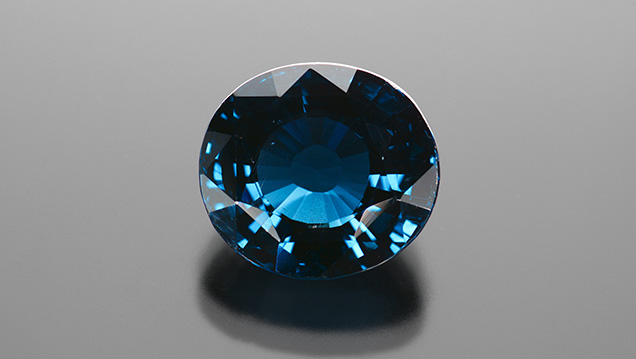
Gahnospinel is a rare zinc-rich member of the spinel supergroup with the ideal chemical formula (Mg,Zn)Al₂O₄, representing an intermediate composition between magnesium spinel (MgAl₂O₄) and gahnite (ZnAl₂O₄). It crystallizes in the cubic crystal system and typically forms octahedral crystals with a vitreous luster. Colors range from dark blue and bluish-green to green, gray, and nearly black, depending on the proportions of zinc, magnesium, iron, and trace elements. Transparent gem-quality gahnospinel is uncommon and is occasionally faceted for collectors, while most specimens are valued for mineralogical research. Due to its position within the spinel solid-solution series, gahnospinel exhibits physical properties that are intermediate between spinel and gahnite, including relatively high refractive index and specific gravity. It is primarily found in zinc-rich metamorphic and metasomatic geological environments.
History of Gahnospinel
Although the zinc end-member gahnite was named in 1807 in honor of Swedish chemist Johan Gottlieb Gahn, the mineral known as gahnospinel was not formally recognized until 1937. During studies of blue gemstones from Sri Lanka, British gemologists Basil W. Anderson and Cecil J. Payne observed that certain spinels possessed unusually high refractive indices and densities that could not be explained by ordinary magnesium spinel. Subsequent chemical analyses by Dr. Max Hey revealed significant zinc substitution within the crystal structure, confirming that these specimens represented an intermediate member between spinel and gahnite. The name “gahnospinel” was introduced to reflect both its relationship to gahnite and its membership in the spinel group. Today, the mineral is recognized as a zinc-rich variety within the spinel supergroup and remains of interest to mineralogists and gemologists because of its uncommon chemistry and rarity in faceted form.
Formation of Gahnospinel
Gahnospinel forms under high-temperature geological conditions where zinc and aluminum are available during mineral crystallization. It is most commonly associated with regional metamorphism, contact metamorphism, and metasomatic processes affecting zinc-rich rocks. Typical occurrences include metamorphosed zinc ore deposits, skarn systems formed by the interaction of igneous intrusions with carbonate rocks, and hydrothermal environments enriched in zinc-bearing fluids. During metamorphism, zinc released from minerals such as sphalerite reacts with aluminum-bearing minerals to crystallize gahnospinel under elevated temperatures and moderate to high pressures. The mineral commonly occurs alongside garnet, quartz, magnetite, sphalerite, willemite, and other zinc-bearing minerals. Well-formed crystals are relatively uncommon because the specific chemical conditions required for significant zinc substitution in the spinel structure are not widespread, making gahnospinel a comparatively rare mineral in nature.
Gahnospinel Localities
Although gahnospinel is considered a rare mineral, it has been reported from a number of zinc-rich metamorphic and skarn deposits around the world. Most occurrences are associated with regions where zinc-bearing minerals have undergone medium- to high-grade metamorphism or metasomatic alteration.
Sri Lanka is one of the best-known sources of gem-quality gahnospinel. The country’s alluvial gem gravels have produced transparent blue to bluish-green crystals that are occasionally cut into gemstones for collectors. These specimens are often associated with other gem minerals such as spinel, sapphire, zircon, and garnet.
In Sweden, where the related mineral gahnite was first identified, zinc-rich spinel-group minerals including gahnospinel have been documented in metamorphosed sulfide deposits. Additional occurrences have been reported from Australia, Namibia, Madagascar, India, Russia, Canada, China, Brazil, and the United States, particularly in skarn deposits and high-grade metamorphic terrains. Most specimens are collected for scientific study rather than jewelry because transparent crystals remain relatively uncommon.
Varieties of Gahnospinel
Gahnospinel (Mg,Zn)Al2O4 does not possess officially recognized varietal names in classical gemology. Rather, it represents an intermediate compositional field within the solid solution series bounded by spinel sensu stricto and gahnite. Specimens are scientifically categorized by their trace-element chemistry, isomorphic substitution ratios, and petrological paragenesis.
Zinc-Dominant Gahnospinel
Trending compositionally toward the gahnite endmember (ZnAl2O4), this variant exhibits elevated specific gravity (S.G.) and a notably higher refractive index (R.I.). Transition metal chromophores, particularly Fe2+ and Co2+, frequently substitute within the tetrahedral sites, imparting intense saturation. Optically, these specimens display profound violet-blue, deep teal, or dark forest-green phenotypes.
Magnesium-Dominant Gahnospinel
Positioned closer to the pure spinel endmember (MgAl2O4), this sub-type yields systematically lower specific gravity and refractive parameters compared to its zinc-rich counterparts. Lacking dominant transition metal impurities, these crystals commonly exhibit muted, desaturated tones, manifesting as pale steely-blue, grayish-lavender, or subtle greenish-gray hues.
Euhedral Gem-Quality Gahnospinel
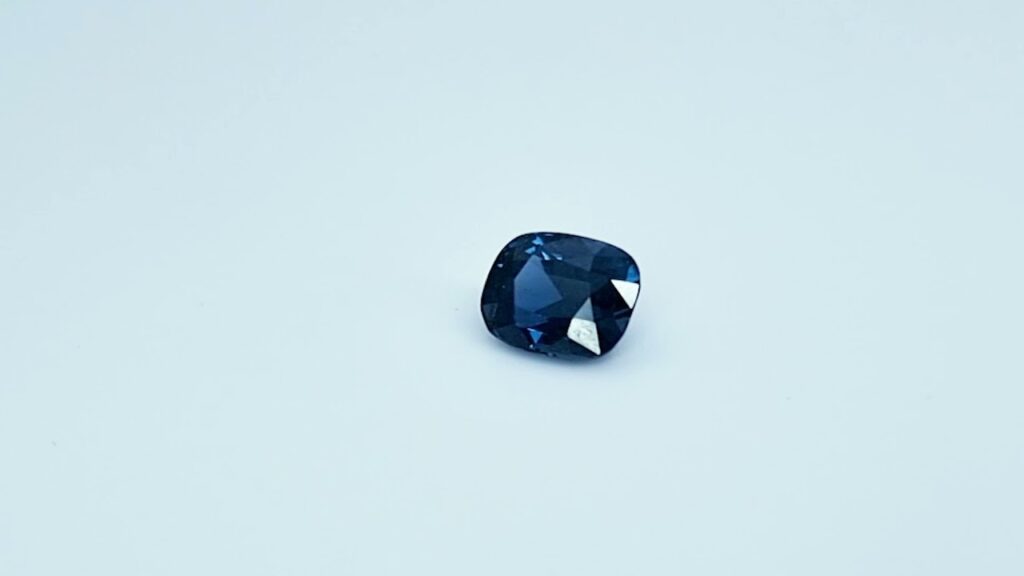
Macroscopically transparent, euhedral crystals devoid of heavy inclusions are exceptionally rare and highly coveted by esoteric gem collectors. Commercially, they are seldom encountered in mainstream jewelry. Due to overlapping optical properties with standard blue spinel, conclusive identification necessitates advanced spectroscopic analysis (e.g., EDXRF or Raman spectroscopy) to confirm the presence of significant structural zinc.
Massive and Paragenetic Gahnospinel
In geological environments, gahnospinel predominantly crystallizes as anhedral to subhedral granular aggregates disseminated within high-grade metamorphic terranes, such as marbles, skarns, and specialized pegmatites. These specimens serve as crucial petrogenetic indicators, offering valuable insights into zinc mobilization and fluid-rock interactions during regional metamorphism.
Crystal Structure of Gahnospinel
Gahnospinel belongs to the spinel supergroup and crystallizes in the isometric (cubic) crystal system. Its structure follows the general spinel formula AB₂O₄, where magnesium and zinc occupy the tetrahedral A sites while aluminum occupies the octahedral B sites.
The oxygen atoms form a cubic close-packed framework that provides exceptional structural stability. Zinc and magnesium substitute freely for one another over a wide compositional range, creating a continuous solid-solution series between spinel and gahnite. This atomic substitution is responsible for variations in density, refractive index, and color observed among different specimens.Individual crystals commonly develop as well-formed octahedra, although dodecahedral and distorted crystal habits may also occur. Twinning is uncommon, and cleavage is absent because of the strong three-dimensional bonding within the crystal lattice. Instead, gahnospinel typically fractures with a conchoidal to uneven surface.
Physical Properties of Gahnospinel
Gahnospinel is a durable oxide mineral that belongs to the spinel supergroup and exhibits physical properties intermediate between magnesium spinel and zinc-rich gahnite. It crystallizes in the cubic (isometric) crystal system and most commonly forms octahedral crystals, although granular and massive aggregates are more frequently encountered in nature. The mineral displays a vitreous luster and ranges from transparent to opaque depending on crystal quality. Its color is highly variable, typically including blue, bluish-green, green, gray, dark green, and nearly black, with coloration largely controlled by the relative proportions of zinc, magnesium, iron, and other trace elements. Gahnospinel has a Mohs hardness of approximately 7.5 to 8, making it resistant to scratching and suitable for occasional use as a gemstone. It lacks cleavage due to its strong three-dimensional crystal structure and instead breaks with a conchoidal to uneven fracture, contributing to its overall toughness. The mineral has a specific gravity ranging from about 4.1 to 4.4, which is noticeably higher than that of ordinary magnesium spinel because of its zinc content. Optically, gahnospinel is isotropic, as expected for cubic minerals, with a refractive index typically between 1.76 and 1.80, while fluorescence is generally absent or very weak under ultraviolet light.
Chemical Properties of Gahnospinel
Chemically, gahnospinel is a zinc- and magnesium-bearing aluminum oxide with the general chemical formula (Mg,Zn)Al₂O₄. It belongs to the spinel supergroup, whose minerals share the characteristic AB₂O₄ crystal structure in which magnesium and zinc occupy tetrahedral sites and aluminum occupies octahedral sites within a closely packed oxygen framework. One of the defining chemical characteristics of gahnospinel is the extensive substitution between magnesium and zinc, allowing the mineral to form a continuous solid-solution series between magnesium spinel (MgAl₂O₄) and gahnite (ZnAl₂O₄). Natural specimens commonly contain minor amounts of iron, manganese, chromium, cobalt, or other trace elements, which can influence both color and density without significantly altering the crystal structure. Gahnospinel is chemically stable under normal environmental conditions and demonstrates excellent resistance to weathering and oxidation because of its robust oxide framework. It is insoluble in water and reacts only slowly with strong acids, making it one of the more chemically resistant minerals found in metamorphic rocks. This high degree of chemical stability allows gahnospinel to survive geological processes that may alter surrounding minerals, making it a valuable indicator mineral in studies of zinc-rich metamorphic and metasomatic environments.
Applications of Gahnospinel
Although gahnospinel has limited commercial importance because of its rarity, it is valued in several specialized fields, including mineralogy, gemology, scientific research, and mineral collecting. Transparent, well-formed crystals are occasionally cut into faceted gemstones, where they are appreciated by collectors for their unusual zinc-rich composition rather than widespread use in jewelry. Due to the scarcity of gem-quality material, gahnospinel is rarely seen in the commercial gemstone market and is more commonly found in museum collections and private mineral collections. In mineralogical research, gahnospinel serves as an important indicator mineral for zinc-rich metamorphic and skarn environments, helping geologists interpret the pressure, temperature, and chemical conditions under which host rocks formed. Its position within the solid-solution series between spinel and gahnite also makes it valuable for studying crystal chemistry, cation substitution, and the evolution of spinel-group minerals. In educational settings, gahnospinel is frequently used as a reference specimen for teaching mineral classification, crystal structures, and metamorphic mineral assemblages. While it has no significant industrial applications due to its limited availability, its scientific significance and rarity make it an important mineral for geological research and specialized mineral collections.