
Purpurite is a rare and visually arresting manganese phosphate mineral, celebrated within the mineralogical community for its striking, naturally vibrant purple-to-deep magenta hues. Named after the Latin word “purpura”, which references the royal purple dyes of antiquity, this mineral belongs to the triphylite group and possesses a distinct satin-to-submetallic luster that gives its surfaces a captivating, multidirectional shimmer when exposed to light. While it shares structural similarities with iron-dominant minerals, Purpurite represents the manganese-rich end-member of a solid solution series, meaning its intense, regal coloration is inherently tied to its internal chemistry rather than external impurities. Although it is exceptionally rare to find Purpurite in transparent, well-defined crystals suitable for traditional gemstone faceting, the mineral is highly coveted by collectors, lapidaries, and artisans worldwide. It is frequently fashioned into exquisite cabochons, ornate carvings, and polished metaphysical stones, offering one of the most vivid and saturated purple palettes naturally occurring anywhere in the mineral kingdom.
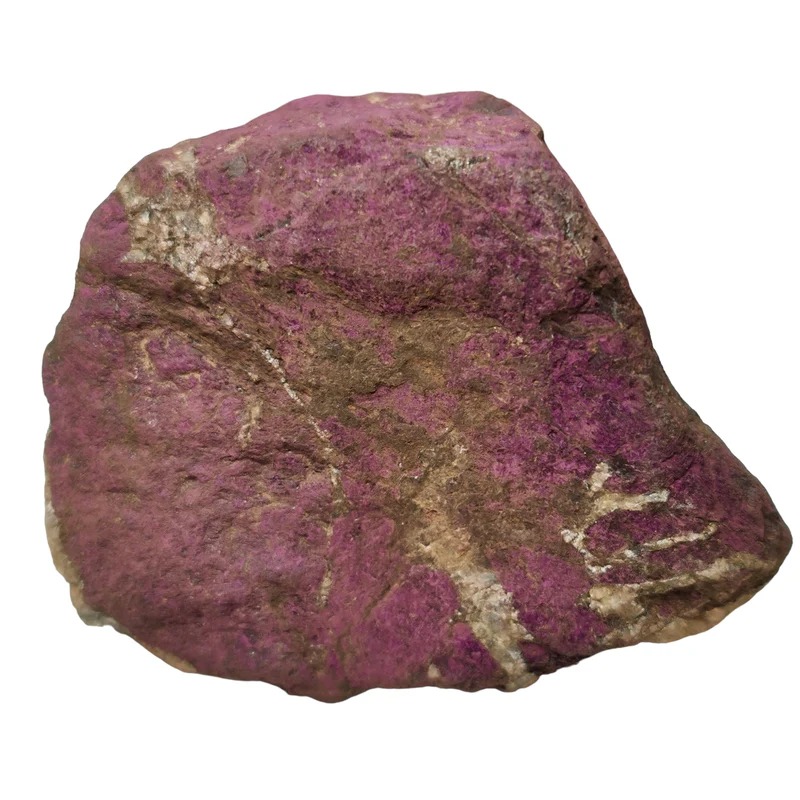
The historical narrative of Purpurite traces back to its official scientific discovery in 1905, a milestone marked by the American geologists Louis Caryl Graton and Waldemar T. Schaller, who first identified and meticulously described the mineral species. The type locality—the specific geographical site where the mineral was first recognized—was established within the complex pegmatite formations of the Fari fault, located in Kings Mountain, Gaston County, North Carolina, USA. Shortly after this initial North American discovery, mineralogists and prospectors began unearthing remarkable, high-grade deposits in other prominent pegmatite districts globally. Most notably, the arid Erongo Region of Namibia emerged as a premier source, renowned for producing the world’s finest, largest, and most intensely colored specimens. Unlike traditional precious gemstones that boast ancient folklore or centuries of royal decree, Purpurite has occupied a unique, modern niche; its rapid ascension from a 20th-century geological novelty to a highly prized collector’s mineral highlights its enduring allure and growing significance within contemporary gemology and mineral collecting circles.
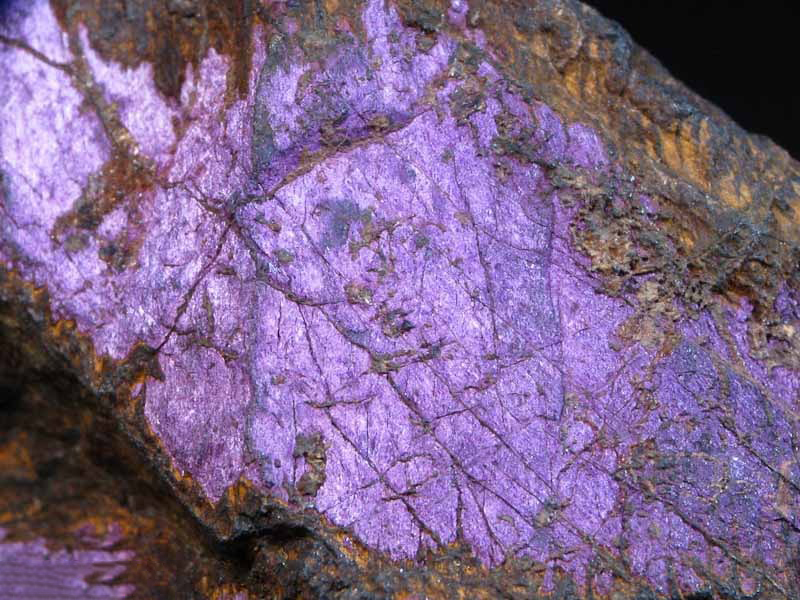
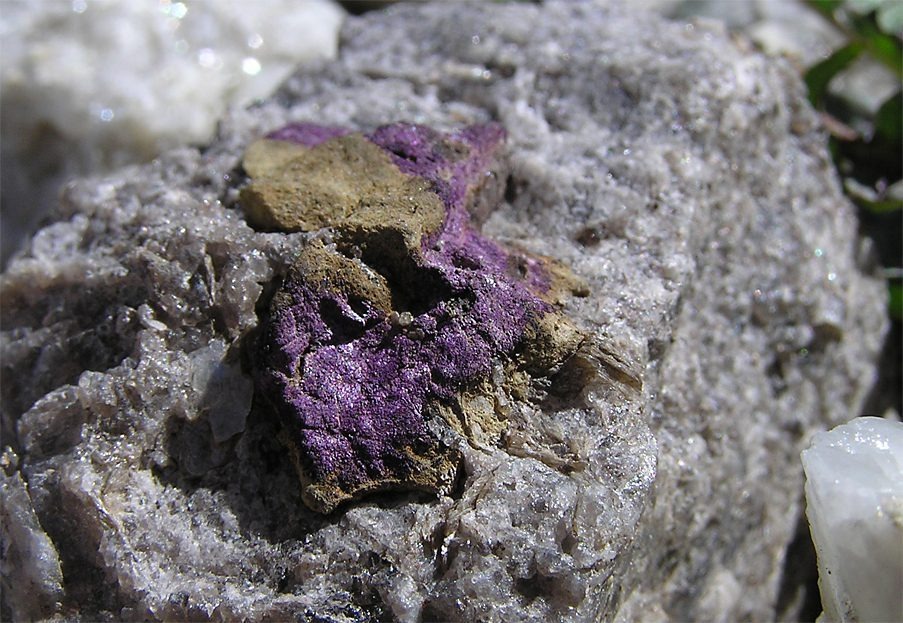
Purpurite is classified strictly as a secondary mineral, meaning it forms through a complex, multi-stage process of hydrothermal alteration and meteoric weathering within lithium-rich, highly zoned granite pegmatites. It does not crystallize directly from cooling, primordial magma; instead, it occurs as a late-stage transformation product of primary phosphate minerals—principally lithiophilite (LiMnPO₄). Over millions of years, as low-temperature hydrothermal fluids and oxygenated groundwater circulate through the cooling fractures of the pegmatite veins, a profound leaching process takes place. During this alteration phase, lithium ions (Li⁺) are progressively stripped out of the original lithiophilite crystal lattice and carried away by the fluid pathways. Concurrently, the divalent manganese (Mn²⁺) residing within the remaining structural framework undergoes a critical oxidation process, elevating it into a trivalent state (Mn³⁺). This specific transition to trivalent manganese is the exact chromophore—or color-causing agent—responsible for the mineral’s trademark, breathtaking purple hue. As the alteration nears completion, the mineral purpurite (MnPO₄) is born, often leaving behind a distinctive dull black or dark brown weathering crust of manganese oxides on its exterior, which collectors carefully remove to reveal the vibrant purple treasure hidden beneath.
Varieties and Solid-Solution Series
In strict mineralogical terms, Purpurite does not exist as a standalone species with a static composition, but rather represents the manganese-rich end-member of an important, continuous solid-solution series. Within this geological classification, Purpurite transitions fluidly into Heterosite (FePO₄), which is the iron-rich end-member of the series. Because these two minerals share the exact same crystal structure and form through identical weathering processes, specimens found in nature are almost always an intermediate blend of both elements, containing varying ratios of manganese and iron. True Purpurite is defined by a distinct dominance of manganese over iron. While there are no widely recognized visual subtypes or “varieties” in the gemstone trade, the mineral’s appearance can subtly shift depending on its precise position along this solid-solution spectrum. Specimens with higher iron content (leaning toward Heterosite) tend to exhibit darker, brownish-purple or deep lavender tones, whereas those approaching the pure manganese end-member showcase the highly prized, electric neon-magenta color that mineral collectors aggressively seek out.
Color and Optical Properties
The most defining characteristic of Purpurite is undoubtedly its extraordinary color palette, which ranges from a deep, velvety royal purple to a vivid, almost artificial-looking magenta or fuchsia. This brilliant coloration is not caused by microscopic trace impurities, but is instead an intrinsic property driven by the presence of trivalent manganese (Mn³⁺) within its primary chemical matrix. Optically, Purpurite belongs to the orthorhombic crystal system and is heavily opaque, rarely allowing light to pass through even the thinnest splinters. However, its surfaces exhibit a striking satin-to-submetallic luster that beautifully catches the light, giving polished cabochons a unique silk-like shimmer. Another fascinating optical phenomenon possessed by Purpurite is its intense pleochroic nature. When viewed from different crystallographic directions under polarized light, the mineral exhibits dramatic color shifts, fluctuating between a deep brownish-black, a rich reddish-purple, and a brilliant crimson. To the naked eye, this causes raw specimens to display a mesmerizing, multidirectional depth of color that sets it apart from almost any other purple mineral in the world.
Physical and Chemical Properties
Chemically, Purpurite is classified as an anhydrous manganese phosphate with the ideal empirical formula MnPO₄. Born from the extensive chemical leaching of its parent mineral, lithiophilite, its crystalline framework is distinguished by the near-total evacuation of alkali metal ions—specifically lithium (Li⁺)—leaving behind a highly oxidized matrix. On the Mohs scale of mineral hardness, Purpurite registers a relatively modest 4.0 to 4.5, rendering it a delicate specimen that demands exceptional care and specialized techniques when being cut, shaped, or set by lapidaries. It possesses a specific gravity ranging between 3.20 and 3.40; this relatively high density is a direct consequence of the heavy manganese transitions packed within its internal structure.
Crystallographically, the mineral belongs to the orthorhombic system, typically occurring in massive, granular, or compact aggregates rather than distinct euhedral crystals. It exhibits good cleavage along the {100} and {010} planes, which, combined with its brittle tenacity, results in an uneven to sub-conchoidal fracture pattern when fractured. When rubbed against an unglazed porcelain plate, Purpurite leaves a characteristic dark maroon to reddish-purple streak, a vital diagnostic feature for mineralogists.Perhaps the most remarkable physical and chemical quirk of Purpurite is its profound vulnerability to atmospheric and environmental degradation. Over geological timescales, prolonged exposure to moisture and oxygen causes the surface manganese to over-oxidize, transitioning into a dull, unsightly dark brown or velvety black alteration crust dominated by secondary manganese oxides. This dark exterior effectively cloaks the mineral’s inner brilliance. To unveil the breathtaking royal purple hidden within, collectors and gemstone artisans frequently utilize a delicate chemical intervention: a highly controlled, brief bath in a diluted acid solution (such as oxalic or hydrochloric acid) to selectively dissolve the oxidized outer skin, or alternatively, they employ precise mechanical abrasion. This careful process restores the mineral to its pristine, unweathered state, beautifully illustrating the dynamic balance between chemical fragility and aesthetic splendor that defines Purpurite.
Applications and Uses of Purpurite
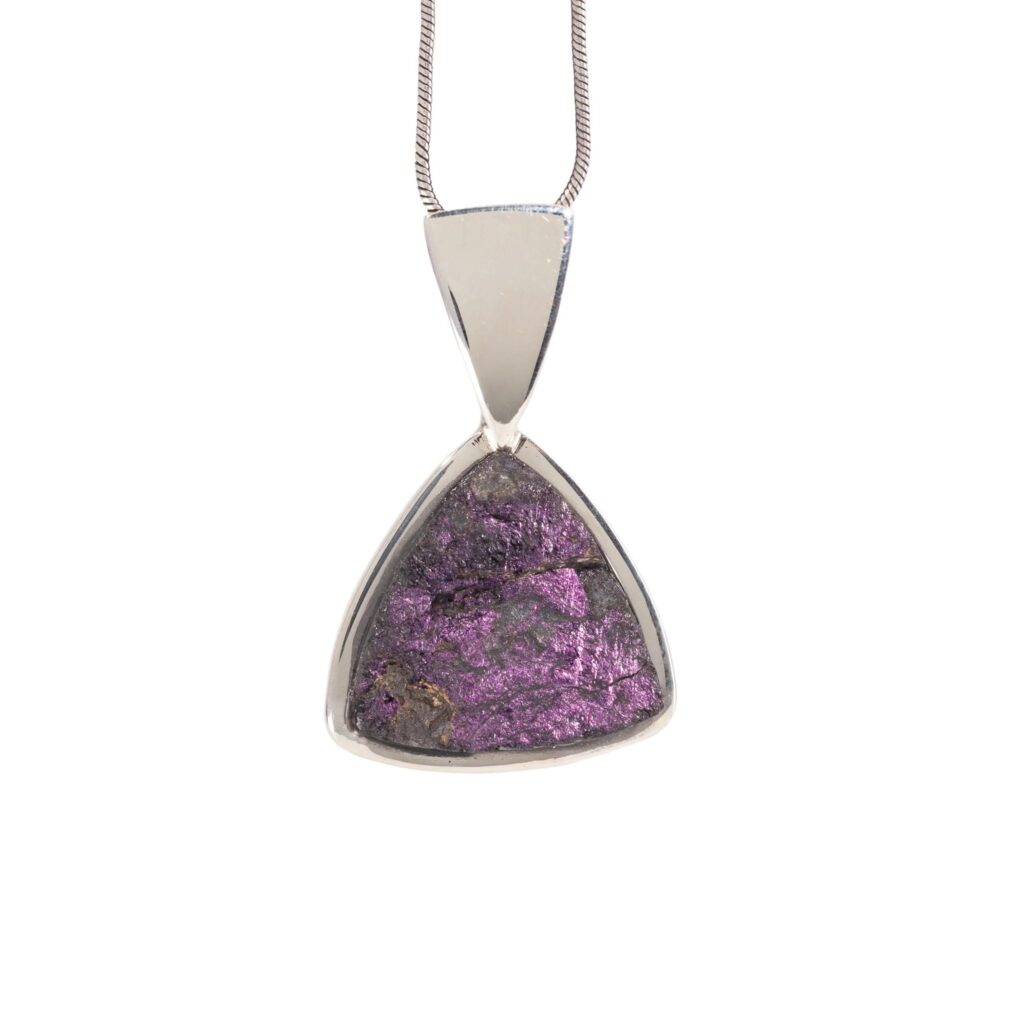
Despite its striking visual appeal, Purpurite is a highly specialized mineral whose applications are concentrated within niche luxury, artisanal, and spiritual markets rather than industrial sectors, owing largely to its relative scarcity and physical fragility. Its primary and most prestigious use is within the global mineral collecting community, where high-grade specimens exhibiting an intense, unweathered neon-magenta or deep royal purple hue—especially those sourced from the renowned pegmatites of Namibia—are aggressively sought after by museums and private connoisseurs for their aesthetic rarity and geological significance. In the lapidary arts, although Purpurite’s modest hardness of 4.0 to 4.5 on the Mohs scale and opaque nature preclude it from being faceted into traditional transparent gemstones, it is highly valued for being fashioned into vibrant cabochons, decorative spheres, and intricate ornamental carvings. When expertly cut and stabilized, it is frequently integrated into bespoke artisan jewelry, typically reserved for protective mountings such as pendants, brooches, and earrings where its unique satin-to-submetallic luster can be showcased safely away from high-wear contact. Furthermore, Purpurite has garnered a massive commercial following within contemporary metaphysical and crystal healing subcultures, where practitioners revere it as a powerful stone of transformation, spiritual expansion, and mental clarity associated with the crown chakra. This esoteric demand drives a robust global trade in tumbled pocket stones, meditation wands, and raw chunks dedicated entirely to holistic wellness, beautifully illustrating how a singular geological anomaly can bridge the gap between scientific curiosity, fine craftsmanship, and spiritual practice.