
Ludlamite is a rare secondary hydrated iron phosphate mineral highly regarded among mineralogists and collectors for its vivid green coloration and well-formed crystal habits. It belongs to the phosphate mineral class and has the ideal chemical formula Fe₃(PO₄)₂·4H₂O, although minor substitution by magnesium and manganese is common in natural specimens. The mineral crystallizes in the monoclinic crystal system and typically occurs as sharp tabular, wedge-shaped, or radiating crystals, often displaying excellent transparency and a bright vitreous luster.The color of Ludlamite ranges from pale yellowish green and apple green to rich emerald and deep forest-green shades, with the most intensely colored crystals being especially prized by collectors. Due to its relatively low hardness of approximately 3.5–4 on the Mohs scale and its perfect cleavage, Ludlamite is considered a fragile mineral that requires careful handling. While unsuitable for most gem and jewelry applications, its rarity, aesthetic appeal, and crystal quality have made it one of the most desirable phosphate minerals in museum collections and advanced private mineral cabinets.
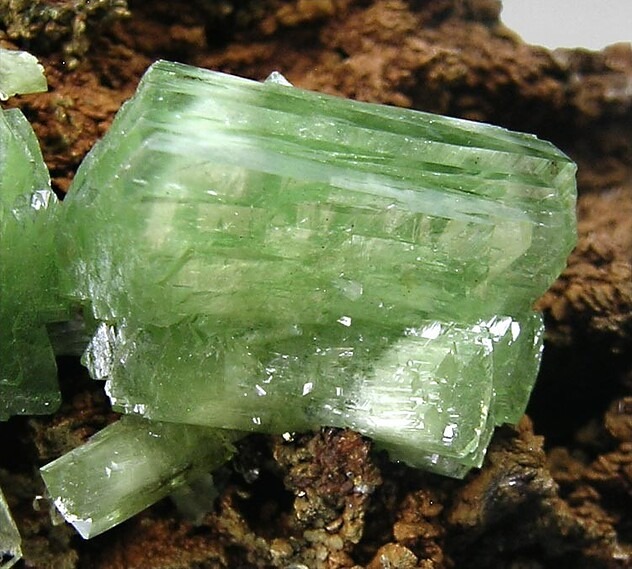
Ludlamite forms primarily as a secondary mineral through the alteration of earlier phosphate-bearing minerals in iron-rich geological environments. It is most commonly associated with the late-stage hydrothermal alteration of granite pegmatites, where phosphorus-rich fluids interact with primary phosphate minerals such as triphylite and lithiophilite. During this process, circulating hydrothermal or meteoric waters gradually break down the original minerals, releasing iron and phosphate ions that subsequently recombine to form Ludlamite under relatively low-temperature conditions.
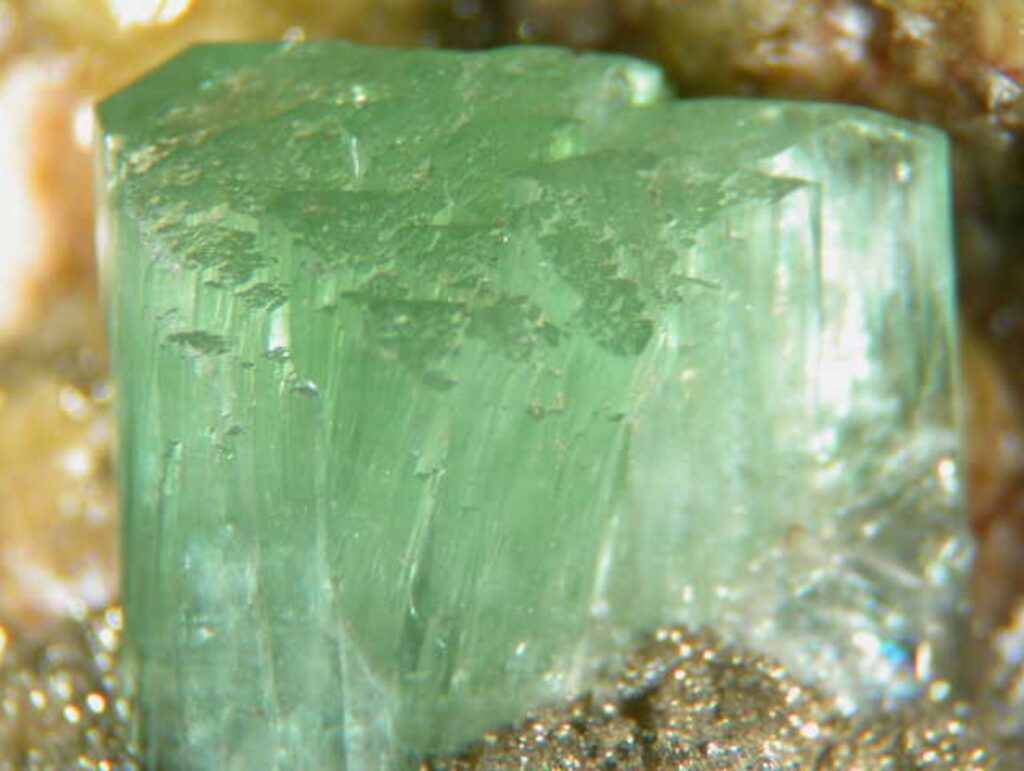
The mineral typically crystallizes within fractures, cavities, and solution pockets created during alteration, where suitable chemical conditions allow hydrated iron phosphates to precipitate. Less commonly, Ludlamite may develop in iron-rich sedimentary deposits or within oxidized zones of polymetallic ore bodies. It frequently occurs alongside other secondary phosphate minerals, including Vivianite, Fairfieldite, Childrenite, Phosphosiderite, and Siderite, reflecting a complex sequence of phosphate mineralization and weathering processes. The presence of Ludlamite often indicates a phosphate-rich environment that has undergone extensive hydrothermal or supergene alteration.
Ludlamite was first described in 1875 from specimens discovered at the historic Wheal Jane Mine in Cornwall, England, a region renowned for its rich mining heritage and diverse mineral assemblages. The mineral was named in honor of Henry Ludlam (1824–1880), a distinguished British mineral collector whose extensive collection contributed significantly to nineteenth-century mineralogical research and was later incorporated into the collections of the Museum of Practical Geology in London.Although Cornwall provided the type locality for the species, some of the finest Ludlamite specimens ever recovered were later discovered in the Blackbird Mining District of Lemhi County, Idaho, United States. Crystals from this locality became famous for their exceptional size, transparency, and intense emerald-green color, establishing a benchmark for specimen quality that remains highly regarded among collectors today. Additional important occurrences have been documented in Germany, Bolivia, Portugal, China, and several other phosphate-rich regions around the world, helping scientists better understand the mineral’s geological distribution and formation conditions.
Crystal Structure and Optical Characteristics of Ludlamite
From a crystallographic perspective, Ludlamite belongs to the monoclinic crystal system, specifically falling under the prismatic crystal class with the space group symmetry denoted as P2₁/a. Its internal lattice framework is characterized by a complex, three-dimensional arrangement where octahedral layers of divalent iron atoms, coordinate-bonded with oxygen and water molecules, are intricately linked by isolated phosphate (PO₄) tetrahedra. This distinctive atomic configuration typically manifests macroscopically as thick, tabular, or wedge-shaped crystals, often forming striking fan-shaped or parallel aggregates.
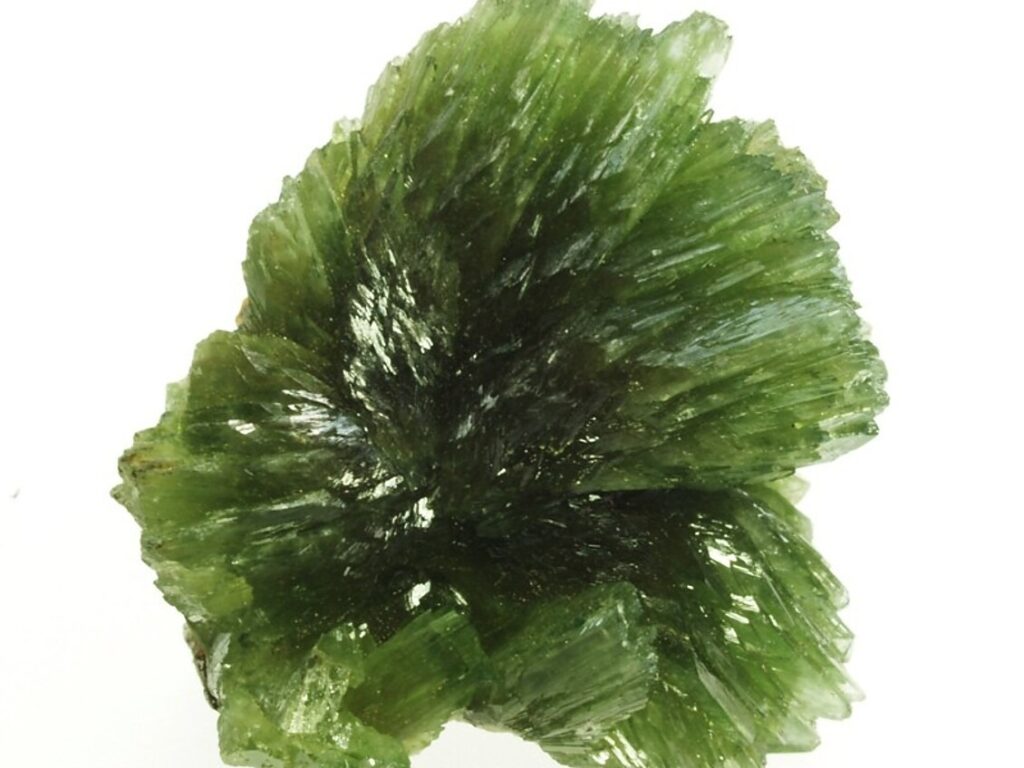
Optically, Ludlamite is a biaxial positive mineral with a moderately high refractive index, typically ranging between n_alpha = 1.650 and n_gamma = 1.697. It exhibits strong, distinct pleochroism under transmitted polarized light, where the mineral displays observable color shifts from a pale green or nearly colorless state to a much deeper, more vibrant shade of apple green depending on the orientation of the crystal. Furthermore, its luster is characteristically vitreous, turning distinctly pearly along its prominent cleavage planes, which enhances the depth and visual brilliance of high-quality mineral specimens.
Physical and Chemical Properties of Ludlamite
The physical profile of Ludlamite is defined by its notable fragility and distinct mechanical constraints. It possesses a relatively low Mohs hardness rating of 3.5, meaning it can be easily scratched by a copper coin or a pocket knife. The mineral exhibits perfect cleavage parallel to the {100} plane and distinct cleavage along {001}, which causes it to split easily into thin flakes under mechanical stress. Its fracture is uneven to subconchoidal, and it has a measured specific gravity ranging from 3.12 to 3.19, which feels relatively heavy for a non-metallic mineral due to its high iron content.
Chemically, Ludlamite is a hydrated iron magnesium manganese phosphate with the definitive formula (Fe,Mg,Mn)₃(PO₄)₂·4H₂O. Divalent iron (Fe²⁺) is the dominant cation responsible for the mineral’s signature green coloration; however, magnesium (Mg) and manganese (Mn) frequently substitute into the crystal lattice via isomorphic substitution, creating a solid-solution series. When exposed to heat or aggressive chemical environments, Ludlamite readily dissolves in acids, particularly cold dilute hydrochloric acid (HCl), without effervescence. Additionally, because it contains water molecules bound tightly within its crystal lattice, heating a specimen in a closed tube causes it to readily dehydrate, releasing water vapor and altering the mineral’s structural integrity and vivid color.
Applications and Industrial Uses of Ludlamite
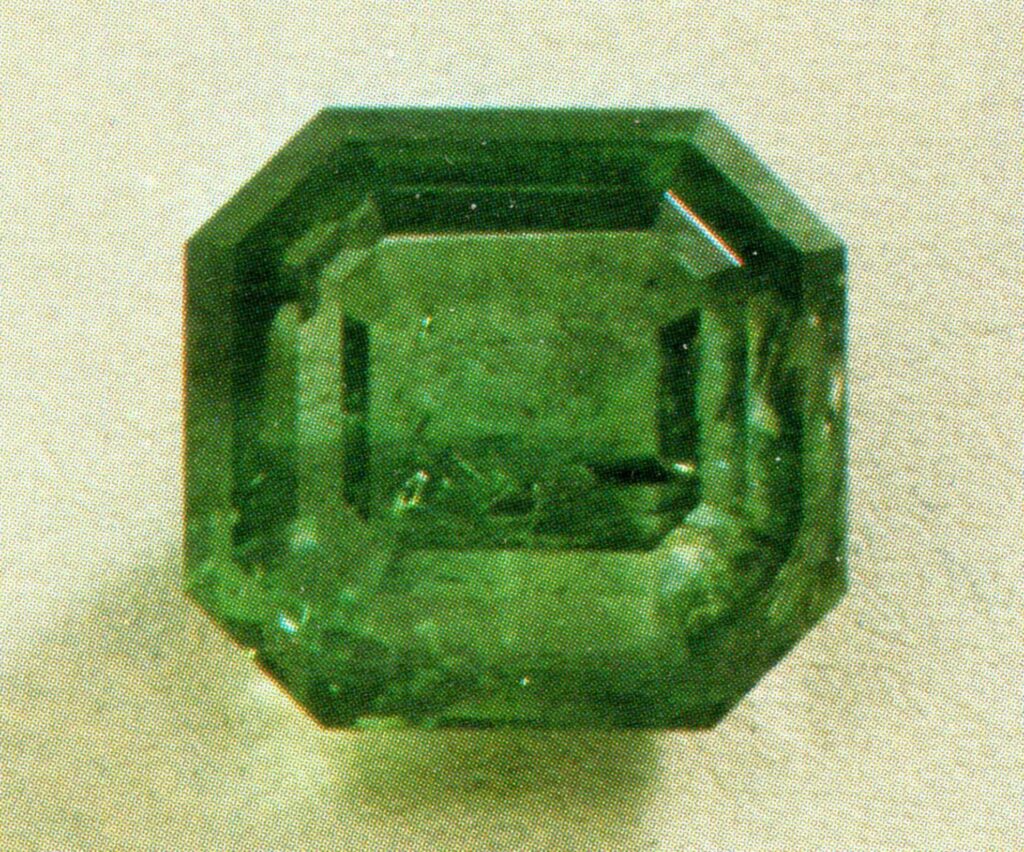
From a purely practical and industrial standpoint, Ludlamite has no commercial applications, primarily due to its extreme scarcity, low structural density, and fragile mechanical properties. With a Mohs hardness of only 3.5 and two distinct planes of cleavage, the mineral is entirely unsuitable for use in industrial abrasives, metallurgy, or commercial gemstone faceting. Furthermore, while it is chemically a hydrous iron phosphate, its natural deposits are far too small and sporadic to ever be economically viable as an ore for iron extraction or agricultural phosphorus. Instead, the “application” of Ludlamite is strictly limited to the high-end mineralogical market. It serves as an elite flagship specimen for museum curations, university geology departments, and private connoisseurs. Exceptional specimens—particularly those displaying brilliant translucency, pristine crystal geometry, and deep emerald-green coloration—are highly valued and command premium prices among systematic mineral collectors worldwide.
Metaphysical Meaning and Spiritual Properties of Ludlamite
In the realm of crystal healing, holistic therapy, and esoteric mineralogy, Ludlamite is regarded as a crystal of profound emotional resilience, heart-centered healing, and spiritual grounding. Because of its vibrant green coloration, metaphysical practitioners strongly associate Ludlamite with the Heart Chakra (Anahata). It is believed to act as a powerful energetic filter, helping individuals process deep-seated emotional trauma, alleviate lingering anxieties, and release stagnant grief or anger. Unlike other high-vibration crystals that can feel ungrounding, Ludlamite’s high iron content provides a stabilizing, anchoring energy that connects the user to the soothing, nurturing frequencies of the Earth. It is often utilized in deep meditation practices to foster self-compassion, enhance emotional intelligence, and cultivate a quiet, unshakeable sense of inner peace during times of intense personal upheaval or existential transition.