
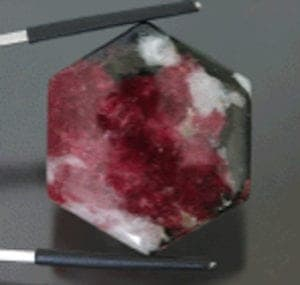
Eudialyte is a rare and chemically complex nine-member-ring cyclosilicate mineral known for its striking palette of vibrant magenta, deep carmine red, pink, and brownish-red hues. It possesses a moderate hardness of 5 to 6 on the Mohs scale and exhibits a vitreous to greasy luster. Beyond its aesthetic appeal, which makes it highly coveted by mineral collectors and lapidaries as a minor gemstone, eudialyte is scientifically significant. It has an extraordinarily intricate crystal structure that incorporates a wide array of elements, including sodium, calcium, manganese, iron, and zirconium, along with substantial traces of rare earth elements (REEs), yttrium, niobium, and mildly radioactive elements like uranium. Consequently, geoscientists frequently utilize it as a geochronometer to date and investigate the evolutionary history of its host rocks.
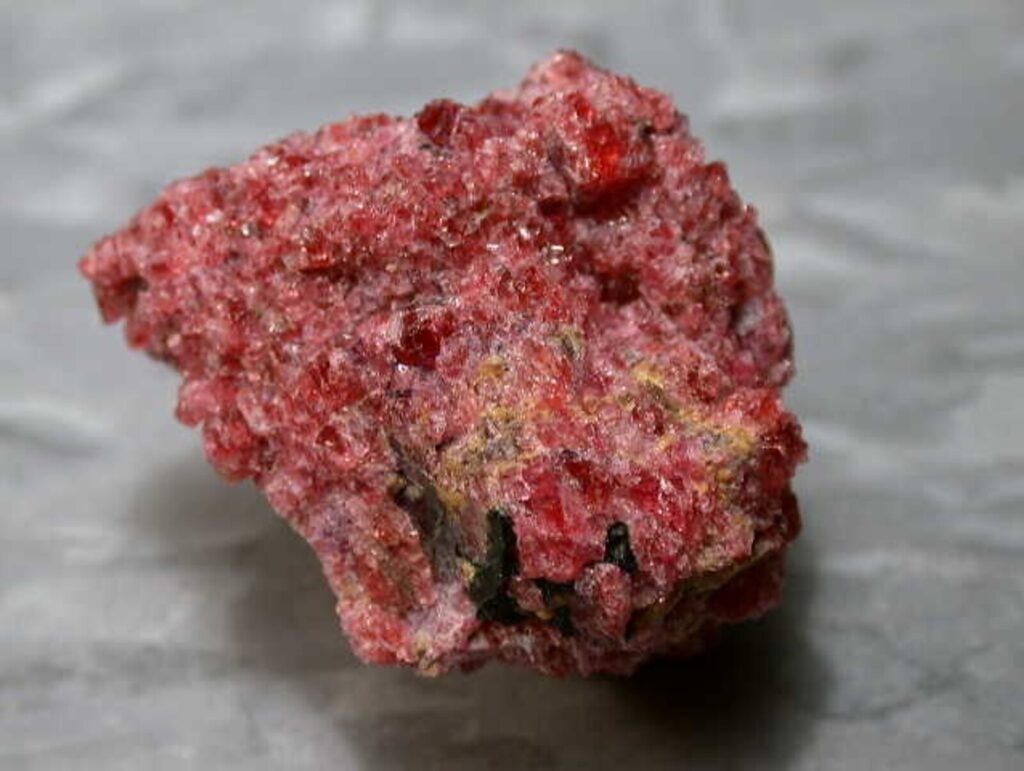
Geologically, eudialyte is a primary mineral that forms almost exclusively within peralkaline igneous environments—specifically in silica-undersaturated plutonic rocks such as nepheline syenites and their associated pegmatites. It crystallizes over millions of years during the late stages of magma cooling, under specific conditions where there is an abundance of alkali metals (like sodium) and incompatible elements (such as zirconium and rare earths) but a distinct deficit of silica. In some instances, eudialyte can also develop through secondary hydrothermal alteration, replacing earlier-formed minerals like albite. Because the structural framework of eudialyte is highly adaptable, it acts as a chemical “sponge” during its formation, locking in whatever trace elements are concentrated in the residual magmatic fluids.
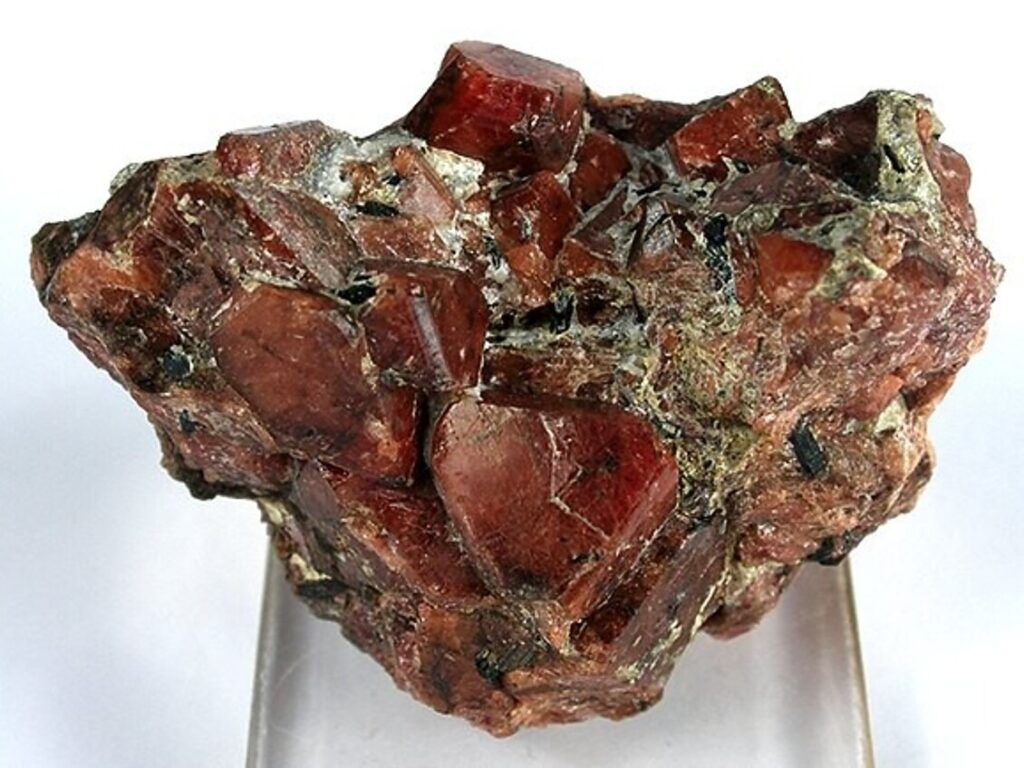
Eudialyte was first scientifically described in 1819 by the German chemist Friedrich Stromeyer. He examined specimens discovered within the unique, hyper-alkaline Ilimaussaq intrusive complex in southwest Greenland. Stromeyer derived the mineral’s name from the Greek phrases eu, meaning “well” or “easily”, and dialytos, meaning “decomposable” or “dissolvable”—a direct allusion to the mineral’s rapid solubility and tendency to gelatinize when exposed to acids. Beyond its Western scientific classification, eudialyte holds a rich place in regional folklore. On Russia’s Kola Peninsula, one of the world’s premier modern localities for the mineral, the indigenous Sámi people traditionally refer to the vibrant red stone as “Sámi Blood.” According to ancient legend, the crystals were formed from the blood drops of Sámi warriors spilled across the tundra during a mythological battle against a giant enemy.
Crystal Structure
Eudialyte crystallizes in the trigonal crystal system and serves as the defining mineral for the complex cyclosilicate eudialyte group. Its highly intricate structural framework is built around distinctive nine-membered rings of silicate tetrahedra (Si₉O₂₇¹⁸⁻), which are interconnected by a network of zirconium-containing octahedra, calcium-dominated six-membered rings, and various sodium, iron, and manganese polyhedra. This remarkably adaptable lattice can accommodate an extraordinary array of different chemical elements. Consequently, eudialyte acts like a structural “sponge” for rare elements, exhibiting extreme compositional diversity. This has led to the discovery of numerous distinct mineral species within the eudialyte group, all of which share the same basic structure but differ in their specific chemical components.
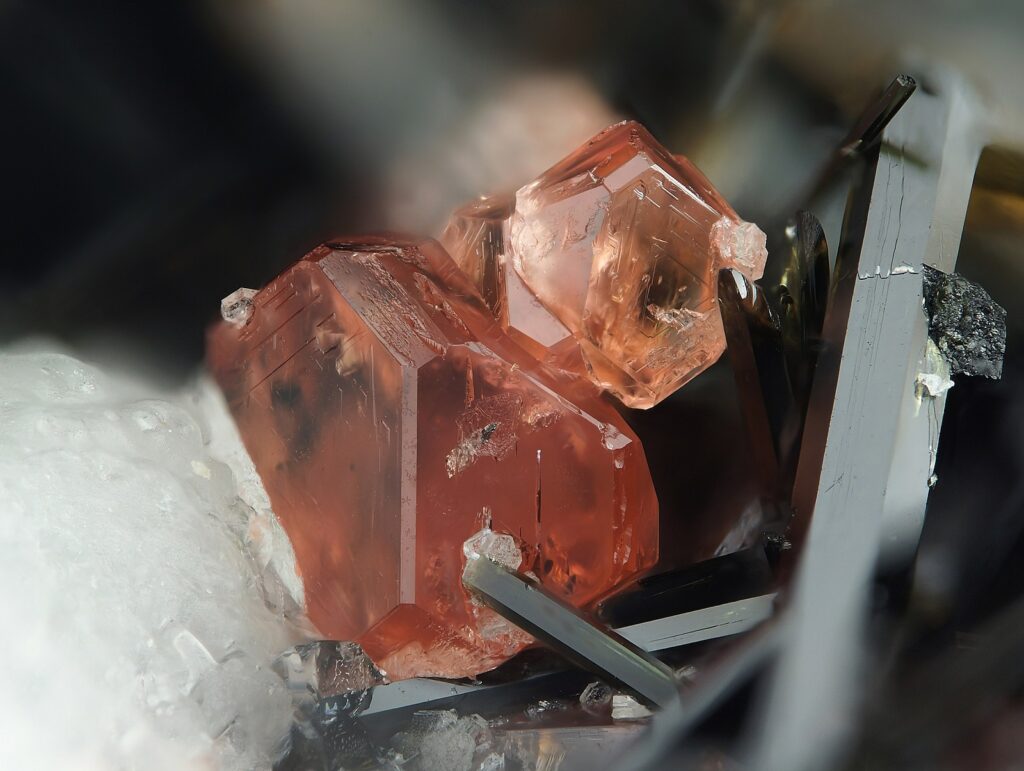
Optical Characteristics and Coloration
Visually, eudialyte is best known for its striking red palette, encompassing colors from pale raspberry pink and vivid magenta to deep wine-red and brownish-red. This intense, dramatic coloration has earned it rich mythological associations, most notably in regional folklore where it is famously referred to as “Sámi Blood” or “Dragon’s Blood”—a poetic description inspired by an ancient legend claiming the stones were formed from the blood drops of warriors spilled across the tundra. Scientifically, however, this definitive red coloration is primarily caused by the presence of transition metal cations—chiefly manganese (Mn²⁺) and iron (Fe²⁺/Fe³⁺)—occupying specific sites within the crystal structure, while localized rare-earth element clusters subtly influence the exact shade and intensity. Rare varieties can even exhibit yellowish, violet, or green tones depending on their exact chemical composition. In thin sections and hand specimens, the mineral ranges from translucent to transparent, displaying a vitreous to greasy luster on fresh surfaces. Optically, eudialyte is typically uniaxial negative and exhibits low to moderate birefringence, often showing unusual interference colors under a microscope.
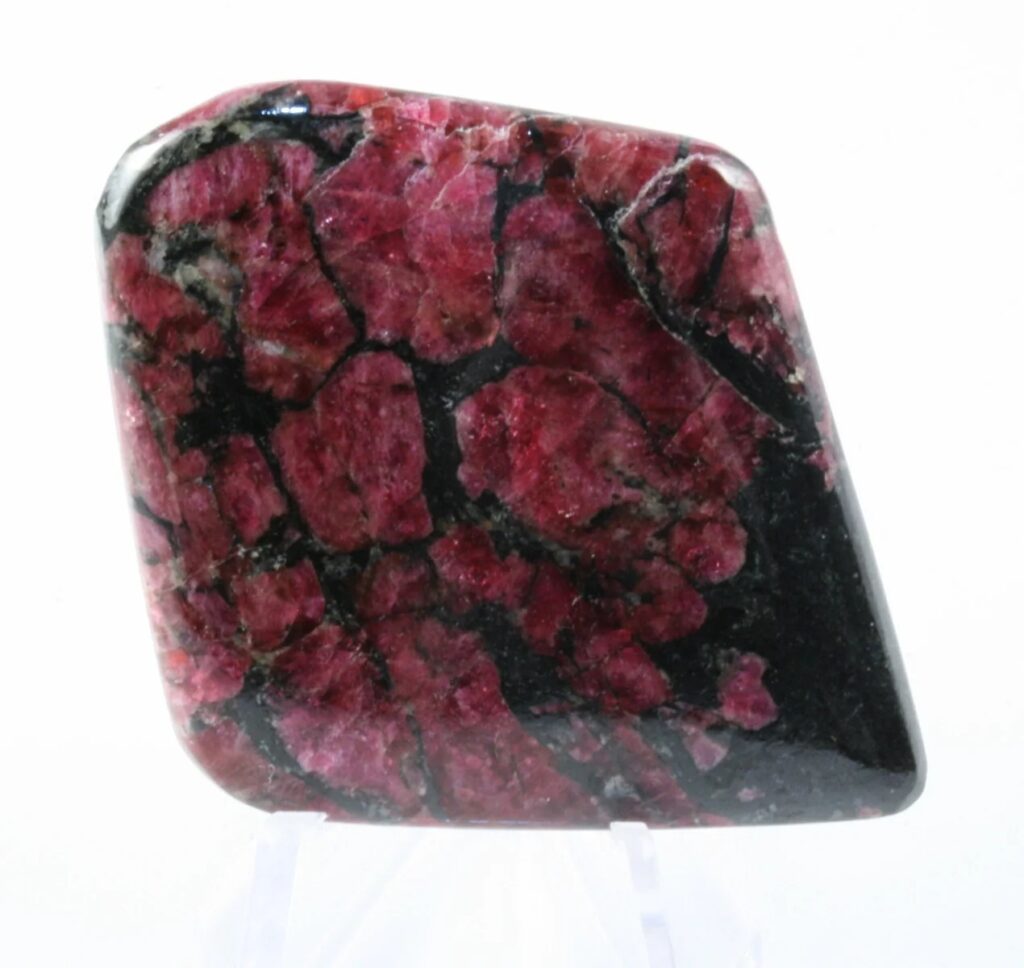
Physical and Chemical Properties
Chemically, eudialyte is a highly complex sodium-calcium-zirconium cyclosilicate with the generalized chemical formula Na₁₅Ca₆Zr₃Si(Si₂₅O₇₃)(O,OH,H₂O)₃(Cl,F,OH)₂. It has a Mohs hardness of 5 to 6, a white streak, and a specific gravity ranging from 2.8 to 3.1, which increases when heavier elements are present. The mineral typically occurs as granular masses, though it occasionally forms well-defined rhombohedral or tabular crystals within nepheline syenites and related alkaline rocks. It exhibits poor cleavage and an uneven to shell-like fracture. A defining geochemical trait of eudialyte is its ability to concentrate economically important elements, including zirconium (Zr), niobium (Nb), yttrium (Y), and rare-earth elements (REEs). Furthermore, unlike many other durable silicate minerals, its structure easily decomposes and turns into a gel-like substance in cold acids. This characteristic is reflected in its name, which comes from the Greek words meaning “easily dissolvable,” making it both a valuable indicator for studying alkaline magmatic processes and a significant potential source for extracting critical metals.
Radioactivity of Eudialyte
Eudialyte is classified as a mildly radioactive mineral due to its ability to incorporate trace amounts of uranium and thorium into its complex crystal structure. These radioactive elements substitute for other cations during crystallization, particularly in highly evolved alkaline igneous environments where rare and incompatible elements become naturally concentrated. In the vast majority of specimens, the levels of radioactivity are low and generally pose minimal risk during normal handling, collection, or display. However, radiation readings can vary significantly depending on the specific locality and the precise chemical composition of the specimen. The presence of uranium and thorium is of particular scientific importance because it enables researchers to apply radiometric dating techniques. This helps geoscientists accurately determine the absolute age of mineral formation and reconstruct the evolutionary history of complex alkaline rock systems, making eudialyte a valuable tool in geochronological research.
Uses of Eudialyte
While eudialyte is not widely used as a mainstream commercial gemstone due to its moderate hardness and poor cleavage, it holds several important applications in lapidary art, scientific research, and resource exploration. Its vibrant raspberry-red to deep magenta coloration and distinctive appearance make it highly sought after by mineral collectors worldwide. High-quality material is frequently cut into cabochons, beads, and decorative carvings, while polished eudialyte-bearing rocks are used as striking ornamental stones for display. In geological research, eudialyte serves as a critical indicator mineral for studying alkaline magmatic systems because it directly records the distribution and enrichment of zirconium, niobium, and rare-earth elements. In recent years, the mineral has also attracted significant attention as a potential economic source of zirconium and rare-earth elements. These are critical raw materials used in advanced technologies, green energy systems, electronics, and aerospace applications, elevating eudialyte’s importance in strategic mineral resource development.
The Metaphysical Properties of Eudialyte
Eudialyte is widely cherished in the metaphysical community as a potent “stone of the heart,” revered for its unique ability to harmonize the base chakra with the heart chakra. Its vibrant, complex energy is believed to facilitate a profound sense of self-acceptance and emotional healing, making it an excellent companion for those working to release past trauma or deep-seated guilt. By fostering a bridge between the physical and emotional bodies, Eudialyte encourages individuals to manifest their heart’s desires into reality while providing the grounding necessary to navigate life’s transitions with grace. Furthermore, it is often associated with the stimulation of the spirit, helping to align one’s personal will with the higher purpose of the soul, thereby fostering a deep sense of empowerment, intuitive clarity, and existential connection.