
Zircon is a naturally occurring zirconium silicate mineral with the chemical formula ZrSiO₄, widely recognized for its exceptional durability, brilliant luster, and geological significance. It forms in igneous, metamorphic, and sedimentary rocks and is considered one of the oldest minerals found on Earth, with some zircon crystals dating back more than 4 billion years. Zircon commonly appears in colors such as brown, red, yellow, blue, green, and colorless, and transparent gem-quality specimens are highly valued in jewelry for their strong brilliance and fire. Beyond its ornamental use, zircon is scientifically important because it preserves radioactive isotopes that allow geologists to accurately determine the ages of rocks and study the early history of the Earth.
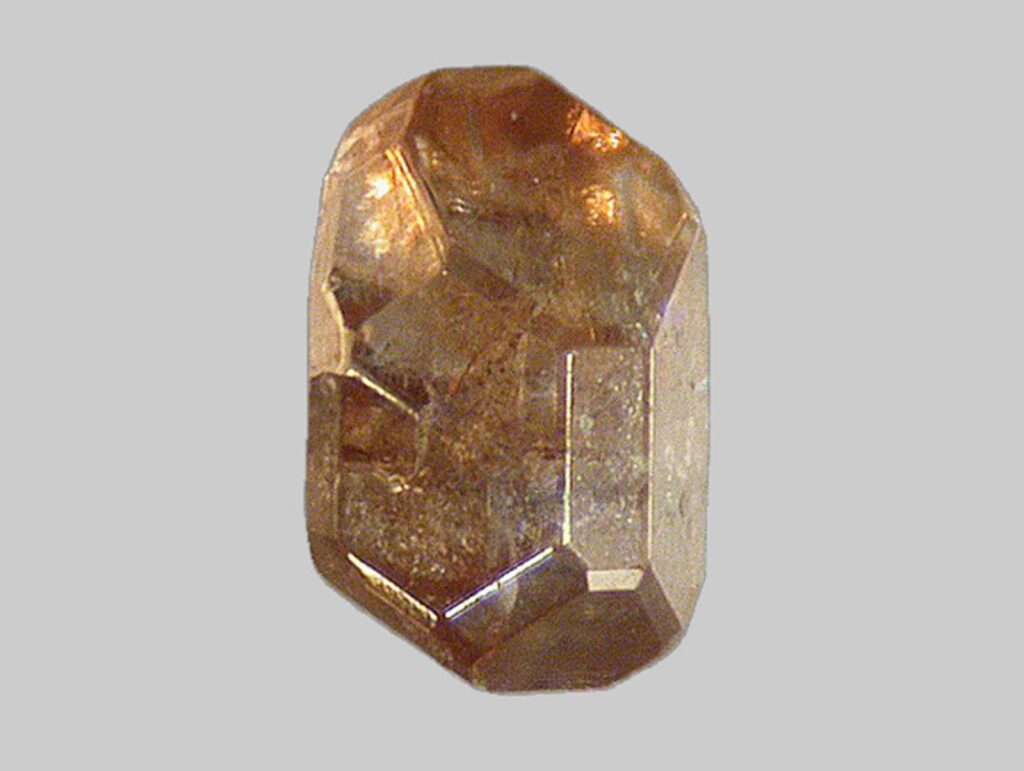
Zircon forms primarily through magmatic crystallization processes in silica-rich igneous environments. During the slow cooling of magma, zirconium becomes progressively concentrated in the residual melt because it is chemically incompatible with most major rock-forming minerals. Once the magma reaches sufficient saturation in zirconium, zircon crystals begin to precipitate as early accessory minerals within granites, syenites, pegmatites, and volcanic rocks. The mineral may also recrystallize during high-grade metamorphism, where elevated temperatures and pressures alter pre-existing rocks and mobilize zirconium-bearing fluids. Due to its exceptional chemical stability, high melting point, and resistance to physical and chemical weathering, zircon crystals often survive multiple geological cycles. After the host rocks erode, durable zircon grains can be transported by rivers and deposited into sedimentary environments such as placer sands and conglomerates, where they may persist for billions of years with minimal alteration.
Zircon has a long and historically significant presence in both gemology and geological science. The name “zircon” is believed to originate from the Persian word zargun, meaning “gold-colored,” referring to the mineral’s common yellow and reddish hues observed in ancient trade routes throughout the Middle East and Asia. Zircon gemstones were widely used in jewelry during the Middle Ages and the Victorian era, where their brilliance and vivid colors made them popular decorative stones long before synthetic gem substitutes existed. In the late eighteenth century, the mineral gained scientific importance when German chemist Martin Heinrich Klaproth identified the element zirconium from zircon in 1789. During the twentieth century, zircon became one of the most valuable minerals in geochronology after scientists discovered that uranium-bearing zircon crystals could preserve isotopic records for billions of years. This breakthrough transformed zircon into a critical tool for determining the age of rocks, studying continental evolution, and investigating the earliest stages of Earth’s geological history.
Crystal Structure of Zircon
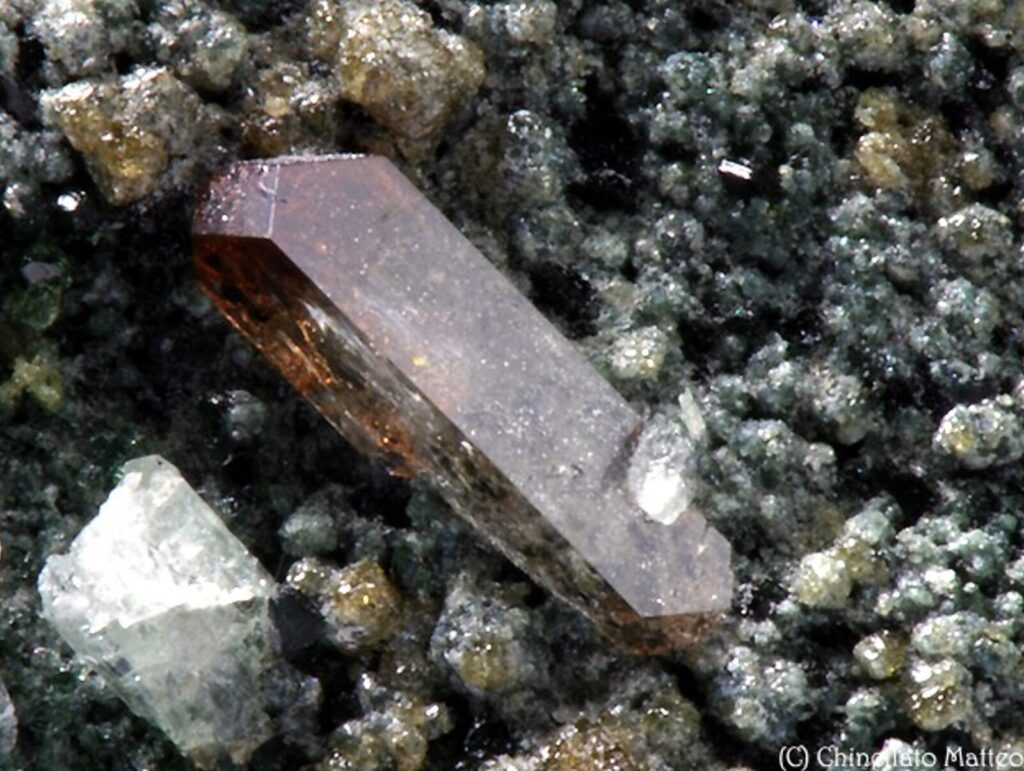
Zircon crystallizes in the tetragonal crystal system and develops a highly stable nesosilicate crystal structure composed of isolated silica tetrahedra (SiO₄) linked with zirconium ions (Zr⁴⁺). Within the lattice, each zirconium atom is coordinated by eight oxygen atoms, forming a dense and strongly bonded framework that contributes to the mineral’s exceptional hardness, chemical durability, and resistance to metamorphism. Zircon crystals commonly occur as elongated prismatic forms terminated by pyramidal crystal faces, although rounded detrital grains are also widespread in sedimentary deposits due to prolonged transport and erosion. The robust atomic arrangement allows zircon to withstand extreme geological conditions, including high temperatures, pressure, and chemical alteration, enabling many crystals to survive for billions of years while preserving valuable isotopic information.
Color and Optical Properties of Zircon
Zircon exhibits a remarkably wide range of colors, including colorless, yellow, brown, red, orange, green, and blue varieties. These color variations are primarily caused by trace-element impurities, structural defects, and natural radiation exposure over geological time. Brown and reddish zircons are among the most common naturally occurring forms, while blue zircon is typically produced through heat treatment of brown material under controlled conditions. Optically, zircon is highly valued for its strong brilliance and intense fire, resulting from its elevated refractive index and significant light dispersion. The mineral also displays pronounced birefringence, meaning light entering the crystal splits into two rays traveling at different velocities, often creating a doubling effect visible through the table facet of cut gemstones. Depending on clarity and crystal quality, zircon may appear transparent, translucent, or opaque, with an adamantine to vitreous luster that enhances its visual appeal.
Physical and Chemical Properties of Zircon
Chemically, zircon is a zirconium silicate mineral with the formula ZrSiO₄ and belongs to the nesosilicate mineral group. It possesses a Mohs hardness ranging from approximately 6.5 to 7.5, making it relatively durable but still susceptible to brittle fracture under strong impact. Zircon has a high specific gravity, typically between 4.0 and 4.7, which contributes to its noticeably dense feel compared to many other gemstones. The mineral generally lacks prominent cleavage and instead breaks with conchoidal to uneven fracture surfaces. One of zircon’s most significant characteristics is its remarkable chemical resistance, as it remains stable under a wide variety of geological and environmental conditions. Many zircon crystals contain trace amounts of uranium and thorium that substitute for zirconium within the crystal lattice. Over immense periods of time, radioactive decay from these elements can partially damage the internal structure of the mineral, producing a metamict state characterized by reduced crystallinity, lower density, and altered optical behavior. Despite this radiation-related alteration, zircon remains one of the most reliable minerals used in geochronological dating and geological research.
Traditional Trade Names and Varieties of Zircon
Hyacinth or Jacinth
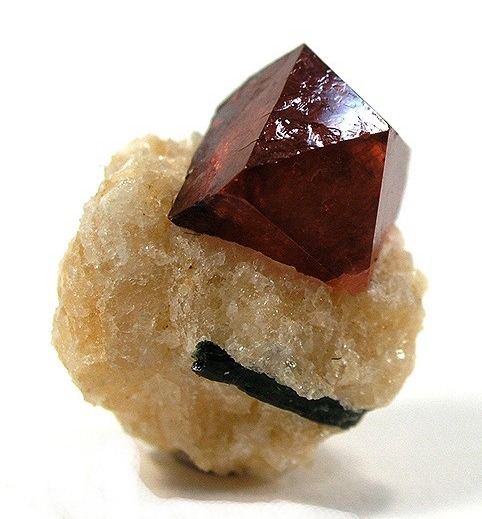
Hyacinth, also historically spelled Jacinth, is one of the oldest and most widely recognized trade names associated with zircon. The term traditionally describes transparent zircons displaying vivid warm colors ranging from golden yellow and orange to reddish-brown, cinnamon-red, and deep red. These stones were highly valued in ancient Mediterranean, Middle Eastern, and European jewelry traditions, where their fiery appearance and strong brilliance often caused them to be mistaken for other red gemstones such as garnet or spinel. The name itself originates from the ancient Greek word hyakinthos, which historically referred to reddish or orange-colored precious stones. In gemology, hyacinth zircons are admired for their exceptionally high refractive index and strong dispersion, properties that create intense flashes of spectral color under light. Many fine hyacinth zircons occur naturally, although some reddish-brown material may undergo gentle heat treatment to enhance transparency or shift color saturation. Historically, these gems were frequently used in Victorian, Georgian, and Art Deco jewelry due to their rich coloration and diamond-like fire
Starlite
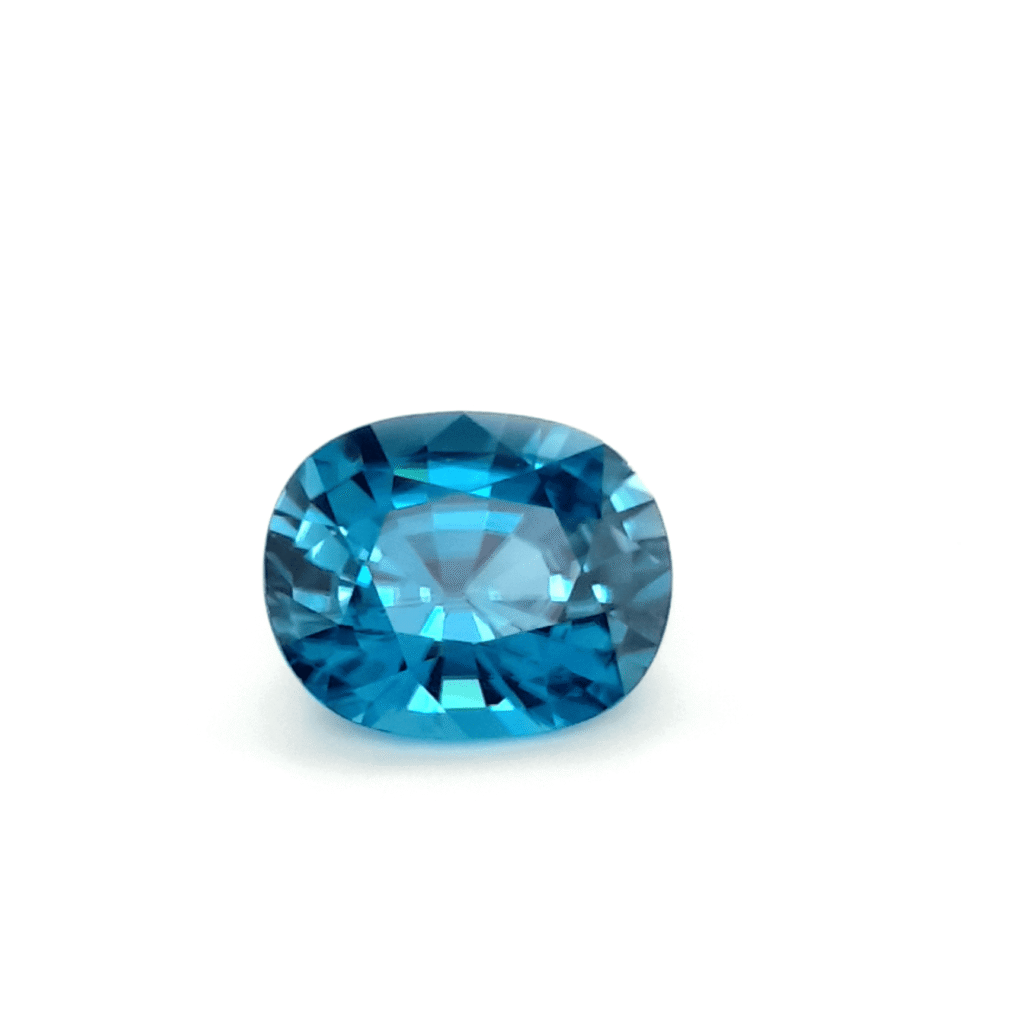
Starlite is a well-known commercial trade name introduced in the early twentieth century by George Frederick Kunz, the influential chief gemologist of Tiffany & Co.. The name specifically refers to vivid blue zircons produced through controlled heat treatment of naturally reddish-brown zircon crystals. During heating, changes occur within the crystal lattice and trace-element structures, transforming the original warm-toned material into striking sky-blue, teal-blue, or electric blue gemstones. Starlite zircon became especially popular because of its extraordinary brilliance, intense fire, and optical performance, which often surpass those of many other blue gemstones. Unlike synthetic stones, Starlite remains a natural zircon whose color has merely been enhanced through thermal processing. Most gem-quality blue zircons sold in the modern market fall into this category. Due to zircon’s relatively high birefringence, expertly cut Starlite stones may display a slightly doubled facet appearance, a diagnostic feature valued by gemologists for identification purposes.
Jargoon or Jargon
Jargoon, also spelled Jargon, is a historical gem trade term derived from the Persian word zargu, meaning “gold-colored” or “gold-like.” Despite its linguistic origin, the term eventually became associated primarily with colorless, pale yellow, faint smoky-gray, or nearly transparent zircon varieties. Before the development of synthetic diamond simulants such as cubic zirconia, jargoons were widely used in European jewelry as natural substitutes for diamonds because of their remarkable brilliance, adamantine luster, and high dispersion. Well-cut jargoons can produce intense rainbow flashes comparable to diamond fire, making them especially popular during the eighteenth and nineteenth centuries. Antique jewelers frequently mounted these stones in silver or gold settings to imitate more expensive gems. From a mineralogical perspective, jargoon zircons are often relatively low in radioactive structural damage, allowing them to retain excellent transparency and optical clarity. Their historical importance in jewelry makes the term particularly significant in gemological literature and antique gemstone studies.
Beccarite
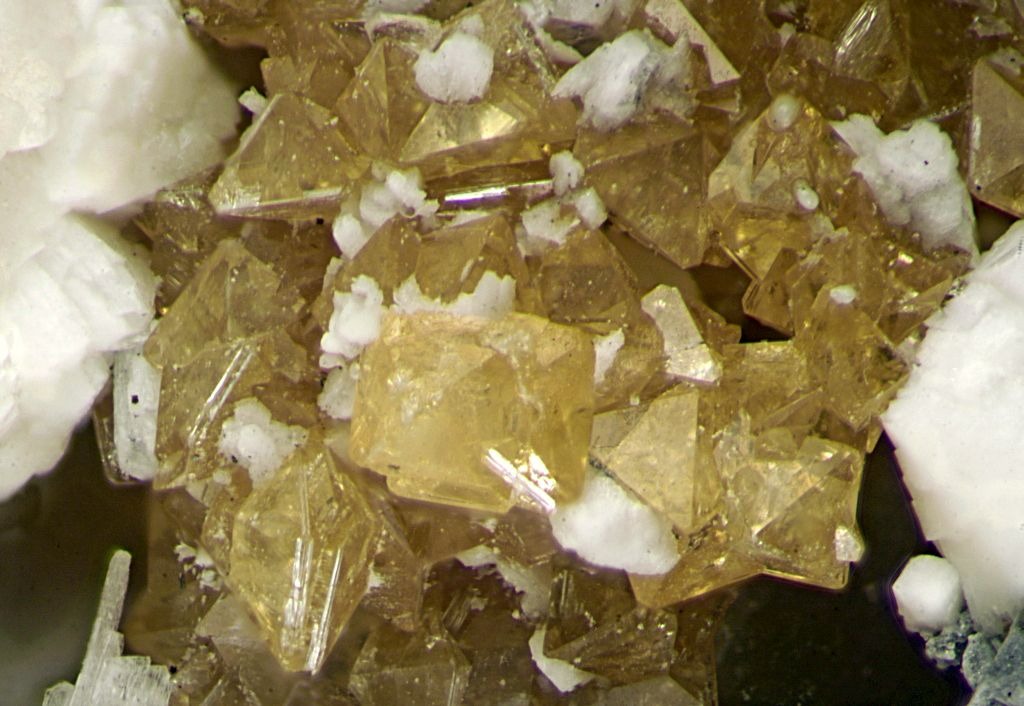
Beccarite is a rare and largely historical trade name used for green zircon varieties exhibiting olive-green, yellowish-green, moss-green, or grass-green coloration. These stones are comparatively uncommon in the gemstone market and are often associated with structurally altered or metamict zircons. Metamictization occurs when prolonged internal radiation from trace uranium and thorium gradually damages the crystal lattice over geological time, reducing crystallinity and affecting optical properties. This structural alteration can influence color formation and may produce the muted green tones characteristic of beccarite material. Compared with transparent blue or colorless zircons, green zircons are frequently more translucent and may display reduced brilliance due to internal structural disruption. However, fine-quality transparent green zircons remain highly prized among collectors because of their rarity and unusual appearance. Some specimens may also exhibit subtle pleochroism and warm secondary color modifiers under different lighting conditions.
Melichrysos
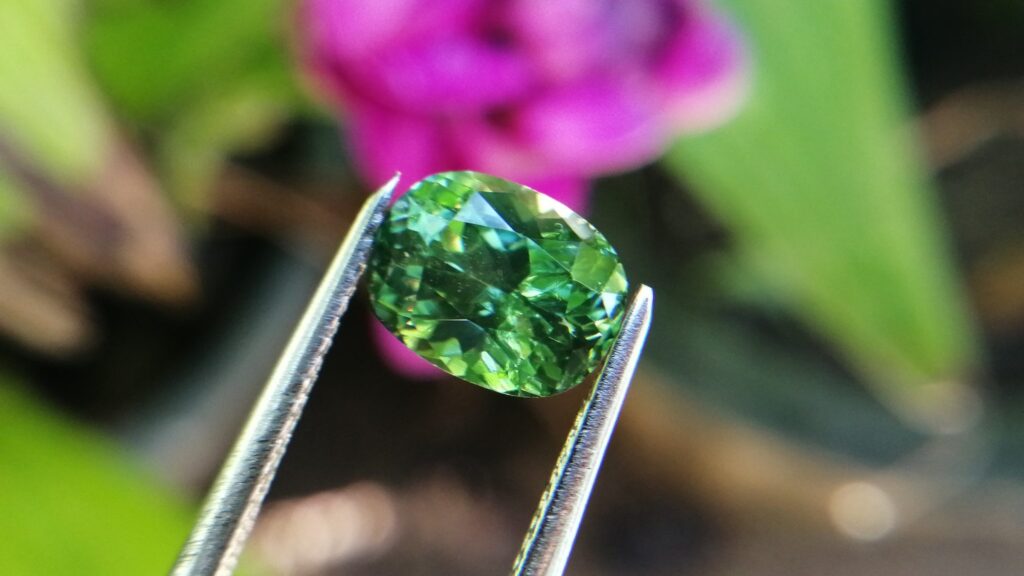
Melichrysos is an ancient and highly poetic trade name derived from Greek roots meaning “honey gold.” The term was historically applied to zircon gemstones displaying rich honey-yellow, golden-yellow, amber-yellow, or warm champagne-like coloration. These zircons were appreciated in classical antiquity for their glowing appearance and exceptional optical brilliance, qualities that made them desirable ornamental stones long before the development of modern gemology. Golden zircons classified under the melichrysos designation often contain trace impurities or structural features that influence their warm coloration. In fine specimens, the combination of strong adamantine luster and high dispersion creates a fiery visual effect resembling molten gold under sunlight. Historically, such stones were associated with luxury, prosperity, and solar symbolism in various ancient cultures. Today, the term survives mainly in historical gemological references and antique gemstone terminology rather than mainstream commercial usage.
Sparklite
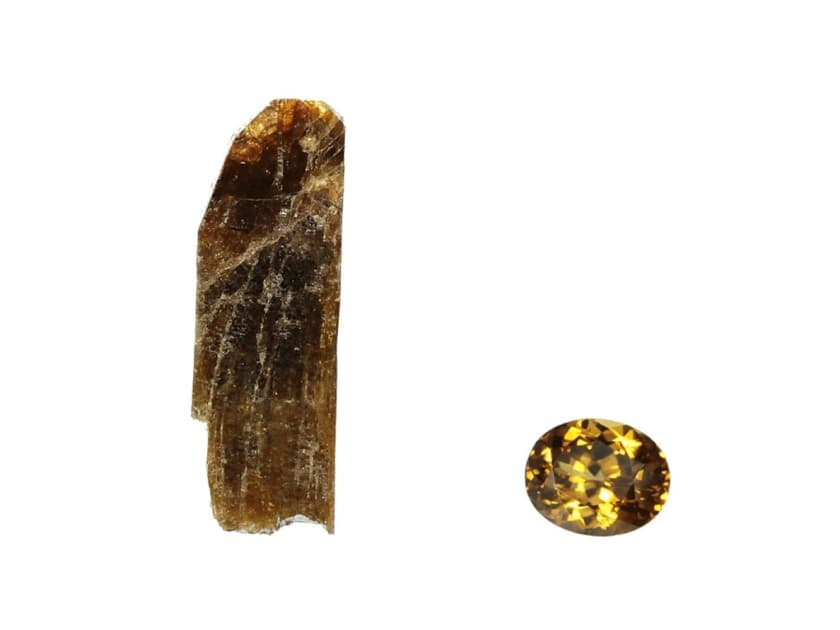
Sparklite is a vintage commercial trade name developed to market exceptionally brilliant colorless zircons during the late nineteenth and early twentieth centuries. The name intentionally emphasized zircon’s extraordinary sparkle, fire, and diamond-like optical performance. Because zircon possesses one of the highest refractive indices among natural gemstones, well-cut sparklite stones can display intense flashes of spectral color that rival or even exceed those of diamond under certain lighting conditions. Jewelers frequently promoted sparklite as an affordable yet luxurious alternative to diamond jewelry, particularly before synthetic simulants became widely available. High-quality sparklite zircons were usually precision-cut to maximize brilliance and minimize the visual effects of zircon’s birefringence. In antique jewelry collections, these stones are often encountered in Edwardian and Art Deco settings where their bright optical character complemented the design aesthetics of the era. Although the term is now largely obsolete in modern gem marketing, it remains historically significant within vintage jewelry terminology.
Stremlite
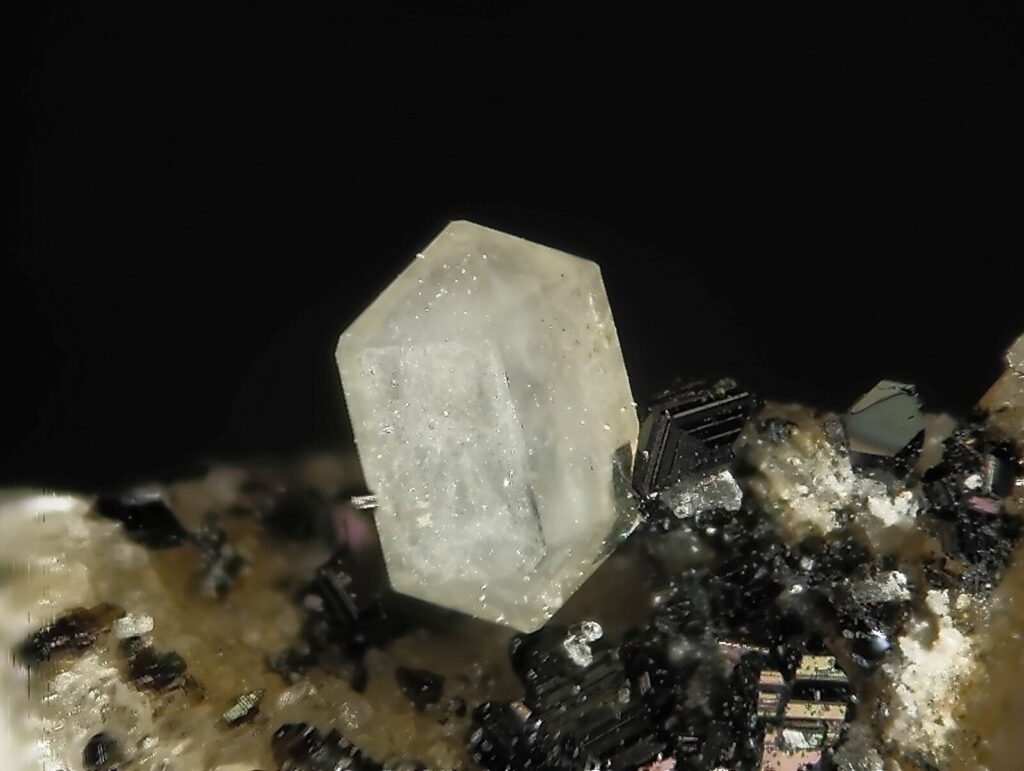
Stremlite is a relatively obscure and regionally used market trade name associated primarily with blue zircon. Unlike more standardized commercial names such as Starlite, the term has historically appeared in localized jewelry markets or proprietary branding contexts rather than formal gemological classification systems. Stremlite was generally employed as an alternative marketing synonym intended to emphasize the gemstone’s bright blue coloration, brilliance, and strong optical fire. In most cases, stones sold under this designation were heat-treated blue zircons similar to those marketed as Starlite. Because the term lacks strict gemological standardization, its usage has varied across different dealers and historical periods. Modern gemological references rarely employ the name officially, but it occasionally appears in vintage gemstone catalogs, regional trade documents, or older jewelry inventories. Despite its limited recognition, the term reflects the long history of creative commercial naming practices within the gemstone industry
What’s the Difference Between Zircon and Cubic Zirconia?
Although zircon and cubic zirconia are often confused because of their similar names, they are completely different materials in both origin and composition. Zircon is a natural zirconium silicate mineral (ZrSiO₄) formed through geological processes over millions or billions of years, while cubic zirconia (CZ) is a synthetic laboratory-created material made from zirconium dioxide (ZrO₂) designed to imitate diamond. Natural zircon is valued for its strong brilliance, high refractive index, vivid fire, and natural color varieties such as blue, brown, red, yellow, green, and colorless forms. It also displays birefringence, an optical property that can create a visible doubling effect inside faceted stones. Cubic zirconia, by comparison, is optically isotropic, lacks birefringence, and is generally more uniform in appearance because it is artificially produced. Zircon has a Mohs hardness of approximately 6.5–7.5 and can be somewhat brittle, whereas cubic zirconia is slightly harder at around 8–8.5 but lacks the natural crystal structure, inclusions, and geological significance of genuine zircon. Despite common misconceptions, zircon is not an imitation gemstone but a naturally occurring and historically important mineral that has been used in jewelry for centuries.
Why Does Zircon Look So Similar to Diamond?
An optical and mineralogical breakdown of why natural white zircon functions as nature’s ultimate diamond look-alike.
The Optical Illusion: High Refraction & Fire
Natural colorless (white) zircon closely mimics diamond due to its extraordinary Refractive Index (1.92–2.01), which is incredibly close to diamond’s (2.42). This means light slows down and bends sharply when entering the stone, creating a brilliant brilliance. Furthermore, zircon has a high dispersion rating (0.039), meaning it splits white light into a rainbow of spectral colors (“fire”) almost as effectively as a diamond does, creating a nearly identical visual performance to the untrained eye.
- Chemical Formula ZrSiO₄
- Refractive Index 1.92 – 2.01 (Very High)
- Dispersion (Fire) 0.039 (Strong rainbow flashes)
- Birefringence 0.059 (High – causes facet doubling)
- Mohs Hardness 7.5 (Durable, but prone to abrasions)
- Crystal System Tetragonal
- Chemical Formula C
- Refractive Index 2.42 (Highest among gems)
- Dispersion (Fire) 0.044 (Exceptional color play)
- Birefringence None (Singly Refractive)
- Mohs Hardness 10 (Hardest known natural material)
- Crystal System Isometric (Cubic)
How to Tell Them Apart: The Double Refraction Clue
While they look identical from a distance, gemologists separate them instantly using a loupe. Zircon is strongly birefringent (doubly refractive). When light passes through zircon, it splits into two rays. If you look down through the top of a faceted zircon, you will see a visual doubling of the back facet edges (they look like blurry double lines). Diamonds are singly refractive, so their facet edges always appear perfectly sharp and single under magnification.
Applications and Metaphysical Significance of Zircon
Zircon has been valued for centuries not only as a gemstone but also for its broad industrial, scientific, and cultural applications. In jewelry, zircon is widely appreciated for its exceptional brilliance, strong fire, and diverse color range, which includes blue, golden, red, brown, green, and colorless varieties. High-quality zircon gemstones are commonly used in rings, pendants, earrings, and antique-style fine jewelry, where their diamond-like optical performance makes them particularly desirable. Beyond gemology, zircon also plays an important role in geology and earth sciences. Due to its remarkable chemical stability and resistance to weathering, zircon crystals are extensively used in radiometric dating, especially uranium-lead (U–Pb) dating, allowing scientists to determine the ages of rocks and some of the oldest known materials on Earth. Industrial zircon compounds are additionally utilized in ceramics, refractory materials, foundry casting, abrasives, and high-temperature engineering applications because of their durability and heat resistance.
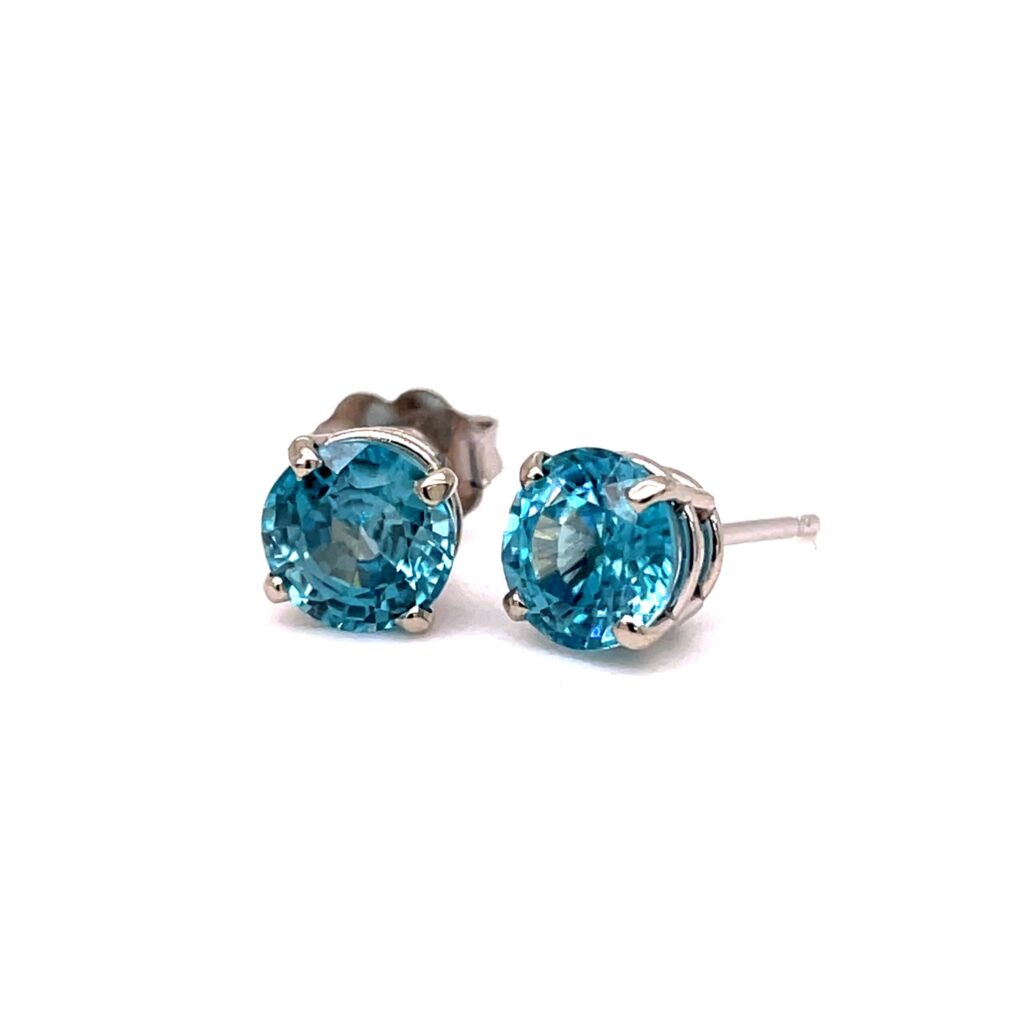
In metaphysical traditions, zircon has long been associated with wisdom, spiritual grounding, protection, and positive energy. Different colors of zircon are believed to possess distinct symbolic meanings within crystal healing practices. Blue zircon is often connected with mental clarity, communication, emotional balance, and spiritual insight, while golden or honey-colored zircon is traditionally associated with prosperity, confidence, creativity, and personal vitality. Historically, zircon was regarded in several cultures as a protective stone believed to ward off negative energies, encourage restful sleep, and promote harmony between the physical and spiritual worlds. Although these metaphysical interpretations are rooted in cultural beliefs rather than scientific evidence, zircon continues to hold symbolic importance among crystal enthusiasts, collectors, and practitioners of alternative spiritual traditions.