
Marcasite, frequently identified by its descriptive name white iron pyrite, is a prominent iron sulfide mineral characterized by the chemical formula FeS₂. While it possesses the exact same chemical composition as the more widely known pyrite, it is classified as a polymorph because it crystallizes in the orthorhombic crystal system rather than the isometric system. This structural difference accounts for its distinct physical properties; marcasite typically exhibits a pale bronze-yellow to nearly white metallic luster on fresh surfaces, though it is prone to tarnishing into a darker yellowish or brownish patina when exposed to the atmosphere. Perhaps its most notable characteristic is its inherent instability. Marcasite is significantly more brittle than pyrite and is highly susceptible to a chemical reaction known as pyrite decay or marcasite disease. In environments with high humidity, the mineral reacts with moisture and oxygen to produce iron sulfates and sulfuric acid, a process that can lead to the physical disintegration of specimens and the damage of surrounding materials.
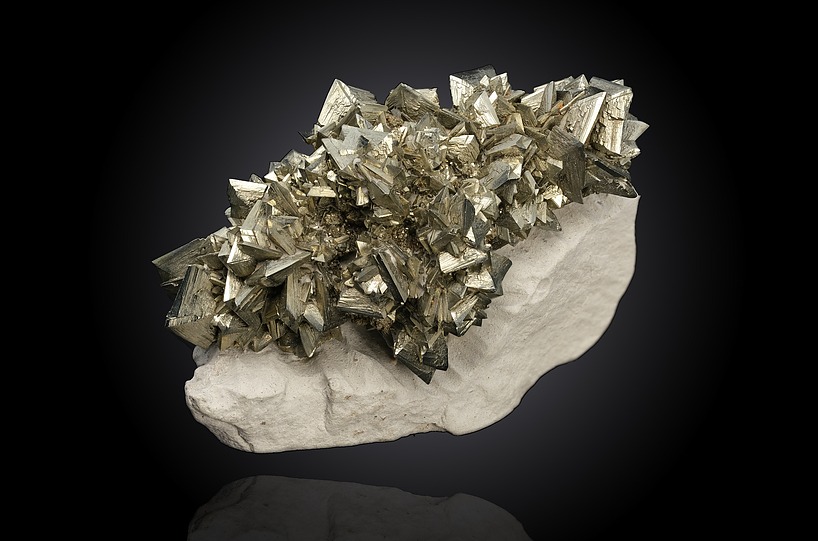
The formation of marcasite is generally associated with low-temperature, highly acidic geological environments, which distinguishes its primary developmental path from that of pyrite. It is most commonly found in sedimentary rocks such as limestone, shale, and coal beds, where it often forms as concretions, nodules, or as a replacement mineral within fossilized organic matter. The mineral precipitates from hydrothermal solutions at relatively low temperatures or develops through the alteration of other iron-rich minerals like pyrrhotite or chalcopyrite in the presence of acidic groundwater. Morphologically, marcasite is recognized for its unique crystal habits, which differ starkly from the cubic or pyritohedral forms of its polymorph. It frequently manifests as tabular, spear-shaped, or radiating crystals. A particularly famous formation is the cockscomb aggregate, where multiple twinned crystals grow together in a serrated pattern resembling a rooster’s crest. These formations are often found in lead-zinc ore deposits where the mineralizing fluids were sufficiently acidic to favor the orthorhombic structure over the cubic one.
Historically, the term “marcasite” was used more broadly to describe all iron sulfides, including pyrite, until mineralogists clearly distinguished between the two in the 18th and 19th centuries. In the realm of jewelry and fashion, “marcasite jewelry” has a rich history, particularly during the Victorian era and the Art Deco movement. Interestingly, most historical and modern “marcasite” jewelry is actually made from faceted pyrite, as true marcasite is too unstable and brittle for long-term wear. During the Victorian era, it was popularized as a sophisticated and affordable alternative to diamonds, often set in sterling silver to provide a subtle, metallic glint.
Varieties and Morphological Habits of Marcasite
Although marcasite is a specific mineral species with a fixed chemical formula (FeS₂), it manifests in several distinct varieties based on its physical form, growth environment, or unique structural presentations. In mineralogy, these are often categorized by their “habit” or “morphology” rather than chemical subspecies.
Cockscomb Marcasite (Spear-head Marcasite)
This is the most iconic and visually striking variety. It consists of multiple tabular or spear-shaped crystals that have twinned together on the {101} plane. These twins grow in radiating, serrated clusters that closely resemble the crest of a rooster. They are frequently found in hydrothermal vein deposits.
Radiated Marcasite
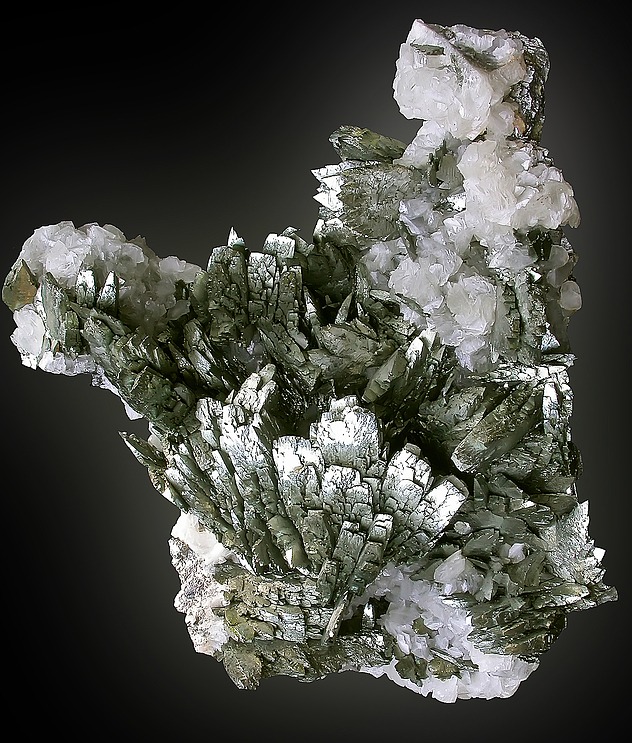
Often found in sedimentary nodules or concretions, this variety features crystals that grow outward from a central point in a needle-like (acicular) or fibrous arrangement. When these nodules are broken open, they reveal a brilliant, sunburst-like internal structure with a high metallic luster.
Sperkise
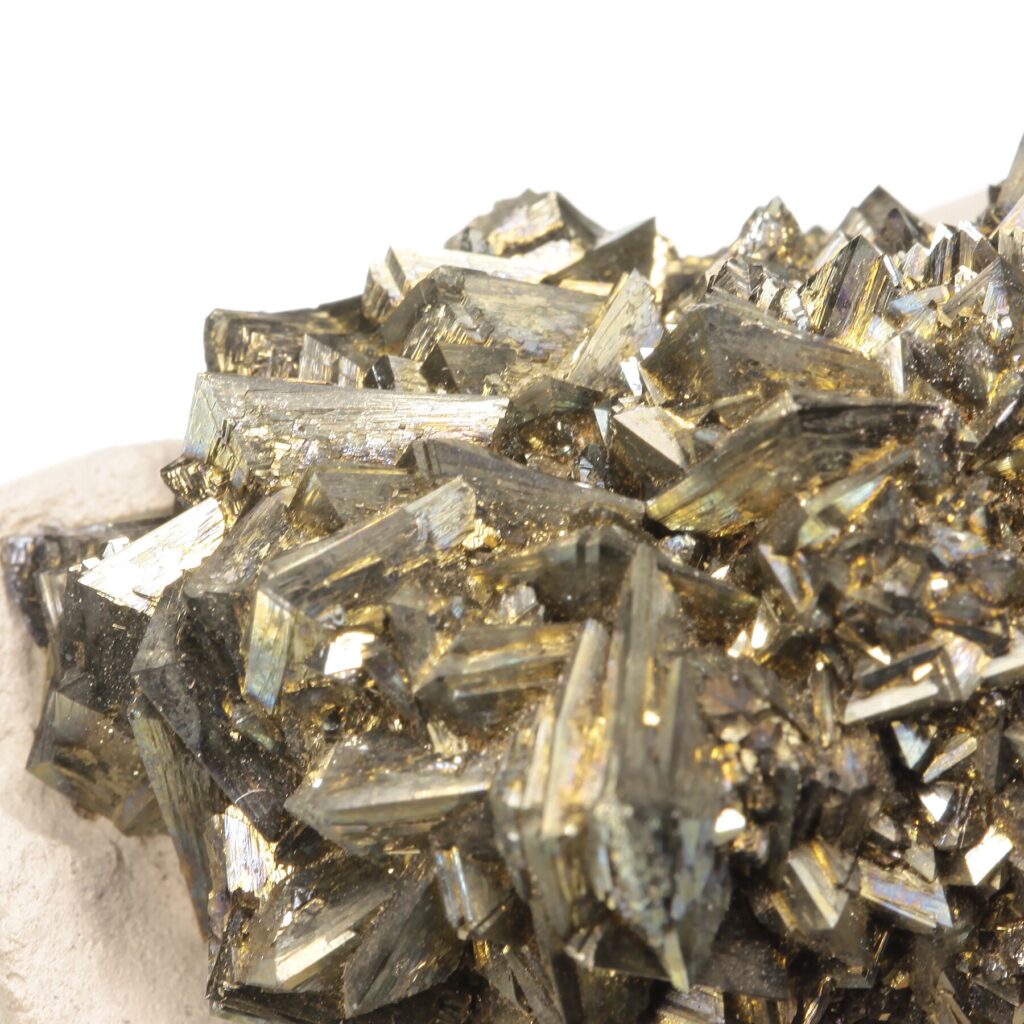
A specialized term for a specific type of twinning found in marcasite. It refers to spear-shaped twin crystals where the two individuals are joined in a way that creates a distinct “V” or arrowhead shape. These are particularly common in the chalk and limestone deposits of Europe.
Globular or Reniform Marcasite
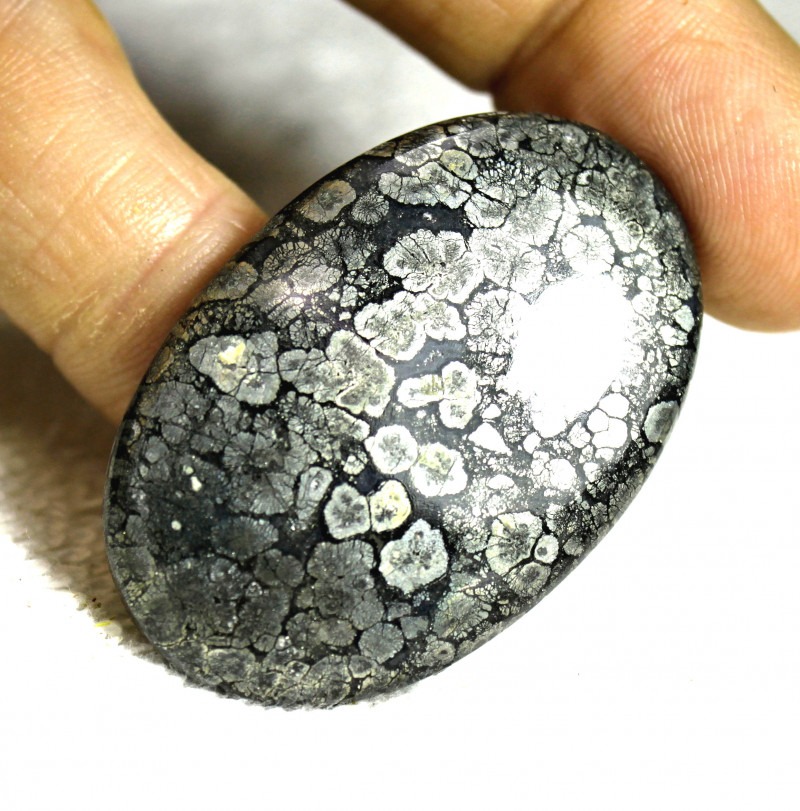
This variety occurs as rounded, grape-like (botryoidal) or kidney-shaped (reniform) masses. These often have a smooth, dark exterior due to tarnishing but reveal the characteristic radiating internal structure of marcasite when fractured.
Capillary or “Hair” Marcasite
An extremely delicate variety where the mineral forms exceptionally thin, hair-like fibers. These are often found inside the cavities of other minerals or within geodes, creating a fuzzy or velvet-like appearance on the surface of the host rock.
Pseudomorphous Marcasite
Pseudomorphous marcasite occurs when the mineral chemically replaces a pre-existing substance while faithfully retaining the original’s external geometry. This process is most frequently observed in fossil replacements, where marcasite precipitates within organic structures such as ammonites, bivalves, or ancient wood, preserving intricate biological details in a metallic, brass-colored cast. Additionally, it can form mineral pseudomorphs by replacing precursor sulfides like pyrrhotite or fluorite; in these cases, the marcasite maintains the cubic or hexagonal outer symmetry of the previous mineral despite its own internal orthorhombic lattice. This phenomenon is a valuable tool for geologists, as it provides a clear record of the changing chemical environments and fluid compositions within a geological site.
Iridescent marcasite
While not a separate structural variety, some specimens develop a thin, oxidized surface layer that creates a vivid, multi-colored (iridescent) play of light. This occurs naturally when the mineral is exposed to specific atmospheric conditions, though it can also be a precursor to the destructive “marcasite decay.”
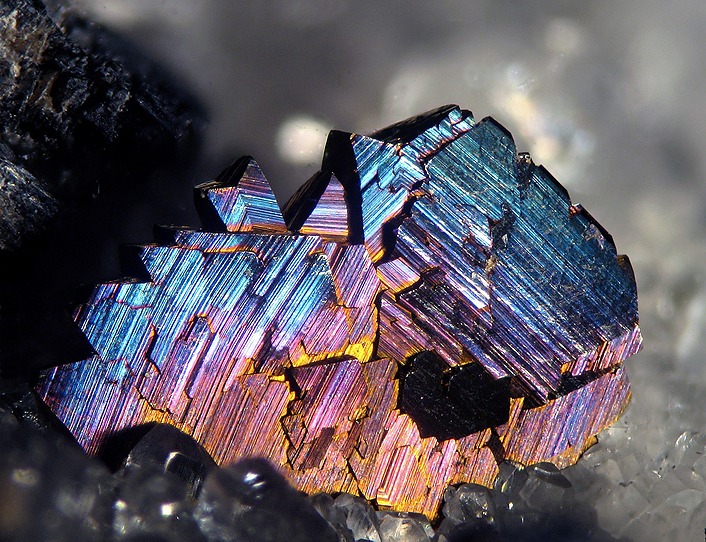
Crystal Habit and Crystallography
Marcasite crystallizes in the orthorhombic crystal system (space group Pnnm), which fundamentally dictates its varied and distinctive crystal habits. Unlike the isometric cubes or pyritohedrons common to its polymorph pyrite, marcasite typically forms tabular, disc-shaped, or spear-like crystals. One of its most iconic morphological expressions is the “cockscomb” aggregate, a result of repeated twinning on the {101} plane. These twins create serrated, radiating clusters that resemble the crest of a rooster.Furthermore, marcasite frequently occurs in globular or reniform (kidney-shaped) masses with an internal radiating fibrous structure. It is also common as a replacement mineral in pseudomorphs, where it occupies the external form of a different mineral or organic matter, such as wood or mollusk shells, while maintaining its own internal orthorhombic structure.
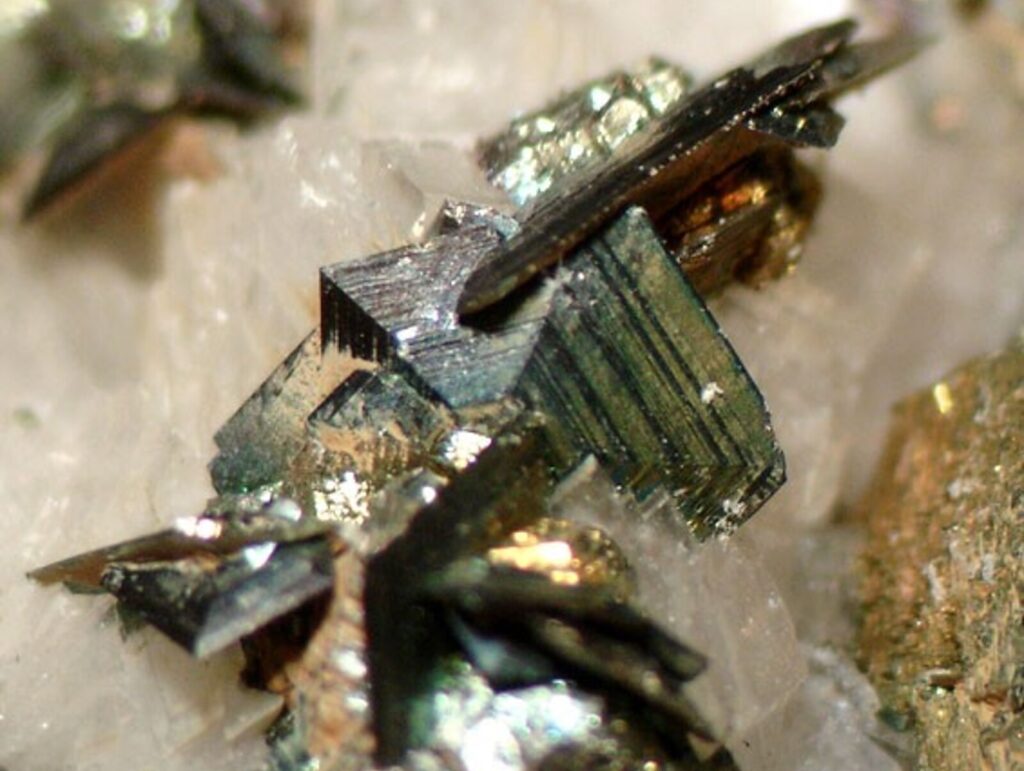
Optical Properties
In the study of ore microscopy and mineral optics, marcasite is classified as an opaque mineral. When examined under reflected plane-polarized light, it demonstrates a high reflectance and a characteristic creamy-white to pale yellow color. A primary diagnostic feature of marcasite is its strong bireflectance and distinct pleochroism, which causes visible color shifts—ranging from white to yellowish or even greenish-brown—as the stage is rotated.Between crossed polars, marcasite exhibits intense anisotropy, producing vivid polarization colors such as blue, green, and purple. This extreme optical activity is a key differentiator from pyrite, which is isotropic and remains dark under crossed polars. Additionally, the reflectance of marcasite is slightly higher than that of pyrite, contributing to its “whiter” appearance on fresh, polished surfaces. These optical parameters are essential for geologists and mineralogists when identifying fine-grained sulfide assemblages within complex mineral matrices.
Physical and Chemical Properties
The physical profile of marcasite is defined by its metallic density and extreme brittleness. It exhibits a Mohs hardness of 6 to 6.5 and a specific gravity ranging from 4.85 to 4.89. Its tenacity is described as brittle, and it lacks discernible cleavage, instead displaying an uneven to subconchoidal fracture. On a macroscopic level, it manifests a brilliant metallic luster and a dark grayish-green to black streak.
Chemically, marcasite is an iron disulfide (FeS₂) that acts as a metastable polymorph of pyrite. It is highly sensitive to environmental conditions, particularly atmospheric humidity. In the presence of moisture and oxygen, the mineral undergoes an exothermic oxidation process known in mineralogy as “marcasite decay” or “pyrite disease.” This chemical breakdown involves the oxidation of sulfide ions into sulfuric acid (H₂SO₄) and the formation of various hydrated iron sulfates such as melanterite (FeSO₄·7H₂O). This reaction is often accompanied by a distinct sulfurous odor and a significant increase in volume, which causes the specimen to crack, swell, and eventually crumble into a fine, acidic powder. Consequently, the preservation of marcasite requires strictly controlled, low-humidity environments to prevent rapid structural degradation.
Jewelry Applications and Modern Uses
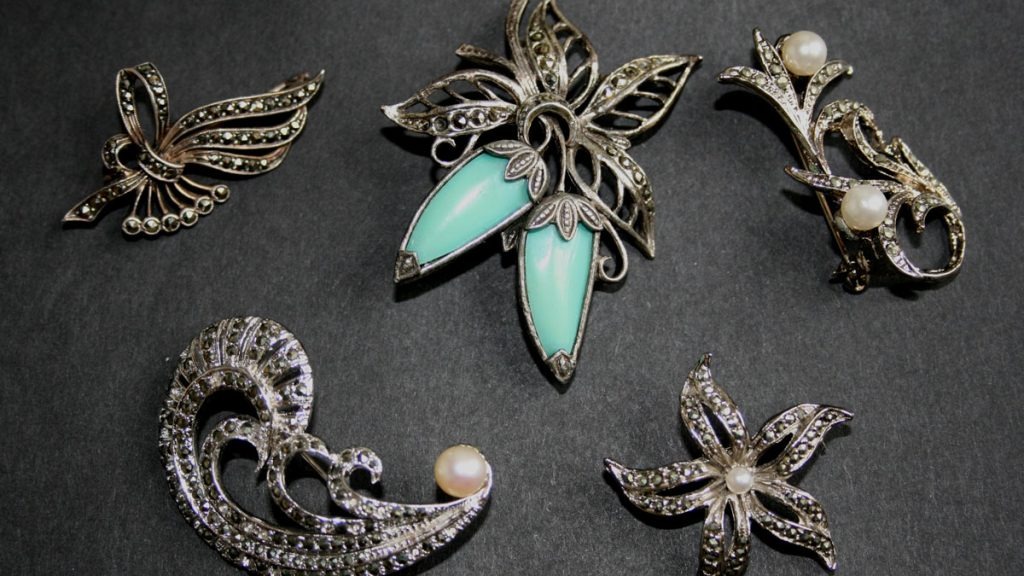
In the specialized field of gemology and decorative arts, marcasite has a unique but often misunderstood application. It is primarily utilized in the production of “marcasite jewelry,” a style characterized by small, rose-cut metallic stones pavé-set into sterling silver. This aesthetic reached its zenith during the Victorian, Edwardian, and Art Deco eras, where it served as a sophisticated and more accessible alternative to the brilliance of diamonds. However, due to the inherent instability and extreme brittleness of true orthorhombic marcasite, almost all commercial jewelry labeled as such is actually crafted from its more stable polymorph, pyrite. Pyrite’s superior resistance to “pyrite decay” and mechanical stress makes it the preferred material for faceted stones that must withstand daily wear. These pieces are frequently designed with vintage-inspired motifs, such as floral patterns, butterflies, and geometric Art Deco forms, where the stones’ subdued, metallic luster provides an elegant, antique patina.
Beyond its presence in the jewelry trade, the applications of true marcasite are relatively limited due to its chemical volatility. In an industrial context, marcasite was historically utilized as a minor source of sulfur for the production of sulfuric acid, particularly in regions where other sulfur sources were scarce. However, this has largely been superseded by more efficient recovery methods from petroleum and natural gas processing. Today, its primary value lies in the scientific and collector markets. For mineralogists, marcasite is an essential subject of study for understanding low-temperature hydrothermal systems and sedimentary geochemistry. For mineral collectors, high-quality “cockscomb” aggregates and iridescent tarnished specimens are highly prized for their complex crystallography and aesthetic appeal. While it lacks broad industrial utility, marcasite remains a critical mineral for paleo-environmental reconstruction, as its presence in the geological record serves as a precise indicator of highly acidic, anaerobic conditions.