
Gemstone grading is the process used to evaluate and describe a gem’s quality in a clear, professional, and comparable way. Whether you are a collector, a first-time buyer, or simply interested in gemstones, understanding grading standards helps you judge beauty, rarity, and value with greater confidence.
The Diamond Four Cs Standard
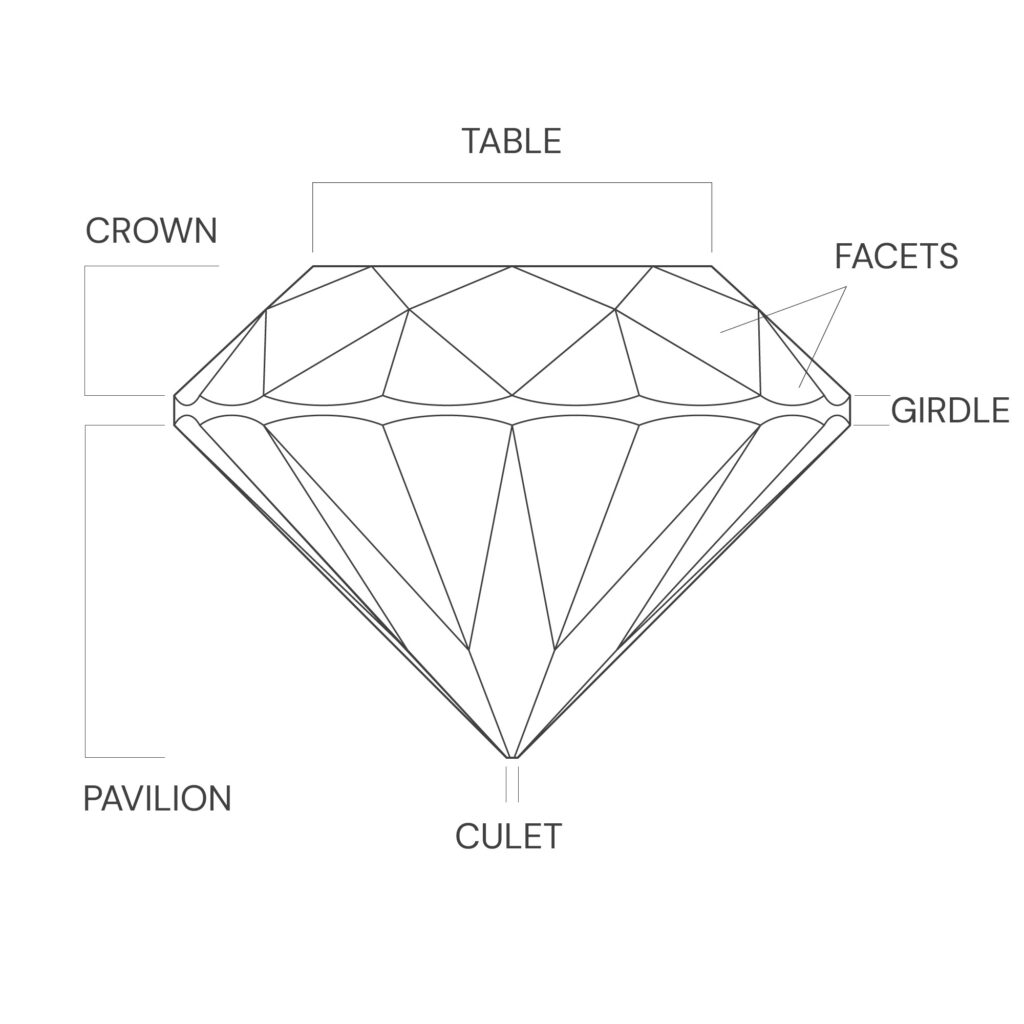
Whether you are buying an engagement ring or a timeless piece of jewelry, understanding the Diamond 4Cs is essential. This international standard was created by the GIA to describe diamond quality using four key factors: Cut, Color, Clarity, and Carat Weight.
By mastering these four pillars, you can find a diamond that perfectly balances beauty, brilliance, and budget.
Color: Measuring Purity
Diamond color refers to the presence or absence of color within a white diamond. The GIA color scale begins with D, which represents completely colorless diamonds, and continues down to Z, where a noticeable yellow or brown tint is visible.Colorless diamonds in the D to F range are rare and highly valued. Diamonds graded G to J are considered near colorless and often offer excellent value, as they appear white to the naked eye at a lower price point. Diamonds in the K to Z range show increasingly warm tones that are more visible, especially in larger stones.Metal choice can also influence color selection. Diamonds set in platinum or white gold typically benefit from higher color grades, while yellow or rose gold settings can mask slight warmth, allowing for a lower color grade without sacrificing appearance.
Clarity: Evaluating Natural Characteristics
Most natural diamonds contain internal features known as inclusions or external characteristics called blemishes. Clarity grading measures how visible these features are and how much they affect the diamond’s appearance.Flawless and Internally Flawless diamonds have no visible inclusions, even under magnification, but they are extremely rare and expensive. Diamonds graded Very Slightly Included or Slightly Included often represent the best balance of beauty and value. Many of these stones appear completely clean to the naked eye, even though minor inclusions may be visible under magnification.When evaluating clarity, the goal is usually to find an “eye-clean” diamond that looks flawless without paying the premium for the highest clarity grades.
Carat Weight: Understanding Size and Value
Carat weight measures how much a diamond weighs rather than how large it appears. While larger diamonds are generally rarer, carat weight alone does not determine beauty or brilliance. Cut quality and shape can significantly affect how large a diamond looks when worn.
Diamond prices tend to increase sharply at popular weight milestones, such as one carat or two carats. Choosing a diamond slightly below these thresholds can offer substantial savings while maintaining a nearly identical visual size. A well-cut diamond with a slightly lower carat weight can often appear larger than a heavier diamond with poor proportions.
Choosing the Right Balance of the 4Cs
The Diamond 4Cs are designed to work together, not in isolation. A diamond with excellent cut, balanced color, eye-clean clarity, and an efficient carat weight often delivers the best overall value. Understanding these grading standards allows you to make confident decisions and focus on what truly matters for your personal style and budget.
| Grading Factor | Main Grading Parameters | Standard Scale / Terms |
|---|---|---|
| Cut | Proportions, symmetry, polish, light performance | Excellent, Very Good, Good, Fair, Poor |
| Color | Degree of color presence in white diamonds | D, E, F (Colorless); G, H, I, J (Near Colorless); K–Z (Light Yellow to Brown) |
| Clarity | Type, size, number, and visibility of inclusions and blemishes | FL, IF, VVS1–VVS2, VS1–VS2, SI1–SI2, I1–I3 |
| Carat Weight | Diamond weight measured in carats | 1 carat = 0.20 grams; commonly recorded to two decimal places |
The Core Factors Used in Gemstone Grading
Color
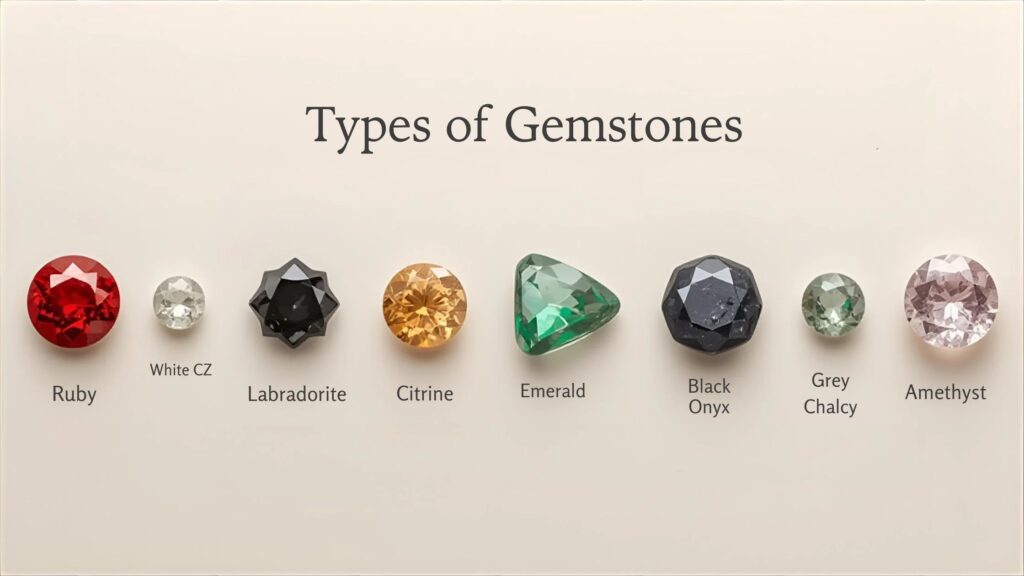
Color is often the most important factor for colored gemstones. Gem color is described using three aspects. Hue is the basic color, such as blue, red, or green. Tone shows how light or dark the color appears. Saturation measures the intensity or purity of the color. High-quality gemstones usually have a balanced tone, vivid saturation, and minimal unwanted color changes.
Clarity
Clarity refers to natural internal features or surface characteristics. Unlike diamonds, many colored gemstones naturally have inclusions, and some inclusions are expected. Clarity is evaluated based on the size, location, and visibility of these features, as well as their effect on transparency and durability. Each type of gemstone has its own clarity standards. What is acceptable for one gemstone may reduce the value of another.
Cut
Cut describes how a gemstone is shaped and faceted, not just its overall form. A good cut enhances brilliance, color, and symmetry. Poor cutting can make even a high-quality gemstone look dull, while a well-cut gemstone appears brighter and more appealing.
Carat Weight
Carat weight measures how much a gemstone weighs, not how large it looks. Larger gemstones are usually rarer, but value does not increase evenly with weight. Two gemstones of the same weight can have very different prices depending on their color, clarity, and cut.
Diamond Grading vs. Colored Gemstone Grading
Diamond grading is highly standardized, with precise scales for color and clarity. This level of standardization is possible because diamonds are relatively consistent in appearance.
Colored gemstones, however, present more complexity:
- Thousands of color variations exist
- Different species have different grading expectations
- Color preference can vary by market and culture
As a result, colored gemstones are usually graded using descriptive analysis rather than fixed numerical scales.
Professional Gemstone Grading
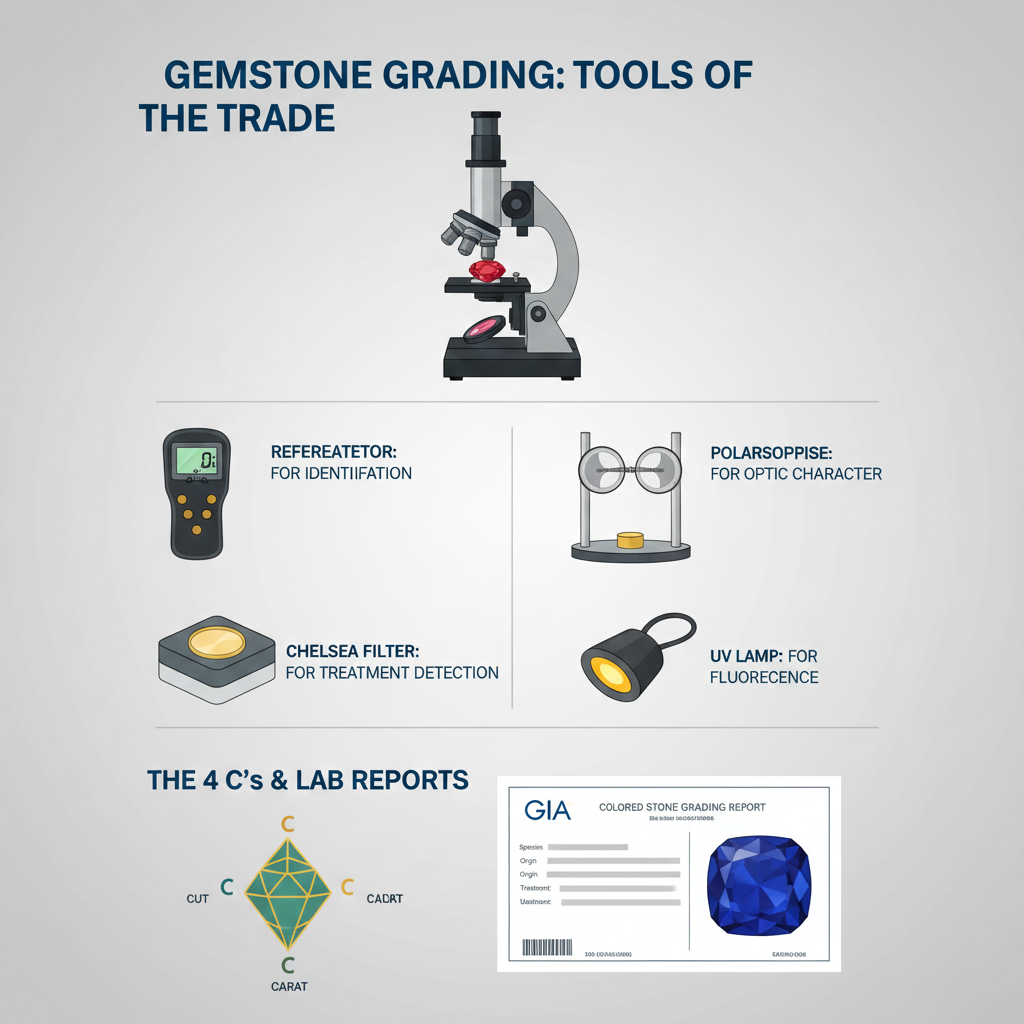
Professional gemstone grading involves a detailed and systematic evaluation of a gemstone using specialized tools and techniques. Gemologists examine each stone carefully to determine its quality and characteristics in a way that is consistent and reliable.
Precision Instruments
Grading begins with the use of precision instruments. Gemologists often use a 10x loupe to inspect inclusions and surface features. For more detailed analysis, microscopes allow for a closer examination of internal structures, clarity, and natural growth patterns. Refractometers and other optical instruments measure how light interacts with the gemstone, providing critical information about refractive index, birefringence, and optical properties.
Laboratory Standards
Professional grading follows standardized laboratory protocols to ensure consistency. By applying internationally recognized grading systems, gemologists can describe a gemstone’s color, clarity, cut, and weight in a precise and reproducible way. This standardization guarantees that the same gemstone would receive a similar description whether evaluated in New York, London, or Bangkok.
Treatment Identification
An essential part of professional grading is identifying whether a gemstone has undergone any artificial treatments, such as heating, fracture filling, dyeing, or irradiation. Treatments can dramatically affect a gemstone’s appearance and market value. Gemologists document these treatments to provide transparency for buyers and collectors. Accurate treatment identification ensures that grading reports reflect the true nature and value of the stone.
Professional Gemstone Identification and Market Evaluation
Gemstone identification and evaluation are the two fundamental pillars of professional gemology. While identification confirms the specific species or variety of a mineral, evaluation is the process of determining its actual economic market value. A critical part of this process is authenticity verification, where modern gemologists use advanced instruments to distinguish between natural stones and laboratory-created synthetics. Because treatments and enhancements can significantly alter a stone’s worth, professional verification is essential for establishing trust between buyers and sellers. Furthermore, geographic origin often dictates rarity; for instance, rubies from Myanmar typically command higher price premiums than those from other regions. To ensure total transparency, it is highly recommended to obtain a grading report from recognized laboratories like the GIA or IGS, which serve as legally recognized evidence of a stone’s quality and characteristics.
Essential Techniques for Gemstone Self-Assessment
While expert consultation is vital, enthusiasts can perform a preliminary self-assessment by mastering a few basic gemological techniques. To evaluate Color, you should observe the gemstone under natural, north-facing daylight to accurately judge its hue, tone, and saturation. For Clarity, using a 10x magnifying loupe allows you to inspect the interior for inclusions or surface blemishes that might affect the stone’s integrity. Finally, evaluating the Cut involves analyzing how the stone interacts with light; a high-quality cut will maximize brilliance and prevent “leaky” areas where light fails to reflect. By checking for consistent sparkle and even color distribution, collectors can better understand a gemstone’s quality before seeking a formal professional appraisal.