
Brookite represents a captivating chapter in the study of mineralogy, serving as the distinct orthorhombic polymorph of titanium dioxide, TiO₂. While it shares an identical chemical formula with rutile and anatase, it is distinguished by a specific spatial arrangement of atoms that occurs much less frequently in nature. This structural divergence is not merely a technicality; it dictates the mineral’s entire physical persona. Unlike the relatively simple tetragonal symmetry of rutile, brookite’s internal architecture is defined by a more intricate orthorhombic system where titanium-oxygen octahedra are linked in a way that minimizes symmetry but maximizes complexity. This unique lattice structure is responsible for the mineral’s exceptional optical properties, including a remarkably high refractive index and strong birefringence, which often result in a brilliant, sub-metallic to adamantine luster that catches the light with startling intensity.Visually, brookite is characterized by its sophisticated crystal habit, typically manifesting as tabular, elongated, or thin platy crystals that frequently display striations along their surfaces. Its color palette is equally diverse and moody, ranging from warm, translucent amber and honey-yellows to deep, reddish-browns and even velvet-like, nearly opaque blacks. These variations are often the result of trace impurities—such as iron or niobium—interspersed within the TiO₂ framework. Because brookite requires very specific, low-temperature hydrothermal conditions to form without collapsing into the more stable rutile structure, large or well-defined specimens are quite rare. This rarity, combined with its high dispersion and complex crystal faces, elevates brookite from a simple oxide to a highly coveted treasure for mineralogists and specialized collectors who appreciate the delicate balance of chemistry and geometry required for its existence..
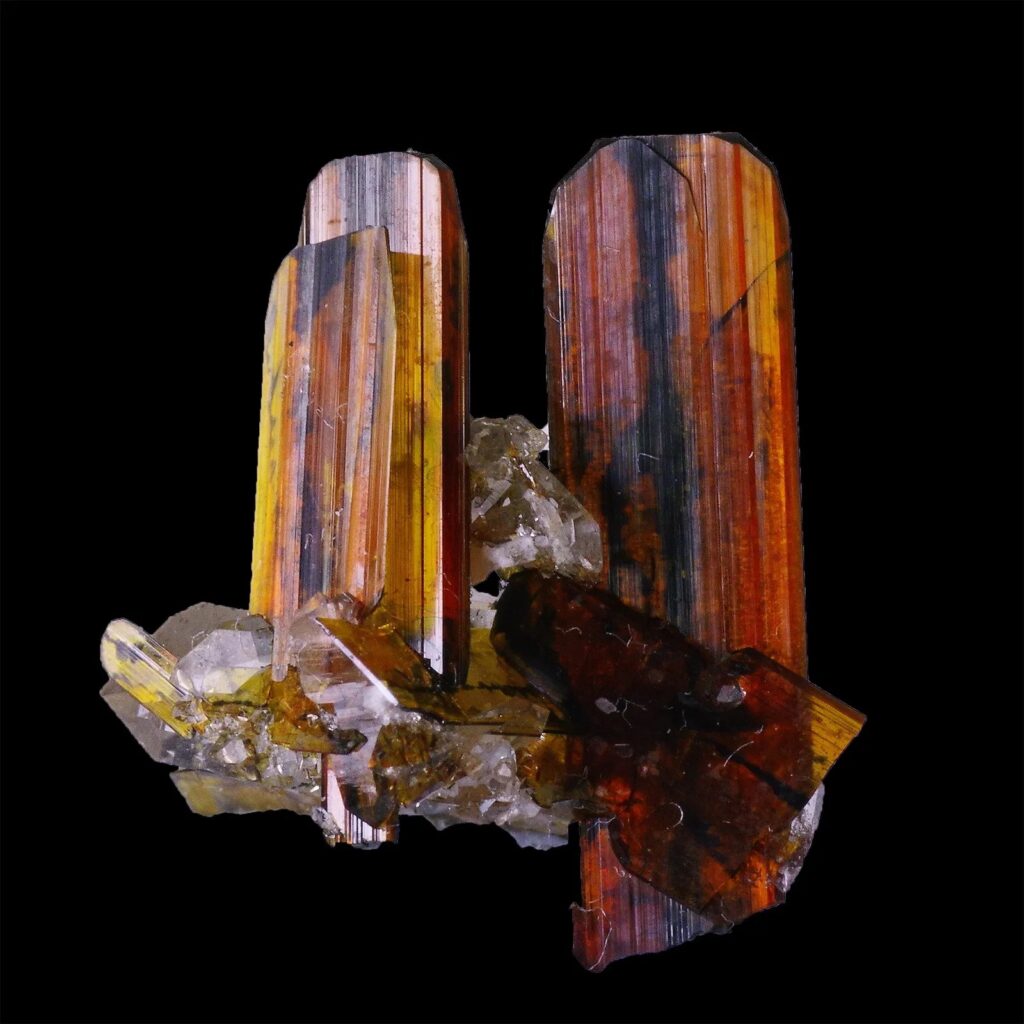
Brookite formation represents a sophisticated geochemical process governed by precise pressure-temperature constraints and specific fluid chemistry. Primarily occurring within low-temperature hydrothermal environments, this mineral typically crystallizes in the cooling stages of titanium-rich fluids as they circulate through alpine-type fissures and rock cavities. Unlike the more common rutile, which thrives in high-pressure volcanic settings, brookite emerges when titanium ions are released through the alteration of precursor minerals—such as ilmenite or titanite—during low-grade metamorphism or hydrothermal leaching. This crystallization process requires a specific kinetic environment where the concentration of titanium and the presence of certain ions, like iron or niobium, favor the development of the orthorhombic crystal lattice over its tetragonal counterparts.
Geological rarity of brookite is directly attributed to its existence as a metastable polymorph of TiO₂. This means that while the mineral is physically solid and seemingly permanent, it is not in its state of lowest possible energy. It occupies a precarious structural niche; once environmental temperatures exceed a critical threshold, typically cited around 750°C, the brookite lattice becomes energetically untenable. At this thermal limit, the atomic arrangement undergoes a spontaneous and irreversible transformation, collapsing into the more thermodynamically stable structure of rutile. Because of this thermal sensitivity, brookite acts as a sensitive indicator of geological history, signifying that its host environment has remained relatively cool and has not been subjected to the intense heat of high-grade metamorphism that would have otherwise triggered its structural conversion.
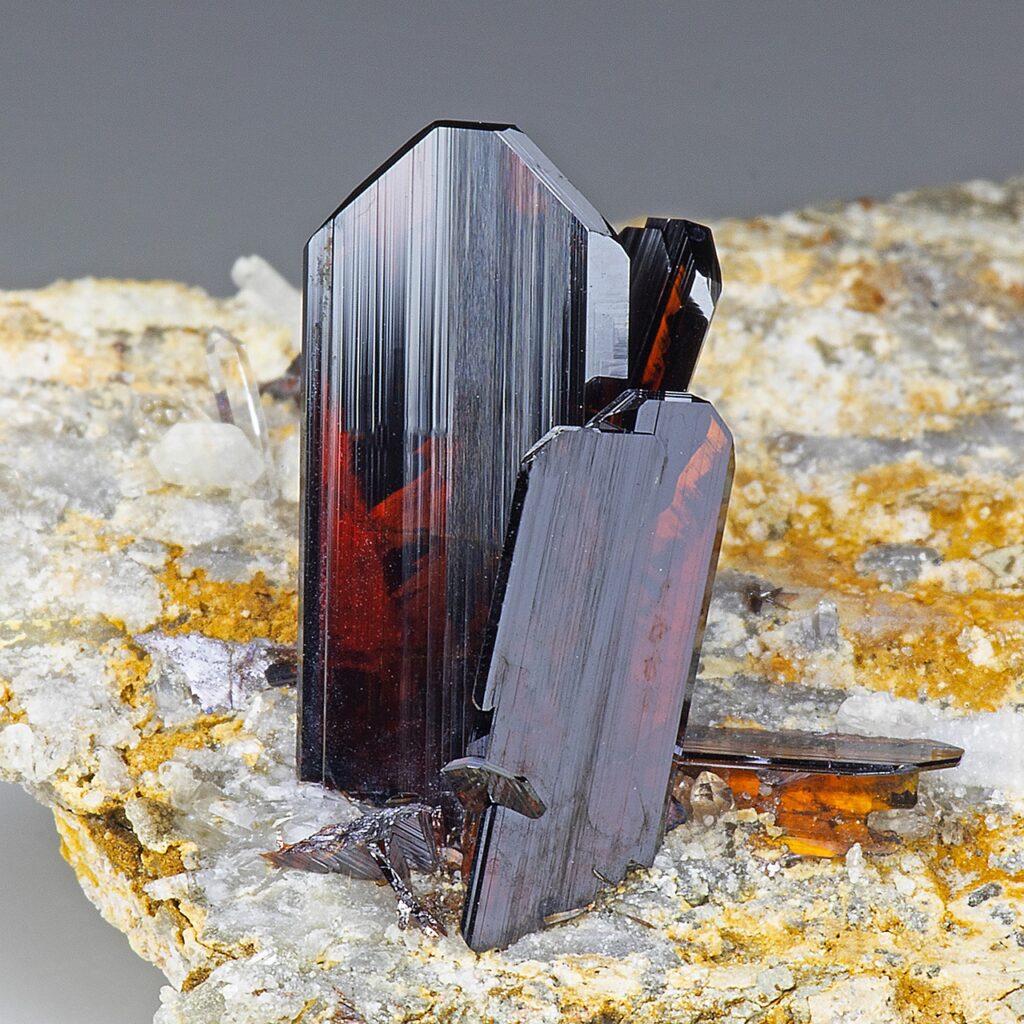
Historically, the mineral was first recognized and described in 1825 by the French mineralogist Armand Lévy. He chose the name “Brookite” to honor Henry James Brooke, a distinguished English crystallographer and mineral dealer who made significant contributions to the field during the 19th century. Early notable discoveries were made in the rugged landscapes of Snowdonia, Wales, which remains a classic locality for the species. In the modern era, Brookite has moved beyond the cabinets of historians and collectors into the realm of material science, where its unique semiconductor properties are being researched for applications in photocatalysis and solar energy technology.
Crystal Structure and Physical Properties of Brookite
From a crystallographic perspective, Brookite is defined by its orthorhombic symmetry, belonging to the Pbca space group. While it shares the chemical formula TiO₂ with rutile and anatase, its structure is characterized by a more complex arrangement of titanium-oxygen octahedra; in Brookite, these octahedra share three edges, creating a staggered, “zigzag” internal geometry that differs from the edge-sharing patterns of its polymorphs. This unique atomic packing results in a high refractive index (ranging from 2.58 to 2.74) and strong birefringence, giving the mineral its signature adamantine to sub-metallic luster. Physically, Brookite is relatively hard, measuring 5.5 to 6 on the Mohs scale, and possesses a specific gravity of approximately 4.1. It typically exhibits a brittle tenacity and lacks a distinct cleavage, often breaking with a conchoidal or uneven fracture. One of its most striking optical features is its strong pleochroism, where the crystal appears to shift in color—from yellowish-brown to deep orange or red—depending on the angle of observation and the polarization of light.
Applications of Brookite
While brookite is significantly less abundant than its counterparts rutile and anatase, it has gained substantial attention in the field of materials science due to its unique semiconducting properties. As a polymorph of TiO₂, brookite possesses a distinct band gap and crystalline surface structure that make it a highly effective photocatalyst. Research indicates that brookite often outperforms anatase in the degradation of organic pollutants and the production of hydrogen through water splitting, particularly when synthesized as high-surface-area nanoparticles. Additionally, its high refractive index and dielectric constants make it a subject of interest for advanced optical coatings and electronic components. In recent years, scientists have focused on hydrothermal synthesis methods to produce pure-phase brookite, aiming to harness its specific electronic transport properties for next-generation solar cells and sensors.
Brookite is primarily valued by researchers and mineral collectors, its application in the jewelry industry remains a niche but fascinating topic. From a gemological perspective, Brookite possesses several qualities that make it attractive for jewelry, most notably its incredible refractive index (which is higher than that of a diamond) and its strong metallic-to-adamantine luster. When cut as a gemstone, Brookite can exhibit deep, fiery flashes of amber, orange, and red. However, its use in mainstream jewelry is severely limited by its rarity; findable crystals large and transparent enough to be faceted are exceptionally scarce. Furthermore, with a hardness of 5.5 to 6 on the Mohs scale, Brookite is relatively soft compared to traditional stones like sapphires or diamonds, making it more suitable for low-impact pieces like pendants or earrings rather than rings that are prone to daily wear and tear.
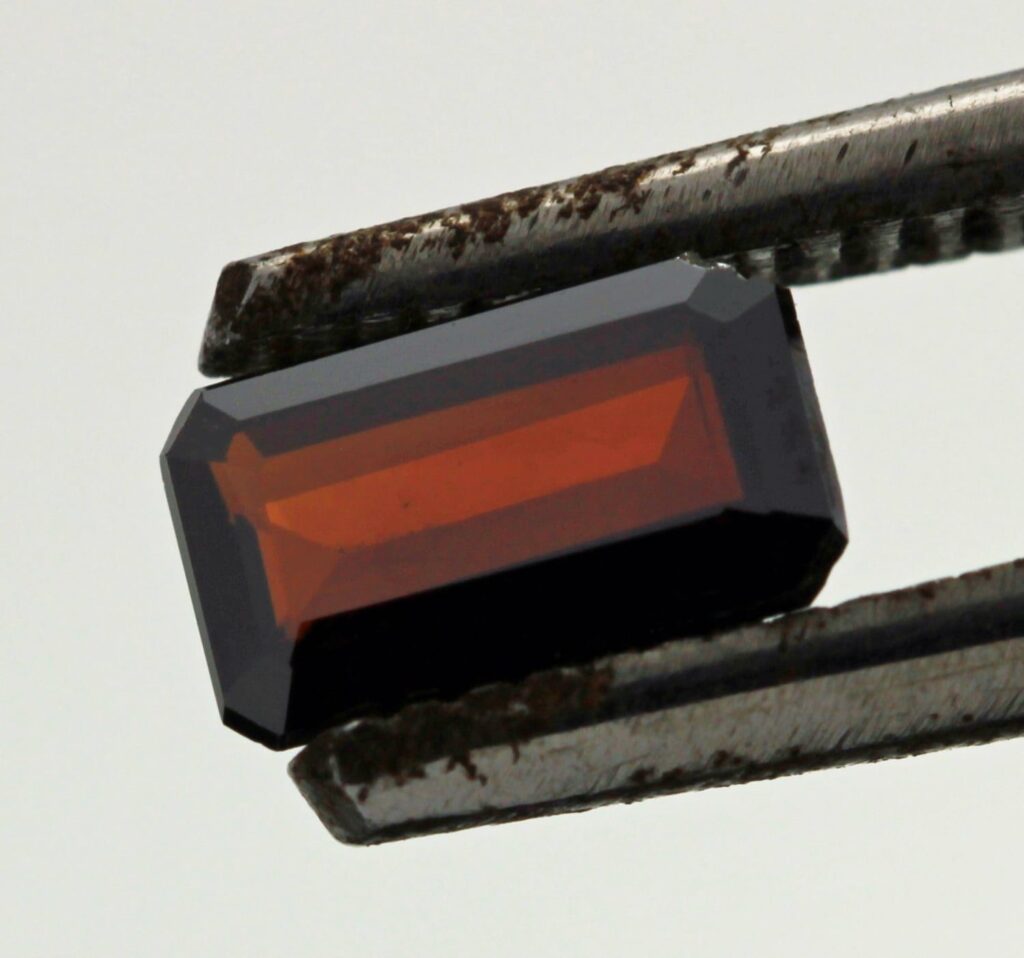
Beyond its rare appearance in collector-grade jewelry, Brookite’s industrial and scientific applications are largely centered on its role as a high-performance semiconductor and photocatalyst. Because it is a polymorph of TiO₂, Brookite features a unique crystalline surface and electronic band gap that allow it to facilitate chemical reactions when exposed to light. Researchers are particularly interested in its ability to break down organic pollutants in water and its potential for high-efficiency hydrogen production through water splitting. Unlike its more common relative, anatase, Brookite’s specific atomic “zigzag” structure can sometimes offer superior electron-transport properties, making it a subject of ongoing study for the development of next-generation solar cells and advanced optical coatings.