
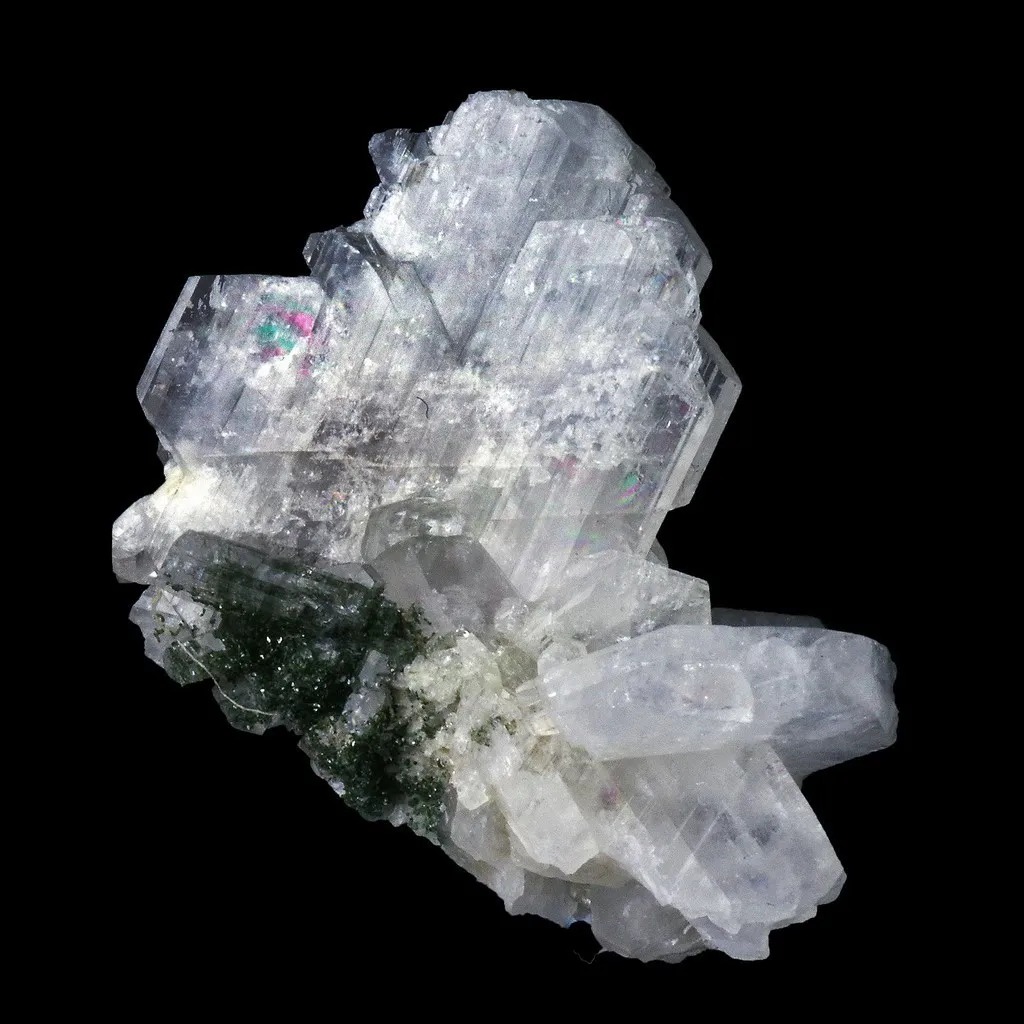
Derived from the Latin word albus, meaning “white,” albite is named for its most common appearance. Chemically, it is a sodium aluminum silicate with the formula NaAlSi₃O₈. Although typically found as snowy white crystals, albite can also occur in subtle shades of gray, blue, or green. It is a major component of the Earth’s crust and is widely distributed across igneous, metamorphic, and sedimentary rocks. Well-formed, tabular albite crystals are especially valued by mineral collectors for their clean geometry and aesthetic appeal.
The Formation of Albite
Albite forms through a range of geological processes, most commonly during the cooling of magma or the transformation of existing rocks under heat and pressure. In igneous environments, it crystallizes from silica-rich melts and is often among the last minerals to solidify in granites and pegmatites. Another important pathway is sodium metasomatism, a process in which sodium-rich fluids alter pre-existing feldspar minerals, gradually converting them into albite.In metamorphic settings, albite is characteristic of the greenschist facies, forming under relatively low temperatures and pressures. As the sodium-rich end member of the plagioclase feldspar series, its presence provides valuable clues about the chemical environment and thermal conditions during rock formation.
History and Discovery
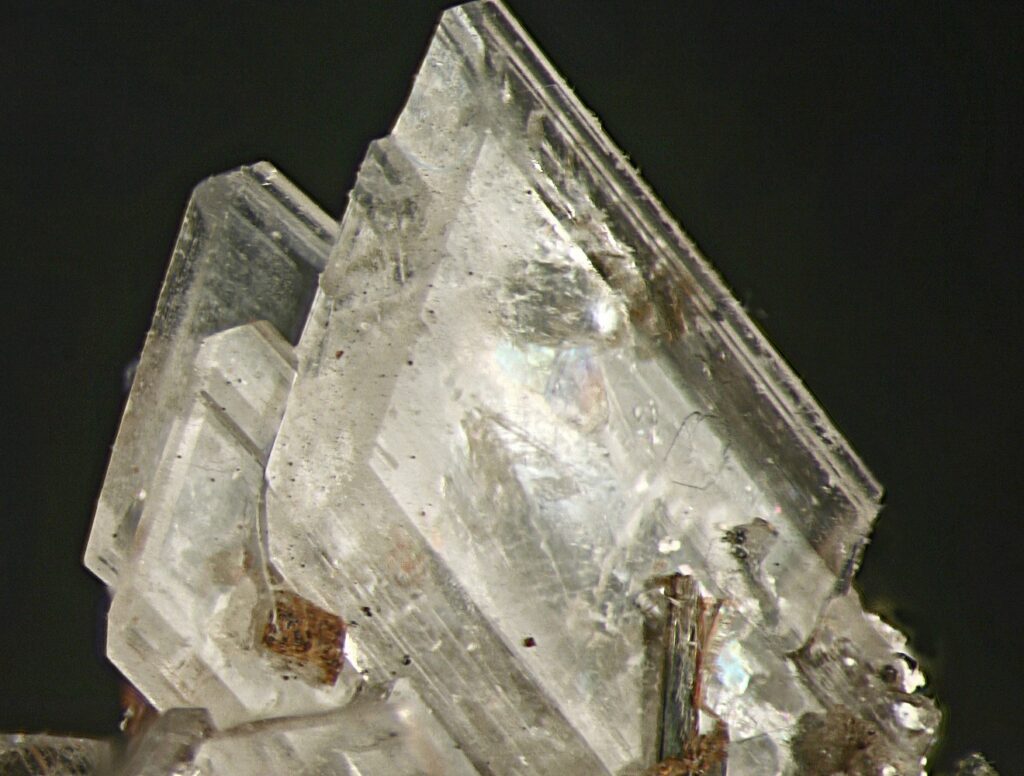
Albite was first formally described in 1815 by Swedish chemists Johan Gottlieb Gahn and Jöns Jacob Berzelius, who identified it as a distinct mineral species based on samples from Sweden. During the 19th and 20th centuries, albite became an essential reference point in geology, particularly in the classification of igneous rocks and the study of mineral crystallization sequences, such as Bowen’s Reaction Series.Beyond its scientific importance, albite also has aesthetic value. Certain varieties, such as peristerite, display a soft, iridescent sheen reminiscent of moonstone, making them occasionally desirable for use in jewelry. This combination of geological significance and visual appeal has helped maintain albite’s relevance in both scientific and collector communities.
Applications and Significance of Albite
Albite has a range of applications in both industry and geoscience. In industrial settings, it is primarily used in the ceramics and glass sectors, where it serves as a crucial source of sodium and alumina. Its function as a flux helps lower melting temperatures during production, significantly improving energy efficiency while enhancing the strength and durability of final materials such as porcelain, ceramic tiles, and various glass products. Beyond manufacturing, its chemical stability makes it an ideal additive for specialized fillers and abrasives.
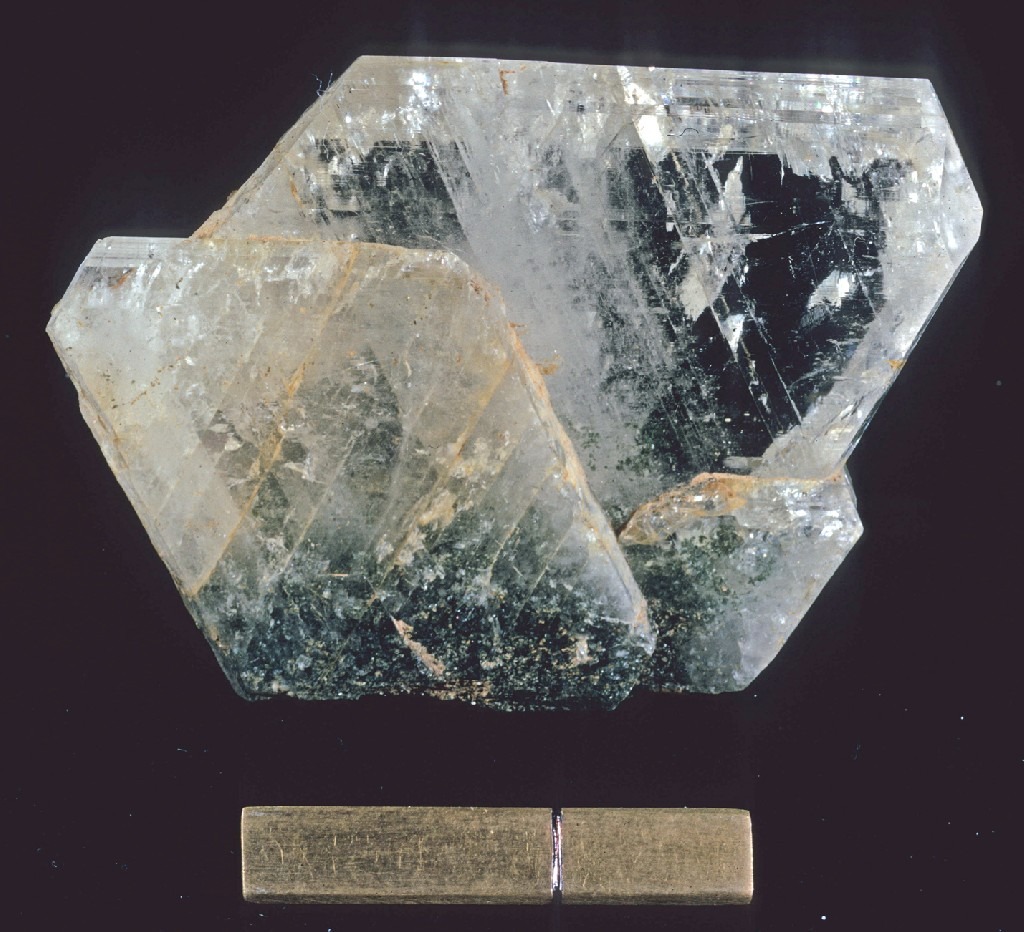
In geological studies, albite serves as an important indicator mineral. Because its formation is closely tied to specific temperature, pressure, and chemical conditions, geologists use it to interpret metamorphic grades and reconstruct the complex history of igneous and metamorphic rock formations. For instance, its presence can distinguish between different stages of cooling in a granite pluton or indicate the specific pressure levels during mountain-building events.While albite is not a mainstream gemstone, it is occasionally cut and polished for ornamental purposes. This is particularly true when specimens exhibit a pearly luster or subtle iridescence, such as the variety known as peristerite, which is often confused with moonstone. More commonly, however, albite is highly valued by mineral collectors for its well-formed, tabular crystals and its frequent occurrence alongside other rare minerals in pegmatitic environments, where it often forms the striking “cleavelandite” variety.
Albite in the Jewelry Industry
Albite is not a common choice for mainstream jewelry due to its physical properties, specifically its hardness and cleavage. On the Mohs scale, albite ranks between 6 and 6.5, making it softer than quartz and susceptible to scratches from everyday wear. Furthermore, it possesses perfect cleavage in two directions, which means the stone can easily split or fracture if subjected to a sharp impact. Because of these factors, albite is rarely seen in rings or bracelets that encounter frequent contact. It is more suitable for pendants, earrings, or brooches where the risk of physical stress is significantly lower.
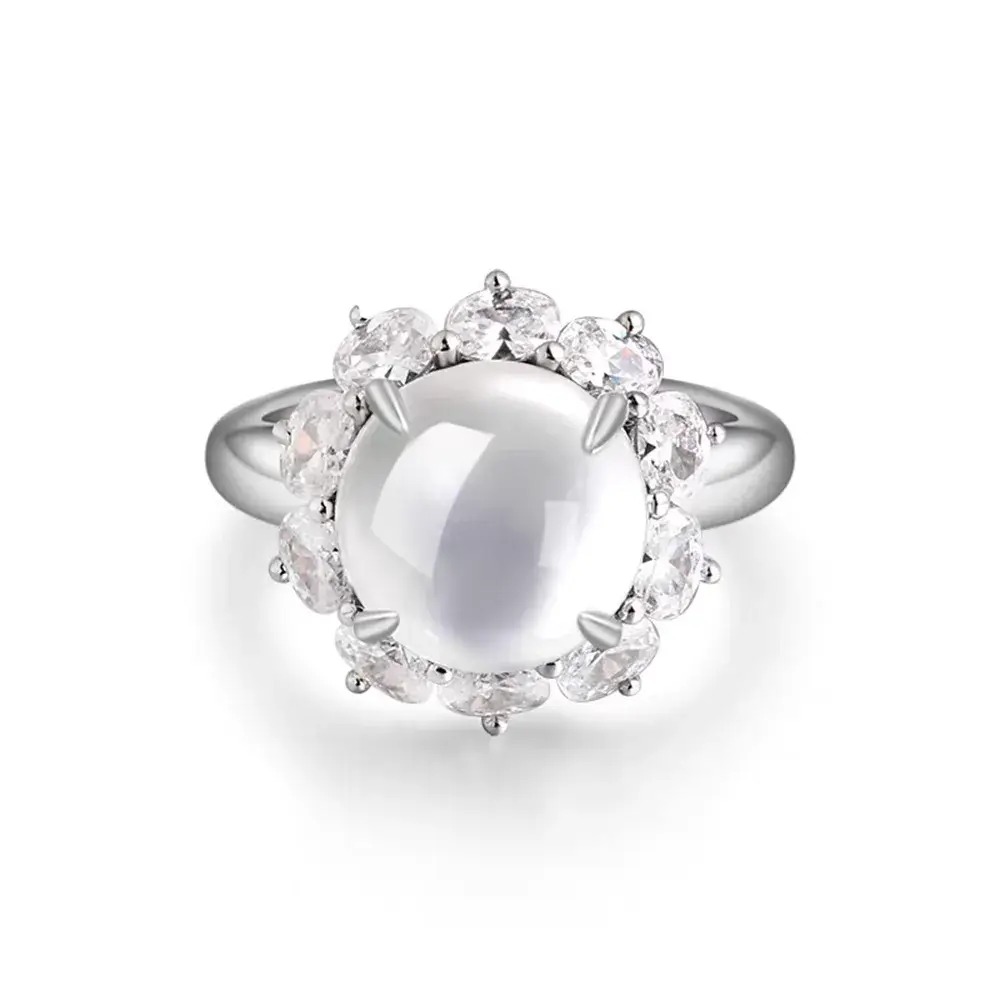
Despite these practical challenges, certain varieties of albite are highly sought after by niche jewelers and collectors. The most notable is peristerite, which exhibits a beautiful blue or white iridescence similar to moonstone. When cut into cabochons, these specimens display a shimmering play of light that makes for striking, unique pieces. Additionally, clear and well-formed albite crystals are occasionally faceted for collectors who appreciate the rarity of a transparent feldspar gemstone. While it remains a specialty item rather than a commercial staple, its subtle glow and natural crystal habits offer a distinct aesthetic for artisan jewelry.