
Adularia is a transparent to translucent variety of potassium feldspar, specifically categorized as a low-temperature form of orthoclase. While it possesses the same chemical composition as other common feldspars, expressed by the formula KAlSi₃O₈, it is distinguished by its unique crystal habit and formation environment. Characterized by its colorless to milky-white appearance and vitreous luster, adularia often forms in pseudo-orthorhombic shapes that set it apart from other minerals in the orthoclase group. In the world of gemstones, high-quality adularia is the primary mineral responsible for the moonstone effect. This phenomenon, known as adularescence, occurs when light scatters between the microscopic layers of the crystal, creating a billowy, ethereal blue or white glow that appears to float across the surface of the stone.
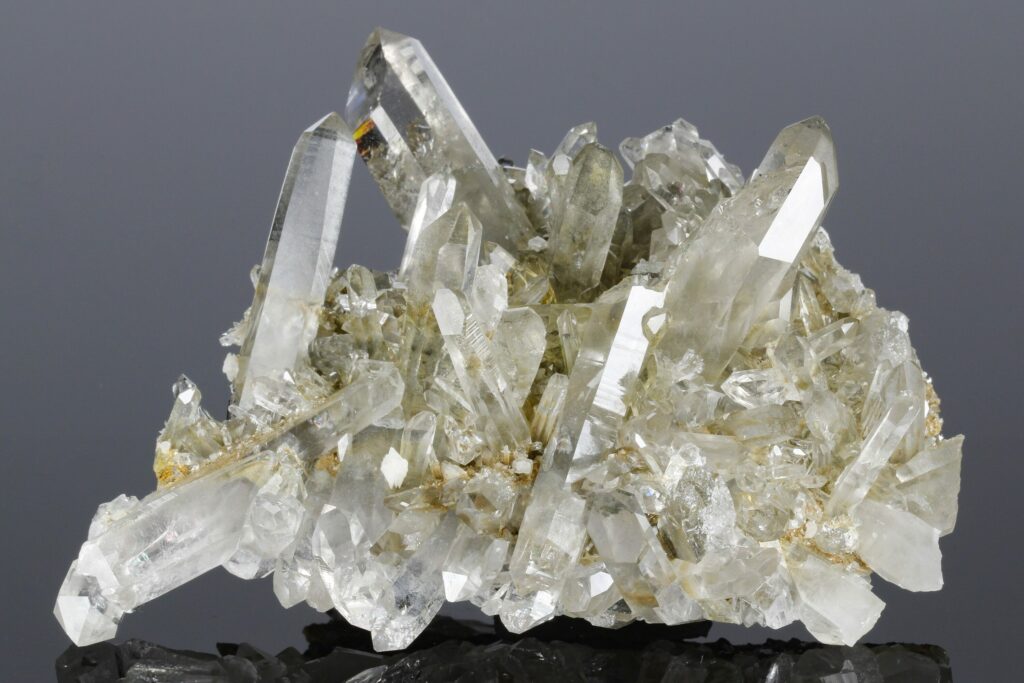
The formation of adularia occurs primarily in low-temperature hydrothermal environments, differentiating it from many other feldspars that crystallize from high-heat volcanic magma. It is most commonly found in alpine-type fissures and epithermal veins, where it precipitates from mineral-rich aqueous solutions at temperatures typically ranging between 200°C and 300°C. As these potassium-rich fluids cool within rock cavities, adularia crystals grow relatively quickly, often resulting in a more ordered atomic structure than its high-temperature cousin, sanidine. Because of this specific developmental path, adularia is frequently discovered alongside minerals such as quartz, chlorite, and hematite, serving as a key indicator for geologists studying the thermal history and fluid chemistry of specific mountain ranges and mineral deposits.
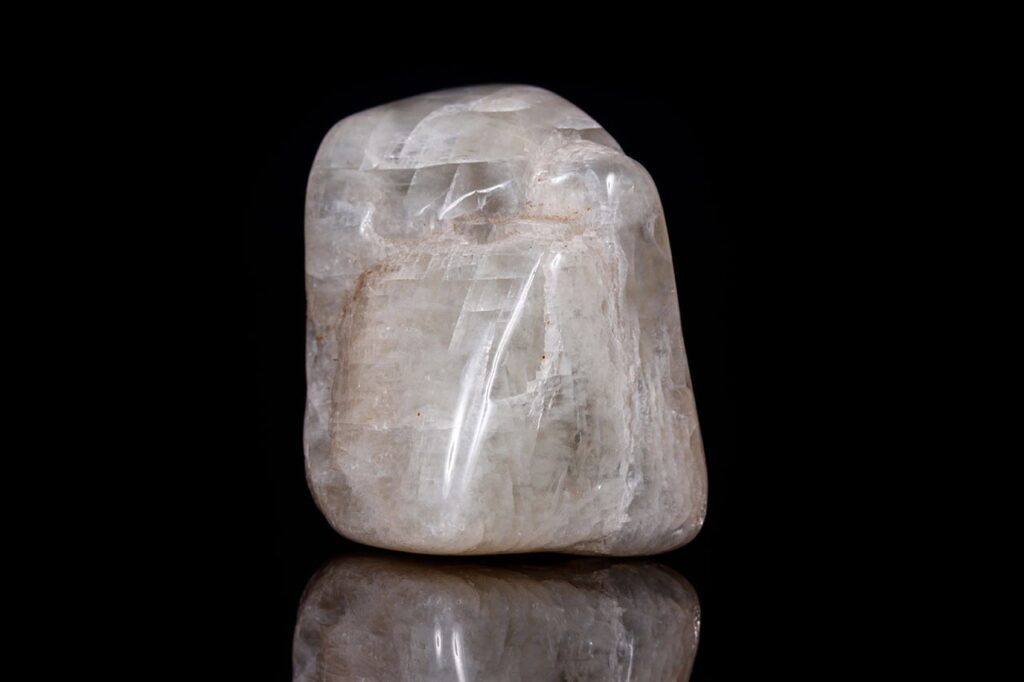
Historically, adularia has played a significant role in the evolution of mineralogical science. The mineral was officially named in 1783 by the Italian scientist Ermenegildo Pini, who derived the term from the Adula Group of the Central Alps in Switzerland. The St. Gotthard region in these mountains provided the first well-documented specimens, which were celebrated for their exceptional clarity. During the 18th and 19th centuries, adularia was at the center of scientific debates regarding the classification of silicates, as its water-clear transparency led early collectors to frequently misidentify it as quartz. Beyond its scientific value, adularia has been prized for millennia as a decorative stone. Ancient civilizations associated its shimmering optical effects with the phases of the moon, leading to its widespread use in jewelry and talismans across various cultures, where it was often believed to offer protection and spiritual clarity to the wearer.
Distinguishing Adularia from Other Feldspars
Adularia is distinguished from other members of the feldspar group primarily by its structural state and formation temperature. Unlike common orthoclase or sanidine, which typically crystallize from high-temperature igneous melts, adularia forms in low-temperature hydrothermal environments. This specific growth process results in a more “ordered” atomic arrangement and a unique crystal habit often characterized by simple, diamond-shaped or pseudo-orthorhombic prisms.
While it shares the chemical formula KAlSi₃O₈ with other potassium feldspars, its high level of transparency and lack of the iron-induced yellow or pink tints common in many orthoclase specimens make it visually distinct. Furthermore, adularia is the only feldspar variety to consistently exhibit true adularescence—the internal scattering of light that creates a floating blue or white sheen—whereas other feldspars like labradorite or amazonite display different optical phenomena, such as labradorescence or simple schiller, caused by different mineral inclusions and light-interference patterns.
Applications of Adularia
Adularia, a colorless to translucent variety of orthoclase feldspar, serves a diverse range of purposes spanning from high-end jewelry to critical geological research. Its most prominent application is in the world of gemstones, where it is known as the primary constituent of Moonstone. Due to its unique internal structure, it exhibits a captivating optical phenomenon called adularescence—a ghostly, shimmering blue or white light that glides across the stone’s surface. This aesthetic quality makes it a favorite for artisans crafting cabochon rings, pendants, and ornamental carvings, often associated with themes of intuition and balance in various cultures.
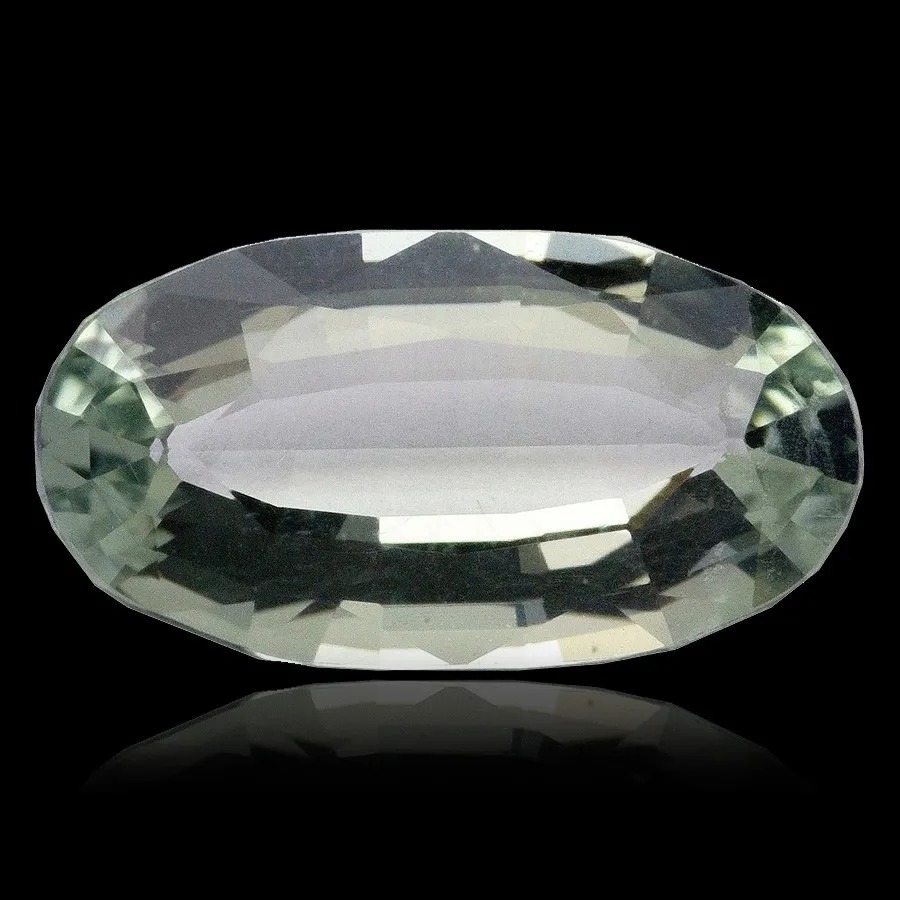
Adularia is a powerhouse in the field of geochronology. Because it contains significant amounts of potassium, it is an ideal candidate for Ar-Ar dating. Geologists use these crystals to pinpoint the exact timing of hydrothermal events, allowing them to reconstruct the thermal history of the Earth’s crust and determine when specific mountain ranges or mineral veins were formed. This scientific utility extends directly into the mining industry; adularia is considered a pathfinder mineral. Its presence in rock formations often indicates a history of boiling hydrothermal fluids, which is a classic signature for discovering high-grade epithermal gold and silver deposits.
In a more industrial context, adularia contributes to the manufacturing of ceramics and glass. While standard feldspar is more commonly used due to its abundance, adularia’s high potassium content makes it an excellent fluxing agent. When added to ceramic batches, it helps lower the melting temperature of the mixture, promoting the vitrification process that gives porcelain its strength and translucency. Whether it is being used to date the movement of tectonic plates or to catch the light in a piece of fine jewelry, adularia remains a mineral of immense value to both scientists and collectors alike.