
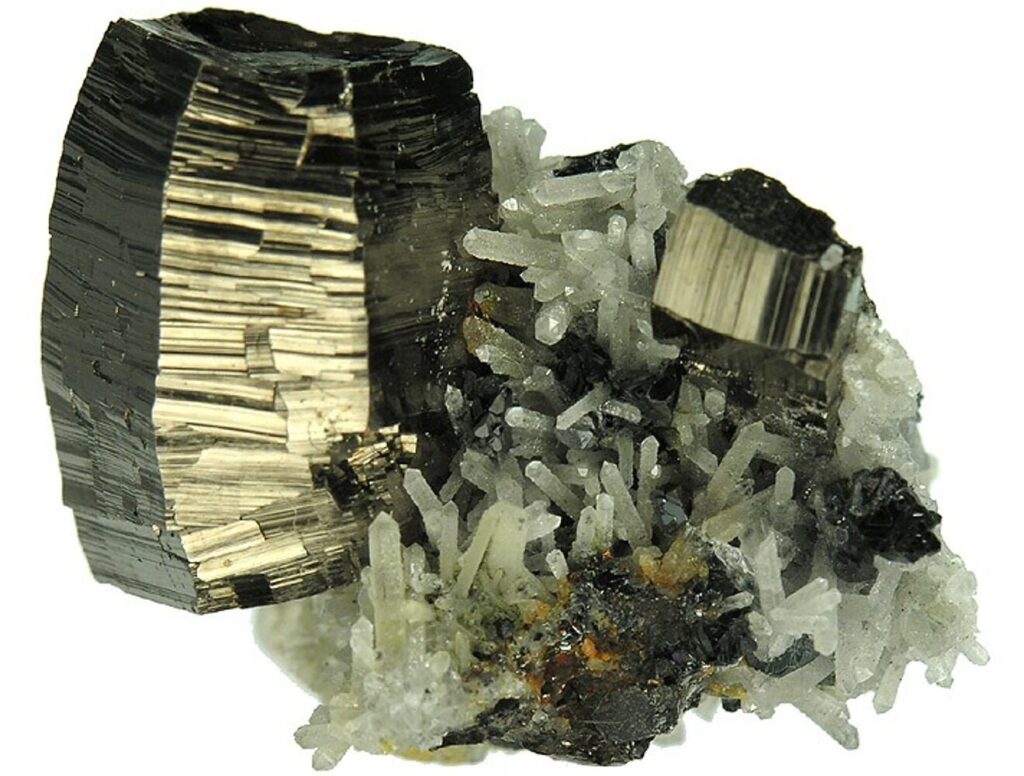
Pyrrhotite is an intriguing mineral belonging to the sulfide group, specifically categorized as an iron sulfide. It is widely recognized among geologists and mineralogists for its unique physical characteristics, most notably its metallic luster that ranges from bronze-yellow to a distinct reddish-brown. Unlike many other sulfide minerals that maintain a fixed and predictable ratio of elements, pyrrhotite is characterized by its deficient iron content within its crystal lattice. This internal structural variation is responsible for the mineral’s most famous trait: its magnetism. While some specimens exhibit strong magnetic attraction, others are only weakly magnetic, a variation that depends entirely on the specific arrangement of atoms and the concentration of vacancies within its structure.
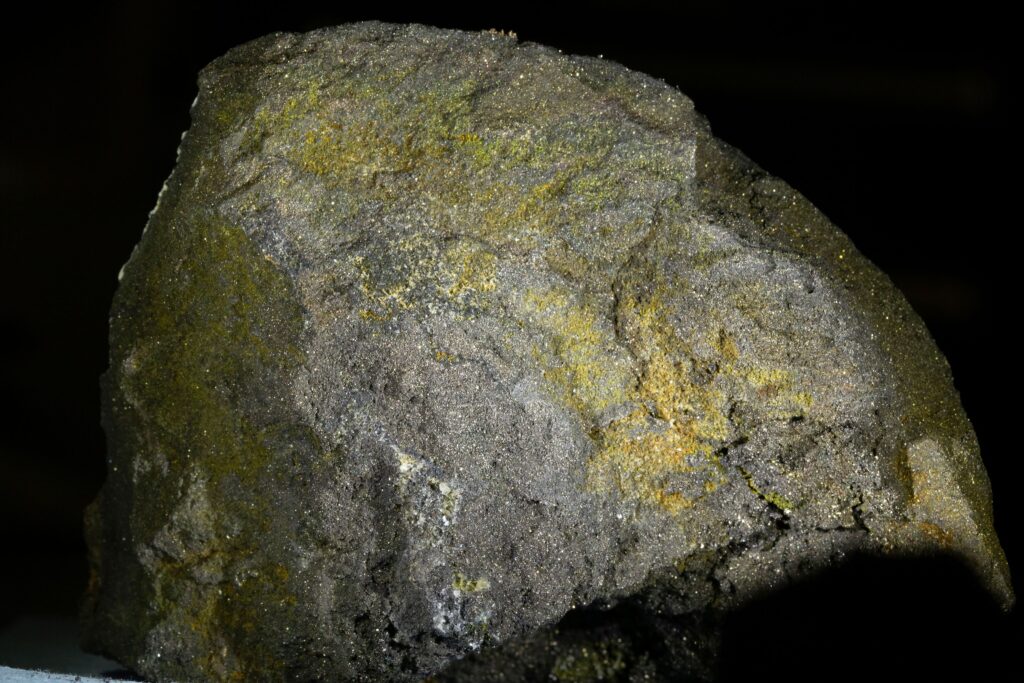
In terms of its geological formation, pyrrhotite typically originates in high-temperature environments where oxygen is scarce but sulfur is abundant. It is most frequently associated with magmatic processes, often crystallizing from cooling silicate melts to form large ore bodies alongside minerals like pentlandite and chalcopyrite. Beyond these igneous origins, it can also form through hydrothermal activity, where hot, mineral-rich fluids circulate through fractures in the Earth’s crust and deposit sulfides as they cool. It is also found in metamorphic environments, appearing when sedimentary rocks containing iron and sulfur are subjected to intense heat and pressure, causing them to recrystallize into more stable metallic forms.
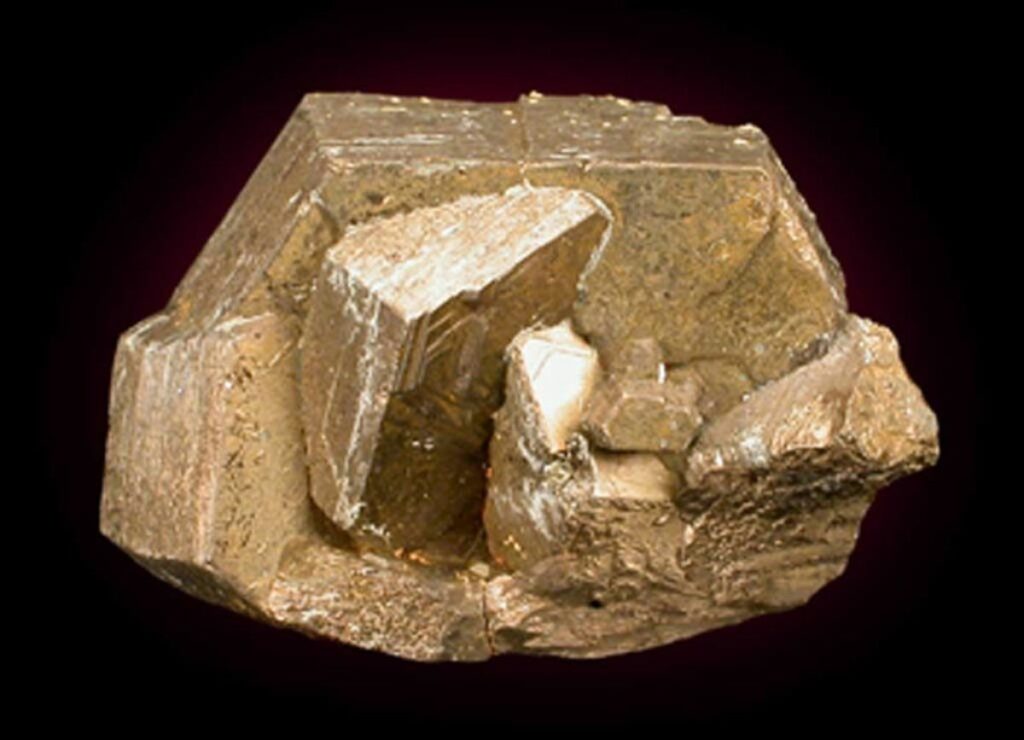
The history of pyrrhotite reflects the broader development of earth sciences and industrial mining. Although miners had likely encountered this reddish, magnetic ore for generations while searching for more valuable metals, it was not formally classified by the scientific community until the early nineteenth century. In 1835, the German mineralogist August Breithaupt provided the first detailed description of the mineral and assigned it the name pyrrhotite. The name is derived from the Greek word pyrrhotos, which translates to reddish or flame-colored, referencing the characteristic tint the mineral takes on, especially after it has been exposed to the air and begins to tarnish. For much of the nineteenth and twentieth centuries, it was primarily viewed as a secondary mineral found in nickel and copper mines. In more recent history, however, it has become a major focus of environmental and engineering studies due to the way it reacts when exposed to moisture and oxygen in various industrial and construction settings.
Industrial Significance and the Impact of Pyrrhotite on Concrete Infrastructure
The presence of pyrrhotite in geological formations and construction materials has significant implications for both industrial applications and civil engineering. Historically, pyrrhotite has been utilized as a source of sulfur and iron, and it is frequently processed alongside other sulfide ores to extract valuable base metals like nickel and copper. In industrial settings, it has also played a role in the production of sulfuric acid. However, in contemporary engineering, the focus has shifted toward its role as a problematic component in construction aggregates. Because of its reactive nature, the primary modern “application” of studying this mineral is in risk mitigation and the development of specialized testing protocols to ensure the longevity of large-scale infrastructure projects.
The most critical challenge involving pyrrhotite arises when it is inadvertently used in concrete foundations. When pyrrhotite-bearing stone is crushed and used as aggregate in building materials, it initiates a destructive process often referred to as concrete degradation. Once the foundation is exposed to moisture and oxygen, the mineral undergoes a chemical transformation that results in the formation of secondary sulfates. This process is particularly damaging because these new minerals occupy a much larger volume than the original pyrrhotite. As they expand within the hardened concrete, they exert immense internal pressure, leading to structural swelling and catastrophic cracking.
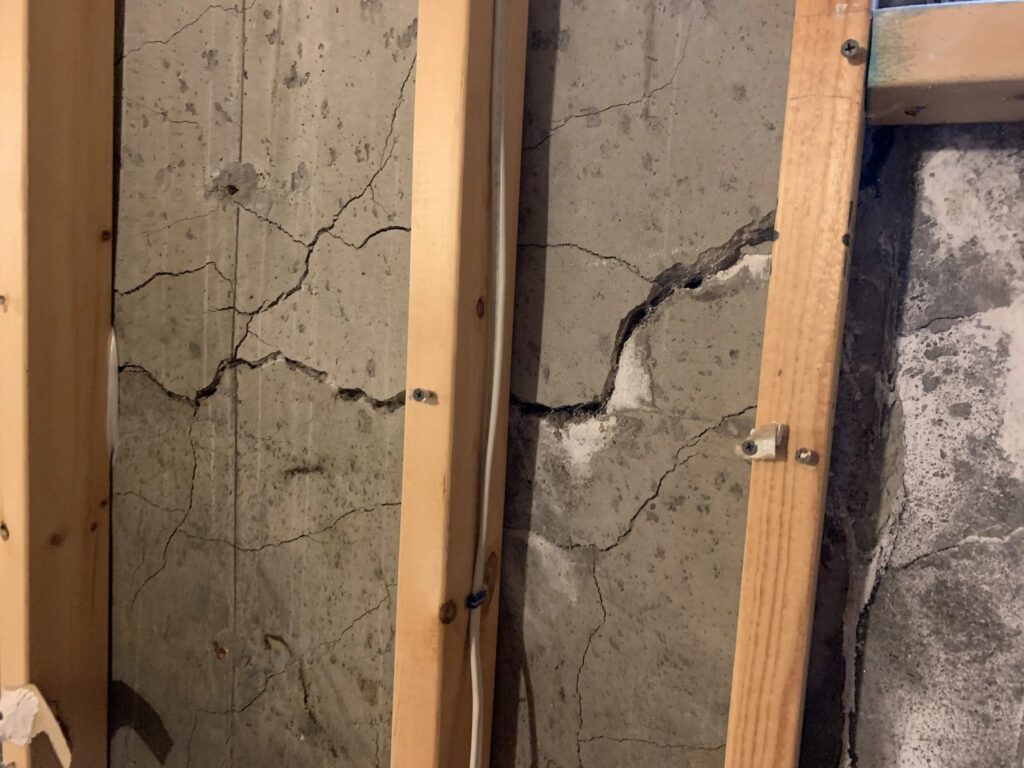
Recognizing the signs of pyrrhotite in a foundation is essential for early intervention and structural assessment. Homeowners and engineers typically look for a distinct map-cracking pattern, which appears as a web of interconnected fissures on the surface of the concrete. Over time, these cracks may widen, and a white, powdery substance known as efflorescence may appear as minerals leach out of the structure. In advanced stages, the foundation may exhibit significant bulging or shifting, which compromises the integrity of the entire building. Due to these risks, geotechnical experts and engineering geologists are now frequently employed to screen quarry sources, ensuring that this iron sulfide mineral does not compromise the safety of residential and commercial structures.
How Pyrrhotite Causes Foundation Cracking
The destruction isn’t caused by a single event, but rather a slow, relentless chemical reaction that occurs within the concrete itself.
- The Presence of Mineral Contaminants: Pyrrhotite enters the concrete mix accidentally when stone aggregate is sourced from quarries containing sulfide minerals.
- The Oxidation Catalyst: When concrete containing pyrrhotite is exposed to moisture and oxygen—even the small amounts found in soil or humid air—a chemical reaction begins.
- The Formation of Secondary Minerals: As pyrrhotite oxidizes, it breaks down and reacts with the calcium hydroxide in the cement paste. This leads to the formation of secondary minerals, primarily secondary ettringite and thaumasite.
- Internal Expansion: These new minerals take up significantly more physical space than the original pyrrhotite. As they grow, they create massive internal pressure within the concrete.
- The Spiderweb Effect: Because concrete is strong under compression but weak under tension, it cannot withstand this internal swelling. It begins to crack from the inside out, typically manifesting as map cracking (a spiderweb pattern) or horizontal gaps that widen over several decades.
Prevention and Mitigation Strategies

Once pyrrhotite is present in the foundation and begins to react, there is currently no known chemical treatment to stop it. Prevention and management are the only viable paths forward. The most effective form of prevention happens at the quarry level through rigorous geological testing and sourcing. Quarries must be tested for sulfide content before their stone is used for residential concrete, and many regions have now implemented strict threshold limits on the percentage of pyrrhotite allowed in aggregate to ensure long-term stability.For existing structures, moisture control is a critical strategy to slow down the rate of deterioration. Since the chemical reaction requires water to proceed, keeping a foundation dry is essential. This can be achieved by maintaining proper drainage systems, such as ensuring gutters, downspouts, and landscape grading direct water away from the foundation. Additionally, using dehumidification to maintain low humidity levels in basements can reduce the oxygen and moisture exchange within the concrete pores, potentially delaying the onset of severe cracking.However, if a foundation is found to have significant pyrrhotite damage, the only permanent solution is a total foundation replacement. This is a complex engineering feat that involves propping the entire house up on hydraulic jacks to keep it stable. Workers then chip away the existing contaminated foundation and pour a new one using certified, pyrrhotite-free aggregate. While this process is incredibly invasive and expensive, it is the only way to restore the structural integrity of a home affected by this mineral.