
Jadeite is a sodium aluminum silicate mineral that constitutes one of the two distinct mineral species referred to as jade, the other being the magnesium-rich silicate, nephrite. Belonging to the clinopyroxene group, jadeite is a high-pressure, low-temperature metamorphic mineral typically found in subduction zone environments where oceanic plates meet continental margins. While chemically pure jadeite is colorless or white, the presence of trace transition metals within its crystal lattice creates a diverse chromatic spectrum. Chromium substitutions for aluminum yield the vivid, highly prized emerald-green hues, while iron contributes to darker greens, yellows, and browns. Manganese is often identified as the chromophore responsible for the rarer lavender and violet varieties.
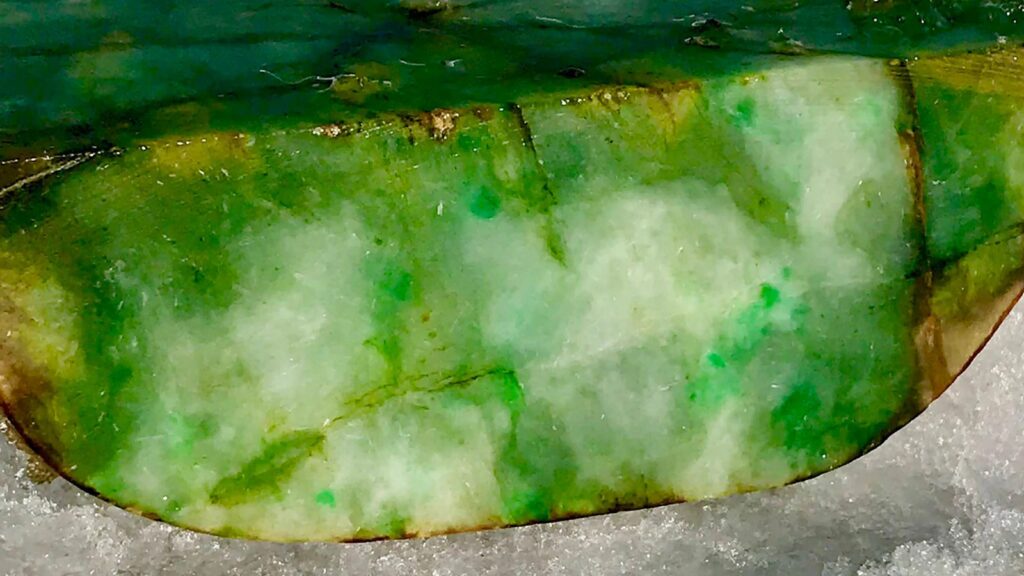
Structurally, jadeite is characterized by a monoclinic crystal system, though it is rarely found as distinct, euhedral crystals. Instead, it occurs as dense, polycrystalline aggregates composed of interlocking fibrous or granular microcrystals. This specific “felted” or “interwoven” microstructure—often referred to as a granoblastic texture—is the source of jadeite’s extraordinary mechanical properties. Despite a Mohs hardness of approximately 6 to 6.5, its internal cohesion provides a level of fracture toughness that surpasses even much harder gemstones like diamond. This durability allows the material to withstand high-impact stress and enables the execution of incredibly intricate, thin-walled carvings without structural failure.
How Jadeite Is Formed
The creation of jadeite is a rare geological event that requires a “pressure cooker” environment—but without the high heat. Most gemstones, like diamonds, form under intense heat and pressure deep in the Earth. Jadeite is different: it needs high pressure but low temperature (roughly 200°C to 400°C). These specific conditions only happen in subduction zones, where one tectonic plate slides deep underneath another. About 20 to 60 kilometers down, the weight of the Earth squeezes the minerals into jadeite, while the cool ocean water being carried down by the sinking plate keeps the temperature from getting too hot.Deep in these subduction zones, hot, mineral-rich fluids act as the “secret ingredient.” As the sinking plate gets squeezed, it releases water packed with sodium, aluminum, and silica. This fluid flows into cracks in the surrounding rocks (usually a green rock called serpentinite) and begins to crystallize into solid jadeite. In some cases, the fluid doesn’t just fill cracks; it actually chemically transforms existing rocks into jadeite through a process called metasomatism. This is why jadeite is almost always found tucked inside “pockets” of serpentinite.
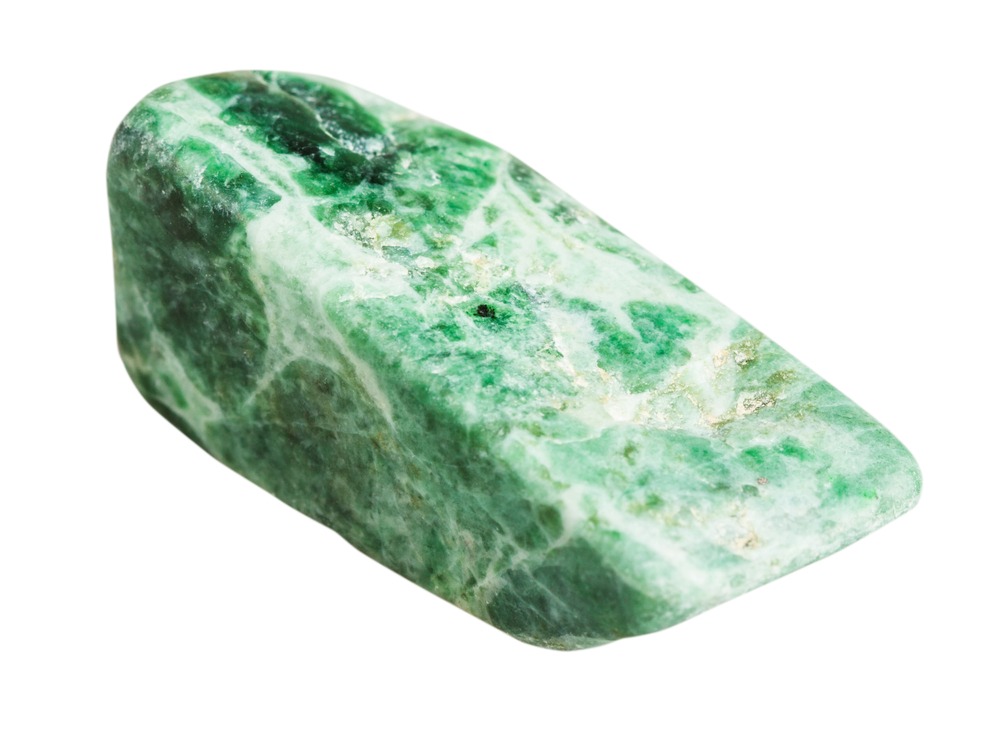
The final challenge for jadeite is getting to the surface without falling apart. Because jadeite is only stable under massive pressure, if it stayed deep underground as the Earth warmed up, it would turn into a different, common mineral like albite. To survive as a gemstone, it has to be pushed toward the surface very quickly by tectonic shifts or volcanic-like “uplifts.” It is usually carried up inside a “mélange”—a chaotic mix of rocks that acts like a protective suitcase—until it is eventually exposed by erosion or found in riverbeds as water-worn boulders.
Historical Significance and Ancient Use
The history of jadeite is a narrative of two disparate worlds—the ancient Americas and Imperial China—where the stone was independently elevated from a utilitarian tool to a sacred symbol of status and immortality. Long before it was scientifically classified in the 19th century, jadeite was revered by the Olmec, Maya, and Aztec civilizations of Mesoamerica. To these cultures, the rare blue-green jadeite found in the Motagua River Valley of present-day Guatemala was more than a gemstone; it represented “life-giving water” and the breath of the soul. It was meticulously fashioned into ritual masks, earflares, and ceremonial celts, often buried with nobility to ensure safe passage into the afterlife.
In Asia, the narrative of “Jade” originally centered on nephrite, the native white and green stone used in China for over five millennia. However, the historical trajectory of jadeite changed dramatically during the Qing Dynasty (1644–1912). In the late 18th century, vibrant, emerald-green jadeite began to enter China in significant quantities from the mountains of Upper Burma (now Myanmar). This “new jade” was so striking that it captured the attention of the Qianlong Emperor and later the Empress Dowager Cixi. Its intense color and superior translucency led to it being dubbed “Imperial Jade,” eventually supplanting nephrite as the most coveted material for the royal court’s jewelry and art.
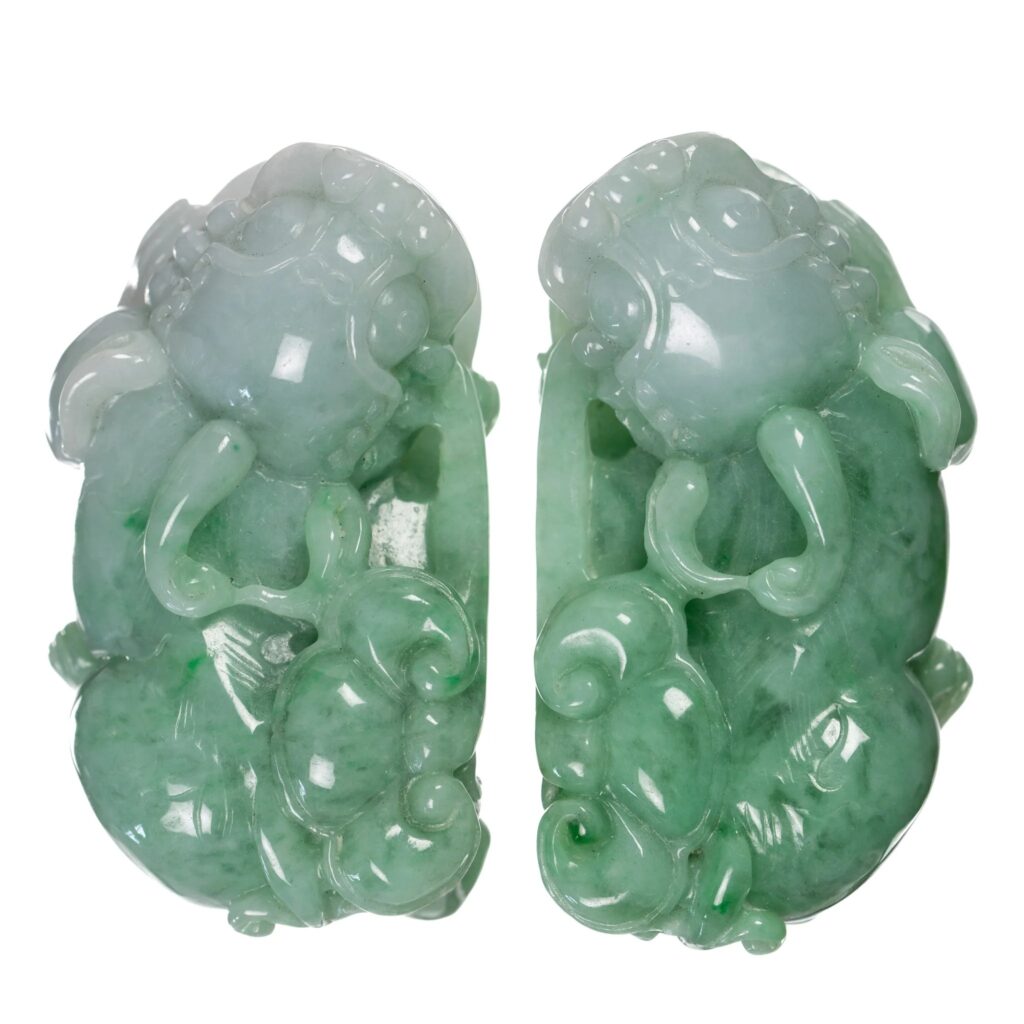
The transition into the modern era was marked by a scientific awakening. In 1863, French mineralogist Alexis Damour analyzed the chemical composition of “jade” and discovered that what had been treated as a single material was actually two distinct minerals: jadeite and nephrite. This distinction provided the academic foundation for modern gemology. Today, while the Mesoamerican sources remain historically vital, the Burmese deposits continue to dominate the global market, maintaining jadeite’s status as one of the most expensive and culturally significant gemstones in human history.
The Different Types of Jadeite
Imperial Jade
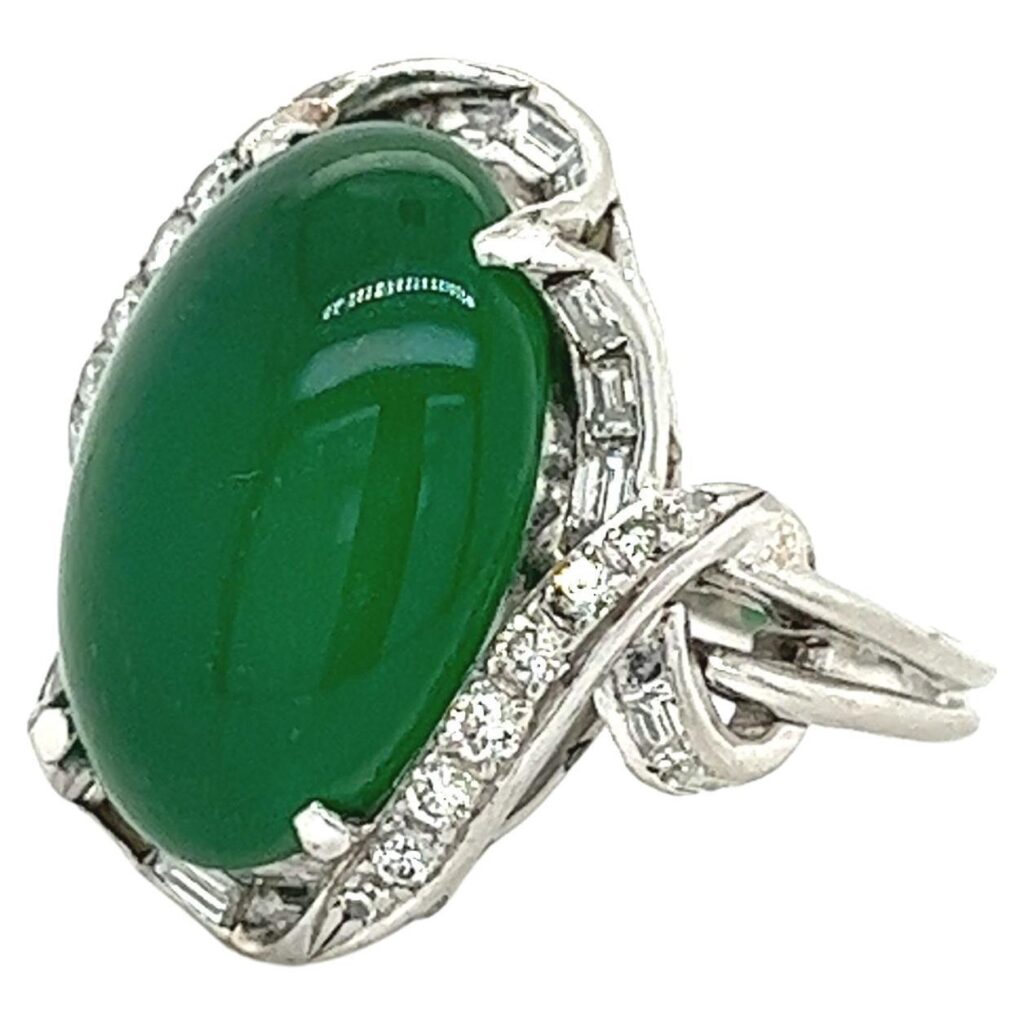
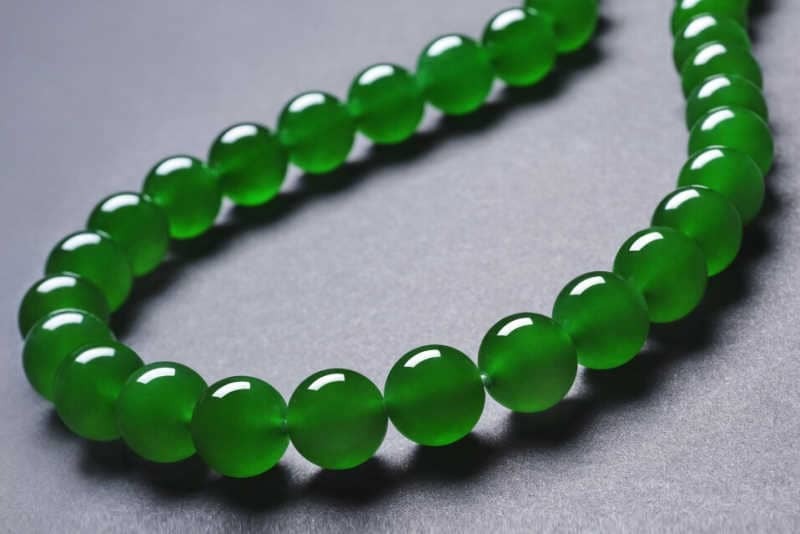
Imperial Jade is the most prestigious and expensive variety of jadeite in the world. It is characterized by a vivid, “emerald” green that is perfectly saturated—neither too dark nor too yellowish. Its hallmark is its exceptional translucence; the stone appears almost gelatinous or glass-like, allowing light to penetrate deeply and glow from within. Traditionally, this material was reserved exclusively for Chinese royalty.
Common Cuts: High-domed cabochons, uniform bead necklaces, and thin “hulu” (gourd) pendants.
Kingfisher Jade
Named after the iridescent feathers of the Kingfisher bird, this variety is a slightly deeper, more intense green than Imperial Jade. While it lacks the sheer “glassy” transparency of the Imperial grade, it is prized for its rich, velvety hue. In certain lighting, it can appear almost emerald-like but with a more “solid” and substantial body color.
Apple Green Jade
Apple Green jadeite is easily recognized by its bright, yellowish-green tint. It resembles the skin of a Granny Smith apple—vivid, fresh, and energetic. This variety usually possesses excellent transparency and is a favorite for contemporary jewelry designs because its color “pops” brilliantly against both white and yellow gold.
Moss-in-Snow Jade
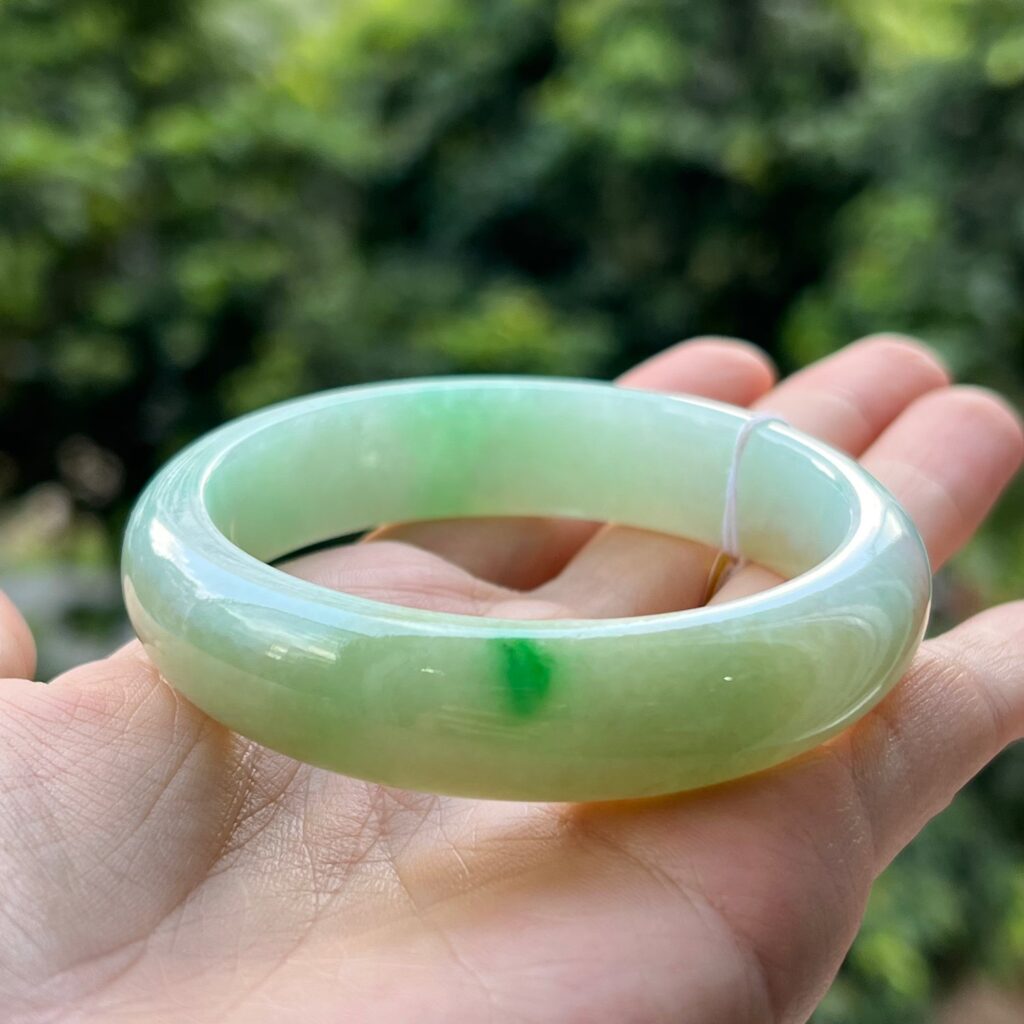
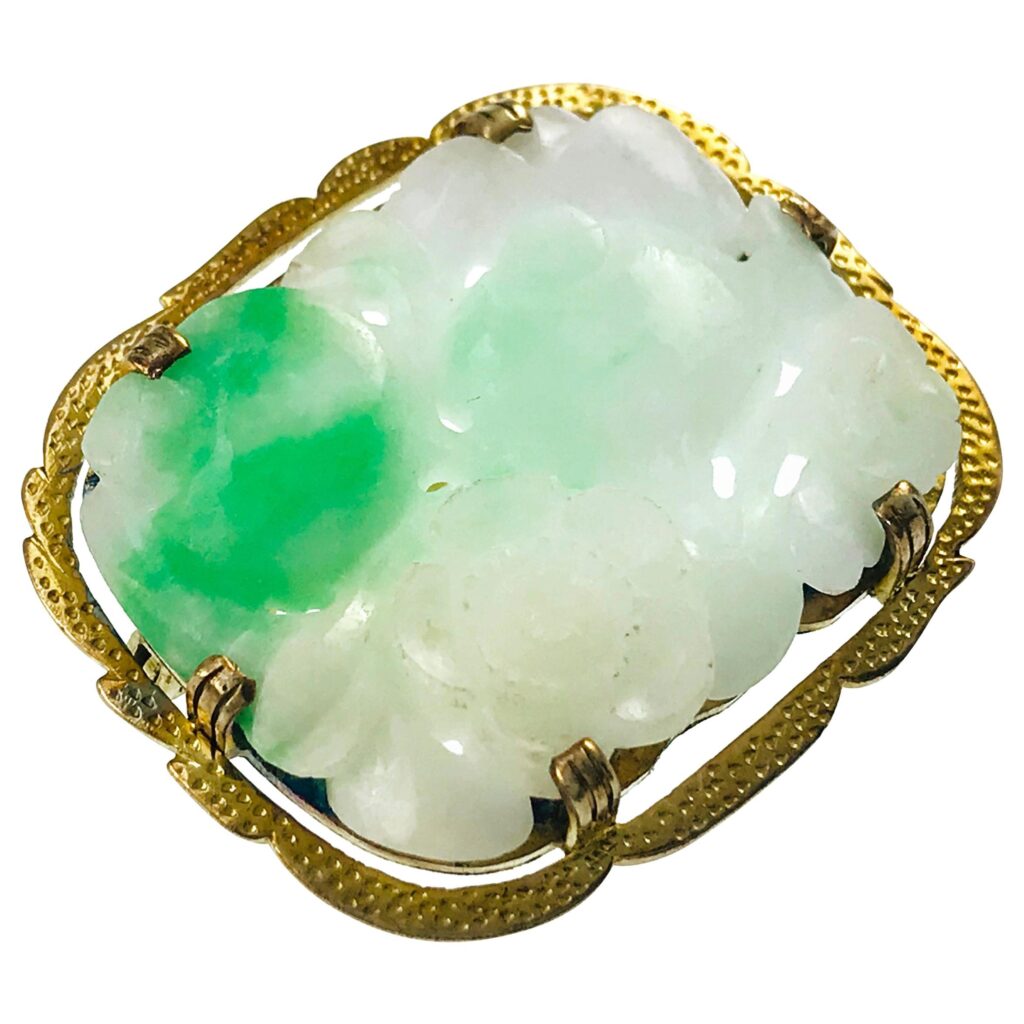
This is one of the most celebrated two-tone varieties in jadeite mineralogy. It features a stark white “snow” background speckled with vibrant green “mossy” patches or veins. The beauty of this stone lies in the contrast; collectors look for a clean, bright white base that makes the green inclusions stand out like a landscape painting.
Lavender Jade
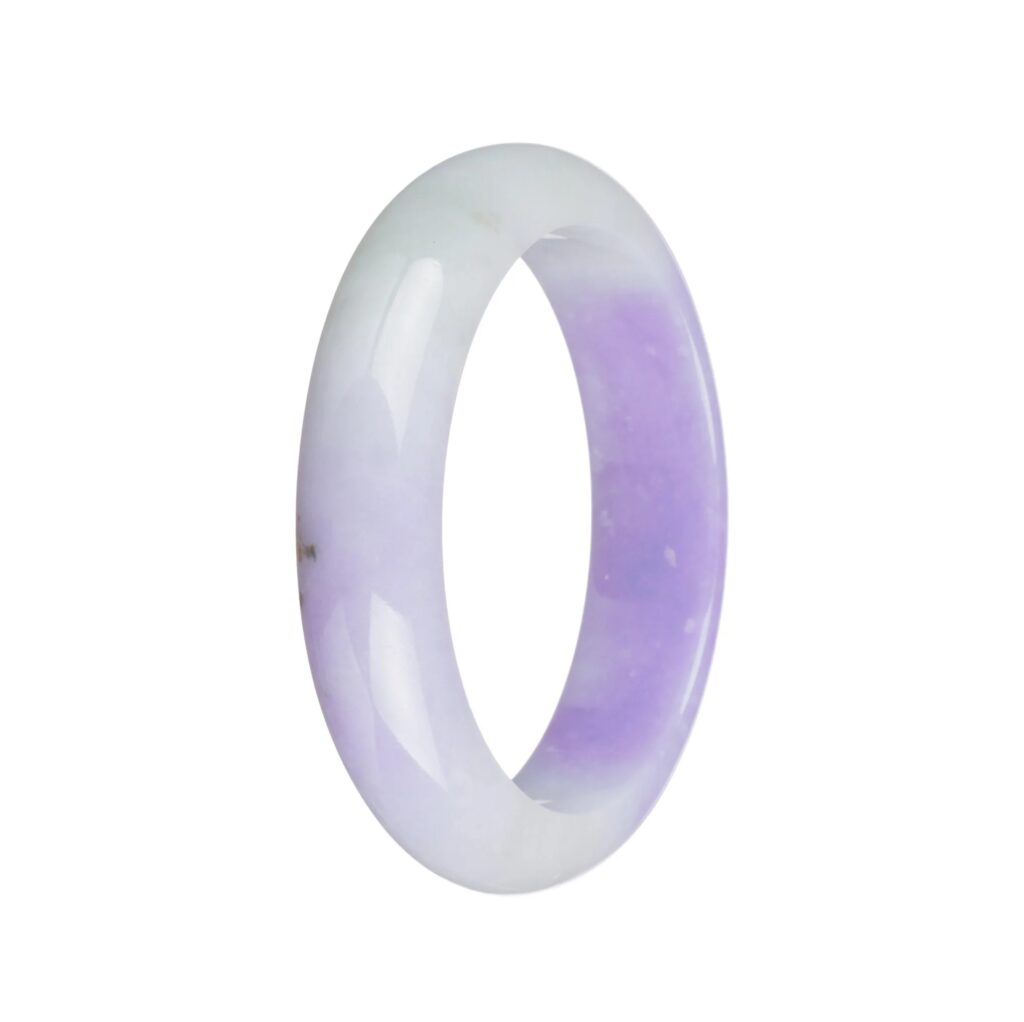
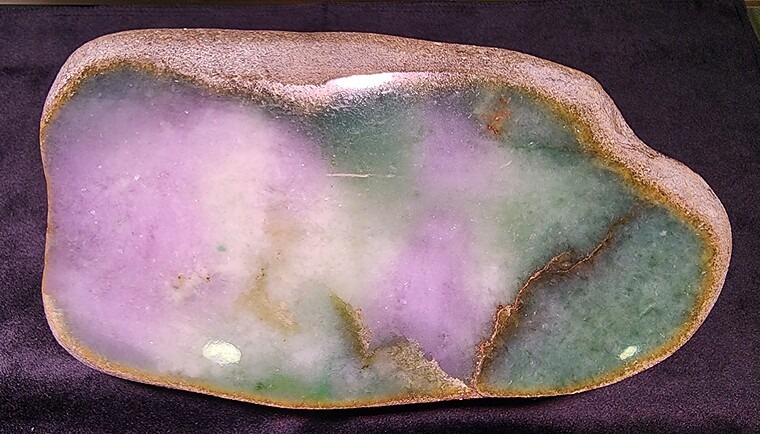
Lavender jadeite has seen a massive surge in popularity among modern collectors. It ranges from a pale, delicate lilac to a deep, rich violet. The color is caused by the presence of manganese.
Olmec Blue Jade
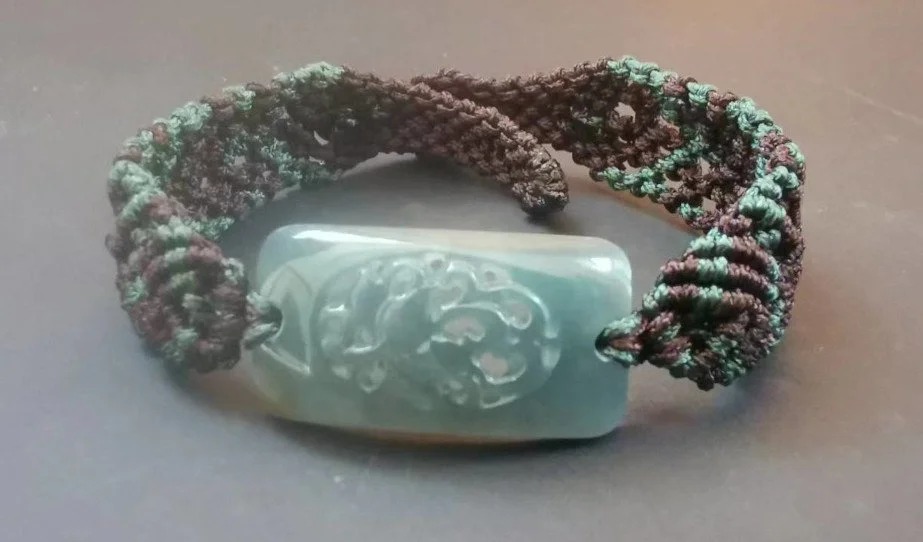
Historically significant and visually striking, Olmec Blue is a translucent, greenish-blue jadeite. It was the most prized stone of the ancient Olmec civilization in Mesoamerica, who associated the color with water and sky. Geologically, it is unique for its high density and the specific “watery” quality of its crystals.
Turkish Purple Jade
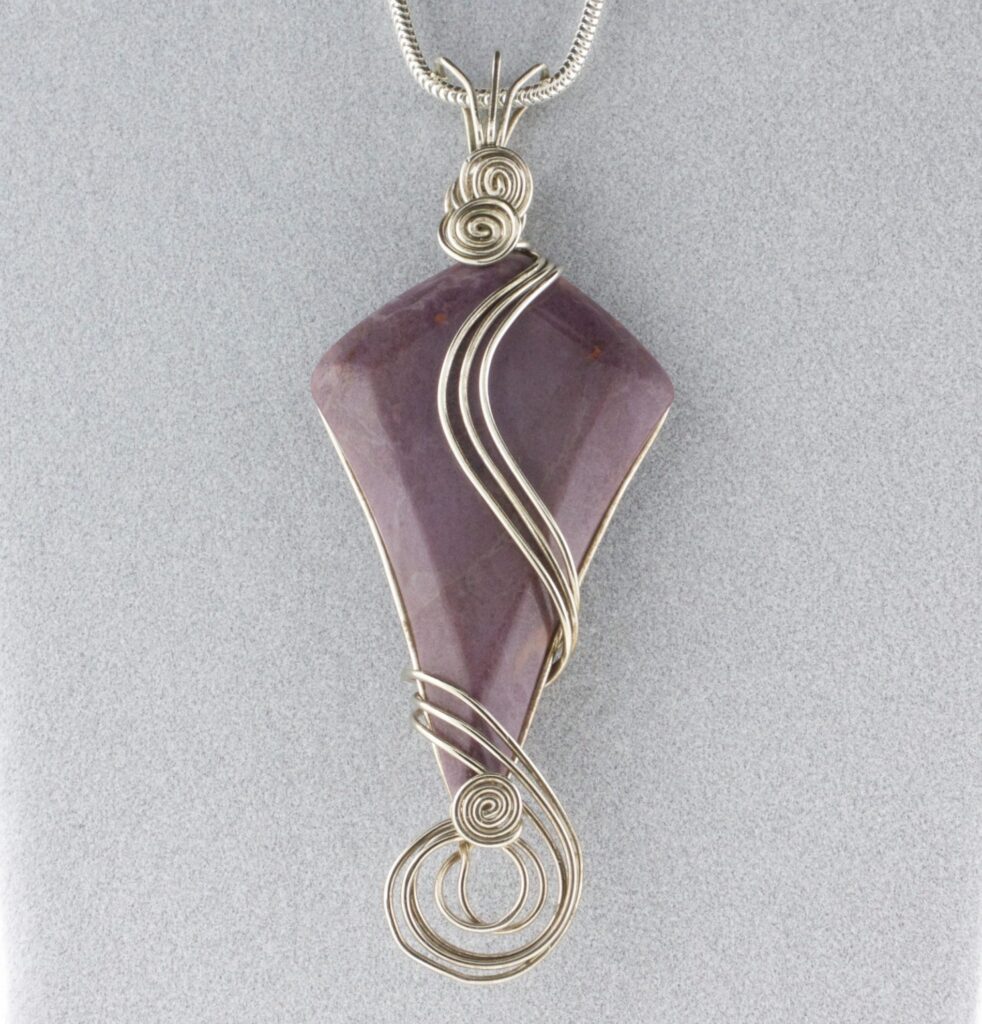
Unlike most jadeite which comes from Myanmar, this rare variety is found in the Harmancık region of Turkey. It is actually a jadeitite (a rock primarily composed of jadeite) that features a unique, earthy purple to grayish-magenta hue. It often contains inclusions of other minerals like quartz or feldspar, giving it a more “stone-like” and matte texture compared to the glassy Burmese varieties.
How the Value of Jadeite Is Judged
Color: The Most Important Factor
Color is the first thing anyone notices. Experts evaluate it based on how pure, intense, and even it is. The “gold standard” is a vibrant, emerald-green called Imperial Jade. It shouldn’t look yellowish, brownish, or gray. Beyond green, colors like lavender are also highly prized, especially when the purple is rich and deep rather than pale.
Transparency and Texture: The “Water” and “Grain”
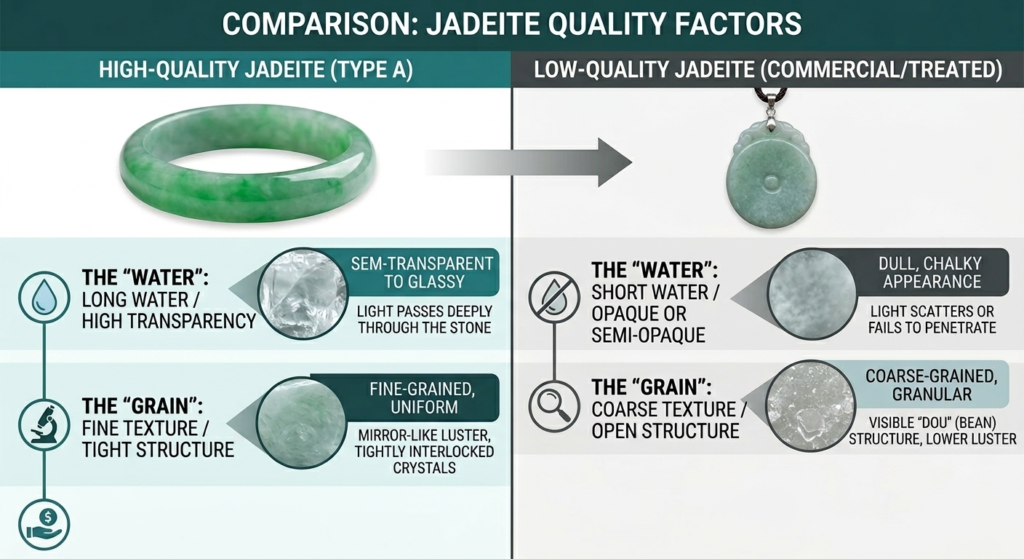
Transparency—often called “water” in the trade—refers to how much light can pass through the stone. The best jadeite is semi-transparent, appearing to glow from within. If you can see a blurry outline of text through a thin piece of jade, it has excellent “water.” This is closely tied to texture. Fine-textured jadeite has microscopic crystals that are so tightly interlocked that the surface looks as smooth as glass. Coarse jadeite looks “dry” and grainy, which lowers its value.
The ABCs of Jadeite: Real vs. Treated
Because high-quality jadeite is so rare, many stones on the market have been “enhanced” in a lab. It is crucial to know the difference between these types:
Type A (Natural): This is 100% natural stone. It may have a light coating of wax on the surface to fill tiny pores, but the internal structure and color are exactly as they came out of the ground. This is the only type that holds significant investment value.
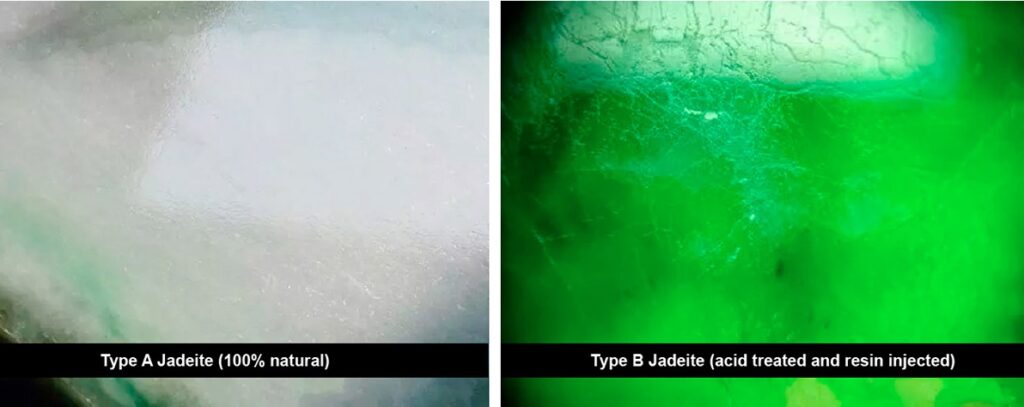
Type B (Bleached & Filled): This stone has been soaked in acid to “bleach” out ugly brown or yellow stains. Because the acid leaves the stone porous and brittle, it is then injected with a clear polymer resin. Over time, this resin can turn yellow or crack.
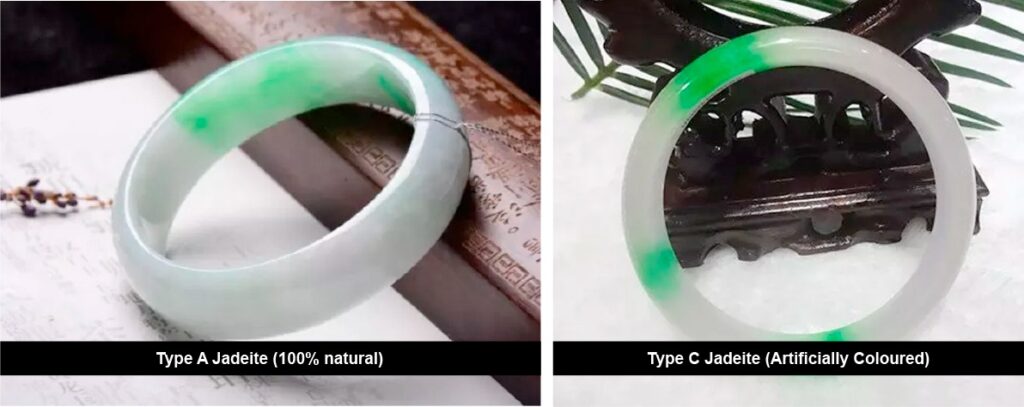
Type C (Dyed): This is jadeite that has been artificially colored. Usually, pale or colorless jade is dyed green or purple. You can often see the dye concentrated in the tiny veins of the stone under a magnifying glass.
What makes jadeite different from nephrite?(Nephrite)
Jadeite and nephrite are two distinct minerals that have been grouped under the umbrella of “Jade” for centuries, yet they differ significantly in their chemical and structural properties. Jadeite is a sodium aluminum silicate (NaAlSi2O6) and a member of the pyroxene group, while nephrite is a calcium magnesium iron silicate (Ca2(Mg, Fe)5Si8O22(OH)2) belonging to the amphibole group. These chemical differences result in jadeite being slightly harder, ranking 6.5 to 7.0 on the Mohs scale, compared to nephrite’s 6.0 to 6.5.
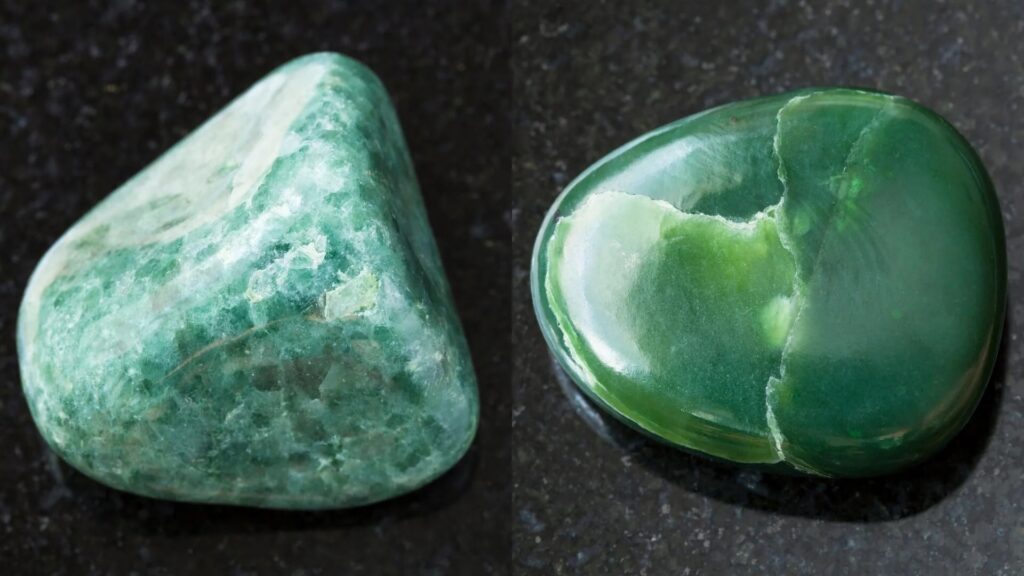
The most fascinating distinction lies in their internal architecture. Nephrite is composed of interlocking, fibrous, felt-like crystals, a structure that makes it the toughest natural mineral in the world—surpassing even diamond in its resistance to shattering. In contrast, jadeite consists of granular, interlocking grains. This allows jadeite to reach a much higher, vitreous (glassy) polish and achieve levels of transparency and vibrant color saturation, such as imperial green and lavender, that are rarely seen in nephrite.
Visually and tactilely, the two stones possess different “personalities.” Jadeite is prized for its bright, reflective surface and “watery” translucence, whereas nephrite is known for its greasy or waxy luster and a more “oily” feel to the touch. While nephrite is celebrated for its earthy tones and historical significance in Chinese culture—specifically the creamy “Mutton Fat” variety—jadeite is generally rarer and commands significantly higher prices in the international gemstone market, especially for specimens with high transparency and vivid hues.