
Mimetite is a lead arsenate chloride mineral with the chemical formula Pb5(AsO4)3Cl. It belongs to the apatite group and is part of a solid solution series with pyromorphite and vanadinite. In this series, the arsenate (AsO4) units are replaced by phosphate or vanadate units respectively. Mimetite typically crystallizes in the hexagonal system, often appearing as prismatic or barrel-shaped crystals, though it is also frequently found in globular or botryoidal masses. Its color range is broad, commonly manifesting in shades of yellow, orange, and brown, with a resinous to adamantine luster. Due to its high lead content, it possesses a high specific gravity, making it a heavy and dense mineral specimen.
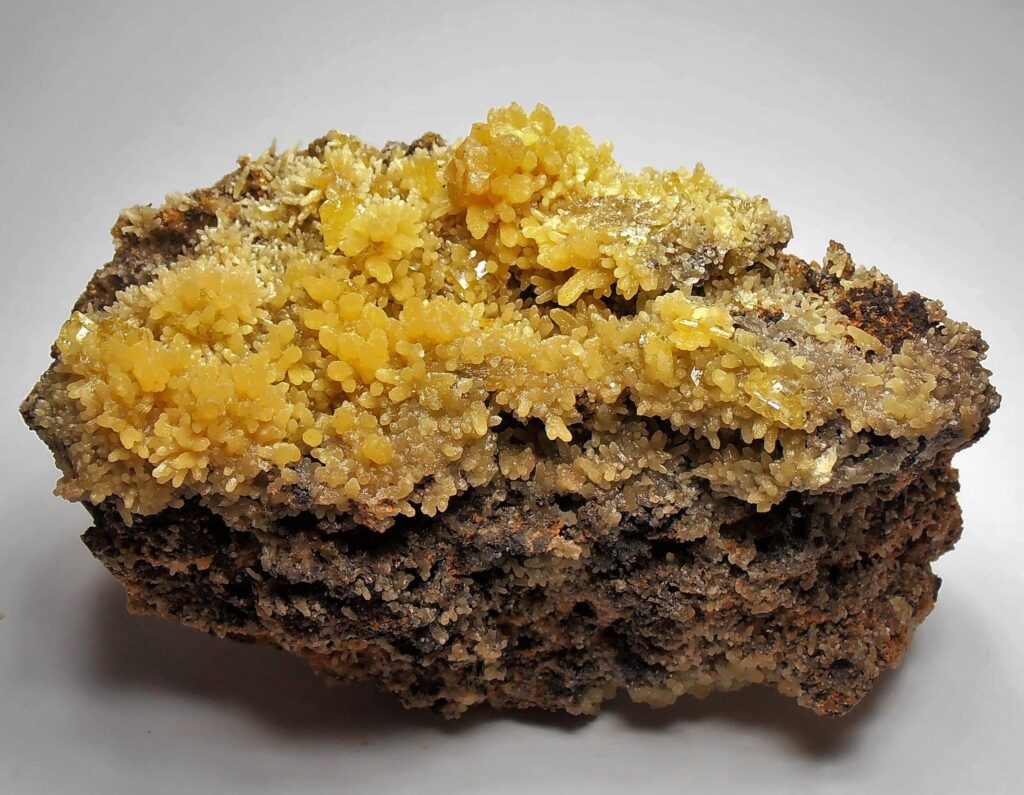
The formation of mimetite occurs primarily as a secondary mineral within the oxidation zones of lead-bearing ore deposits. It is not a primary ore mineral but rather a product of the chemical weathering of primary lead minerals, such as galena. When these primary minerals are exposed to oxygenated meteoric waters containing dissolved arsenic—often derived from the oxidation of arsenopyrite or other arsenic-rich sulfides—a chemical reaction takes place. In the presence of chlorine ions, mimetite precipitates from these supergene solutions. This process typically requires specific geochemical conditions found in the upper, weathered portions of mineral veins, where it is frequently found in association with other secondary minerals like cerussite, smithsonite, and limonite.
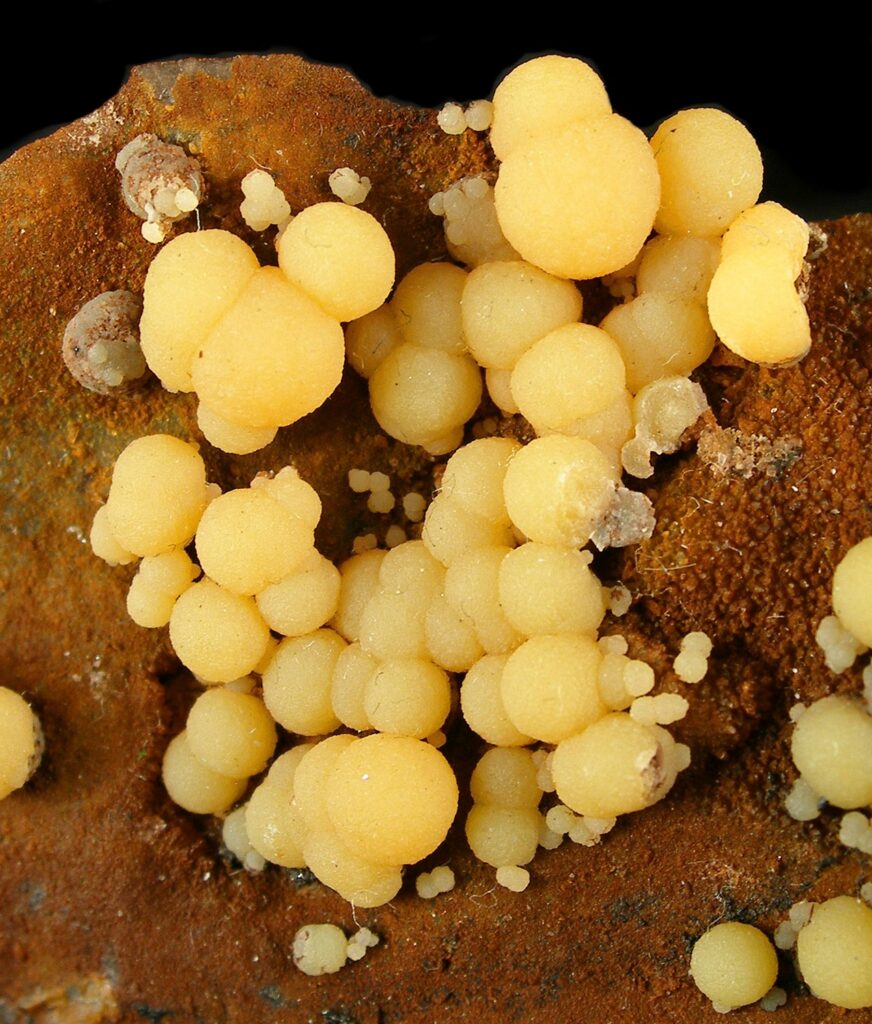
The history and nomenclature of mimetite are rooted in its physical similarity to other minerals. It was officially named in 1832 by the French mineralogist François Sulpice Beudant. The name is derived from the Greek word mimetes, which translates to “mimic,” referring to the mineral’s tendency to be easily mistaken for pyromorphite. Prior to its formal classification, mimetite was often grouped with other lead ores under various local mining terms. Significant historical interest in the mineral grew as major deposits were documented in classic localities such as the Tsumeb Mine in Namibia, the Ojuela Mine in Mexico, and various sites across Saxony, Germany. These locations provided the scientific community with the specimens necessary to distinguish mimetite as a distinct species within the lead arsenate group.
Chemical Series, Polytypes, and Physical Forms of Mimetite
The classification of mimetite is based on its crystal habits and its position within various chemical substitution series. Morphologically, the mineral exhibits several distinct forms: the primary habit is prismatic, consisting of hexagonal prisms with pyramidal or pinacoidal terminations. A recognized morphological variant is campylite, which features curved prism faces resulting in a sub-cylindrical or barrel-shaped appearance. In the oxidation zones of lead deposits, mimetite frequently develops a botryoidal or globular habit, characterized by rounded, aggregate clusters with a resinous luster and internal radiating fibrous structures. Less frequent habits include acicular (needle-like) or capillary (hair-like) crystals, which occur as radiating sprays within mineral cavities.
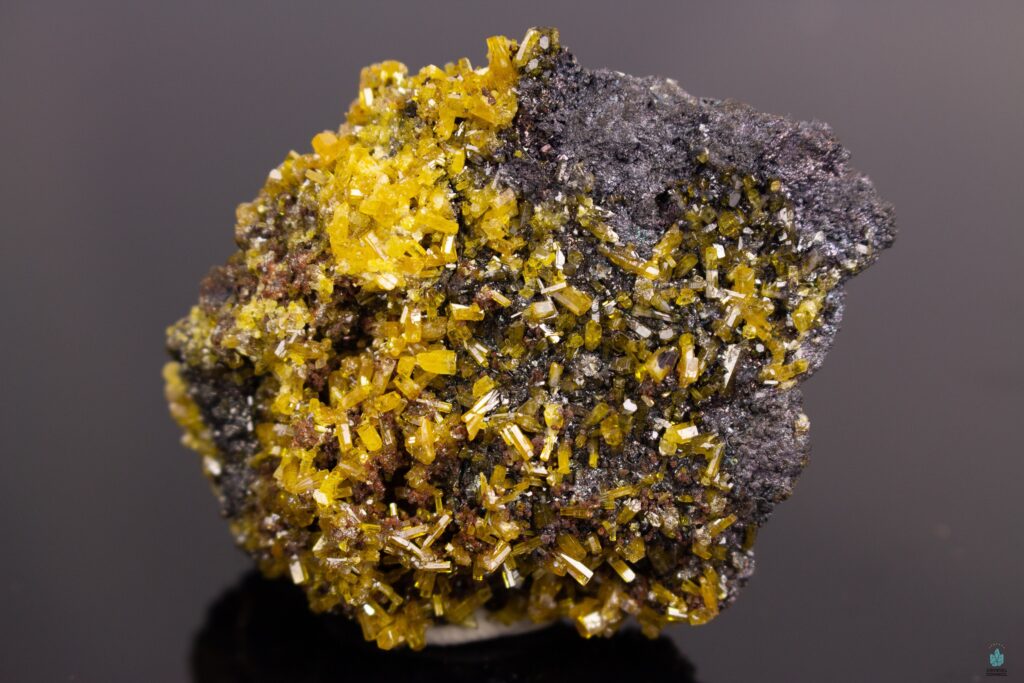
Mineralogically, mimetite is a member of the apatite supergroup and is part of multiple continuous solid solution series. It forms a series with pyromorphite through the substitution of arsenic by phosphorus, and with vanadinite through substitution by vanadium. Based on minor chemical variations, specific varieties are documented, such as calcian mimetite (calcium substitution) and baryto-mimetite (barium substitution). Additionally, structural polytypes including mimetite-M and mimetite-2M are identified; while the standard species is hexagonal, these monoclinic variants represent variations in atomic symmetry. These classifications categorize the geochemical and structural states of lead arsenate minerals under different geological conditions.
Can Mimetite be Used as a Gemstone in Jewelry?
In the field of gemology, mimetite is categorized as a collector’s mineral rather than a conventional gemstone for the commercial jewelry market. While the mineral exhibits high optical constants, including a refractive index ranging from 2.128 to 2.147 and a sub-adamantine to resinous luster, its physical properties impose significant limitations on its utility. With a Mohs hardness of only 3.5 to 4, mimetite is characterized by low scratch resistance and a brittle tenacity. It possesses a poor to indistinct cleavage and an uneven to sub-conchoidal fracture, which renders the crystal structure susceptible to mechanical failure under even minor pressure. These factors mean that mimetite cannot withstand the friction, impact, and environmental stress associated with daily wear. While rare, transparent crystals are occasionally faceted by specialized lapidaries to demonstrate the mineral’s brilliance, these stones are intended for mineralogical displays or encapsulated collections rather than functional jewelry. The technical difficulty of cutting mimetite—due to its heat sensitivity and tendency to shatter—further restricts its presence in the gemstone industry to a niche scientific interest.
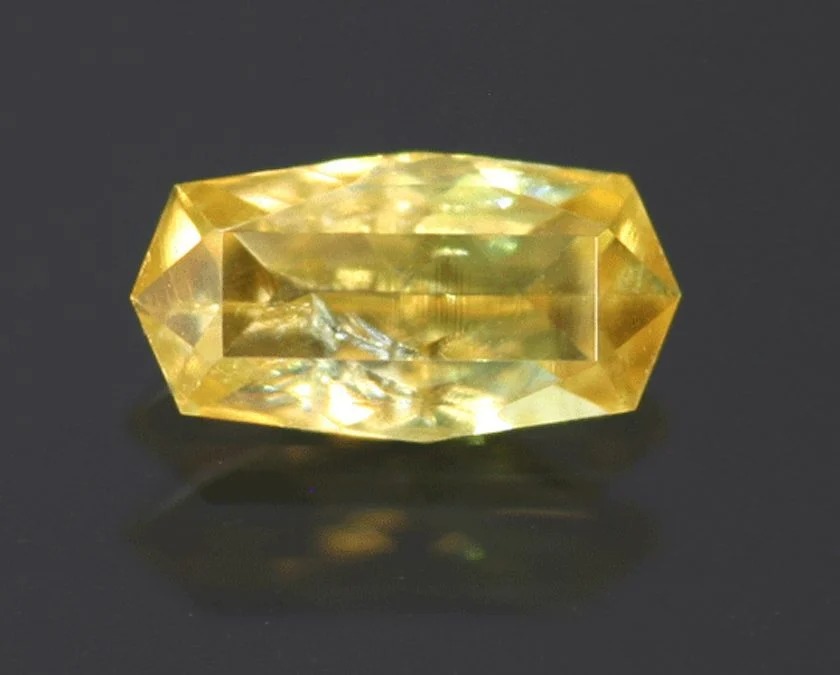
The integration of mimetite into wearable jewelry is extremely rare and typically restricted to high-protection designs, such as pendants or brooches, that minimize surface contact and potential impact. Even in these specialized applications, mimetite is not recommended for settings like rings or bracelets where the risk of abrasion and accidental striking is highest. The mineral is chemically sensitive to common household substances, acids, and even prolonged exposure to moisture in some environments; contact with such agents or the use of ultrasonic cleaning can result in the permanent dulling of its surface or structural degradation. Consequently, any mimetite used in a jewelry context requires specialized maintenance protocols, including cleaning with only mild, pH-neutral solutions and very soft brushes. Due to its high specific gravity of approximately 7.24, even small faceted specimens are notably heavy for their size, a factor that lapidaries and jewelers must consider when designing mounting systems to ensure the stone remains secure without putting undue stress on the fragile crystal.
Is Mimetite Toxic and How to Handle It Safely?
Mimetite is a lead arsenate chloride mineral with the chemical composition Pb5(AsO4)3Cl, containing approximately 69.6 percent lead and 15.1 percent arsenic by weight. Due to the high concentration of these heavy metals, the mineral is classified as a hazardous substance if its particulates are internalized. In its solid crystal form, mimetite is relatively stable and does not pose an acute health risk through brief dermal contact; however, the primary safety concern involves the accidental ingestion or inhalation of mineral dust. This risk is most prevalent during the mechanical processing of specimens, such as sawing, grinding, or polishing, where fine dust or aerosols are generated and can easily enter the respiratory system. Professional safety standards for handling mimetite include the mandatory use of wet-cutting techniques to suppress dust, specialized ventilation systems, and personal protective equipment such as high-efficiency respirators. These measures are essential to prevent the long-term accumulation of lead and arsenic within the human body.
For the general collector, curator, or enthusiast, safety is maintained through standardized hygiene practices and controlled storage environments. It is a standard and necessary procedure to wash hands thoroughly after handling any unsealed mimetite specimens to remove any microscopic traces of mineral matter that may have adhered to the skin. Furthermore, specimens should be stored in stable, individual containers to prevent the accidental creation of dust through friction or impact with other minerals in a collection. Because mimetite is soluble in certain acids, it must be kept away from chemical environments where leaching could occur, which could release toxic ions into the surroundings. Due to the toxic nature of its constituent elements and its inherent physical fragility, mimetite is considered entirely unsuitable for use in items accessible to children or in any application where accidental ingestion or contact with food and drink is a possibility. These safety considerations are fundamental to the responsible and scientific management of lead arsenate mineral species.