
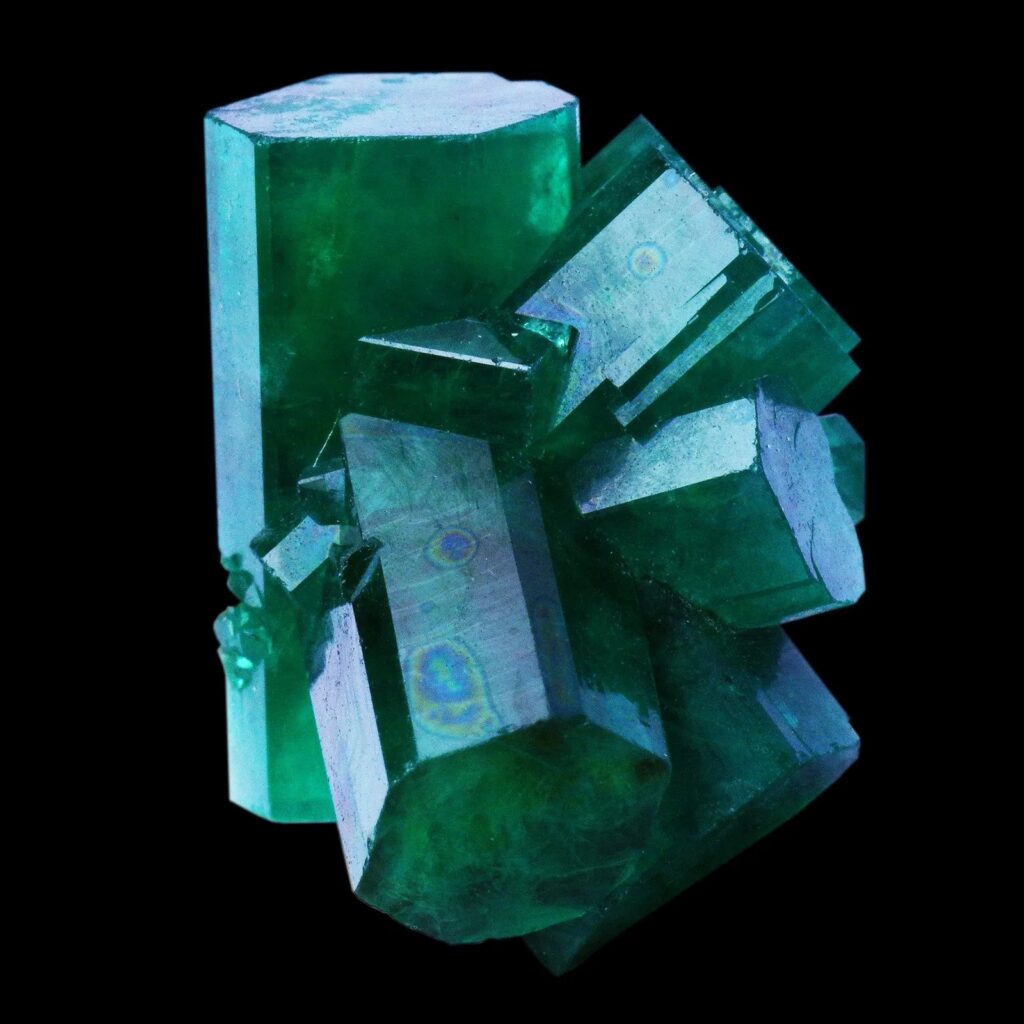
Emerald, the most prestigious variety of the beryl mineral species, is a cyclosilicate composed of beryllium aluminum silicate. In gemological and mineralogical contexts, its identity is defined by the presence of trace amounts of chromium or vanadium which substitute for aluminum atoms in the crystal lattice. This specific ionic substitution is responsible for the characteristic verdant hue that distinguishes emerald from other beryls, such as aquamarine or heliodor. From a structural standpoint, emerald crystallizes in the hexagonal system, typically forming six-sided prismatic crystals that exhibit a vitreous luster.
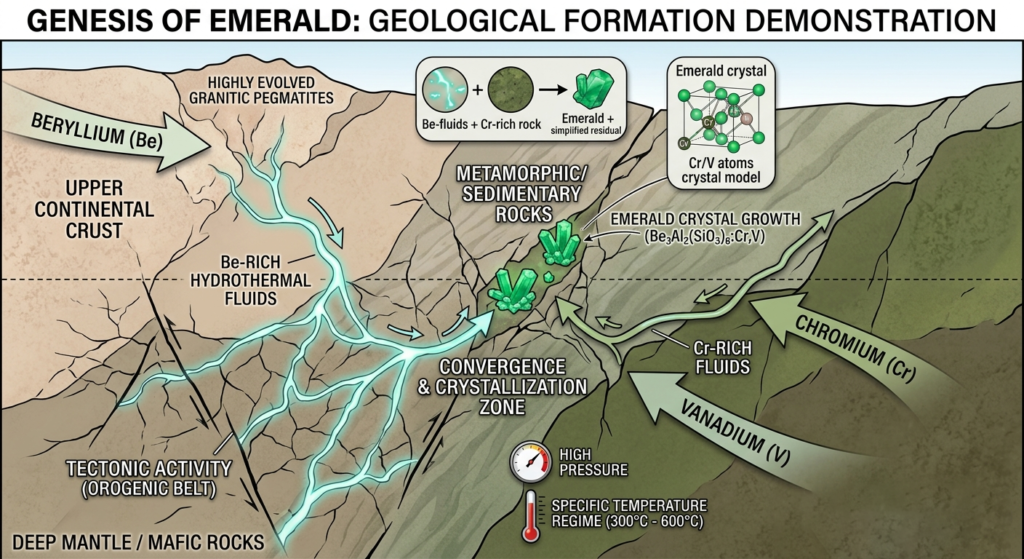
The geological formation of emerald is a rare and complex event that requires the convergence of incompatible chemical elements. Beryllium is an element concentrated in highly evolved granitic pegmatites and the continental crust, while chromium and vanadium are primarily found in the Earth’s mantle and mafic or ultramafic rocks. For emeralds to form, these distinct geological environments must interact through tectonic activity, such as orogenic belts or hydrothermal fluid circulation. This process often occurs in metamorphic or sedimentary host rocks, where hydrothermal fluids transport beryllium into chromium-rich environments, leading to the crystallization of the gemstone under specific temperature and pressure conditions.
The historical narrative of the emerald is a grand saga of human obsession spanning over 3,500 years, intertwining the pursuit of divine favor with the evolution of geological science. The earliest documented extraction of these verdant stones traces back to the rugged Sikait-Zabara region of Egypt, home to the legendary Cleopatra’s Mines, which were worked as early as 330 BC. To the ancient Egyptians, the emerald’s lush green hue was a physical manifestation of fertility and rebirth; they believed it could protect against evil spells and even reveal the truth or falseness of a lover’s oath. This obsession with the stone’s mystical properties was shared by the Roman elite; Pliny the Elder famously lauded the emerald as the only gem that delighted the eye without tiring it, leading to the legend that Emperor Nero watched gladiatorial contests through thin emerald lenses to soothe his vision.Across the ocean and centuries later, the Spanish Conquest of the 16th century unveiled the breathtaking emeralds of the New World. While the Incas had already used these gems in religious ceremonies for five hundred years, the Spanish—initially more interested in gold—eventually traded these “green stones” across Europe and Asia, forever changing the global gemstone market. This influx of superior Colombian material captivated the majestic Mughal emperors of India, who viewed emeralds as “Stones of Heaven.” They commissioned master lapidaries to engrave enormous crystals with sacred prayers and delicate floral motifs, such as the 75-carat Hooker Emerald once owned by Ottoman Sultan Abdul Hamid II. These artifacts transformed raw geological wonders into unwavering symbols of absolute sovereignty and spiritual enlightenment.
In modern academic research, the emerald has transitioned from a mystical talisman to a sophisticated geochemical indicator. Beyond its role as the birthstone for May or a symbol of twenty-year anniversaries, it is studied for its unique “jardin” or internal garden. Through advanced spectroscopic techniques and the analysis of three-phase inclusions—microscopic pockets containing liquid, gas, and crystals—scientists can now decode the stone’s provenance. These inclusions are no longer viewed merely as flaws but as a geological DNA that allows researchers to reconstruct the high-pressure hydrothermal environments of antiquity. Thus, the emerald remains a silent witness to both the rise of ancient empires and the monumental tectonic shifts that shaped our planet millions of years ago.
Comprehensive Classification of Natural and Synthetic Emeralds
| Category / Variety | Geological Formation & Host Rock | Diagnostic Inclusions & Physics | Chemical Trace Elements | Visual Reference |
|---|---|---|---|---|
| I. MAJOR GEOGRAPHIC ORIGINS (PRIMARY MARKET) | ||||
| Colombian (Muzo, Chivor, Coscuez) | Hydrothermal-sedimentary; Hosted in black shale and calcite veins. | Three-phase (liquid-gas-halite); Jagged “saw-tooth” patterns. | Cr3+, V3+; Fe. | 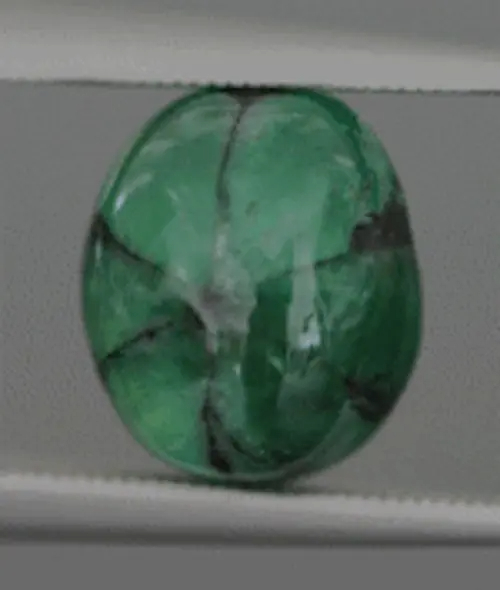 |
| Zambian (Kafubu District) | Metasomatic; Contact between pegmatite and talc-magnetite schist. | Rectangular multiphase; Phlogopite mica; Partially healed fissures. | Cr, V, Fe2+/3+, Mg. | 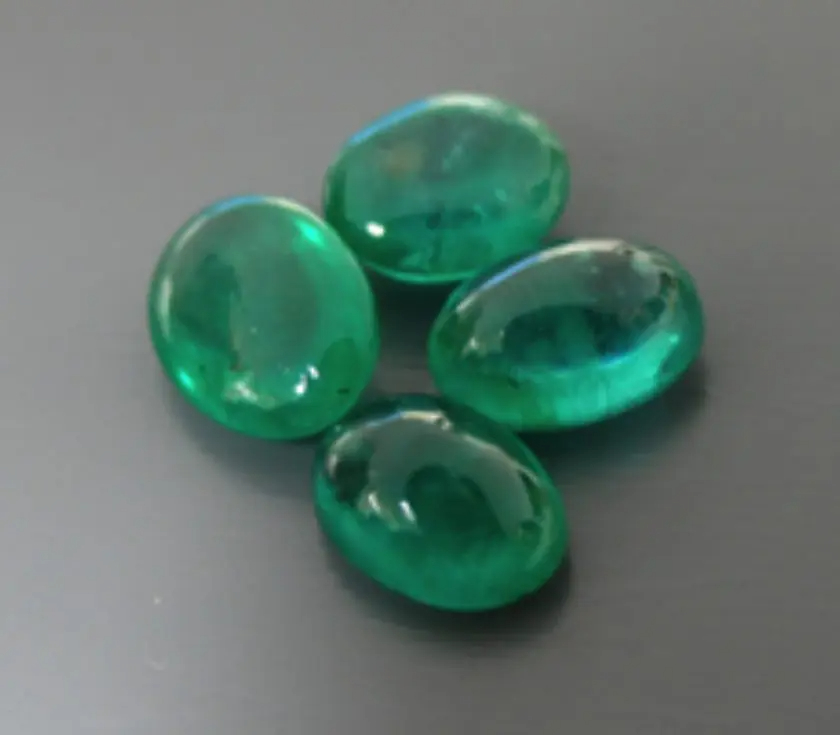 |
| Brazilian (Itabira, Belmont, Carnaiba) | Metasomatic; Associated with mica schists and pegmatites. | Carbonate clouds; Actinolite; Chromite; Talc. | Fe, Cr. | 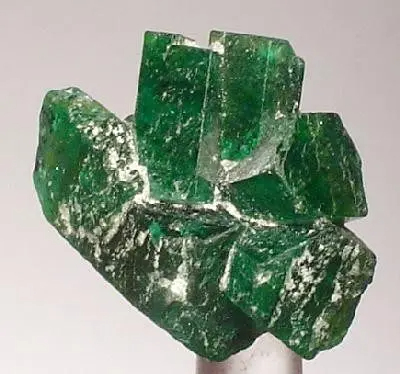 |
| Afghan (Panjshir Valley) | Metamorphic-hydrothermal; Hosted in limestone/dolomite. | Elongated needle-like multiphase inclusions; Girasol effect. | Cr, V; Extremely low Fe. | 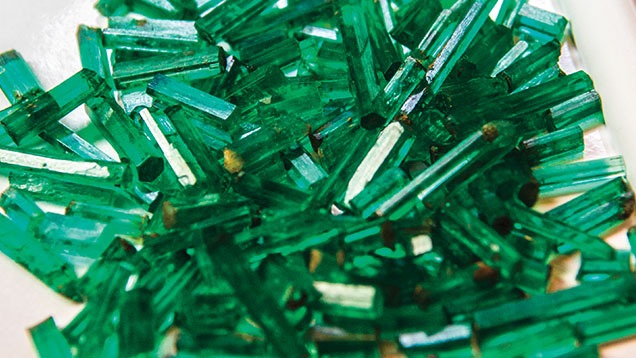 |
| Russian (Ural Mountains) | Mica-schist hosted (classic historical locality). | Bamboo-like Actinolite; Phlogopite mica flakes. | Cr, Fe. | 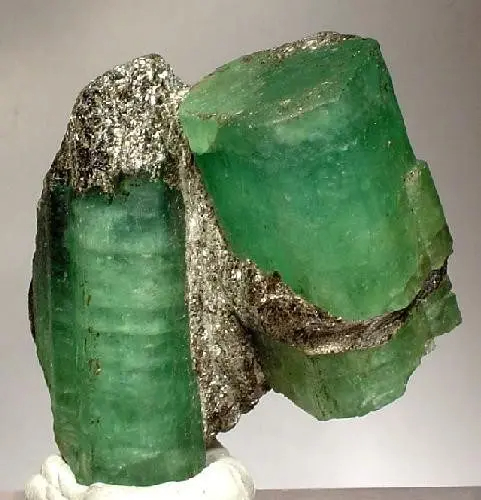 |
| II. MINOR, HISTORICAL & EMERGING ORIGINS | ||||
| Pakistani (Swat Valley) | Ophiolitic mélange; Hosted in magnesite-talc-schist. | Very small crystals; Tiny euhedral chromite; Carbonate rhombs. | Very high Cr content. | 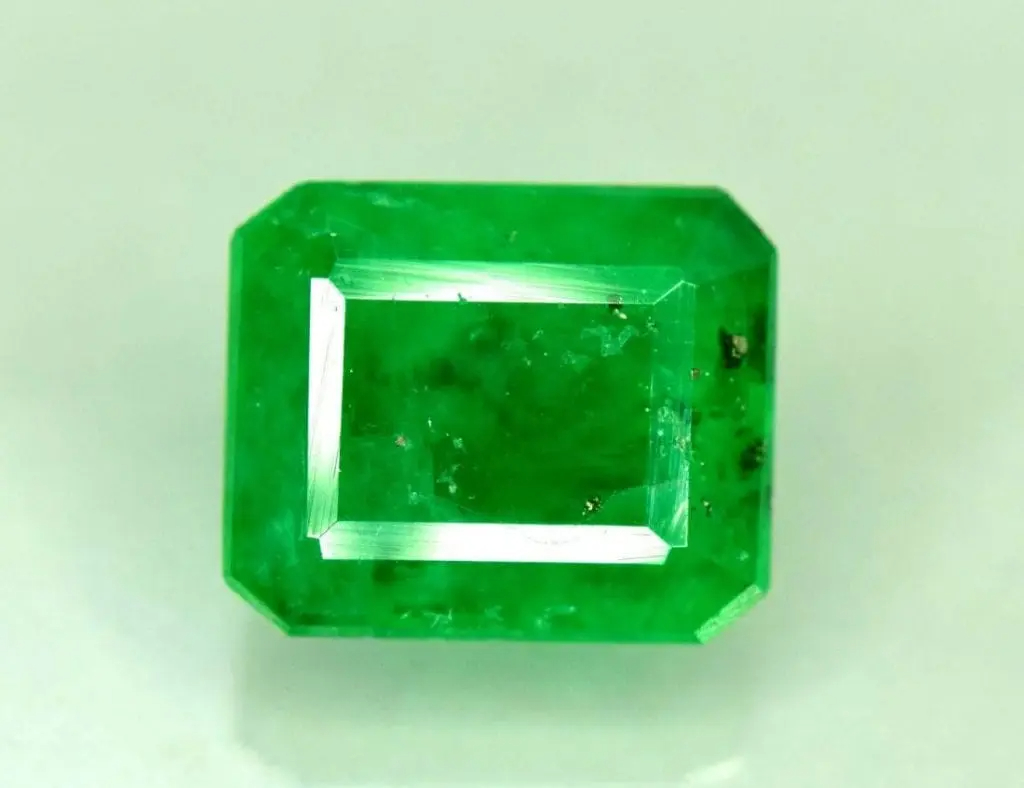 |
| Madagascar (Mananjary, Ianapera) | Metasomatic (schist-hosted). Similar to Zambian material. | Pyrite; Goethite-filled tubes; Hematite plates. | High Fe. | 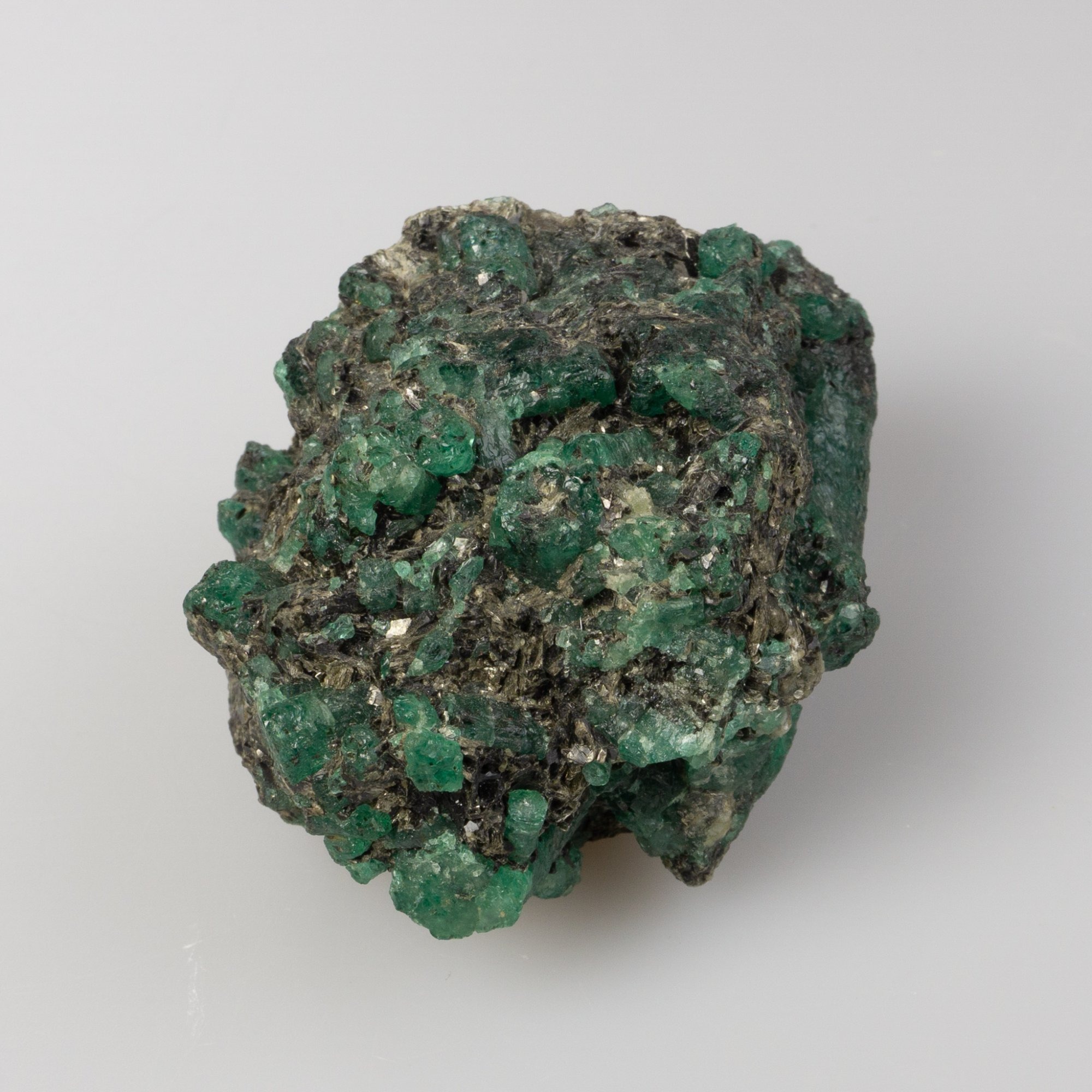 |
| Ethiopian (Shakiso) | Schist-hosted; Often exhibits a slightly “sleepy” appearance. | Brown mica; Grainy iron-staining in fractures. | Cr, High Fe. | 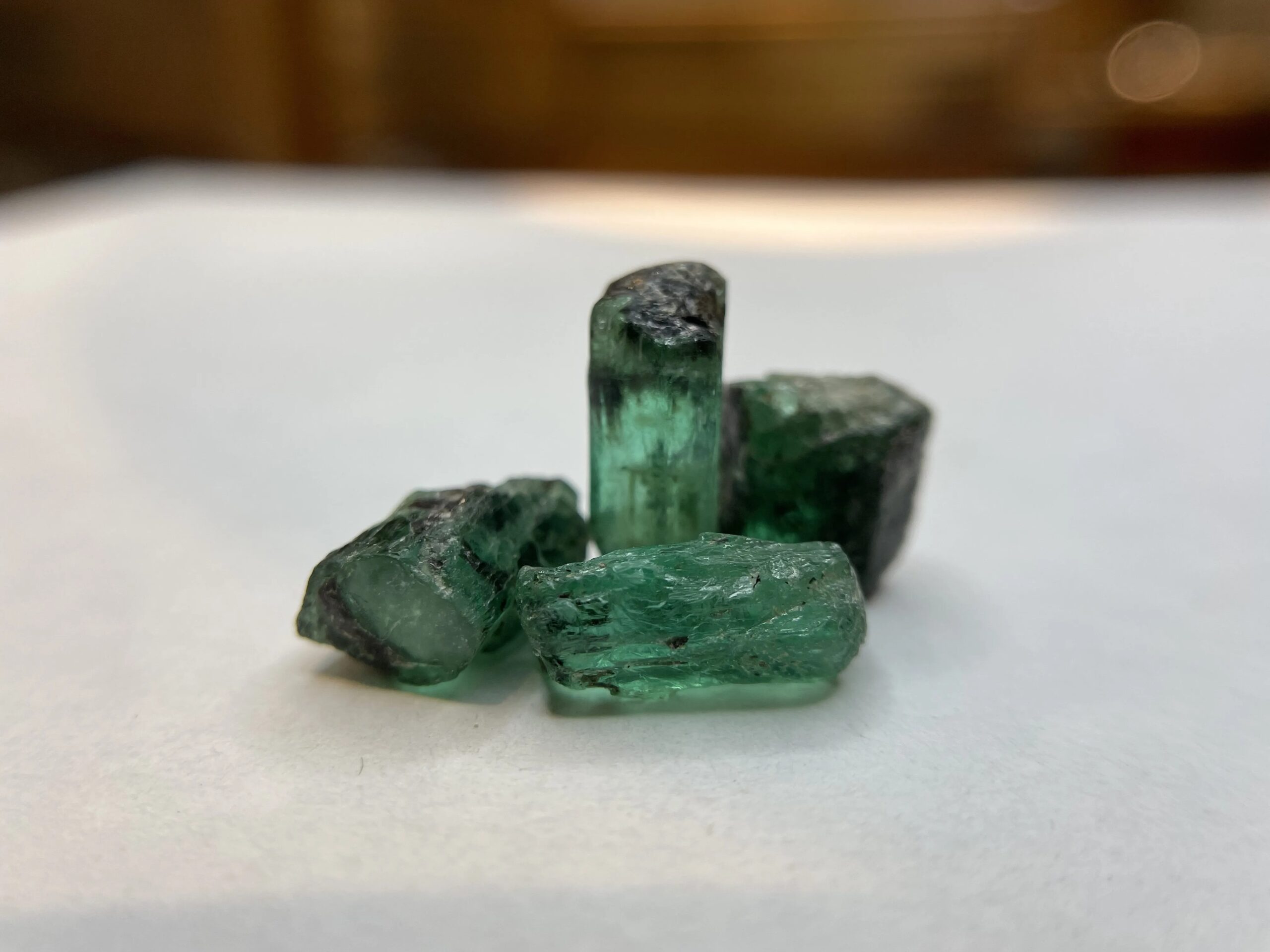 |
| Zimbabwean (Sandawana) | Greenstone belt; Metasomatic. Noted for small, intense green stones. | Tremolite “grass” (curved fibers); Garnet inclusions. | High Cr. | 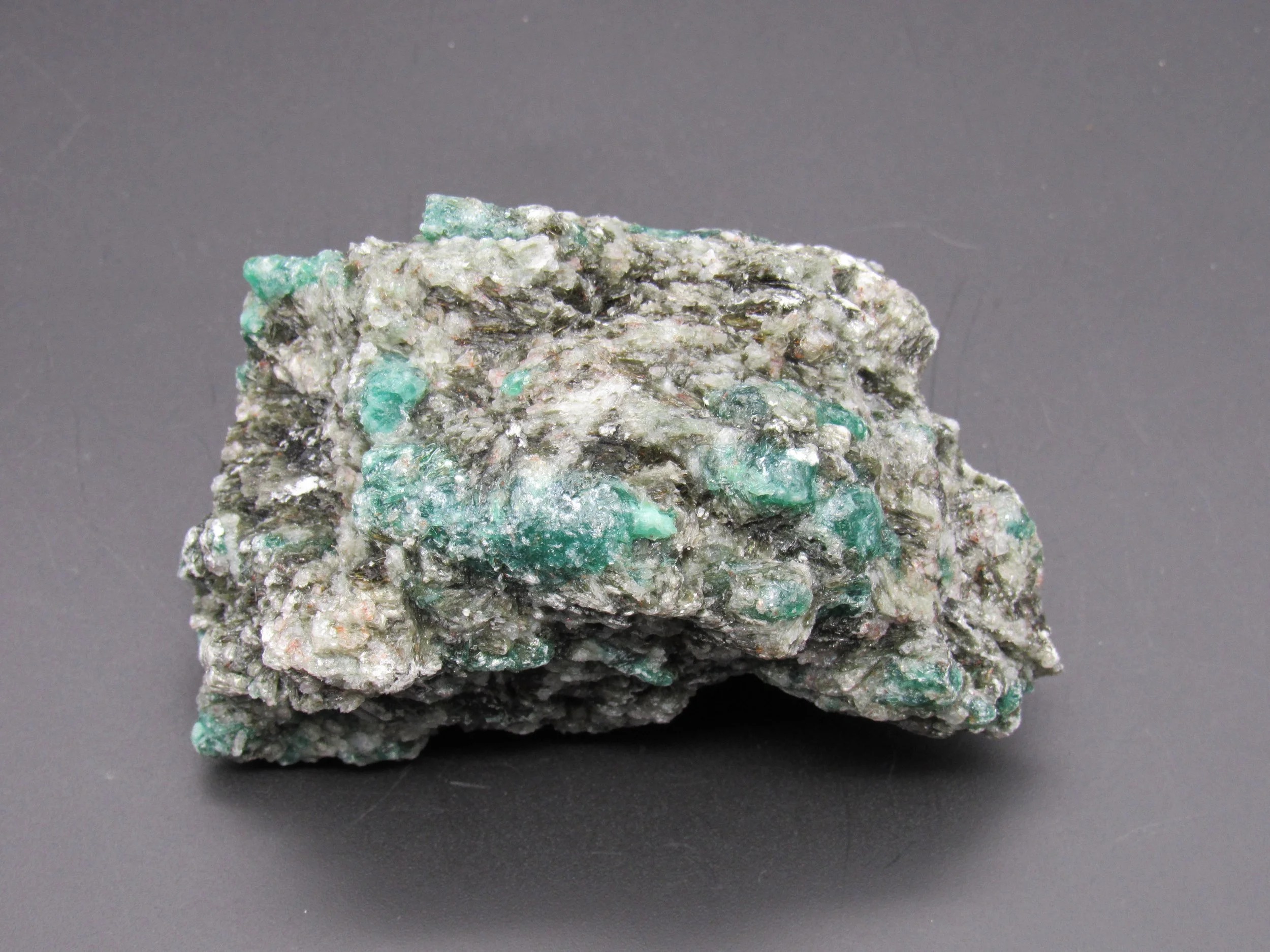 |
| III. MORPHOLOGICAL & OPTICAL VARIETIES | ||||
| Trapiche Emerald | Crystallographic growth sectors divided by carbonaceous shale. | Fixed 6-spoke radial pattern; Non-asteriated. | Host rock impurities. | 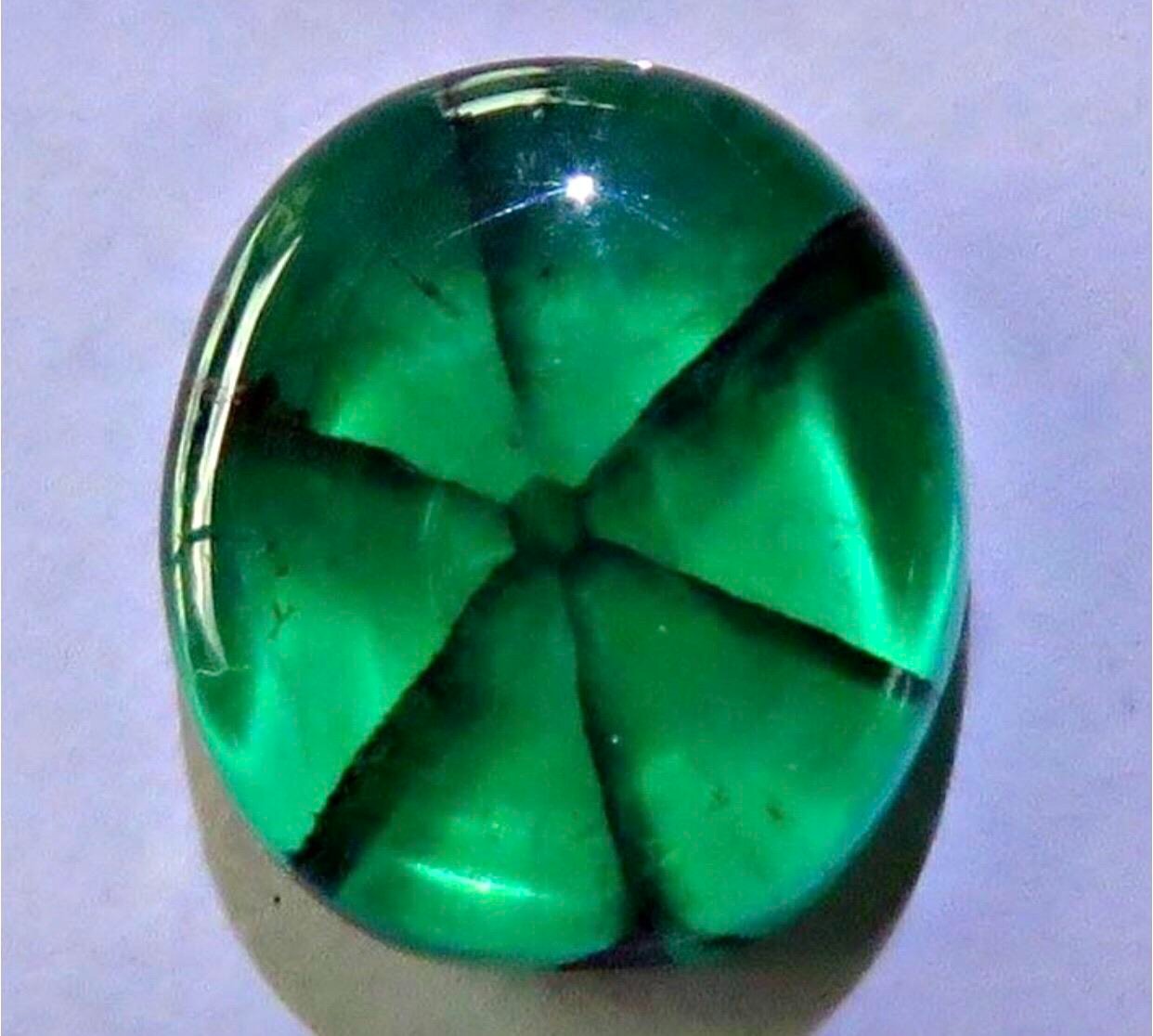 |
| Cat’s Eye (Chatoyant) | Specular reflection from dense parallel hollow growth tubes. | Must be cut “en cabochon” to exhibit the effect. | Structural void. | 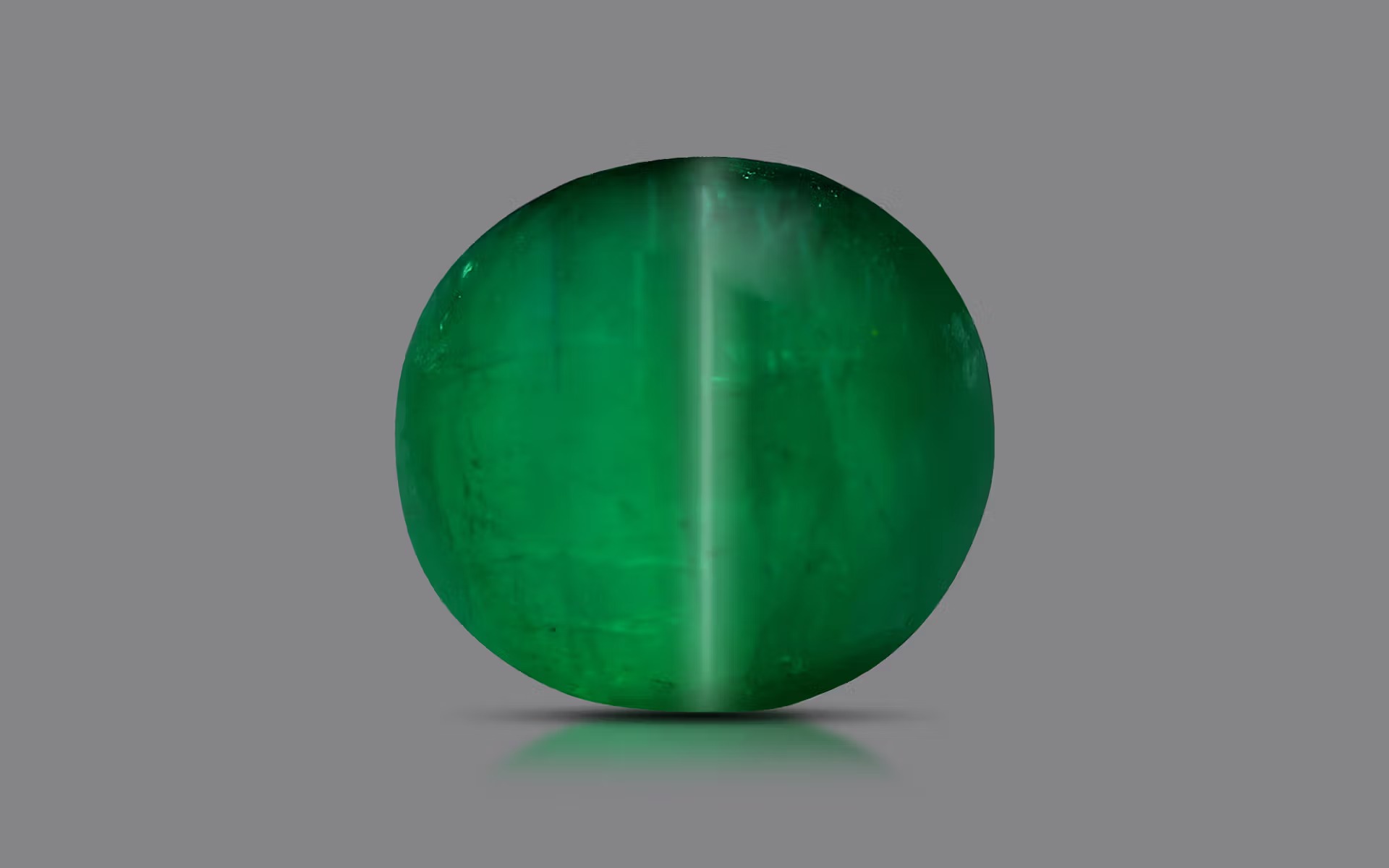 |
| Star Emerald (Asteriated) | Extremely rare; light scattering from oriented inclusions. | Moving star effect (usually 4 or 6 rays). | Ilmenite/Magnetite. | 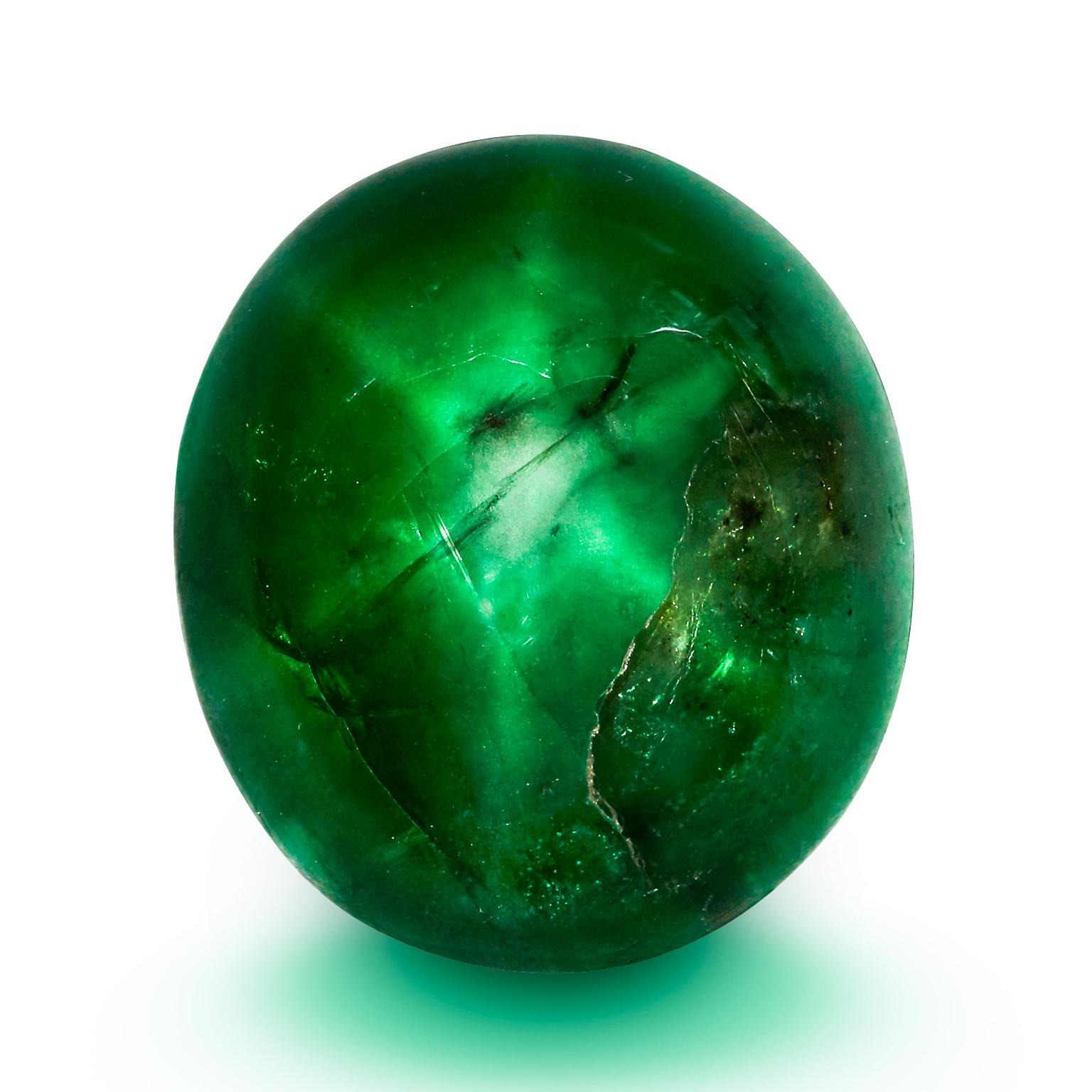 |
| IV. SYNTHETIC EMERALDS & SIMULANTS | ||||
| Hydrothermal Synthetic | Autoclave growth using seed crystals and nutrient solution. | Chevron-style growth zoning; Nail-head spicule inclusions. | Synthetic Cr/V mix. | 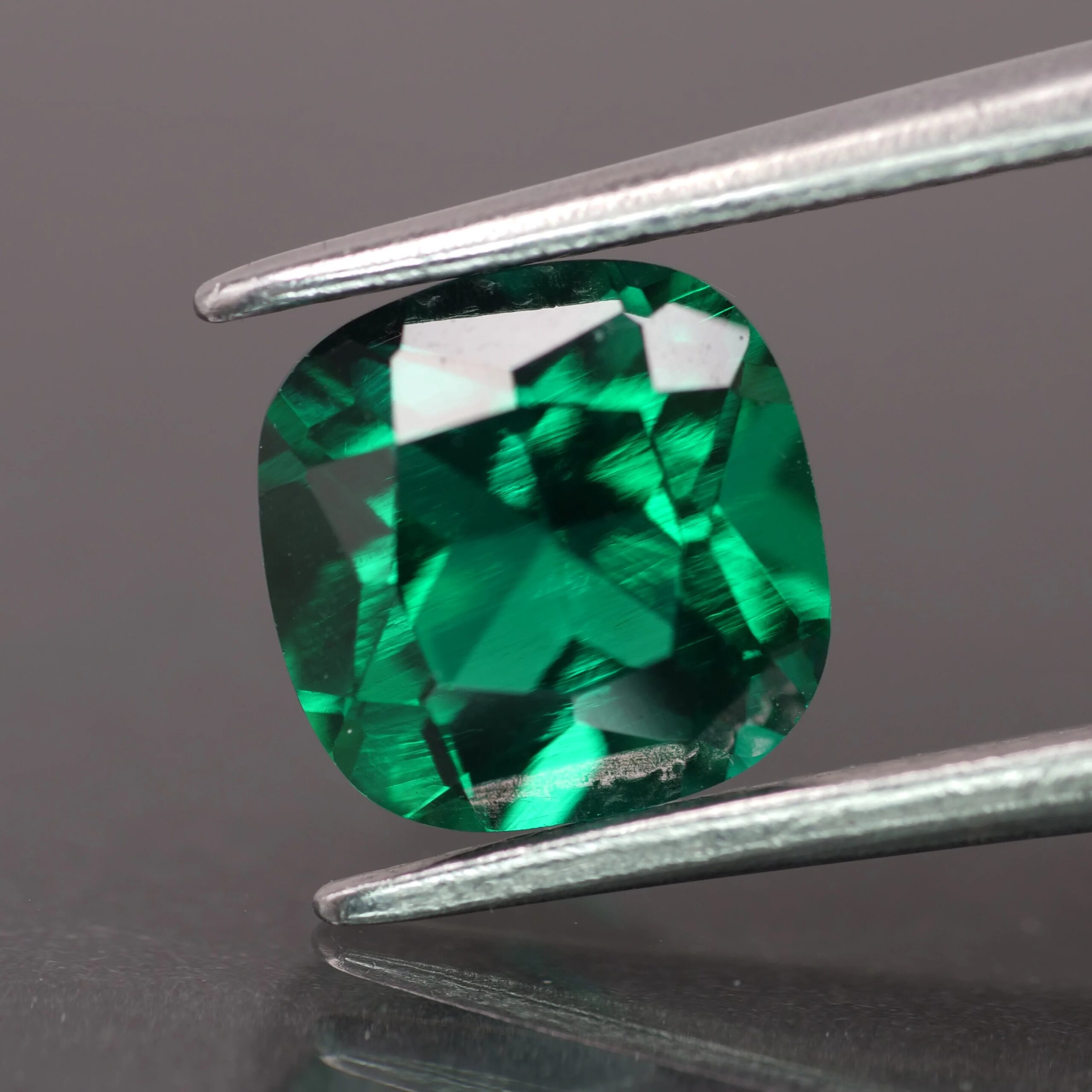 |
| Flux-Grown Synthetic | Slow crystallization from a molten chemical flux. | Wispy “veil” or “feather” flux remnants; Platinum crucibles. | Lithium/Molybdenum flux. | 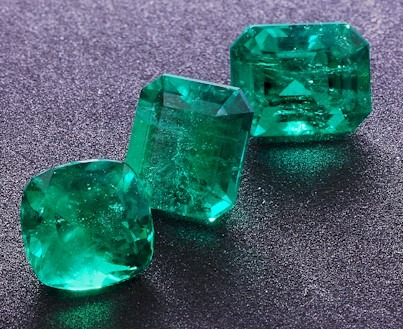 |
| Assembled (Doublets/Triplets) | Composite stones (Beryl-Glass-Beryl or Garnet-Glass). | Glue layer with bubbles; Red-ring effect under UV. | Adhesive colorants. | 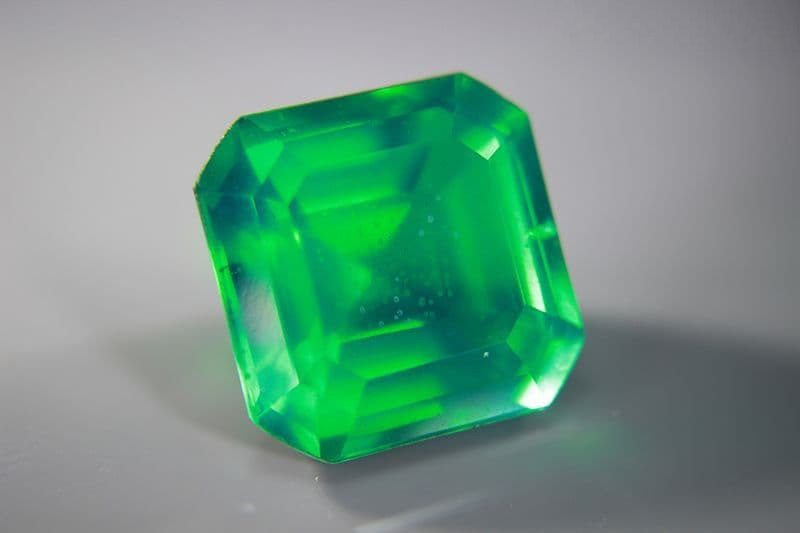 |
How to Identify Real Emeralds
The scientific identification of Smaragdus (Emerald) relies on a tripartite analytical framework: microscopic inclusion analysis, spectroscopic profiling, and trace element geochemistry. Because emeralds are “Type III” gemstones—characterized by inherent structural irregularities—their internal landscape serves as a primary diagnostic tool for both origin determination and the detection of synthetic counterparts.
Micro-Inclusion Analysis: Under 30x to 60x magnification, the presence of multiphasic inclusions remains the most critical indicator of natural formation. Colombian specimens are renowned for “three-phase” inclusions—jagged cavities containing a liquid phase, a CO2 gas bubble, and a solid halite (NaCl) crystal. Conversely, schist-hosted deposits (e.g., Zambia or Russia) typically exhibit “two-phase” inclusions and distinctive mineral guest crystals such as phlogopite mica or bamboo-like actinolite needles.
Spectroscopic Characterization: To address the prevalence of clarity enhancement, Fourier-Transform Infrared (FTIR) and Raman Spectroscopy are employed. These non-destructive techniques identify the specific molecular vibrations of exogenous substances. FTIR is particularly effective at distinguishing between traditional organic fillers (e.g., cedar oil) and modern artificial resins (e.g., Opticon), while also detecting the absence of natural hydroxyl groups in flux-grown synthetics.
Elemental Fingerprinting: Quantifying the chromophore concentrations of Chromium (Cr), Vanadium (V), and Iron (Fe) via Energy-Dispersive X-ray Fluorescence (EDXRF) provides a chemical “fingerprint.” High iron content generally points to metamorphic-metasomatic origins (Zambia/Brazil), whereas low iron combined with high chromium is indicative of hydrothermal-sedimentary environments (Colombia). This geochemical data is essential for segregating emeralds from green beryls and sophisticated laboratory-grown simulants.
Ornamental Applications: The Art of Emerald Jewelry
Emeralds are incorporated into diverse jewelry forms, each designed to highlight the stone’s saturation and clarity. Due to their relative brittleness (Mohs 7.5–8) compared to diamonds, specific setting techniques are prioritized to ensure both aesthetic brilliance and structural integrity. The emerald cut, a step-cut rectangular shape, was specifically developed for this gemstone; its wide, flat table maximizes the display of the lush green color, while the truncated corners protect the stone from mechanical stress and chipping. In the realm of high-jewelry masterpieces and “Haute Joaillerie,” emeralds frequently serve as the centerpiece of elaborate necklaces and tiaras, often paired with colorless diamonds to create a high-contrast visual effect—a classic combination favored by European royalty and modern red-carpet icons.
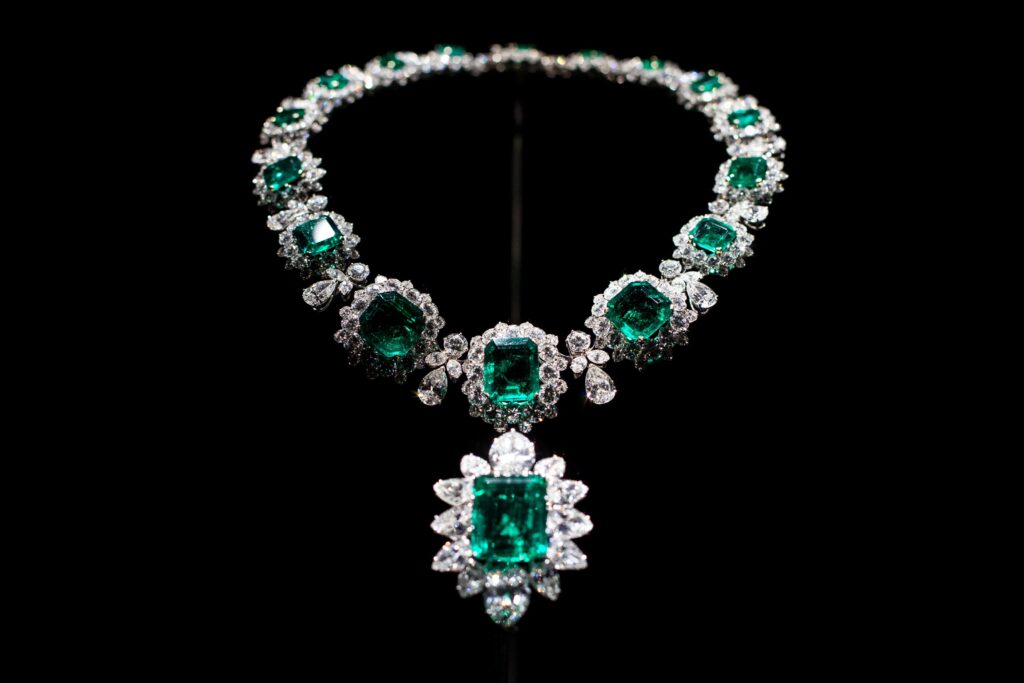
For specimens with lower clarity but rich saturation, the stones are often polished into smooth, domed cabochons or transformed into intricate carvings. In traditional Mogul-style jewelry, emeralds are carved with elaborate floral motifs, a craft that dates back centuries in Indian and Persian history. For more practical daily wear, contemporary designers utilize smaller emeralds in “Gypsy” or bezel settings for rings and pendants, providing a protective metal rim that secures the stone and shields its edges from impact during everyday use.
Symbolism and Metaphysical Significance
Beyond its physical beauty, the emerald carries a profound weight of historical and symbolic meaning across various civilizations. In Roman mythology, the emerald was dedicated to the goddess Venus, symbolizing fertility, beauty, and unconditional love; to this day, it remains a primary choice for 20th and 55th wedding anniversaries, representing enduring passion and loyalty. Its vibrant green hue is synonymous with the lushness of nature, serving historically as a symbol of spring, hope, and the cycle of renewal. In ancient Egypt, Queen Cleopatra famously adorned herself in emeralds, believing they bestowed eternal youth and power.Many cultures believed the emerald could sharpen the wit and provide foresight into the future, often referring to it as the “Stone of Successful Love” for its perceived ability to bring harmony to the heart and domestic bliss to the household. In a modern context, the emerald holds significant weight as the birthstone for May, associated with growth and prosperity. Professionally, its calming green color is often linked to balance and wisdom, making it a favored gemstone for those seeking a sense of grounded luxury and sophisticated elegance.