
Oligoclase forms through the complex crystallization processes of silicate melts within the Earth’s crust, primarily as a member of the plagioclase feldspar solid-solution series. Its formation is governed by the cooling of intermediate to felsic magmas, such as those that produce diorite, syenite, and granite, where the availability of sodium (Na+) and calcium (Ca2+) ions at specific temperatures dictates the mineral’s final composition of 10% to 30% anorthite (CaAl2Si2O8). As magma cools, the chemical equilibrium between the liquid melt and the forming crystals shifts; according to Bowen’s Reaction Series, calcic plagioclase crystallizes first at higher temperatures, followed by more sodic varieties like oligoclase as the environment becomes enriched with silica and sodium. In metamorphic environments, oligoclase develops through the recrystallization of pre-existing minerals under medium-grade pressure and temperature conditions, typical of the amphibolite facies. This slow cooling or metamorphic growth often allows for the development of peristerite exsolution lamellae, where the internal structure segregates into tiny sodic and calcic domains that cause the characteristic bluish schiller seen in some specimens.
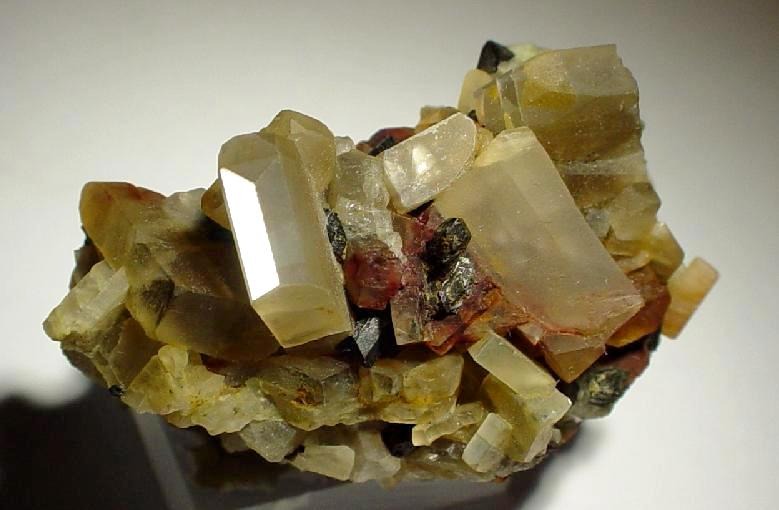
Historically, the identification and naming of oligoclase played a pivotal role in the formalization of modern mineralogy during the 19th century. The mineral was first recognized as a distinct species in 1826 by the German mineralogist August Breithaupt, who derived its name from the Greek words oligos (little) and klasis (fracture) to highlight that its cleavage angle was only slightly different from the 90-degree angle found in orthoclase. Before this systematic classification, many varieties of oligoclase, particularly sunstone, were prized as ornamental materials by ancient cultures, including the Vikings who may have used similar feldspars for navigation and the indigenous peoples of North America who utilized sunstone in jewelry. In the late 1800s and early 1900s, the study of oligoclase’s optical properties and its position within the plagioclase series became a cornerstone for the development of the petrographic microscope and the ternary diagrams used by geologists today. This historical progression from a decorative curiosity to a precise geothermometric tool reflects the broader evolution of Earth sciences from descriptive natural history to a quantitative, analytical discipline.
Varieties and Coloration of Oligoclase
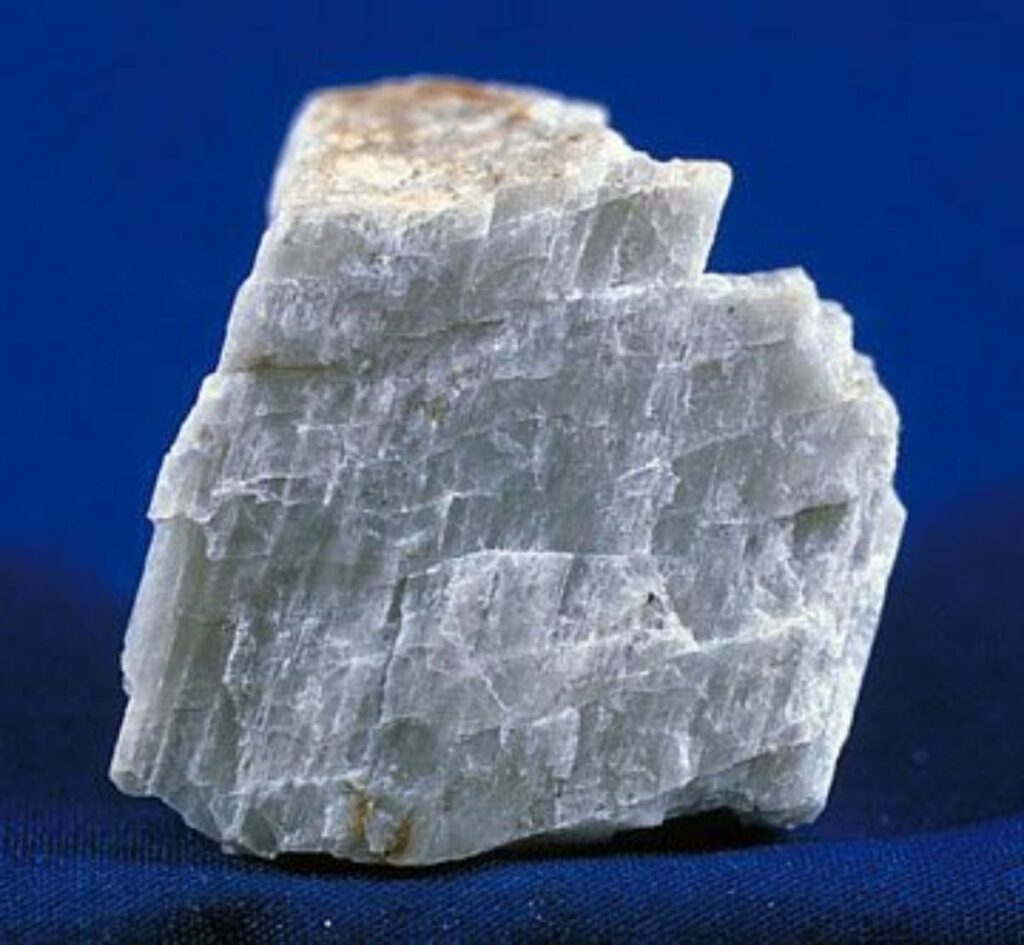
Common Oligoclase
In its most frequent occurrence within granitic or dioritic rocks, it appears as translucent to opaque grains. The color palette typically includes white, colorless, grey, or pale shades of yellowish-green and flesh-red.
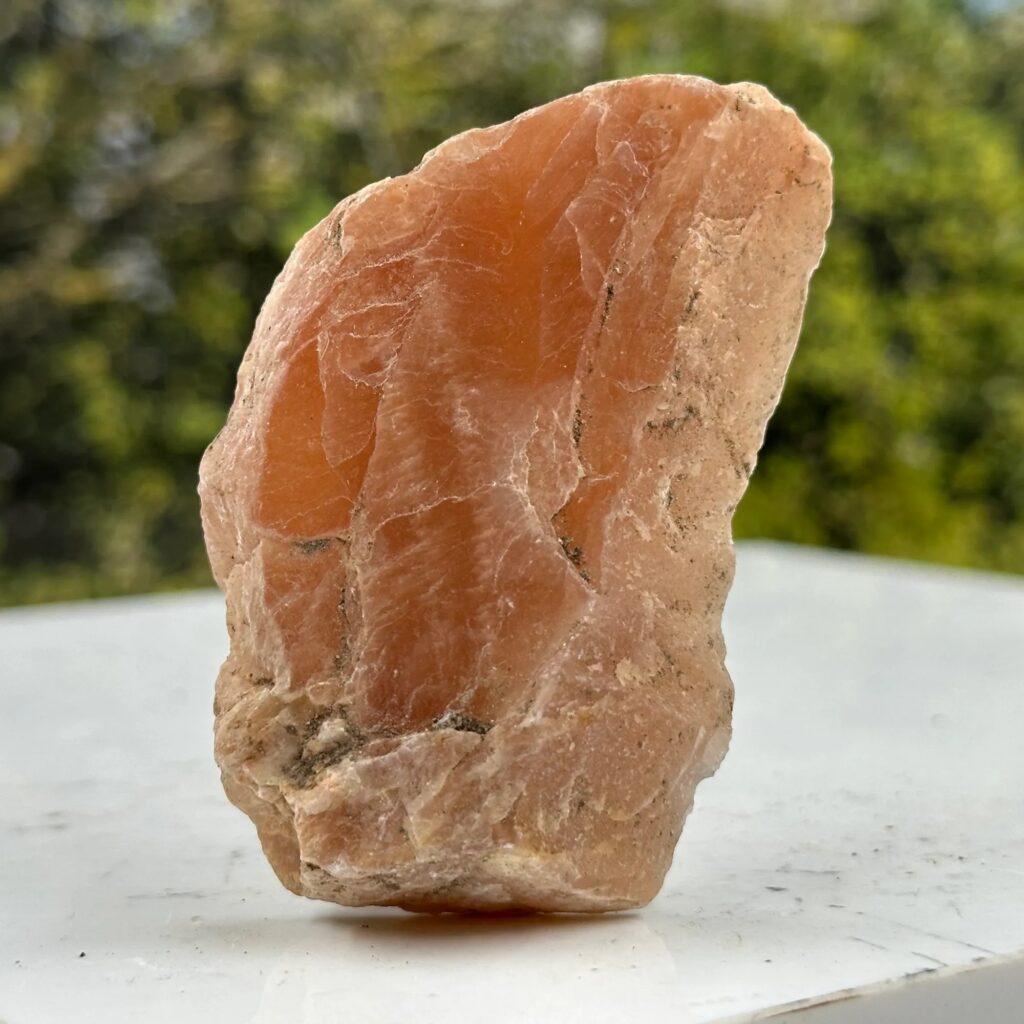
Sunstone (Aventurine Feldspar)
his is the most sought-after variety, characterized by a vibrant orange, reddish, or golden-brown body color. It contains microscopic, plate-like inclusions of hematite (Fe2O3), goethite, or native copper that reflect light to produce a sparkling “aventurescence” or “schiller” effect.
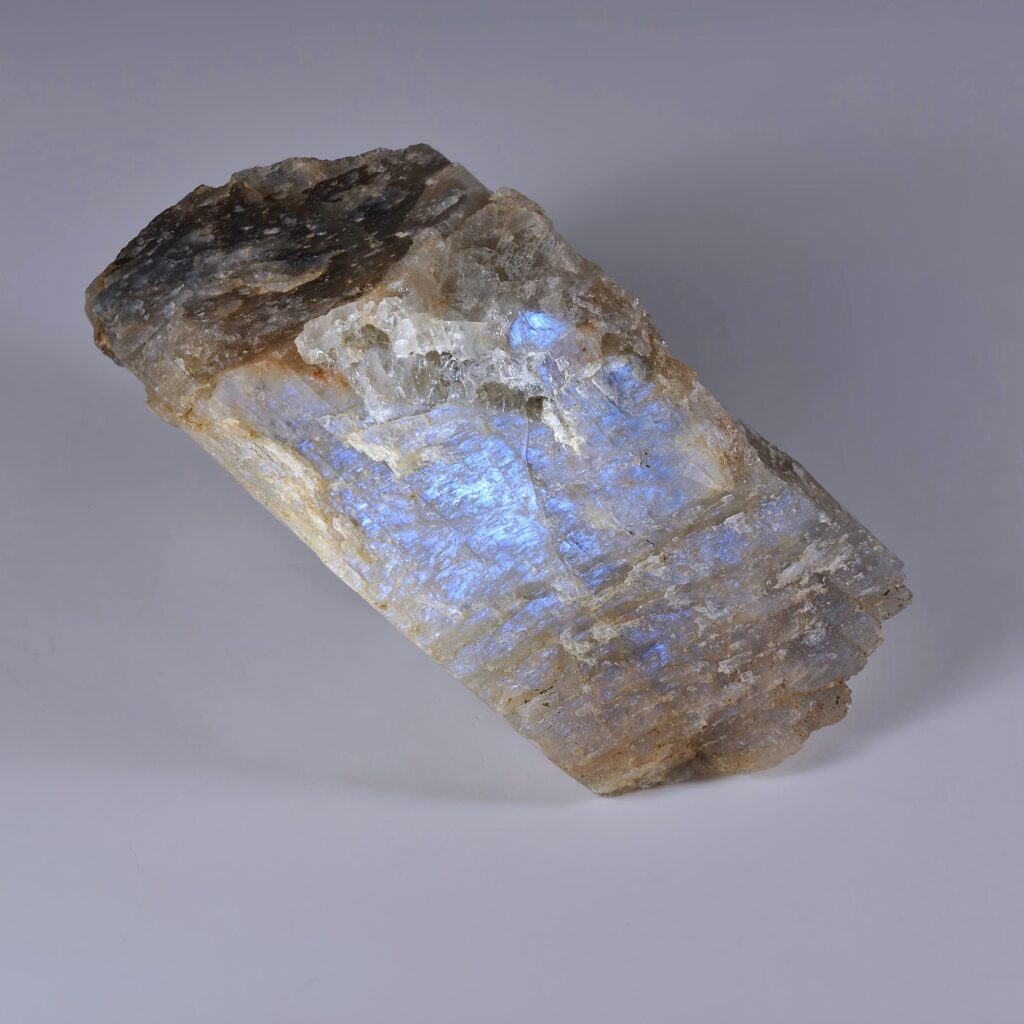
Peristerite
Named after the Greek word for “pigeon” (due to the iridescent feathers on a pigeon’s neck), this variety is typically white or off-white. It exhibits a delicate bluish or multi-colored iridescence caused by light interference within sub-microscopic exsolution lamellae.
Gem-Grade Transparent Oligoclase
Rare, water-clear crystals that lack significant inclusions. These are often faceted for collectors and can appear completely colorless or possess a faint straw-yellow tint.
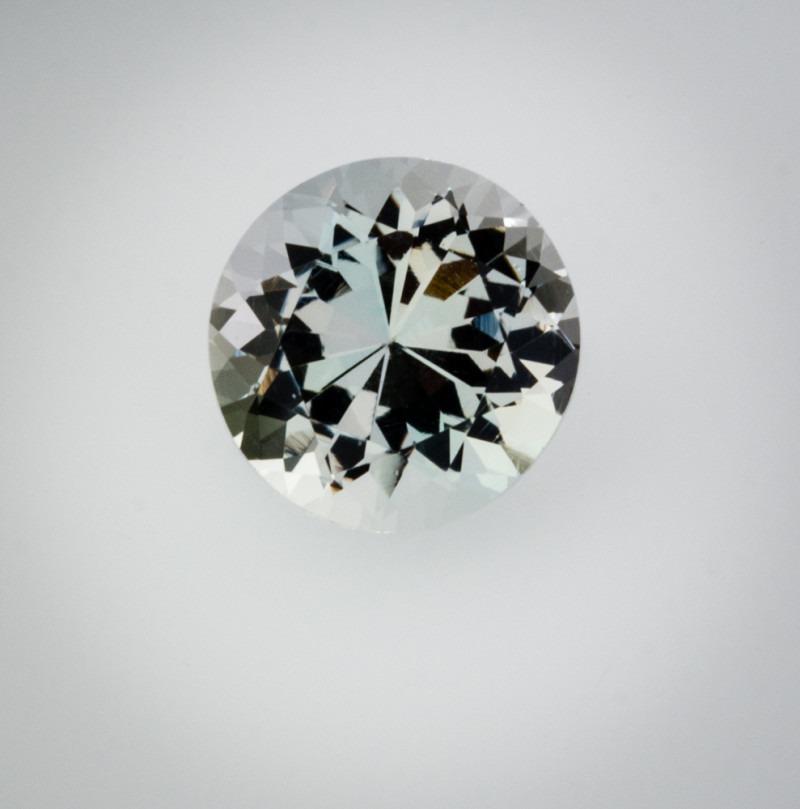
Oligoclase is a representative member of the plagioclase feldspar series, reflecting the dynamic chemical and thermal conditions under which minerals form within the Earth’s crust. Its occurrence in both igneous and metamorphic environments, along with its intermediate composition between sodium- and calcium-rich end members, makes it an important indicator in geological studies. In addition to its scientific value, oligoclase exhibits a range of visual characteristics, from common translucent grains to varieties displaying aventurescence or iridescence. Overall, it remains a mineral of both geological relevance and moderate gemological interest.