
What Is Jet?
To understand what jet is, one must look back approximately 180 million years to the Jurassic Period. Jet is not a mineral in the traditional sense; it does not possess a crystalline structure. Instead, it is a high-grade, fossilized form of wood—specifically from trees in the Araucariaceae family, ancestors of the modern-day Monkey Puzzle tree. When these ancient logs were swept into deep, stagnant water or buried under heavy layers of sedimentary mud, they were deprived of oxygen. Over millions of years, the immense weight of the overlying earth created intense pressure, chemically altering the wood through a process known as coalification. This specialized environment prevented the wood from rotting and instead compressed it into a dense, carbon-rich material that is chemically similar to lignite coal but physically much more stable and durable.From a gemological perspective, jet is categorized as an organic gemstone, placing it in an exclusive group that includes amber, pearl, and coral. What distinguishes jet from ordinary coal is its remarkable toughness and its ability to take a high-luster metallic polish. On the Mohs scale of mineral hardness, jet typically ranks between 2.5 and 4.0, making it relatively soft compared to silicate gems but ideal for intricate lapidary work and detailed carving. One of its most distinctive physical traits is its extremely low specific gravity—it is so lightweight that it often feels warm to the touch and can even float in highly saline water. This tactile warmth and lack of weight made it a favorite for large, elaborate Victorian jewelry pieces that would otherwise be too heavy to wear if crafted from black onyx or glass.
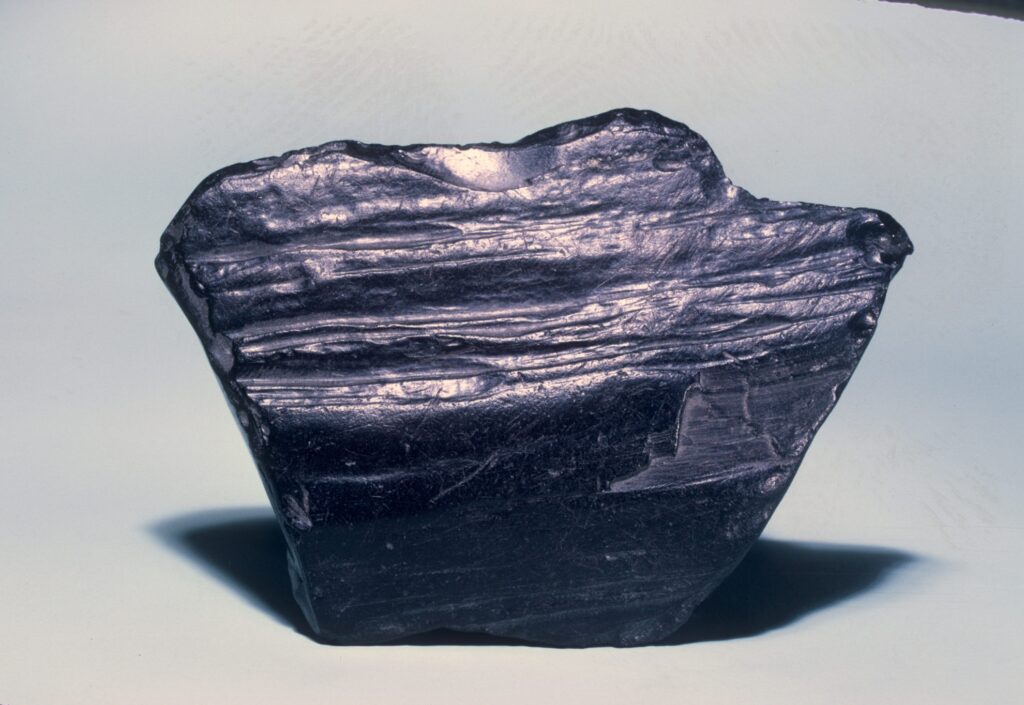
There are two primary varieties of this gemstone: hard jet and soft jet. Hard jet, most famously sourced from the cliffs of Whitby in North Yorkshire, England, was formed in a marine environment where the wood was compressed by salt water, resulting in a stable material that does not crack or degrade when exposed to changes in temperature or humidity. In contrast, soft jet was typically formed in freshwater environments and is more prone to brittleness and “crazing” over time. Regardless of the variety, the defining characteristic of true gem-quality jet is its deep, uniform, “jet-black” color—a hue so intense that it became the namesake for the English expression used to describe the darkest shades of black.
Famous Jet Jewelry and Iconic Museum Collections
The history of jet is punctuated by several extraordinary collections and individual masterpieces that define its cultural significance across different eras. The most iconic examples of jet craftsmanship are inextricably linked to the Victorian Era and the coastal town of Whitby, England. Perhaps the most significant collection of jet jewelry in existence belonged to Queen Victoria herself. Following the sudden and devastating death of Prince Albert in 1861, the Queen entered a period of perpetual mourning that lasted for the rest of her life. During this time, the strict court etiquette regarding mourning attire meant she exclusively wore black jewelry. Her personal preference for Whitby Jet, which was prized for its deep, somber luster and surprisingly lightweight nature, single-handedly transformed the material from a regional curiosity into a global luxury. Intricate brooches, massive yet comfortable chain links, and memento mori lockets from her personal collection remain the definitive archetypes of 19th-century mourning jewelry. Many of these historically significant pieces are preserved today within the Royal Collection Trust, serving as a testament to the era’s sophisticated lapidary skills.
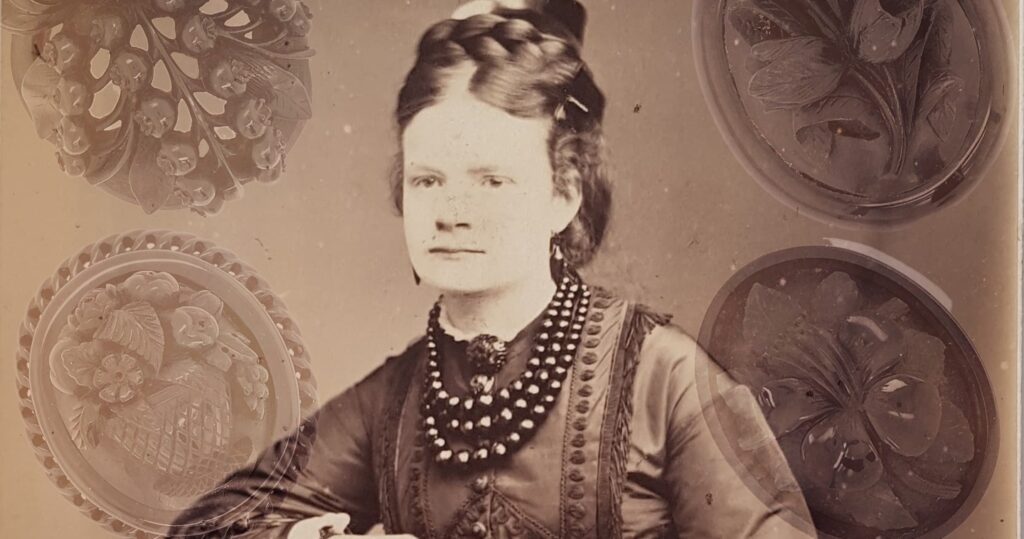
The Victoria and Albert Museum in London houses one of the world’s most comprehensive and visually stunning displays of jet artistry. Their collection highlights the extraordinary versatility and structural integrity of the material, featuring massive, elaborately carved snake bracelets, ornate hair combs, and book-shaped lockets that showcase the incredible level of detail Victorian craftsmen could achieve. One of the museum’s most celebrated exhibits is a mid-19th-century jet suite consisting of a grand necklace and matching drop earrings. Each individual link in this set is hand-carved with delicate floral motifs, illustrating why jet was considered the premier choice for large-scale statement pieces; if these items had been crafted from black glass, tourmaline, or onyx, their weight would have made them physically impossible to wear for extended periods.
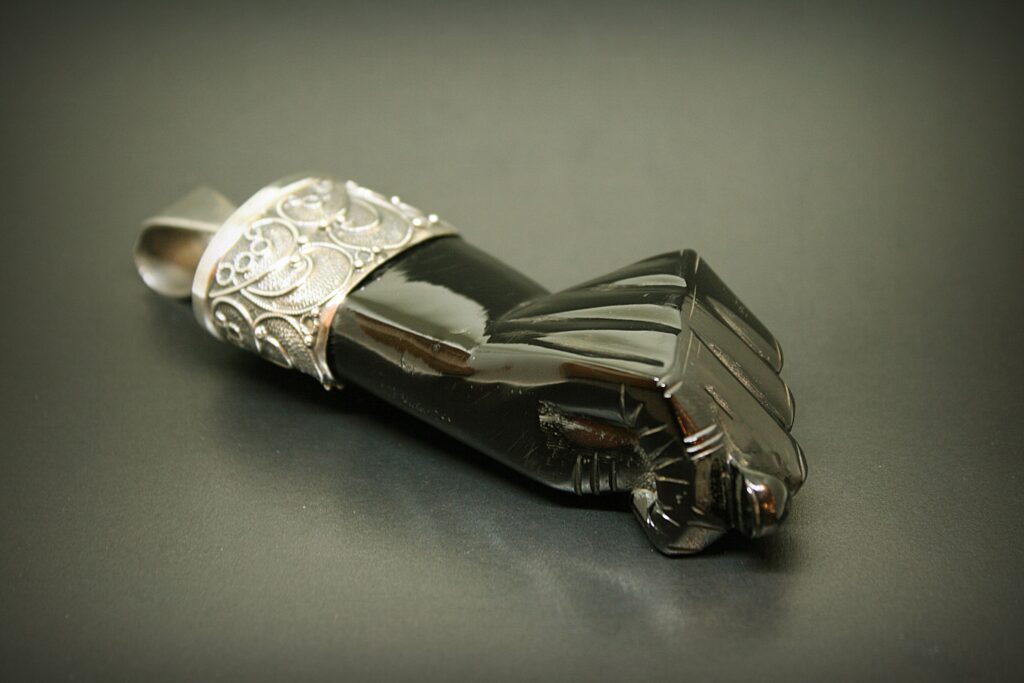
Beyond the major metropolitan galleries, the Whitby Jet Heritage Centre in North Yorkshire stands as a dedicated repository for the finest historical specimens ever found in the region. It is home to the world-famous Whitby Jet Chess Set, a masterpiece of Victorian carving that demonstrates the gemstone’s ability to hold sharp, precise edges and endure over time without cracking. Furthermore, the British Museum maintains an essential collection of ancient jet artifacts that predate the Victorian craze by nearly two millennia. This collection includes Roman-era hairpins and Gorgon amulets discovered in the ancient city of York, known then as Eboracum. These archaeological finds prove that the Romans valued jet not only for its aesthetic beauty but also for its perceived protective properties. They believed that the material’s electrostatic charge, which is generated when the stone is rubbed, possessed the power to ward off evil spirits and negative energy.Another notable historical tradition is the Spanish Jet, or Azabache, movement centered in Santiago de Compostela. For centuries, jet was the primary material used by Spanish artisans to carve Figas, which are traditional fist-shaped amulets, and scallop shell pendants intended for pilgrims completing the Camino de Santiago. Many of these exquisite 15th and 16th-century religious carvings are now preserved in the Cathedral of Santiago de Compostela Museum and the Museo del Azabache. These collections represent a distinct continental style of jet artistry that flourished long before the English mourning jewelry movement began, highlighting the stone’s enduring role as a medium for both spiritual protection and artistic expression across Europe.
How to Identify and Differentiate Black Gemstones
| Texture | Gemstone | Hardness | Weight & Touch | Geological Details |
|---|---|---|---|---|
 |
Jet | 2.5 – 4.0 | Ultra-light; Warm | Organic mineraloid (fossilized wood). Waxy luster; can flake. |
 |
Obsidian | 5.0 – 5.5 | Moderate; Cool | Natural volcanic glass. Sharp conchoidal edges if broken. |
 |
Onyx | 6.5 – 7.0 | Solid; Cold | Cryptocrystalline Quartz. Softer, consistent mineral shine. |
 |
Black Spinel | 8.0 | Very Heavy; Cold | Highly durable mineral. Near-metallic, brilliant reflection. |
 |
Tourmaline | 7.0 – 7.5 | Heavy; Cold | Schorl variety. May exhibit vertical striations or magnetism. |
 |
Blackstone | Varies | Variable weight | Generic trade term for various natural or dyed black stones. |
 |
Hemalyke™ | 5.5 – 6.5 | Extremely Heavy | Synthetic Hematite imitation. Metallic and strongly magnetic. |
 |
Lava Rock | 3.0 – 3.5 | Lightweight; Warm | Basaltic rock. Porous, pockmarked surface with matte finish. |
 |
Magnesite | 3.5 – 4.5 | Medium-light; Warm | Usually dyed black. Dull, uniform color with a matte shine. |
 |
Star Diopside | 5.0 – 6.0 | Moderate; Cool | Pyroxene mineral. Watery sheen with a subtle greenish tint. |
Metaphysical Properties of Jet
Beyond its physical and historical context, jet is associated with a range of metaphysical properties in various spiritual traditions. As a material derived from fossilized ancient timber, it is often categorized as a grounding stone in crystal healing practices. Historically, its ability to hold an electrostatic charge led to the belief that it could shield the wearer from negative influences, acting to absorb environmental stress and emotional density. In spiritual contexts, jet is sometimes used as a tool for inner reflection or to facilitate a connection to ancestral history, serving as a symbolic link between the past and present. It is frequently linked to the Root Chakra, where it is thought to provide a sense of stability during periods of transition. Additionally, its carbon-based structure is traditionally believed to create a protective barrier for those sensitive to external emotional environments. In modern practice, jet is occasionally referred to as a “merchant’s stone,” used in rituals aimed at grounding business goals and fostering practical decision-making. Unlike minerals associated with higher-frequency energy, jet is valued for its perceived ability to anchor personal focus, promoting self-reliance and the resilience necessary to address practical challenges.
How Do You Clean Jet?
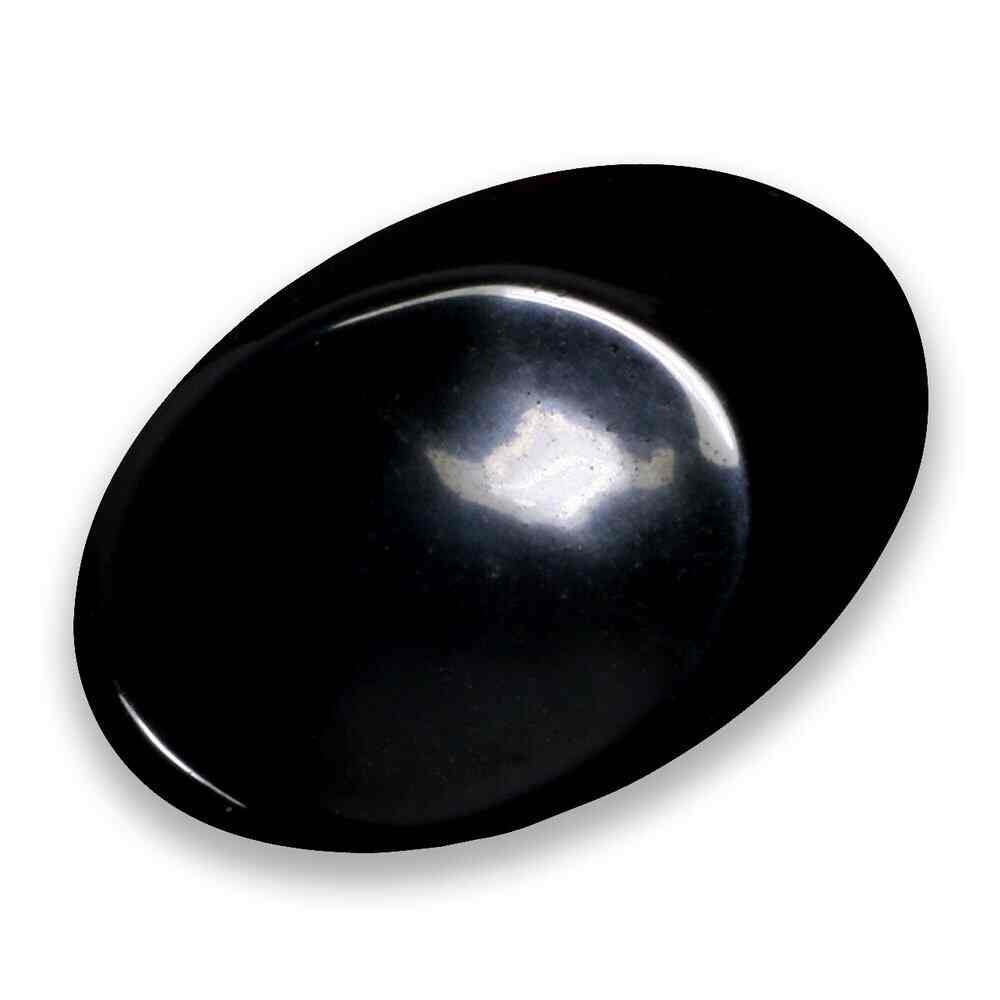
Jet is remarkably lightweight, making it an ideal choice for large, elaborate jewelry designs that remain comfortable to wear all day. However, with a Mohs hardness of only 2.5 to 4, it is relatively soft and brittle compared to mineral gemstones. To prevent accidental chips or impact damage, jet is best suited for pieces like pendants, earrings, and brooches rather than rings or bracelets that encounter more daily wear and tear. It is important to remove jet jewelry before sports or any vigorous physical activity. For maintenance, never use ultrasonic or steam cleaners; instead, simply wash the stone with warm, soapy water and a soft brush. If the surface begins to look dull over time, a tiny amount of mineral oil applied with a soft cloth can effectively restore its signature deep-black shine.