
Papagoite is one of the most visually arresting and mineralogically intriguing copper silicates known to collectors and gem enthusiasts. Celebrated for its saturated, electric-blue coloration, this rare mineral occupies a unique niche in both systematic mineralogy and the world of high-end mineral specimens. Although seldom encountered in faceted form due to its rarity and physical limitations, papagoite has gained considerable attention for its dramatic inclusions within quartz and its distinctive crystallographic character.
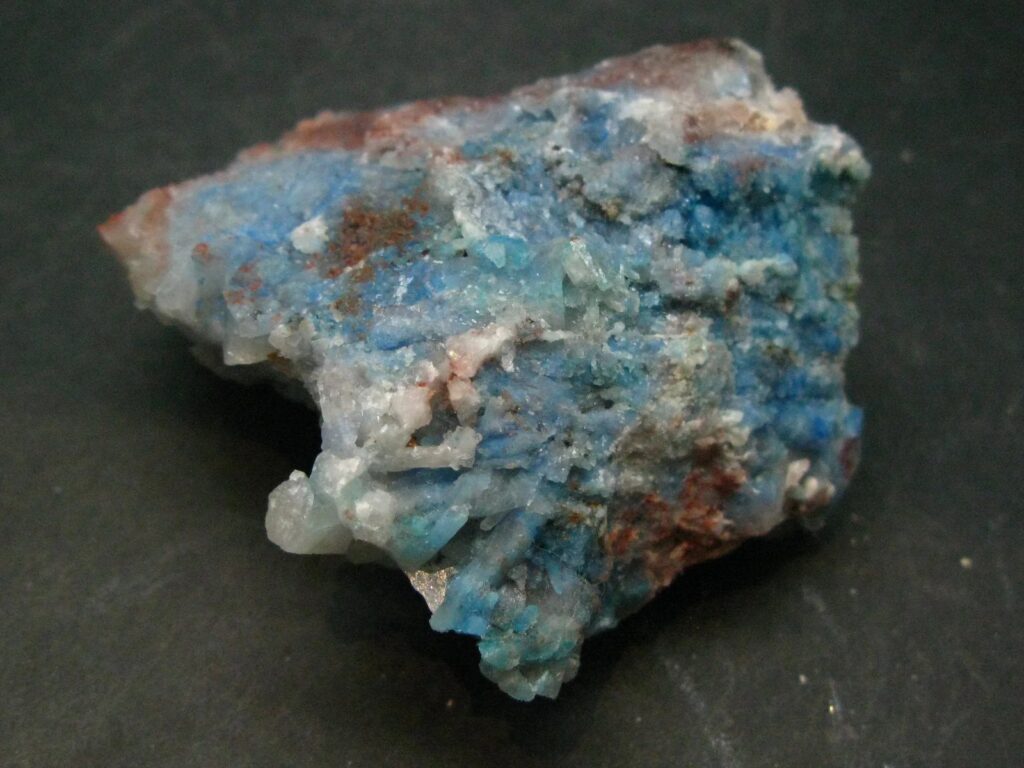
What Is Papagoite?
Papagoite is an exceptionally rare and vibrant cyclosilicate mineral, most famous for its mesmerizing, electric-blue hue that seems to glow with an otherworldly intensity. First discovered in 1960 in Ajo, Arizona, it was named in honor of the Tohono Oʼodham people (formerly known as the Papago) who are indigenous to the region. While it is chemically a complex calcium copper aluminum silicate, its true allure lies in its scarcity and its stunning presentation as microscopic, needle-like inclusions within clear quartz crystals—most notably from the legendary Messina Mine in South Africa. Because the primary sources for high-quality specimens have long been exhausted, papagoite has become a definitive “holy grail” for mineral collectors, prized both for its vivid copper-driven color and its dreamlike appearance when trapped in crystal “phantoms.”

Mineralogical Classification and Chemistry
Papagoite is a hydrated copper aluminum silicate with the idealized chemical formula CaCuAlSi2O6(OH)3. It belongs to the silicate mineral class, specifically within a structurally complex group of chain silicates. The intense blue coloration arises primarily from copper (Cu2+) ions, whose electronic transitions within the crystal lattice selectively absorb portions of the visible spectrum, producing the mineral’s vivid azure hue. This specific interaction with light is what gives the mineral its signature electric glow, distinguishing it from other copper-bearing silicates that might lean more toward green or turquoise tones.
The mineral crystallizes in the monoclinic crystal system (though sometimes discussed in relation to tetragonal symmetries in specific structural studies), typically forming elongated prismatic crystals or granular aggregates. However, well-formed crystals that are visible to the naked eye are transitionally rare. In the majority of geological occurrences, the material is encountered as microscopic inclusions trapped within other host minerals or as compact, earthy masses. When these inclusions occur within clear quartz, they often form radiating sprays or “suns” that are highly sought after for their aesthetic and scientific value.
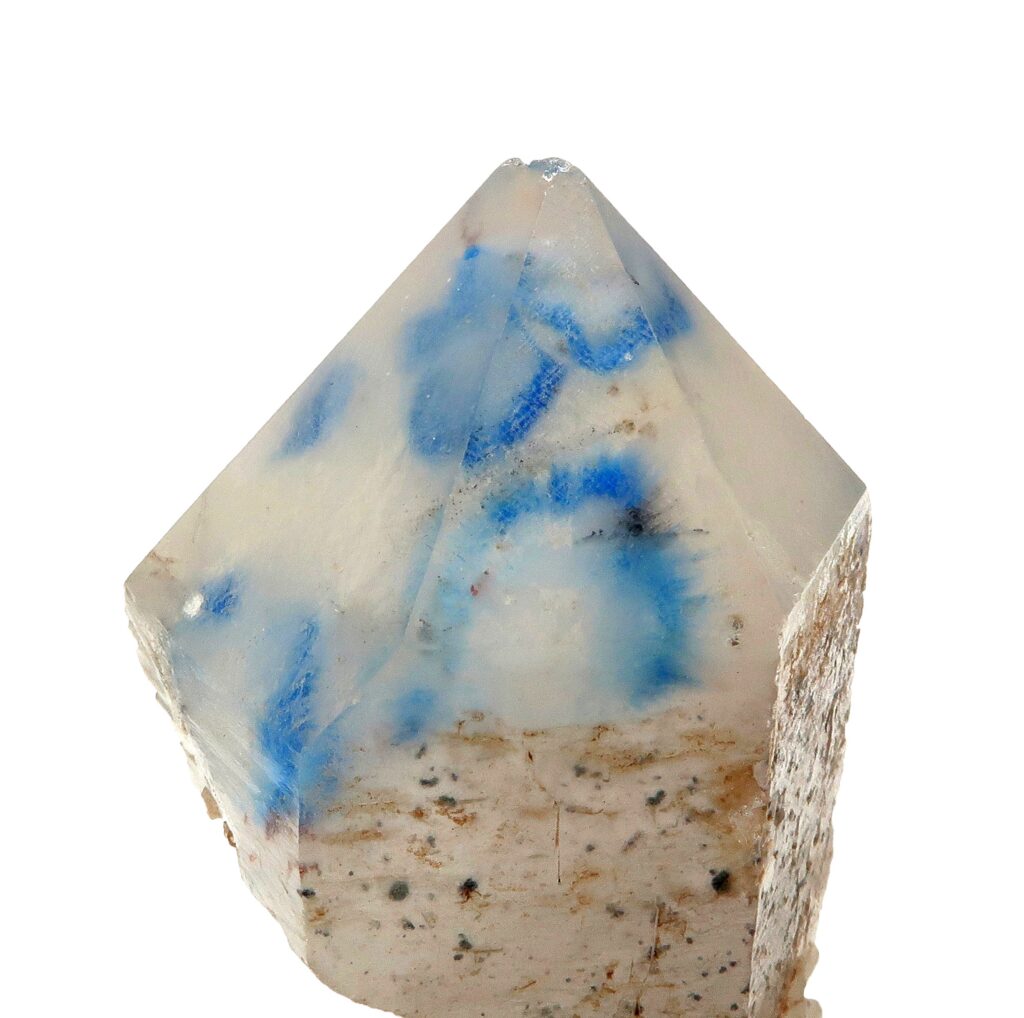
The Spectrum of Papagoite: Beyond a Single Shade
While papagoite is most celebrated for its iconic electric blue or deep azure, its mineralogical and visual profile reveals a nuanced palette that extends beyond a single monochromatic tone. The mineral’s color spans a spectrum from profound, dark azure to a bright, luminous cerulean. Under specific lighting conditions, the presence of copper in its chemical composition may even impart a faint blue-green tint, though this greenish lean is typically much less pronounced than that of its famous associate, ajoite. When tested for its streak, the mineral is reduced to a delicate pale blue powder.
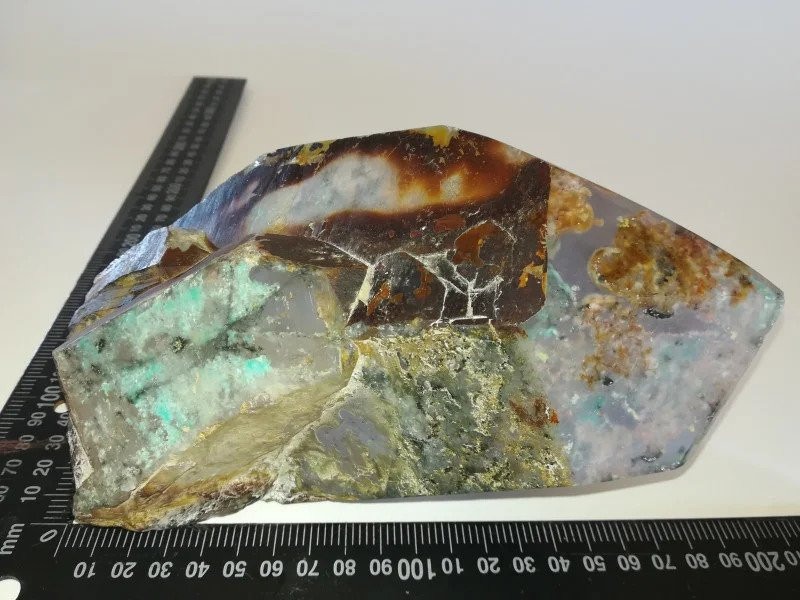
The visual complexity of papagoite is further enhanced by its association with other minerals and its internal structure. In world-class collector specimens, papagoite frequently coexists with ajoite, which presents as a soft teal or turquoise green. When both minerals are suspended within a single clear quartz crystal, they create a dreamlike landscape of interlocking deep blues and soft greens. Furthermore, under microscopic examination, the blue distribution often appears uneven due to internal zoning or structural variations, manifesting as clusters of varying intensity. Ultimately, while its “soul” remains a singular, high-saturation blue, papagoite offers a sophisticated internal world of color.
Papagoite: Formation and Gemological Occurrence
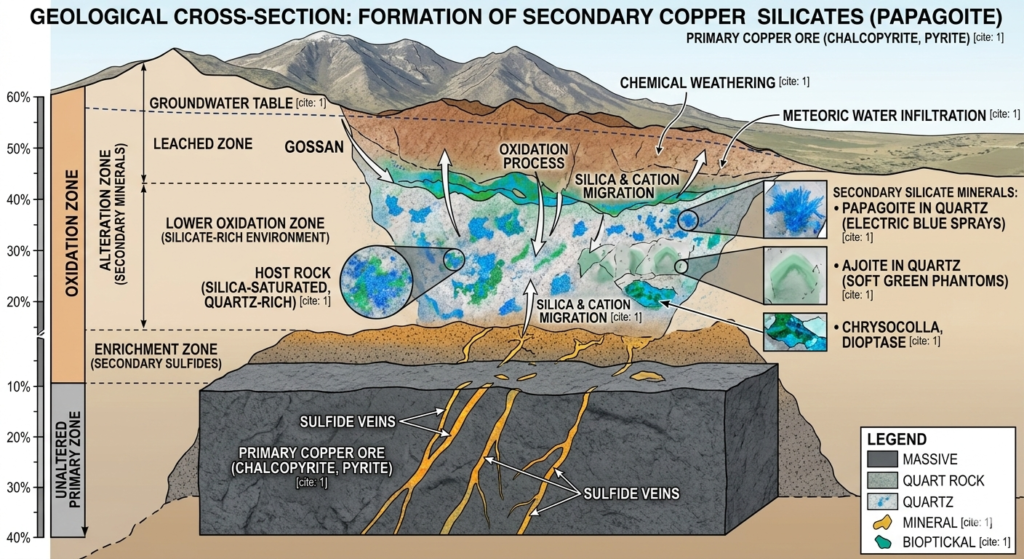
The formation of papagoite is a sophisticated geochemical process that occurs within the secondary oxidation zones of copper deposits, particularly in environments rich in reactive silica. As a secondary mineral, it is not formed during initial magmatic crystallization but rather through the long-term chemical weathering of primary copper ores when exposed to oxygen and meteoric waters. The presence of specific cations—calcium, copper, and aluminum—must converge under precise pressure and temperature thresholds within a silica-saturated environment to allow this complex silicate to crystallize.
In the gemological context, papagoite is most renowned for its hydrothermal occurrence, where it is captured as inclusions within growing quartz crystals. This is famously seen in the Messina Mine of South Africa, where copper-rich fluids circulated through fractured quartz veins. As the quartz crystals precipitated from the hydrothermal solution, tiny sprays of papagoite were trapped within the host, often forming “phantoms” that trace the crystal’s historical growth stages. Because these specific geological conditions are rarely met and the primary historical localities have largely ceased production, the formation of high-quality papagoite remains a rare anomaly in the mineral kingdom.
Gemological Utility and Synthetic Status
While its breathtaking color makes it a tempting candidate for jewelry, Papagoite is rarely used in traditional faceted settings due to its physical properties. With a relatively low hardness and a tendency to occur in brittle, fibrous aggregates, the mineral is prone to fracturing under the pressure of professional cutting tools. Furthermore, because it is almost never found in large, transparent crystals, it is virtually impossible to produce substantial faceted gemstones. Instead, it is primarily celebrated in the jewelry world as “included quartz,” where the hard quartz host acts as a protective shield for the delicate blue papagoite “phantoms” inside. These specimens are often cut into cabochons or polished points to showcase the internal landscapes without risking the mineral itself.Regarding lab-grown alternatives, there is currently no synthetic Papagoite available on the commercial market. The geological conditions required to balance copper, aluminum, calcium, and silica into this specific crystal lattice are extremely complex and costly to replicate in a laboratory setting. While some deceptive “blue-included” glass or dyed quartz exists, authentic papagoite remains a strictly natural treasure, prized by collectors for its rarity and the fact that it cannot be mass-produced by man.
Geographical Sources of Papagoite
Papagoite is an exceptionally rare mineral with only a handful of documented localities worldwide. Its occurrence is restricted to specific geological environments where copper-rich fluids interact with high-silica host rocks.
- Messina Mine, South Africa: This is the most famous and significant source of gem-quality papagoite. It is the only location known for producing the iconic “phantom” quartz crystals, where vibrant blue papagoite sprays are trapped inside clear quartz points.
- Ajo, Arizona, USA: The mineral was first discovered and named here, specifically at the New Cornelia Mine in Pima County. While it serves as the type locality, the material found here typically occurs as thin crusts or microscopic crystals on matrix rather than large inclusions.
- Namibia: Small occurrences have been reported in the Kaokoveld Plateau. These specimens are rare and often show papagoite in association with other secondary copper minerals like malachite or shattuckite.
- Slovakia: Minor scientific occurrences have been noted in the L’ubietová (Libethen) district, though these are primarily of interest to mineralogists rather than collectors.
Because the Messina Mine has long been closed and flooded, no new material is being actively mined from its primary source. This finite supply, combined with the lack of new discoveries elsewhere, has solidified papagoite’s status as one of the most “location-specific” and elusive minerals in the world.
Papagoite Price & Value
Papagoite is considered a premium collector’s mineral, with its market value primarily dictated by its extreme rarity and high aesthetic appeal. Because the Messina Mine—its most significant source—is no longer operational and has been flooded for years, the global market relies almost entirely on a finite supply of specimens from older, private collections. This stagnant supply, coupled with a growing demand for electric blue minerals, has caused the price of high-quality pieces to rise steadily. The valuation of a specific piece depends on several critical factors, most notably the intensity of its color and the nature of its formation. Brighter, more saturated electric blue inclusions command significantly higher prices than those with muted or pale tones. For specimens where the mineral is trapped within quartz, the clarity of the host crystal is paramount; water-white quartz that offers a clear, unobstructed view of internal suns or radiating sprays represents the gold standard for collectors. Furthermore, specimens that exhibit a dual association—containing both the deep blue of papagoite and the soft teal-green of ajoite—are considered the pinnacle of mineral collecting and can fetch astronomical prices at auction. Current market trends reflect this exclusivity, with small thumbnail or rough specimens typically ranging from $35 to $300, while polished cabochons of papagoite-in-quartz can sell for anywhere between $15 and $90 per carat. Standard cabinet-sized specimens generally fall between $300 and $2,500, though museum-grade crystals featuring large, well-defined phantom inclusions or rare combinations with ajoite frequently start at $3,000 and can exceed $30,000 for world-class examples.
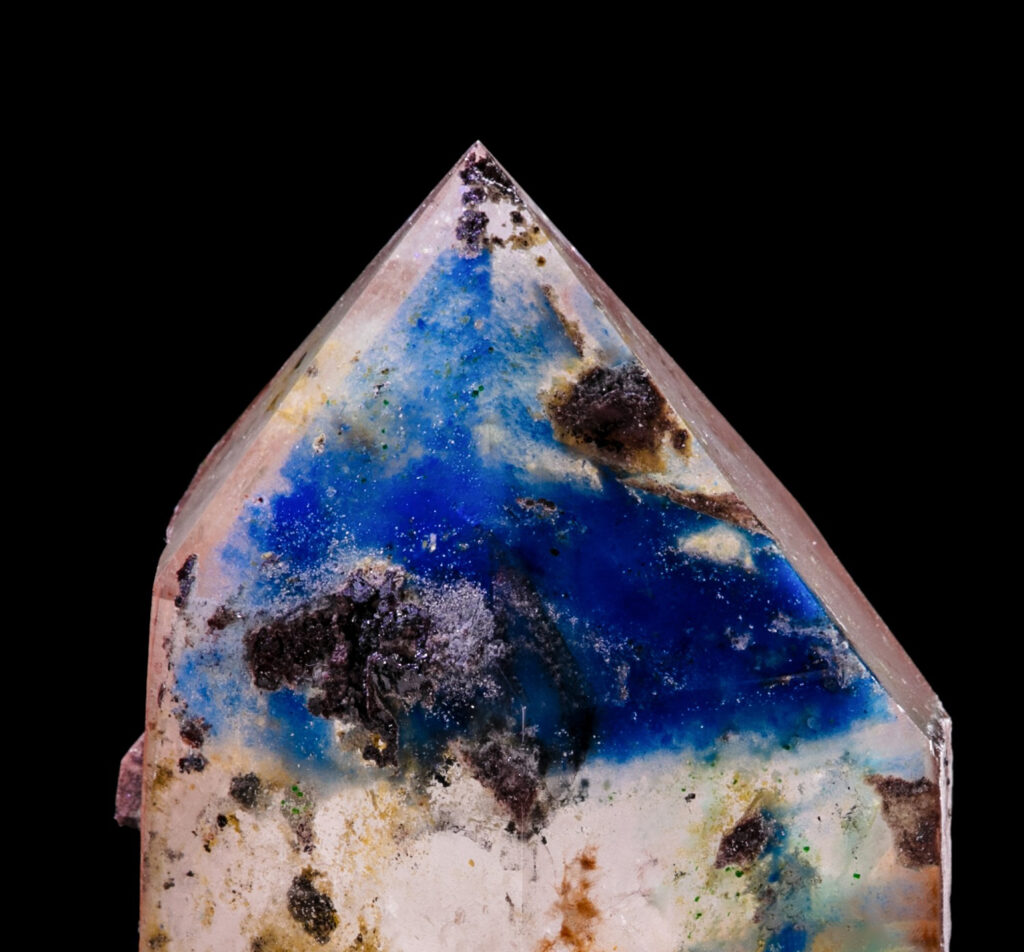
For collectors, a piece of quartz containing papagoite represents more than just a vibrant splash of color; it is a masterwork of nature where the resilience of quartz and the brilliance of copper converge to create a timeless, electric blue landscape.