
Chabazite stands out as a fascinating zeolite mineral, revered by geologists and industrial engineers alike for its distinctive rhombohedral crystal form and its exceptional, high-capacity ion-exchange properties. As a cornerstone member of the zeolite group, it belongs to a specialized family of hydrated aluminosilicate minerals typically birthed in the high-energy environments of volcanic cavities or through the slow alteration of sedimentary ash. Its complex chemical architecture is generally represented by the formula
(Ca,Na₂,K₂,Mg)Al₂Si₄O₁₂·6H₂O ,a variable composition that highlights its ability to host different dominant cations depending on its specific geological “birthplace.”
Beyond its chemical utility, the mineral carries a rich historical pedigree; it was first identified in the late 18th century and subsequently named by the legendary French mineralogist René Just Haüy, whose work laid the very foundations of modern crystallography. The name “chabazite” itself echoes ancient origins, derived from the Greek word chabazios (meaning “easy to break”), a direct nod to the mineral’s perfect rhombohedral cleavage that allows it to fracture into neat, geometric shards. Today, this “easy to break” stone is a high-tech hero, utilized as a sophisticated molecular sieve to filter gas streams and remediate environmental toxins, proving that its value has only grown since its discovery over two centuries ago.
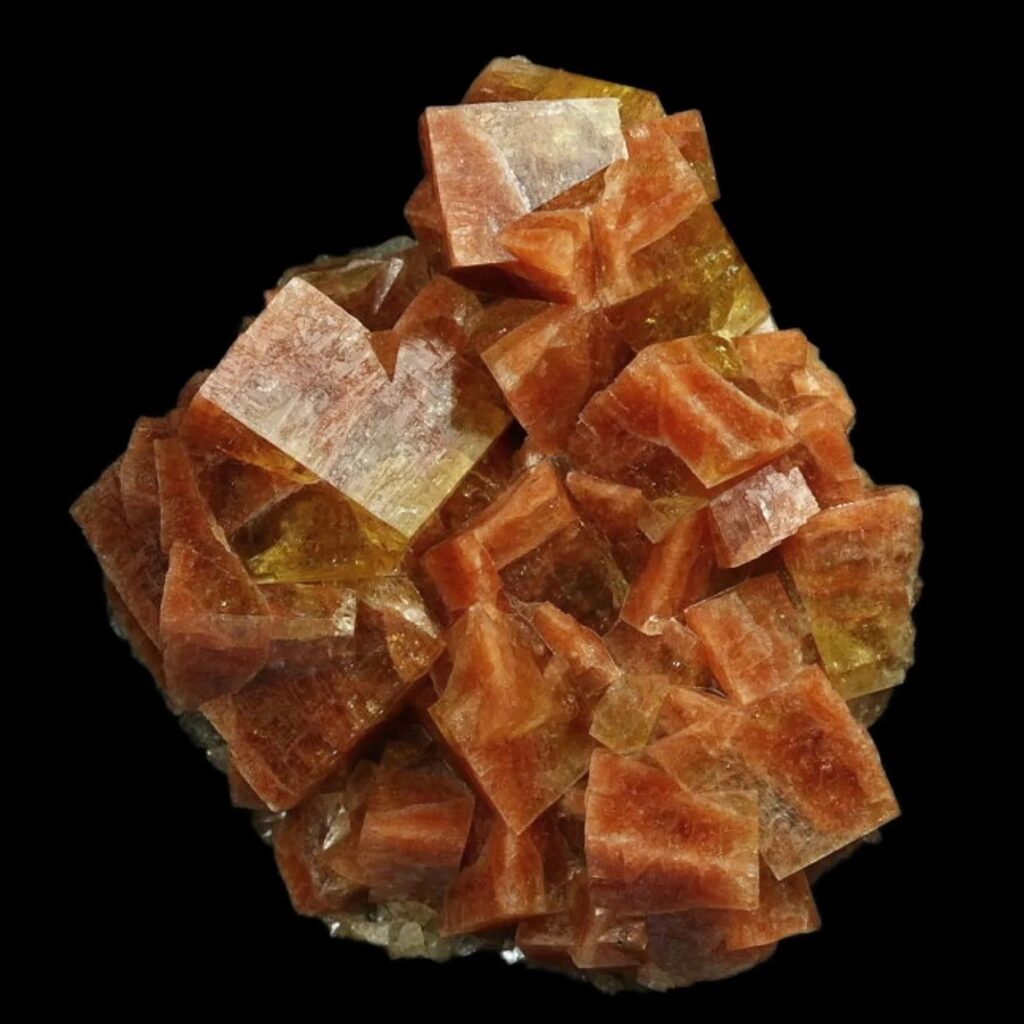
At its structural core, chabazite is a sophisticated hydrated calcium sodium aluminum silicate, though its chemical identity is famously fluid; depending on its geological environment, cations such as potassium and magnesium frequently substitute into its framework. This mineral belongs to the tectosilicate group, characterized by a robust three-dimensional lattice of interconnected SiO₄ and AlO₄ tetrahedra. These tetrahedral units are linked by shared oxygen atoms to form an intricate, cage-like framework known specifically as the “chabazite-type” (CHA) structure. This internal geometry is defined by large, open cavities connected by narrow eight-membered ring windows, effectively creating a natural molecular sieve.
This high-porosity architecture grants chabazite its most remarkable functional capabilities: the ability to absorb and release water molecules reversibly without collapsing (dehydration and rehydration), the capacity for selective cation exchange to “swap” ions with its surroundings, and the power to trap specific gases and microscopic molecules within its molecular cages. It is this unique combination of chemical flexibility and structural stability—represented by the general formula (Ca,Na₂,K₂,Mg)Al₂Si₄O₁₂·6H₂O—that elevates chabazite from a mere geological curiosity to a critical asset in industrial catalysis, carbon capture, and environmental filtration.
Visual Appearance and Identification of Chabazite
In the field, chabazite is most recognized for its elegant and often symmetrical visual presentation. While it is naturally colorless or white in its purest form, the presence of trace impurities or specific dominant cations can shift its palette toward delicate shades of pink, salmon-orange, pale yellow, or even brownish-red. These crystals typically exhibit a vitreous (glassy) luster and vary from transparent to translucent, often catching the light in a way that highlights their sharp geometric edges.
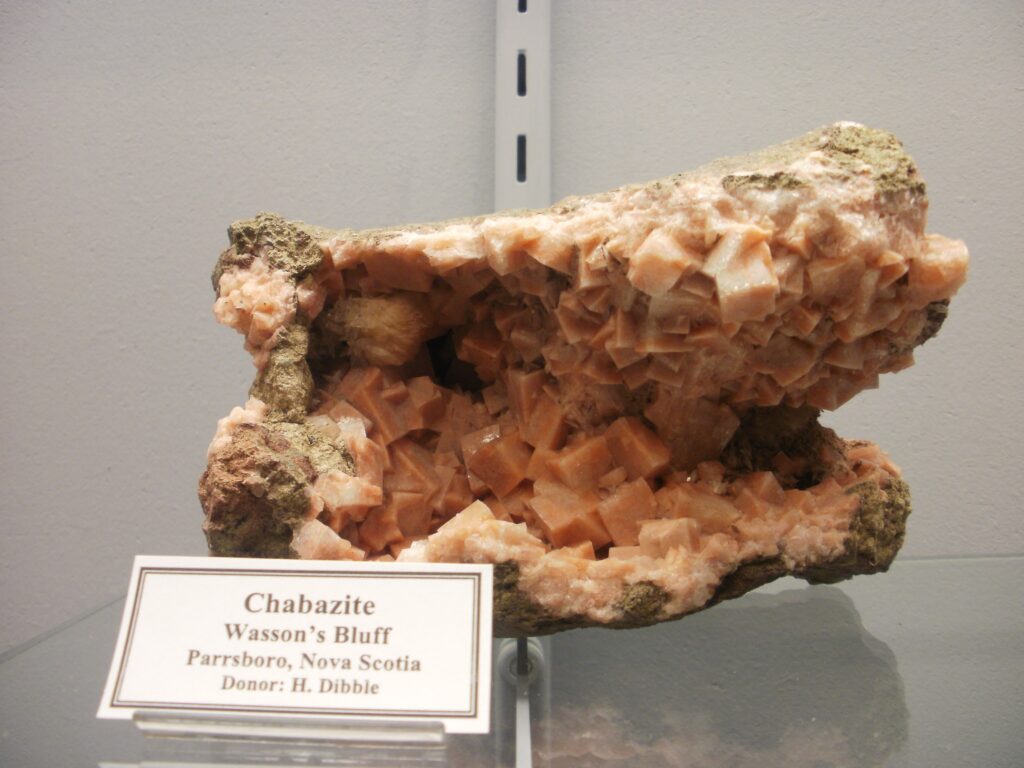
Identifying chabazite requires a keen eye for its specific physical properties, which distinguish it from other members of the zeolite family:
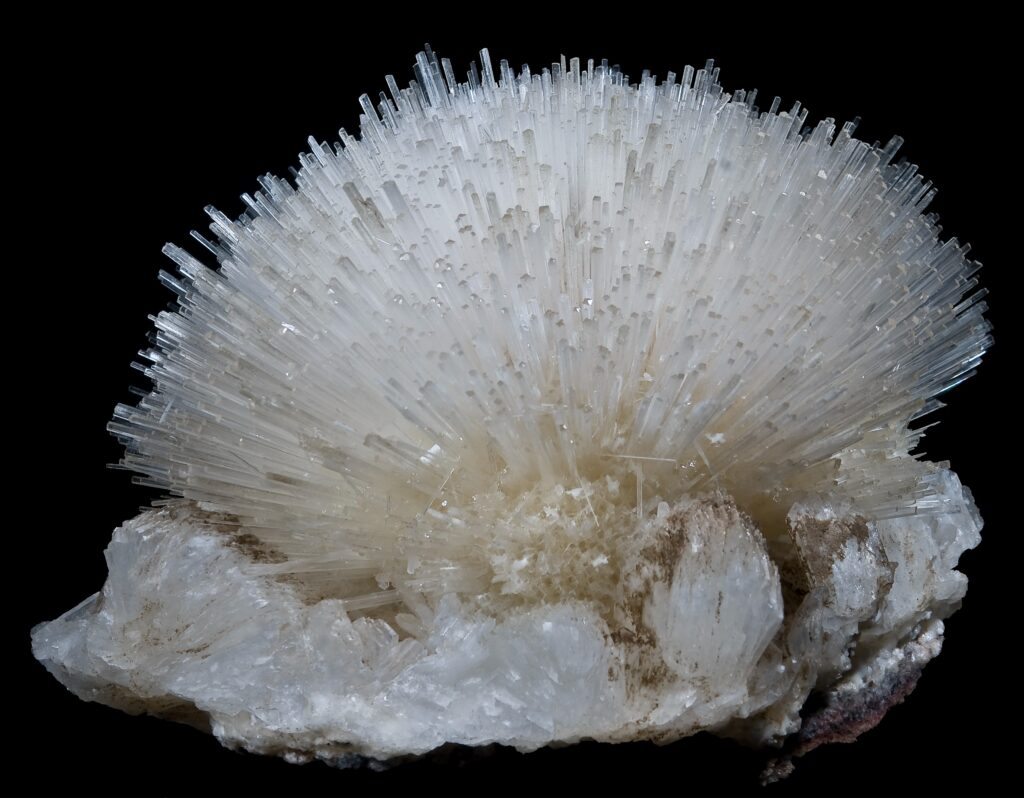
- Crystal Habit: Its most defining feature is the rhombohedral crystal system. These crystals often appear as “pseudo-cubic,” meaning they look like slightly skewed cubes to the naked eye. This distinguishes them from the needle-like (fibrous) habits of zeolites like natrolite or mordenite.
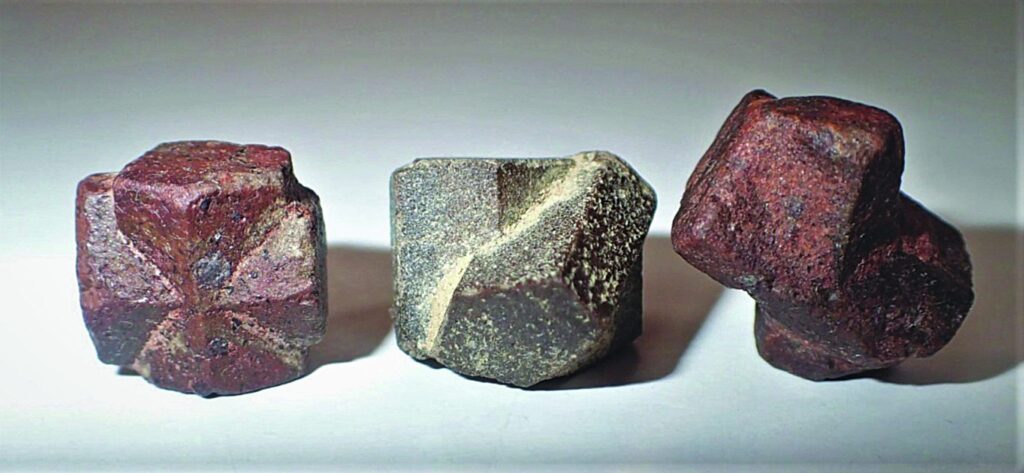
- Twinning: Chabazite frequently displays penetration twinning, where two or more crystals appear to grow through one another. This creates complex, interpenetrating geometric clusters that are a hallmark of the species.
- Cleavage and Fracture: True to its etymological roots, chabazite has distinct rhombohedral cleavage. When broken, it tends to fracture into neat, rhombic fragments rather than irregular shards.
- Physical Constants: It sits at a 4 to 5 on the Mohs hardness scale, making it harder than calcite but softer than feldspar. Its low specific gravity (approximately 2.05 to 2.20) is a physical manifestation of its hollow, cage-like internal structure.
- Associated Minerals: Context is key for identification; chabazite is commonly found in the cavities of basaltic rocks, often nestled alongside stilbite, heulandite, calcite, or quartz.
Does Chabazite Make a Good Jewelry Stone?
While chabazite can exhibit a range of pale yet undeniably attractive colors—from delicate salmon pinks to soft, translucent yellows—it is rarely considered a viable candidate for mainstream jewelry. The primary obstacle lies in its physical vulnerability; with a Mohs hardness rating of only 4 to 5, the stone is far too soft to withstand the daily abrasions and impacts associated with rings or bracelets. Furthermore, chabazite is seldom found in a “clean” or “eye-clean” condition. Its complex, cage-like internal framework naturally leans toward translucency rather than the high-grade transparency required for traditional faceting.Because these crystals are almost never entirely transparent, lapidaries and faceters find them incredibly challenging to work with. Often, a gem cutter can only salvage a single small corner of a pinkish or colorless crystal to produce a finished gem. Consequently, you are far more likely to encounter chabazite in a dedicated mineral cabinet than in a jewelry collection. Even prestigious museum galleries that specialize in rare or “exotic” gemstones seldom possess faceted chabazite specimens, making a cut stone a true holy grail for niche collectors.
Major Localities and Geological Occurrences
Chabazite is widely distributed across the globe, typically found lining the cavities and vesicles of volcanic rocks like basalt and phonolite, or occurring within altered tuff and sedimentary deposits. These diverse environments result in varying chemical compositions and crystal habits depending on the region’s specific geochemistry.
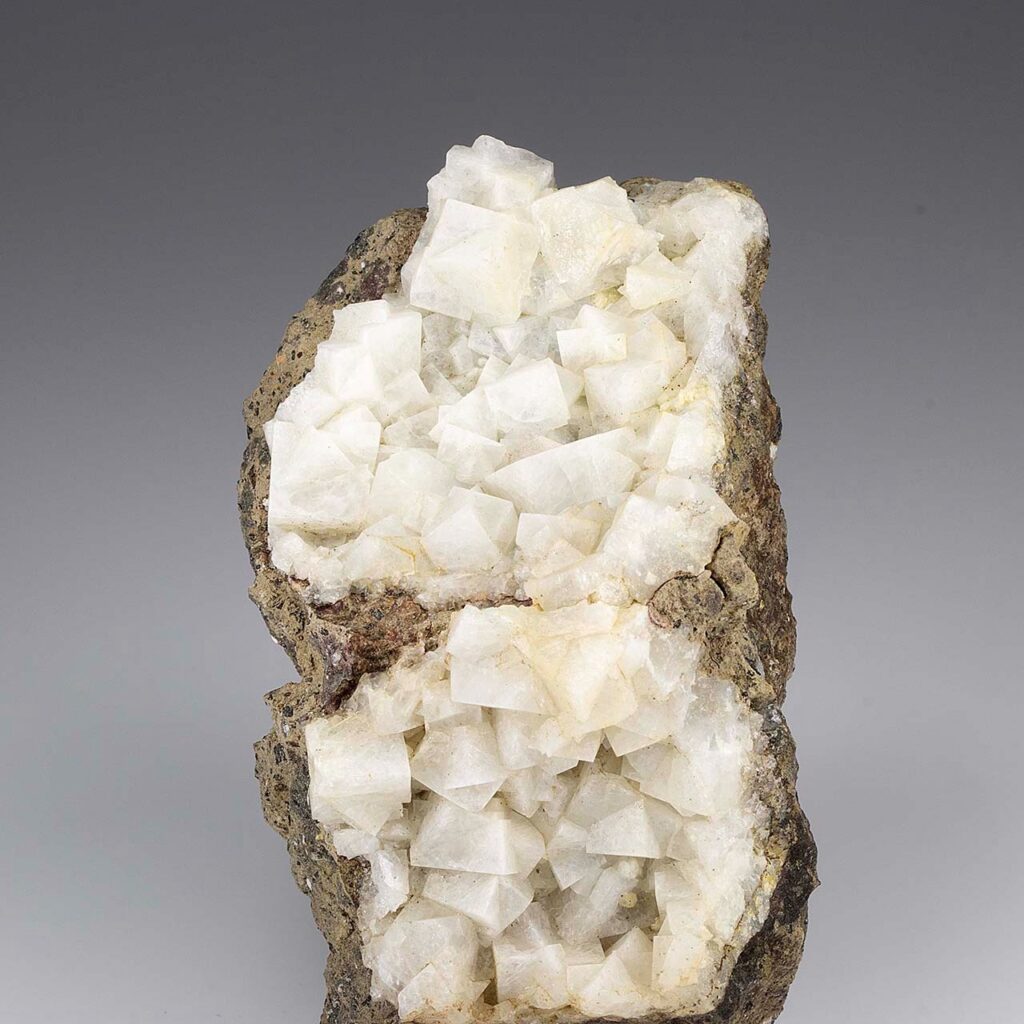
Notable localities for world-class chabazite specimens include:
- Nova Scotia, Canada: The basalt cliffs of the Bay of Fundy, particularly Wasson’s Bluff, are world-renowned for producing large, beautiful clusters of salmon-colored chabazite.
- Italy: The volcanic regions near Rome and Naples, as well as the islands of Sicily and Sardinia, have historically provided significant mineralogical samples, often associated with other rare zeolites.
- The United States: High-quality specimens are frequently recovered from the volcanic rocks of Oregon, Arizona, and New Jersey. Arizona, in particular, hosts large sedimentary chabazite deposits that are mined for industrial applications like water filtration.
- India: The Deccan Traps near Pune and Nasik are famous for producing a wide array of zeolites, where chabazite is often found alongside minerals like stilbite and apophyllite.
- Northern Ireland and Scotland: The basaltic plateaus of County Antrim and the Isle of Skye have a long history of yielding exceptional colorless and white rhombohedral crystals.
- Australia: The volcanic regions of New South Wales and Tasmania are known for producing distinct, high-clarity crystals that are prized by collectors.
Although faceting chabazite isn’t too difficult, it’s too soft for jewelry. However, only a handful of cut chabazites may exist because facetable material is extremely scarce.