
Bismutotantalite stands as an exceptionally rare and chemically complex mineral member of the stibiotantalite group, distinguished primarily by its fascinating fusion of heavy bismuth and refractory tantalum within a stable oxide framework. It is a naturally occurring inorganic compound that materializes only under highly specific and extreme geological pressures, typically during the final, volatile-rich phases of magmatic differentiation. While the mineral is technically capable of being faceted into striking collector stones by master lapidaries, it remains one of the most elusive and exotic materials encountered in the gemstone world. Its presence in any collection is usually a testament to an exhaustive search, as it is far more difficult to source than traditional precious gems, often reserved for the most comprehensive mineralogical archives and holy grail enthusiast circuits.
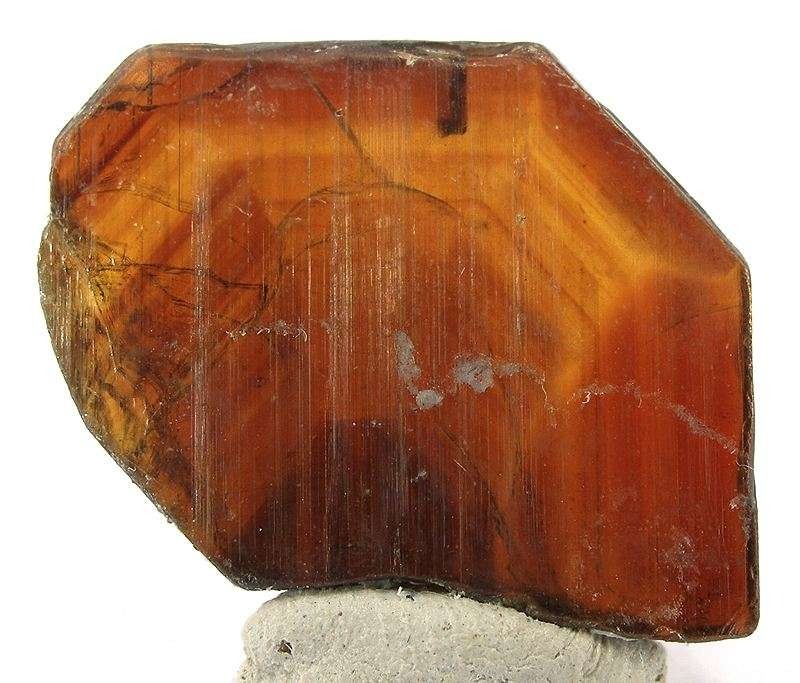
Name and Chemical Nature
The nomenclature of bismutotantalite serves as a literal chemical inventory of its primary metallic constituents, namely bismuth and tantalum. Formally represented by the chemical formula (Bi, Sb)(Ta, Nb)O4, it exists as part of a complex and continuous solid-solution series where antimony may substitute for bismuth and niobium may replace tantalum depending on the local geochemistry of the host rock. The absolute dominance of bismuth and tantalum is the defining characteristic of this specific species, resulting in a mineral that is significantly heavier and more chemically resilient than its more common relatives in the broader tantalite group. Its composition represents a rare geochemical coincidence where two heavy, rare metals find a stable structural home in the same crystal lattice, offering a unique glimpse into the elemental sorting processes of the Earth’s crust.
Physical Characteristics
Bismutotantalite typically manifests in a sophisticated and earthy color palette that ranges from honey-yellow and light cinnamon brown to deep, pitch-black tones. Its luster is one of its most captivating features, varying from submetallic to adamantine, which gives polished surfaces a brilliant, greasy-to-metallic sheen that catches the light with a distinctively heavy or dense appearance. Perhaps its most startling physical trait is its extreme density; with a specific gravity often exceeding 8.15, a small crystal feels unexpectedly massive in the palm of the hand, weighing nearly three times as much as a quartz crystal of equivalent volume. It possesses a Mohs hardness of approximately 5 to 5.5, which is comparable to window glass, and while large crystals are usually opaque and rugged, thin splinters or edges often reveal a surprising, warm translucency that hints at the hidden gemological potential within the raw ore.
Optical Properties
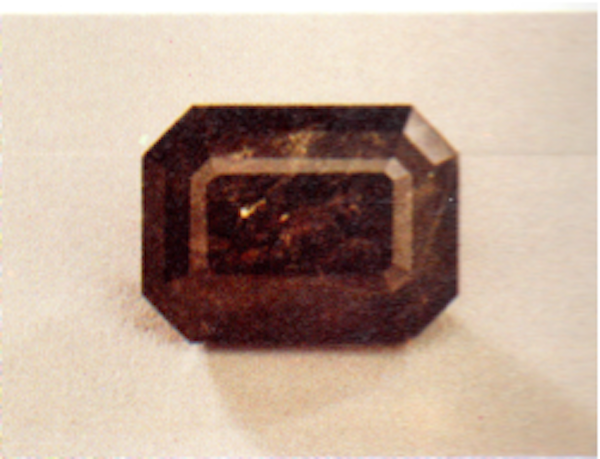
From an optical perspective, bismutotantalite is a powerhouse of light manipulation and refraction. It exhibits remarkably high refractive indices, typically measured at alpha = 2.388, beta = 2.403, and gamma = 2.428, which far exceed the limits of most standard gemological refractometers and even rival the optical brilliance of a diamond. Classified as biaxial positive, its internal crystalline symmetry belongs to the orthorhombic system, characterized by three mutually perpendicular axes of unequal length. This complex internal geometry results in significant birefringence and strong dispersion, meaning light is split and refracted intensely as it passes through the crystal lattice. This contributes to a visual fire and perceived depth that is rarely seen in minerals of such high metallic content, making the few transparent examples highly prized for their optical performance.
Occurrence and Geological Setting
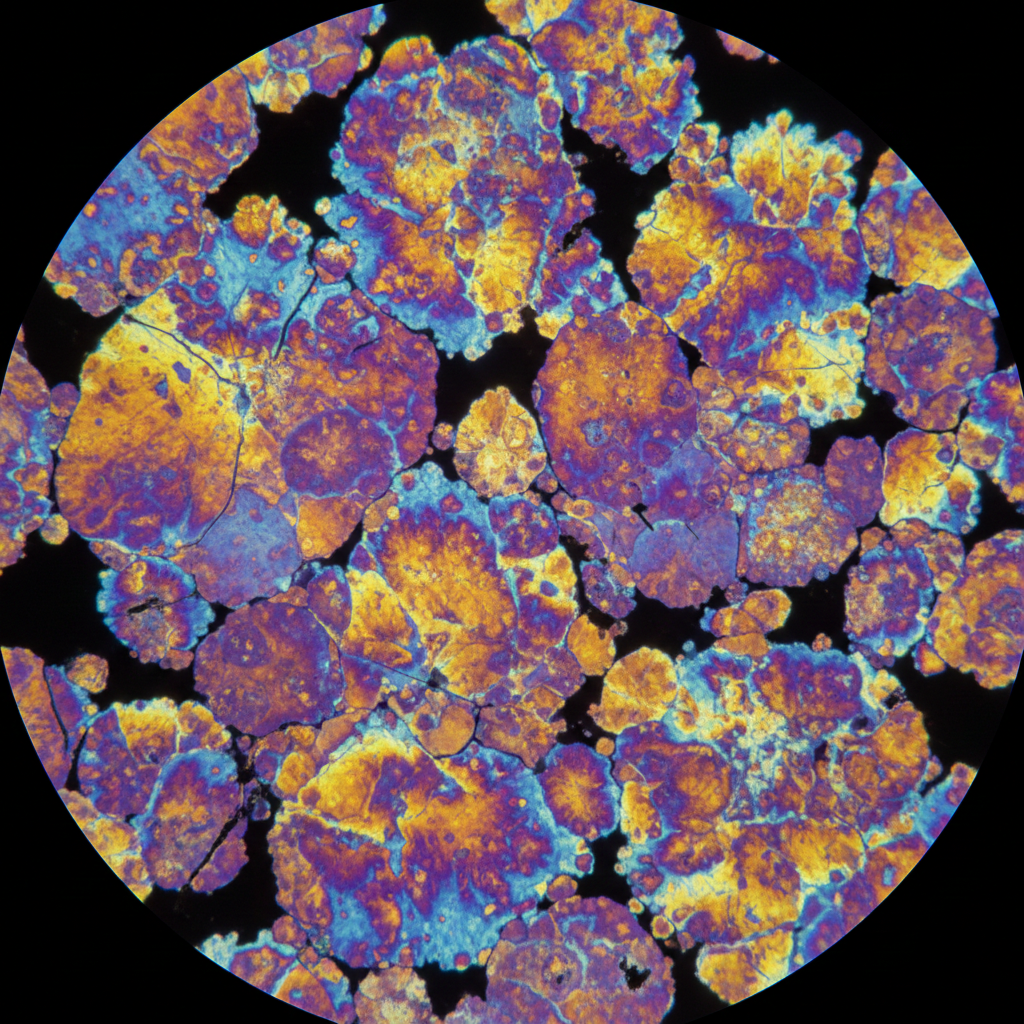
This mineral is essentially a child of the granitic pegmatite, specifically those described as highly evolved or chemically zoned. These are coarse-grained igneous rocks formed during the terminal stages of magma crystallization, where the residual melt becomes highly enriched in rare elements and volatile gases that do not easily fit into the structures of common rock-forming minerals like feldspar or quartz. As the parent magma body cools and solidifies, elements like bismuth and tantalum are squeezed into these final, concentrated liquid pockets. When these rare fluids finally crystallize in vugs or veins, they allow bismutotantalite to form alongside other exotic species like tourmaline, lepidolite, and spodumene, often in high-pressure environments that facilitate the growth of rare oxide minerals.
Sources and Localities
The global supply of bismutotantalite is restricted to a handful of elite and historically significant geological sites. The type locality is Gamba Hill in Uganda, where the first documented specimens were identified in the late 1920s, revealing to the scientific community the existence of such a heavy bismuth-tantalum oxide. Since then, other world-class specimens have been unearthed in the Acari region of Brazil and the complex pegmatite fields of Mozambique. Rare occurrences have also been noted in the Stewart Mine in California, USA, and parts of Kazakhstan. Because these deposits are so localized and the mineral occurs in such small, sporadic quantities, there are no dedicated commercial mining operations for it; instead, it is almost exclusively recovered as a serendipitous byproduct of industrial tantalum or lithium mining.
Bismutotantalite is an exceptional rarity in the world of faceted gemstones, often missing even from the most comprehensive mineral collections. While several members of the tantalite group are occasionally cut, this species remains the most elusive. Despite its alluring warm hues, its modest hardness and distinct cleavage mean it is best reserved as a protected “trophy” specimen rather than for use in jewelry.