
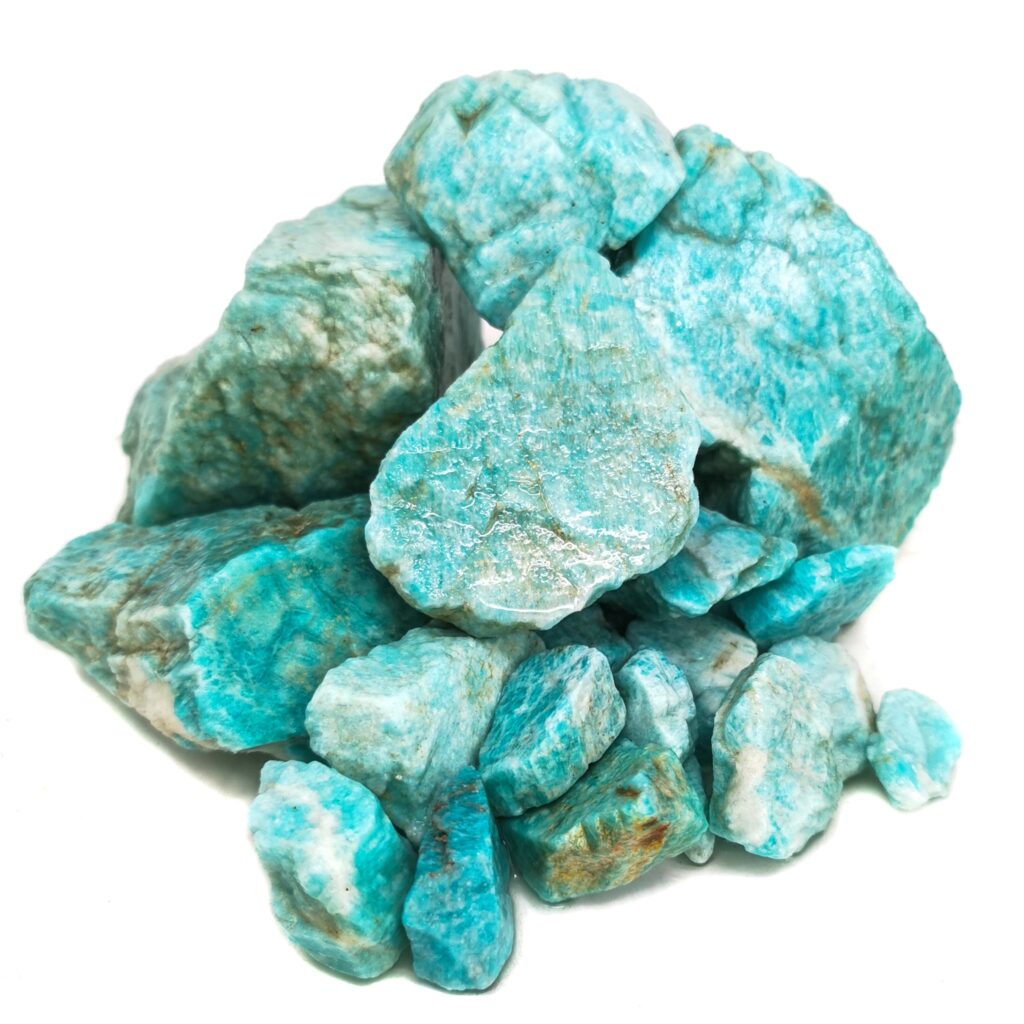
Amazonite is a green to blue-green variety of microcline feldspar, a potassium-rich tectosilicate mineral that forms a major component of the Earth’s continental crust. Although widely recognized in gemological and decorative contexts, Amazonite is best understood through the lens of mineralogy and geology rather than commercial classification. Its significance lies not in rarity, but in the combination of its color, crystal chemistry, geological formation, and long history of human use.
Feldspar Minerals and the Place of Amazonite
Overview of the Feldspar Group
Feldspars are the most abundant group of minerals in the Earth’s crust, accounting for approximately 60 percent of continental rocks. They are framework silicates, or tectosilicates, characterized by a three-dimensional network of silicon and aluminum tetrahedra bonded with alkali or alkaline earth metals. Feldspars are broadly divided into two major groups: alkali feldspars and plagioclase feldspars.
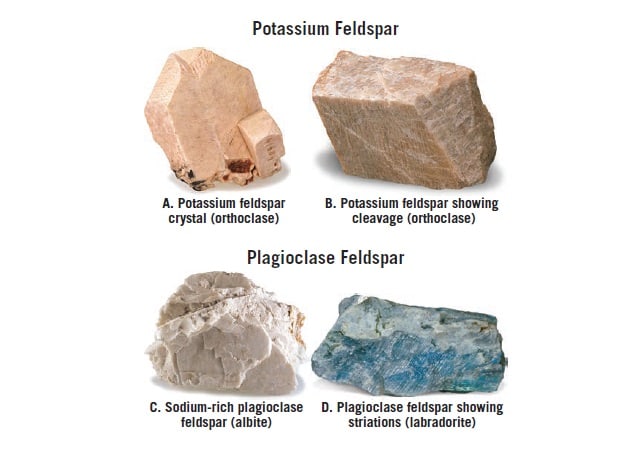
Amazonite belongs to the alkali feldspar group, which is dominated by potassium feldspar varieties. These minerals play a central role in igneous petrology and are key indicators of magmatic processes, cooling history, and chemical environments within the crust.
Fundamental Chemical Formula
The idealized chemical formula of Amazonite is KAlSi₃O₈. This formula reflects a framework of silicon and aluminum tetrahedra linked by shared oxygen atoms, with potassium ions occupying interstitial sites to maintain electrical neutrality. Variations in composition are generally minor and occur at the trace-element level.
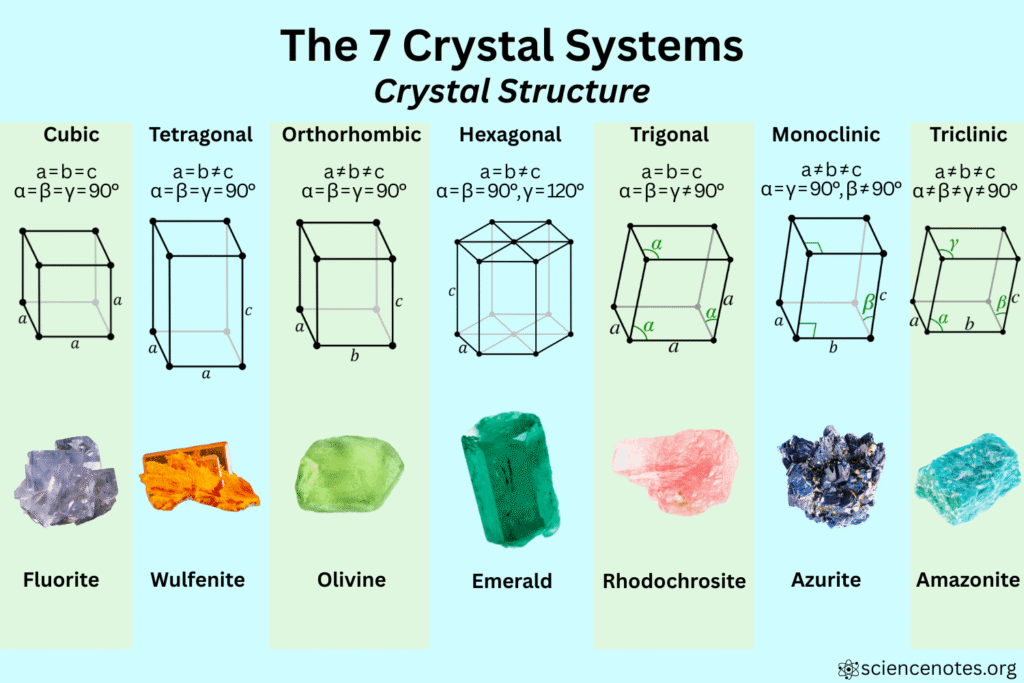
From a crystallographic perspective, Amazonite exhibits a highly ordered aluminum-silicon distribution, a characteristic feature of microcline formed under slow cooling conditions.
Trace Elements and Color Mechanisms
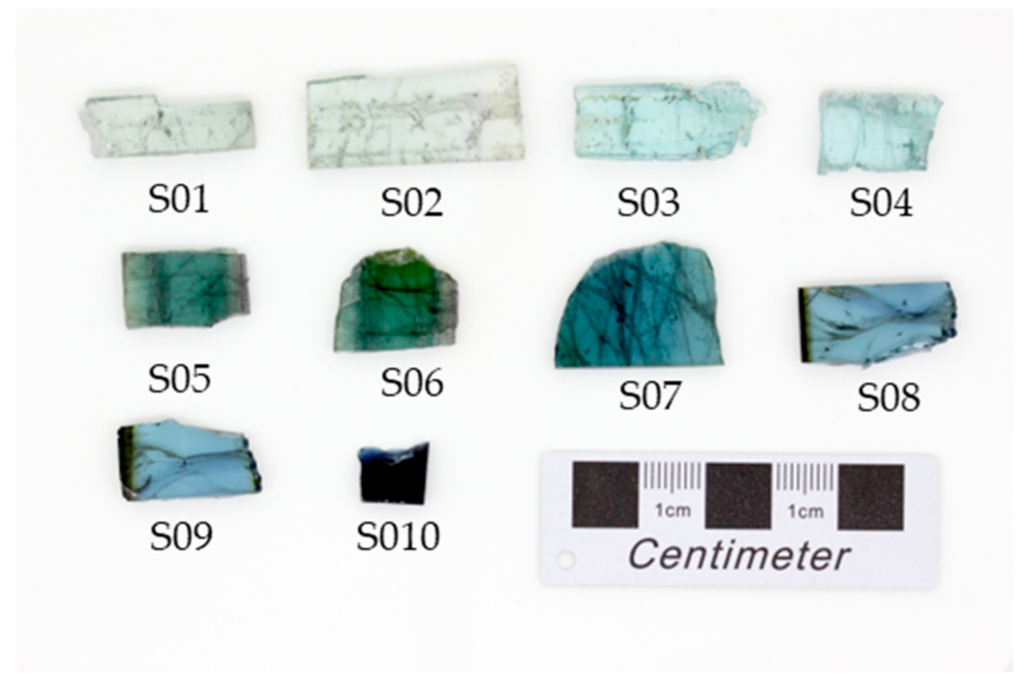
The origin of Amazonite’s distinctive color was historically misunderstood. Early hypotheses attributed the green coloration to copper, largely by analogy with other green minerals. However, detailed spectroscopic and chemical analyses have demonstrated that copper is not responsible for the color.
Modern research indicates that trace amounts of lead incorporated into the crystal lattice, combined with structural water, play a central role in producing Amazonite’s color. These trace constituents create specific electronic defects that affect light absorption in the visible spectrum. Minor variations in lead concentration, water content, and lattice distortion can result in a wide range of green and blue-green tones.
The study of Amazonite has therefore contributed to broader scientific understanding of color mechanisms in minerals, particularly the role of trace elements in otherwise chemically uniform structures.
Hardness and Mechanical Behavior
Amazonite has a Mohs hardness ranging from approximately 6 to 6.5. This places it within the moderate hardness category, comparable to many common silicate minerals. While sufficiently hard for ornamental use, it is not resistant to abrasion or impact in the same way as harder gemstones such as quartz or corundum.
Like all feldspars, Amazonite exhibits two directions of perfect cleavage at nearly right angles. This cleavage reflects planes of weakness in the crystal lattice and has important implications for both geological behavior and lapidary processing.
Density and Streak
The specific gravity of Amazonite typically ranges from 2.56 to 2.58, consistent with potassium feldspars. Its streak is white, regardless of the intensity of its surface color, which is a useful diagnostic property in mineral identification.
Optical Characteristics and Internal Morphology
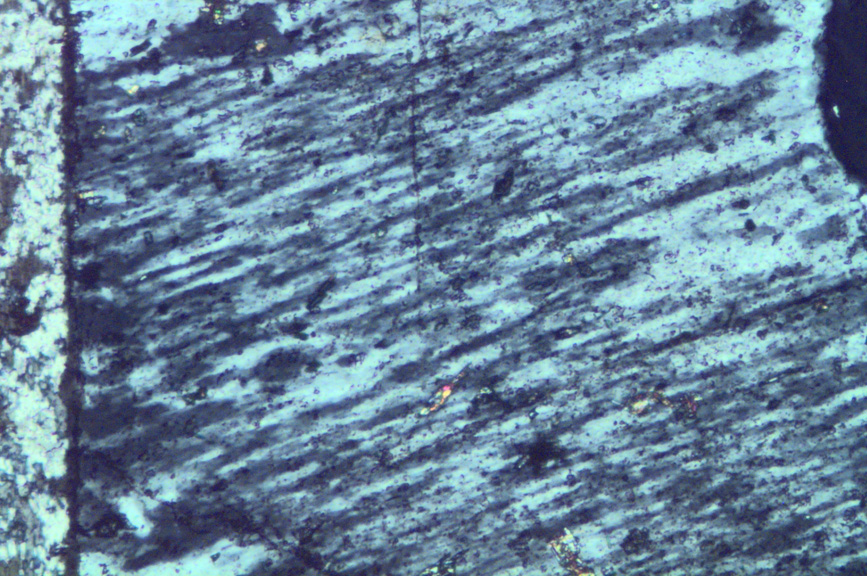
Amazonite typically ranges from translucent to opaque, with true transparency occurring only in rare, thin fragments. Its surface exhibits a characteristic vitreous luster, though a subtle pearly sheen is often visible on its distinct cleavage planes—a diagnostic feature that distinguishes it from the more uniform reflections of quartz or carbonates. One of the most striking visual aspects of Amazonite is its internal texture, often characterized by white streaks or grid-like “perthitic” patterns. These features are the result of perthitic exsolution, a process where sodium-rich feldspar lamellae separate from the potassium-rich host during slow cooling. These textures are not merely aesthetic; they serve as a geological “clock,” providing petrographic researchers with vital data regarding the thermal history and cooling rates of the host rock.
Petrogenesis and Mineralogical Associations
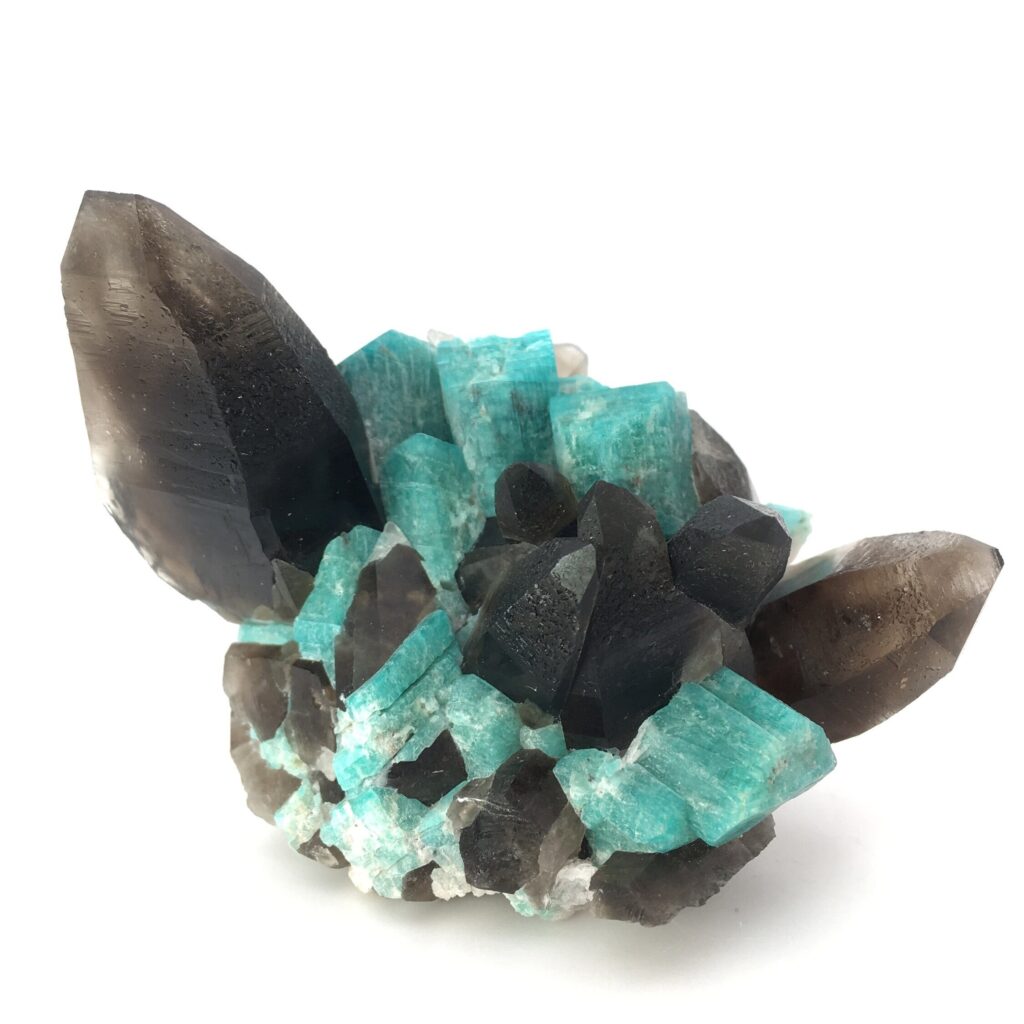
The formation of Amazonite is almost exclusively tied to granitic pegmatites, which represent the chemically evolved “last gasps” of crystallizing magma. These environments are characterized by high volatile content and slow cooling, allowing crystals to grow to significant sizes. The transition of microcline into its triclinic structure—and the subsequent development of the Amazonite variety—is highly dependent on these stable, late-stage magmatic conditions. Typically, Amazonite is found in a rich mineralogical assemblage alongside smoky quartz, albite, biotite, and occasionally fluorite or beryl. Because it requires specific geochemical triggers, such as the presence of trace lead and structural water, the occurrence of Amazonite acts as a reliable indicator of the highly differentiated nature of its parent pegmatite system.
Geographic Distribution and Geological Variability
Despite its misleading nomenclature, Amazonite is not reliably documented within the Amazon River basin. Instead, well-established deposits are distributed across key global regions, most notably the Ural Mountains of Russia, Madagascar, Brazil, India, China, and various African nations. In the United States, significant occurrences are found in the extensively studied pegmatites of Colorado and Virginia. These diverse localities yield specimens with distinct variations in color intensity, texture, and mineral assemblages—differences that serve as a direct record of the specific temperature, pressure, and trace-element availability present during the mineral’s formation. Consequently, Amazonite serves as an invaluable subject for comparative geological studies and environmental reconstruction.
Ethno-Archaeological Significance and Historical Context
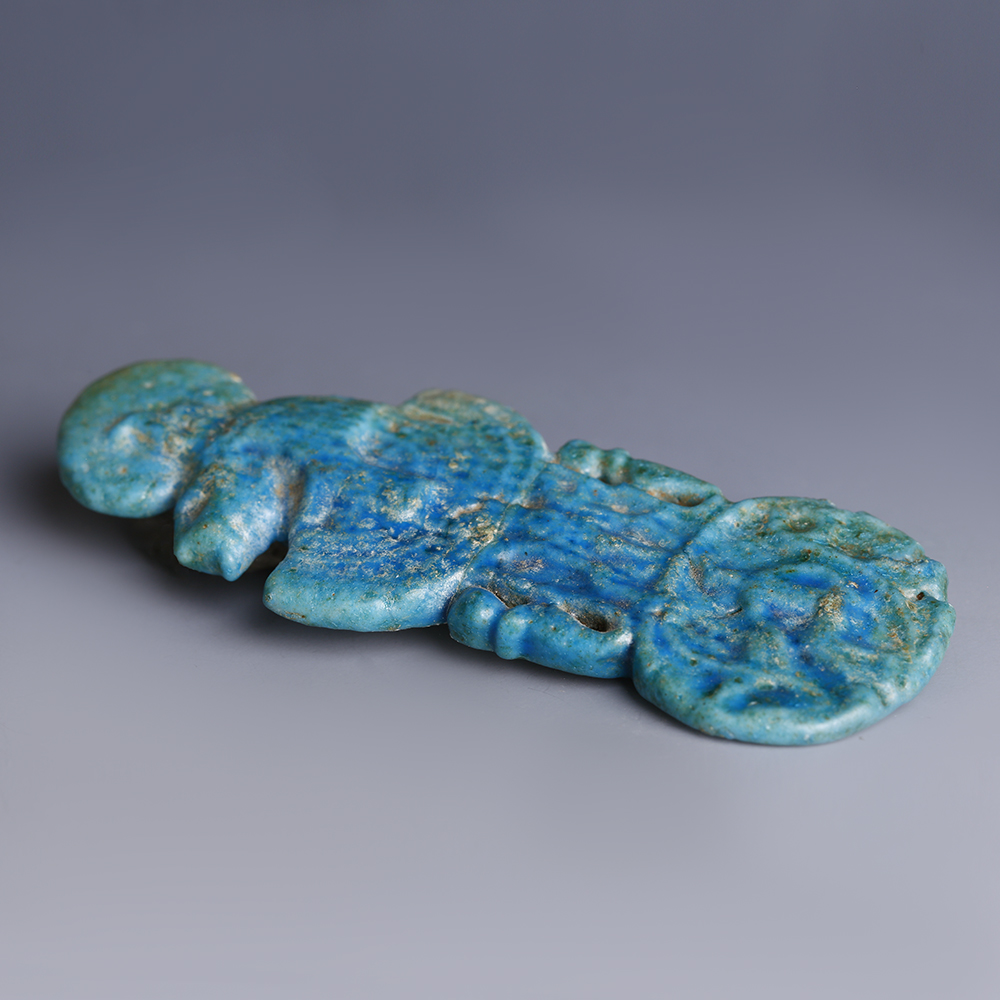
The historical utility of green feldspar minerals consistent with Amazonite dates back to the third millennium BCE, with significant archaeological evidence found in Ancient Egypt. These materials were expertly crafted into beads, amulets, and intricate inlays for ceremonial use. Similar artifacts identified in Mesopotamian and Near Eastern contexts suggest a widespread ancient appreciation for green feldspars. Historically, the value of Amazonite was derived from its vibrant aesthetic and relative workability rather than rarity; its physical properties allowed ancient artisans to shape it using primitive tools, cementing its role as a staple of early decorative arts.
Etymology, Identification, and Scientific Value
The name “Amazonite” was popularized in 18th-century European mineralogy based on the erroneous belief that the stone originated near the Amazon River. Although subsequent exploration failed to locate major deposits in the region, the name persists today due to centuries of established scientific and popular usage. In modern mineralogy, Amazonite is strictly distinguished from visually similar minerals like jade, turquoise, or green quartz through its distinct crystalline structure and cleavage. Beyond its beauty, the mineral is a cornerstone of geological education; by studying how minor chemical substitutions trigger its pronounced visual effects, researchers have gained profound insights into trace-element coloration mechanisms in crystals.